Buying jewelry at auction rewards preparation and punishes guesswork — know the hallmarks, know the buyer's premium, and know your walk-away price before the gavel drops. This guide walks through the exact steps real buyers use to win pieces at fair prices in 2026 without overpaying or getting stuck with a fake.
- Buyer's premiums run 15%-25% on top of the hammer price — factor that in before you bid.
- Check hallmarks first: 750 means 18k gold, 585 means 14k, 925 means sterling silver.
- Set a hard maximum bid before the auction starts and never adjust it mid-session.
- Jewelry Room lists condition reports and provenance notes buyers should read in full before bidding.
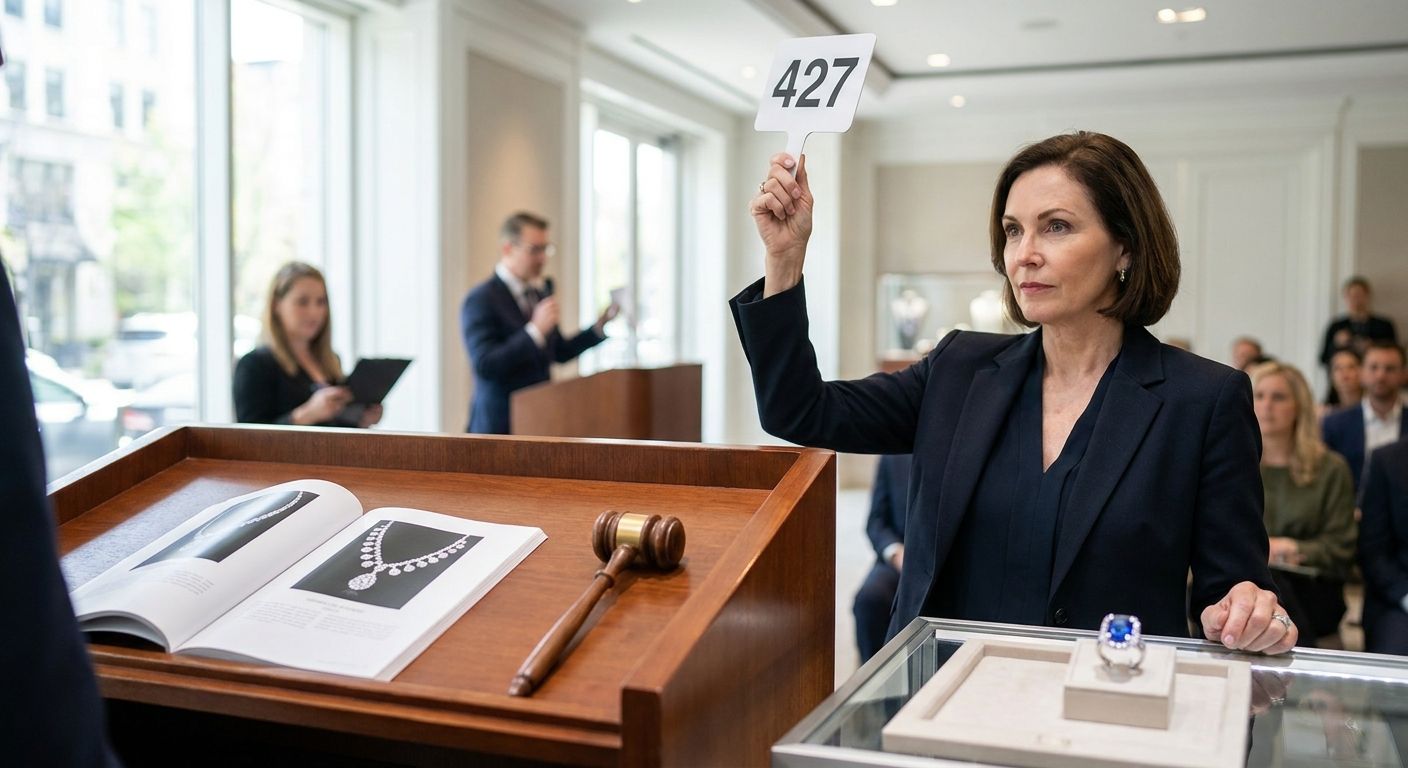
- Live online bidding at platforms like Jewelry Room lets you compete without traveling to a saleroom.
Why this matters
Auction jewelry can sell 20%-40% below retail replacement value, but only if you understand what you're actually bidding on. A ring listed with a vague description and no hallmark photo is a different risk than one with a full gemological report attached. Buyers who skip the homework end up winning lots they can't resell or wear with confidence, and the return policies on auction purchases are far thinner than retail.
The difference between a smart auction buy and an expensive mistake in 2026 comes down to five things: reading the catalog description literally, verifying hallmarks, understanding the fee structure, setting a real budget, and knowing which lots to skip entirely. None of this requires an appraiser's license. It requires a checklist and the discipline to follow it.
What you'll need
- A registered bidder account with the auction house or platform (most require ID verification before you can bid)
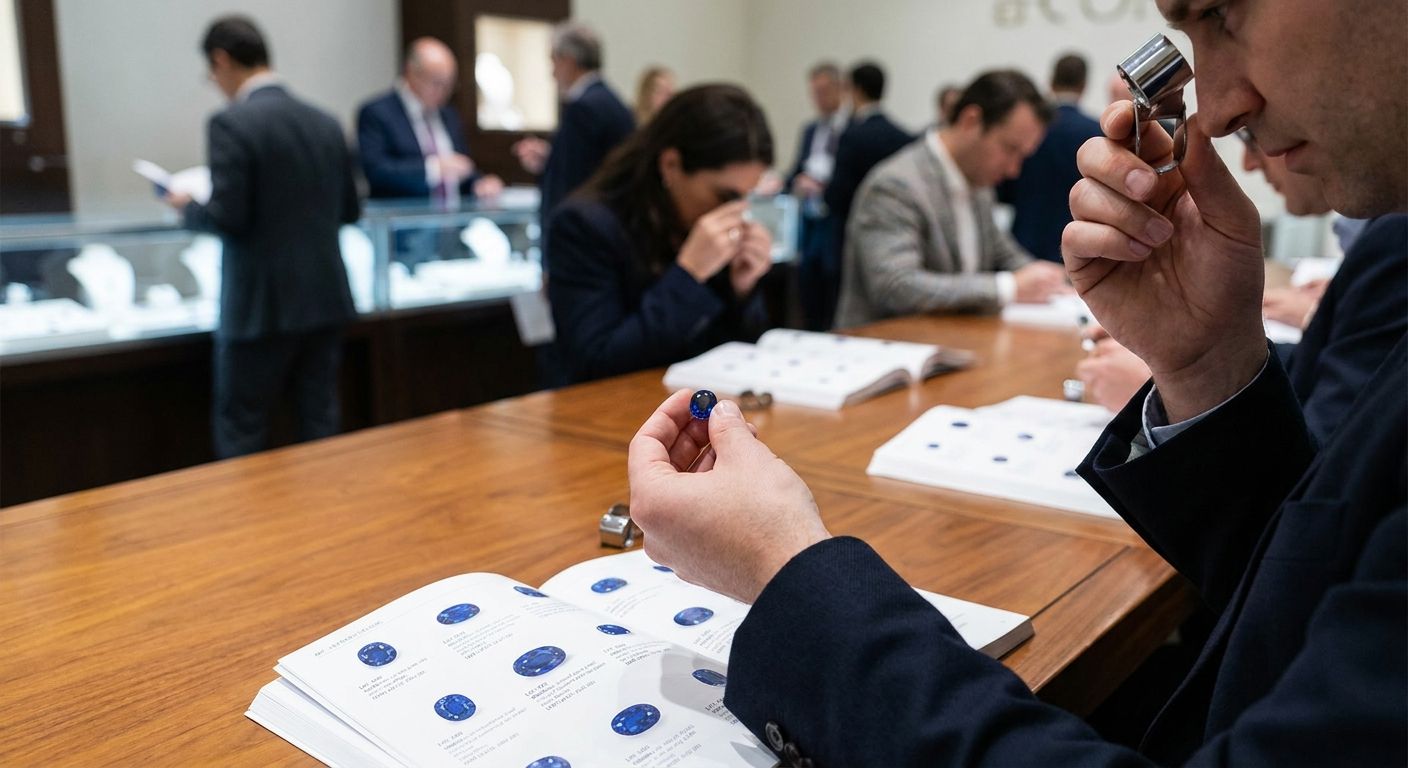
- A jeweler's loupe or a phone camera with macro zoom to inspect hallmark photos closely
- A written maximum bid for every lot you're interested in, decided before the sale opens
- A reference for current gold and silver spot prices on sale day
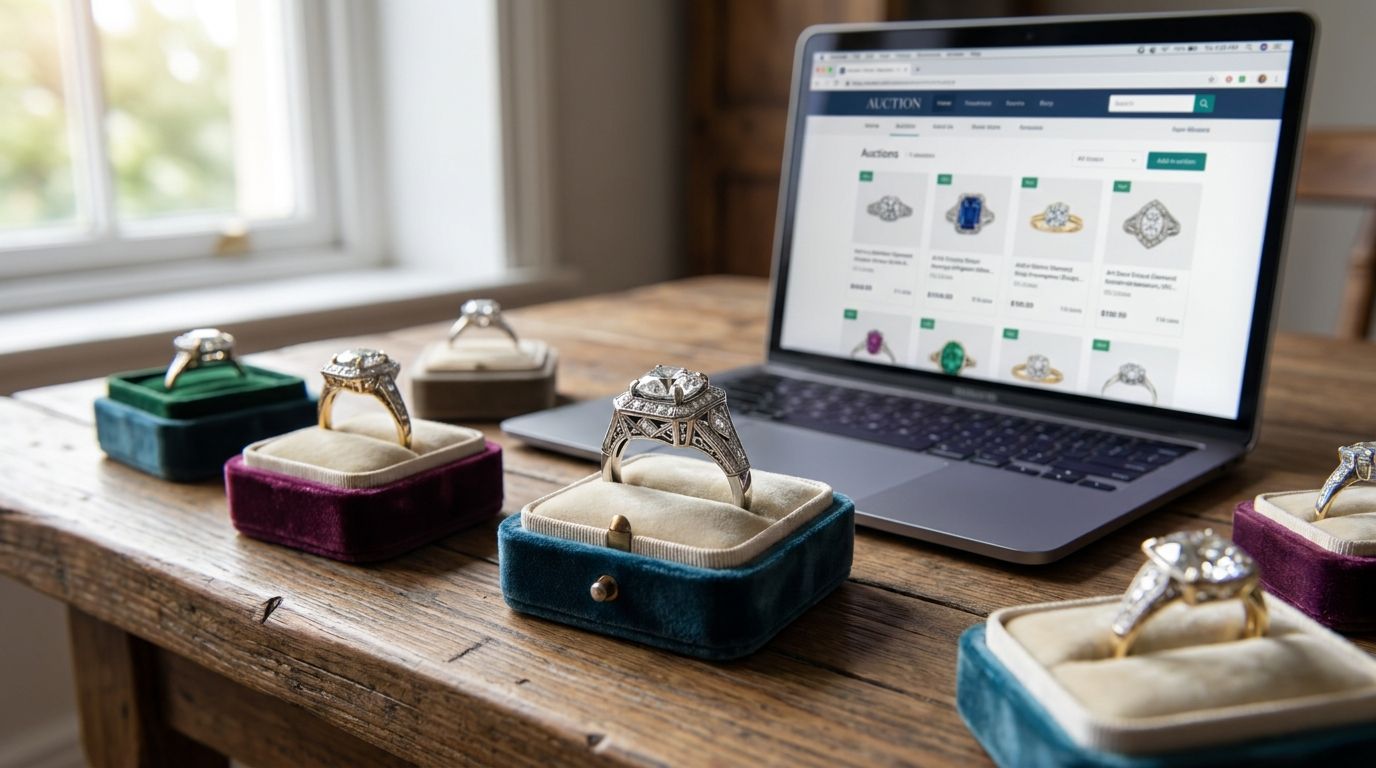
- Access to the Jewelryroom.com auction catalog to review lot descriptions, condition notes, and closing times in advance
- A calculator or spreadsheet to add the buyer's premium and any shipping/insurance costs to your target bid
The steps
1. Register early and confirm bidding rules
Auction platforms verify identity and sometimes require a deposit or card hold before releasing your bidder number. This step protects sellers from non-paying bidders, and it's why last-minute registration on sale day often fails.
Register at least 24 hours before the lot closes. Read the specific buyer's premium percentage listed for that sale — it varies by house and can sit anywhere from 15% to 25% of the hammer price in 2026, plus applicable sales tax.
Common mistake: registering five minutes before bidding opens and getting locked out during a verification hold.
2. Read every lot description word for word
Catalog language is precise on purpose. "14k yellow gold" is a factual claim; "gold-tone" or "gold-filled" is not solid gold at all. "Diamond-accented" often means small melee stones, not a center diamond.
Cross-reference the written description against every photo, including close-ups of hallmarks and clasps. A missing hallmark photo on a piece claiming to be 18k gold is a reason to ask the house for additional images before bidding, not a detail to ignore.
Common mistake: assuming photos alone tell the full story when the text description carries the legal weight of the listing.
3. Verify hallmarks and stamps yourself
Standard gold purity stamps read 750 for 18k, 585 for 14k, and 375 for 9k. Sterling silver is stamped 925. If a listing claims 18k gold but the visible stamp reads 585, that's a 14k piece regardless of what the title says — flag it and ask before you bid.
Maker's marks and country hallmarks (like a lion passant for British sterling) add another layer of authentication. Absence of any stamp isn't automatically a red flag on antique pieces predating modern hallmarking laws, but it does mean you should read the condition report closely.
Common mistake: trusting the catalog title over the actual stamp visible in the photos.
4. Set your maximum bid before the sale starts
Decide your ceiling price in writing, factoring in the buyer's premium, shipping, insurance, and any resizing or repair costs, before the lot opens for bidding. This number should be based on comparable recent sales, not on how much you want the piece.
Write it down somewhere you'll actually look at during the auction. The entire point of a hard maximum is that you don't renegotiate it with yourself once adrenaline kicks in during the final sixty seconds.
Common mistake: raising your ceiling mid-auction because you're one bid away from winning.
5. Use proxy or absentee bidding when you can't watch live
Most platforms, including live online sales through Jewelry Room, let you submit a maximum absentee bid that the system executes incrementally against other bidders. This removes the emotional escalation of live bidding entirely.
Set the absentee bid at your true ceiling and let the system handle the rest. You'll either win at a price below your max or you won't win — either outcome is fine if the ceiling was calculated honestly in step four.
Common mistake: submitting an absentee bid, then also watching live and adding manual bids on top of it, which defeats the purpose.
6. Confirm payment and pickup or shipping terms before you win
Every auction house sets its own payment window, typically 24-72 hours after the sale closes, and its own shipping or insurance terms for jewelry lots. Know these before you bid, not after you've won and are scrambling to arrange a courier.
Jewelry is high-value cargo. Confirm the shipment is insured for full hammer value plus premium, and get tracking with signature confirmation as a minimum standard.
Common mistake: winning a lot without knowing whether the house ships internationally or only offers local pickup.
7. Keep the provenance and condition paperwork
When a lot includes a gemological report, appraisal, or prior ownership history, that paperwork travels with the piece and matters enormously for resale or insurance later. Store it with the item, not in an email you'll lose track of.
For pieces without formal paperwork, keep your own record: the auction listing, the winning bid confirmation, and any photos you took of the hallmark before bidding. This becomes your provenance file.
Common mistake: treating the auction receipt as sufficient documentation when insurers typically want a gemological report for anything over a few thousand dollars.
Browse live jewelry auctions now
Review current lots, hallmarks, and closing times before you bid.
Troubleshooting
The hallmark photo is blurry or missing entirely. Message the auction house directly and request a close-up before the lot closes — most platforms respond within a business day, and a house that won't provide one is telling you something.
You got outbid in the last ten seconds. This is the normal behavior of last-minute sniping on live platforms. If your maximum bid was set honestly in step four, losing the lot at that point means the item wasn't worth more to you than your ceiling — that's the system working correctly, not failing.
The item arrived and the stone looks different from the photos. Contact the auction house immediately with your unboxing photos and the original listing photos side by side. Most houses have a short window, often 48-72 hours, to file a discrepancy claim.
You're not sure if a stamped "925" piece is genuinely sterling or plated base metal. A magnet test rules out ferrous base metals but doesn't confirm silver content. For anything above a modest bid, a jeweler's acid test or an XRF reading from a local jeweler settles it definitively.
The buyer's premium made the total cost higher than expected. This is a math error, not a platform error — always calculate hammer price plus the stated premium percentage plus tax before you set your ceiling, not after you've won.
Tools and resources
- Jewelryroom.com for live and timed jewelry auctions with catalog listings and condition notes
- A jeweler's loupe (10x magnification is standard) for inspecting hallmarks in person once an item arrives
- A gram scale for verifying weight claims on gold and silver lots against the listing
- A current spot price reference for gold, silver, and platinum on the day of the sale
- A local independent jeweler for post-purchase appraisal or acid testing when a lot's value justifies it
What to do next
Once you've won your first lot, the next skill to build is reading condition reports for stone-set pieces — chips, recuts, and old repairs affect value far more than most first-time buyers expect. Watch a few live sales on Jewelry Room before bidding real money, just to see how quickly bidding accelerates in the final minute of a popular lot.
FAQ
How to buy jewelry at auction safely as a first-time bidder?
Register with the auction house in advance, read the full lot description including hallmark photos, and set a hard maximum bid before the sale opens. First-time buyers should start with lower-value lots to learn the pacing of live bidding before committing to expensive pieces.
What is a buyer's premium at a jewelry auction?
A buyer's premium is a fee added on top of the hammer price, typically 15%-25% in 2026, and it goes to the auction house rather than the seller. Always add this percentage plus tax to the hammer price when calculating your true cost.
Is buying jewelry at auction cheaper than retail?
Auction jewelry often sells 20%-40% below retail replacement value, but final cost depends on competition for the specific lot and the buyer's premium. Popular pieces with strong provenance can still sell close to retail price when multiple bidders compete.
How do you know if a hallmark on auction jewelry is real?
Standard gold stamps read 750 for 18k, 585 for 14k, and 375 for 9k, while sterling silver is stamped 925. If the catalog description and the visible stamp don't match, ask the auction house for clarification before bidding.
Can you bid on jewelry auctions online without attending in person?
Yes, most jewelry auctions in 2026 run live online bidding or absentee bidding through the platform, letting you compete from anywhere with an internet connection. Jewelry Room and similar platforms let you register, view catalogs, and submit maximum bids remotely.
What happens if you win a jewelry auction lot and change your mind?
Auction sales are typically final once the hammer falls, with no standard return window like retail purchases. This is why setting a firm maximum bid and reading the condition report before bidding matters more at auction than anywhere else.
How long does shipping take after winning a jewelry auction?
Payment windows typically run 24-72 hours after the sale closes, with shipping arranged after payment clears and insurance confirmed. High-value jewelry lots should always ship with signature confirmation and full insured value.
Do you need an appraisal before bidding on jewelry at auction?
An appraisal isn't required to bid, but reading the catalog's condition report and gemological notes carefully serves the same purpose for most buyers. For lots above a few thousand dollars, an independent appraisal after winning is worth the cost for insurance purposes.
One last thing
The single biggest mistake new auction buyers make isn't overbidding — it's skipping the hallmark photo entirely and trusting the catalog title. A stamp reading 585 on a piece titled "18k gold" tells you the true purity in seconds, no appraiser required. Learn to read those three or four digits before your first bid in 2026 and you'll avoid the most common and most expensive auction mistake there is.