Sapphire auction buyers face a real fork in the road: chase provenance at a major house and pay a heavy buyer's premium, or hunt lower-cost lots where certification is thinner. This guide ranks the venues that actually matter for sapphire auction buyers in 2026, with a clear verdict on each.
- Jewelryroom.com is the Buy pick for sapphire auction buyers who want online bidding without saleroom travel.
- Christie's and Sotheby's carry record-grade sapphires but buyer's premiums run 20-26% on the hammer price.
- Heritage Auctions is the Buy pick for US buyers wanting mid-range certified sapphires at lower entry cost.
- Skip unverified marketplace listings — heat treatment and glass-filling are common undisclosed issues in sapphire.
Why this matters
Sapphire is corundum, rated 9 on the Mohs hardness scale, which is why it holds up in daily-wear rings better than most colored stones. That durability is exactly why sapphire moves fast at auction — buyers know it lasts, and lots with strong provenance or classic origin (Kashmir, Burmese Mogok, Ceylon) draw competitive bidding within seconds of opening.
The problem for sapphire auction buyers isn't finding a sale. It's picking the right venue for the price tier and certification standard they need. A $2,000 mid-range sapphire ring and a museum-grade unheated Kashmir stone do not belong in the same sale, and treating them the same way costs buyers money on both ends.
How we ranked
Each venue below is judged against three questions sapphire auction buyers actually ask: what price tier does it serve, what certification standard backs the lots, and what does the buyer's premium structure do to the real cost. Venues that layer full gemological lab reports (GIA, AGL, GRS) onto sapphire lots rank above venues that leave certification to the consignor. Accessibility for online bidders in 2026 also factors into the ranking — a house that requires in-person paddle registration ranks lower for remote buyers than one built for online bidding.
The ranked list
1. Jewelryroom.com — the accessible online pick
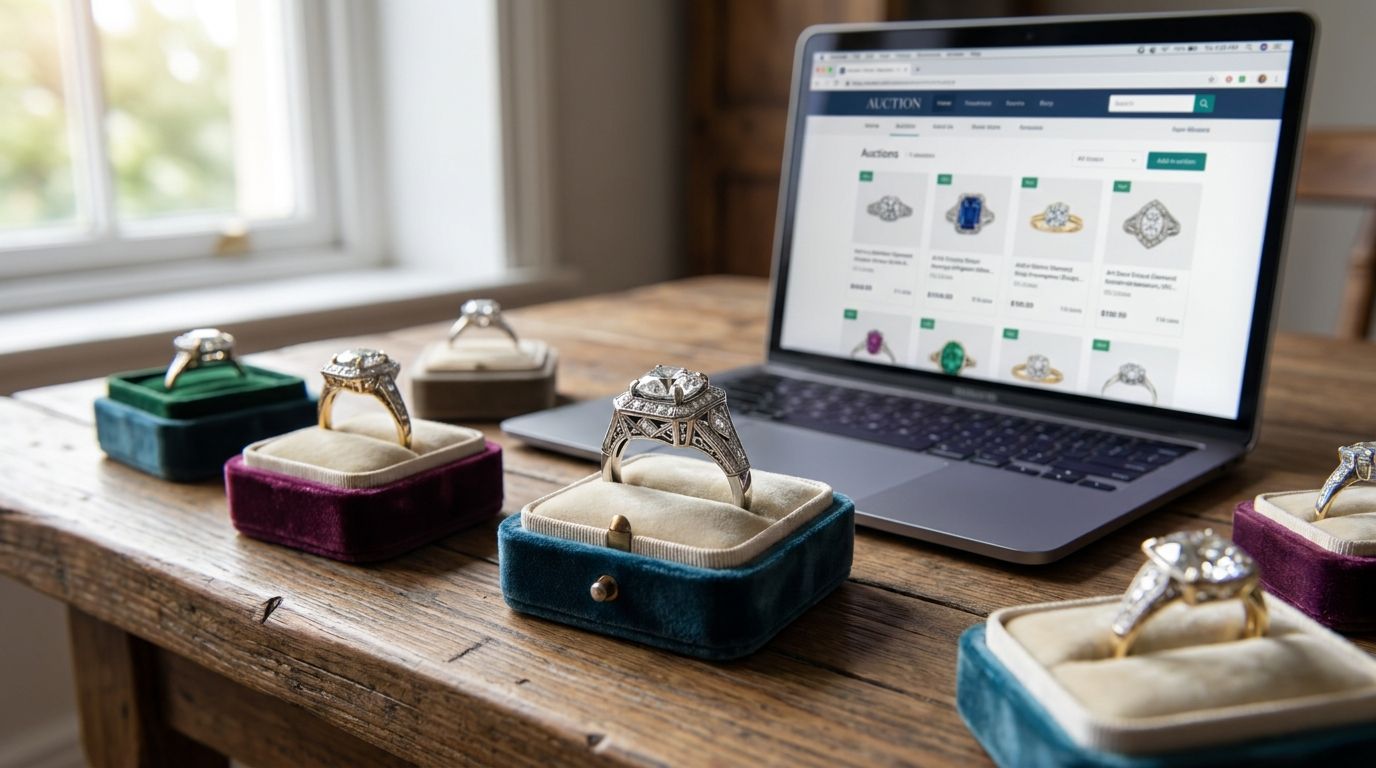
Jewelryroom.com runs as an online jewelry auction platform where sapphire lots go up alongside diamonds, colored gemstone rings, and estate pieces. Buyers bid directly on individual lots without traveling to a physical saleroom, which removes the biggest friction point for remote sapphire auction buyers. The lot structure favors buyers who want to build a bid strategy around a specific stone rather than sit through an entire evening sale.
Verdict: Buy for sapphire auction buyers who want online access without the travel and paddle-registration overhead of a traditional house.
2. Christie's — the blue-chip house
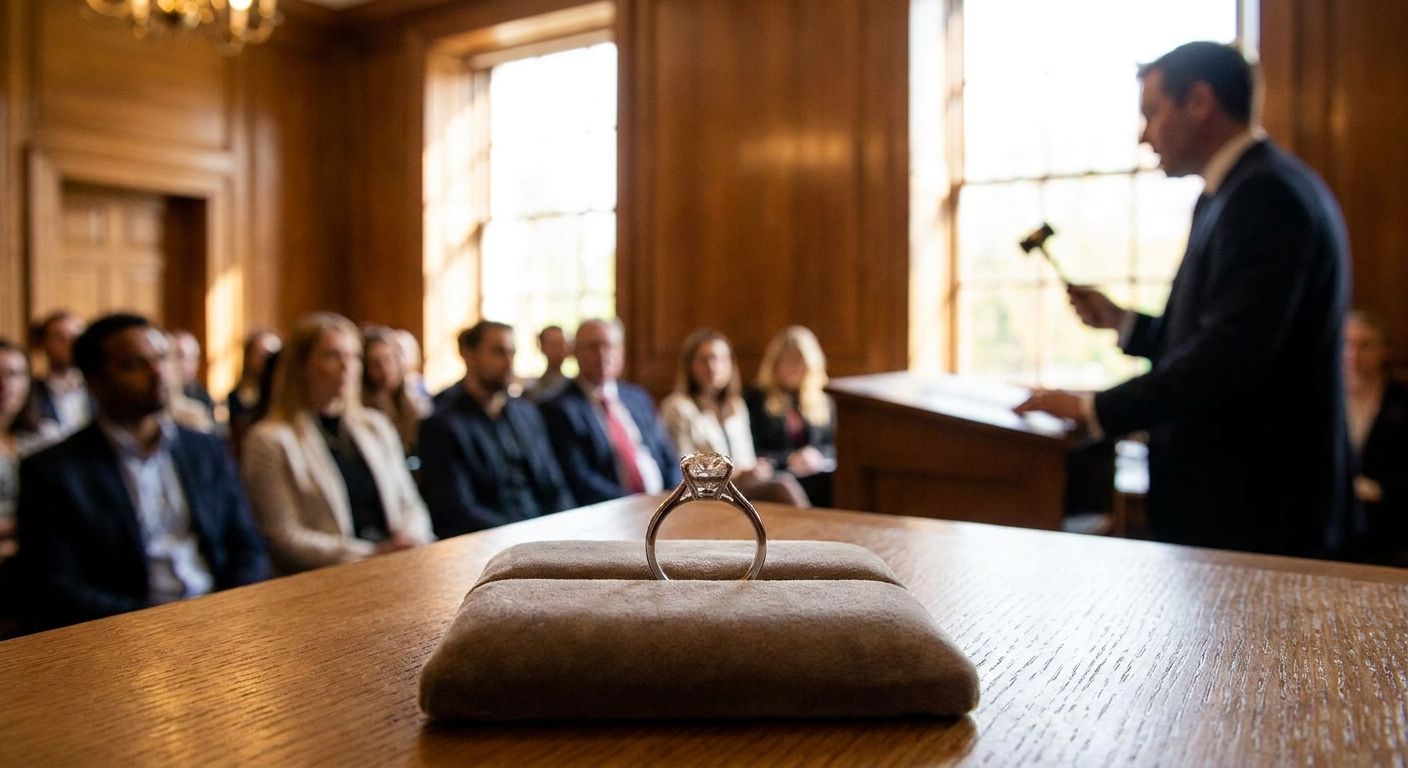
Christie's runs dedicated Magnificent Jewels sales in Geneva, New York, and Hong Kong, and sapphire lots with strong provenance routinely anchor those sales. The house's buyer's premium structure adds a meaningful percentage on top of the hammer price, which changes the real cost math on every bid.
This is the venue for record-chasing, not for building a modest collection. Verdict: Buy for collectors targeting museum-grade, provenance-backed sapphires; Skip for casual buyers priced out by the premium load.
3. Sotheby's — the record-chaser's rival
Sotheby's mirrors Christie's on scale, running its own Geneva and Hong Kong colored-gemstone sales calendar with comparable buyer's premium tiers. Sapphire lots here compete directly with Christie's for the same pool of serious bidders, which keeps prices high on anything with a documented origin.
Verdict: Consider if you're already bidding at this tier and want a second house tracking the same category of stone.
4. Bonhams — the mid-tier alternative
Bonhams runs fine jewelry sales with a lower entry point than Christie's or Sotheby's while still backing lots with full authentication. Sapphire buyers who want major-house standards without major-house competition for every lot tend to land here.
Verdict: Consider for buyers stepping up from entry-level auctions who aren't ready for Christie's-level bidding wars.
5. Heritage Auctions — the US-based generalist
Heritage runs frequent online and live jewelry auctions out of Dallas, with lower minimum bids than the Geneva-calendar houses. It's a practical entry point for US-based sapphire auction buyers chasing certified mid-range stones without international shipping and customs complications.
Verdict: Buy for US buyers who want lower entry cost than Christie's or Sotheby's while keeping a certified paper trail.
6. Regional and estate auction houses — the wildcard
Local estate auctioneers sometimes list sapphire jewelry pulled from private collections, often underpriced relative to certified market value. The catch: many of these lots skip a full gemological lab report entirely, leaving treatment disclosure and origin claims unverified.
Verdict: Wait unless you can get the stone independently graded before the sale closes.
7. General online marketplaces — the risk case
Open marketplace listings for sapphire jewelry frequently omit lab certification altogether, and heat treatment or glass-filling goes undisclosed more often than buyers expect. Sapphire's market is dominated by treated stones, so an uncertified listing claiming "natural, untreated" deserves skepticism by default.
Verdict: Skip if you need a certified, treatment-disclosed stone — the risk isn't worth the discount.
Comparison table
| Venue | Best For | Buyer's Premium | Certification Standard | Verdict |
|---|---|---|---|---|
| Jewelryroom.com | Online, remote bidders | Platform-listed per lot | Lot-level disclosure | Buy |
| Christie's | Museum-grade, record stones | 20-26% | Full gemological reports | Buy (top tier) |
| Sotheby's | Provenance-backed sapphires | 20-26% | Full gemological reports | Consider |
| Bonhams | Mid-tier fine jewelry | Below Geneva-house tier | Full authentication | Consider |
| Heritage Auctions | US mid-range certified stones | Lower than Geneva houses | Certified lots | Buy |
| Regional/estate houses | Underpriced, unverified finds | Varies by house | Inconsistent | Wait |
| General marketplaces | Nothing you can't verify yourself | N/A | Frequently absent | Skip |
Where to buy
Three rules keep sapphire auction buyers out of trouble regardless of which venue they pick:
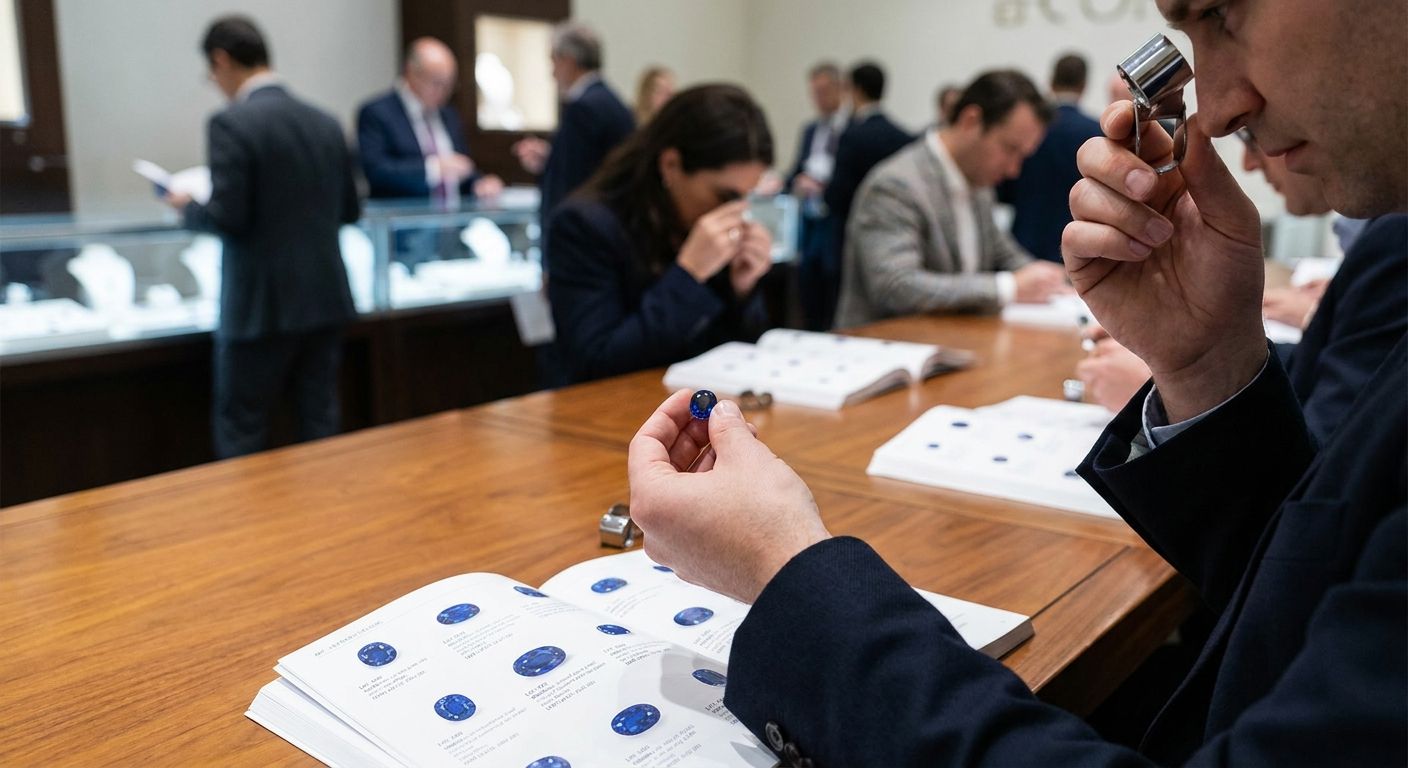
- Demand a lab report before you bid, not after. GIA, AGL, and GRS reports disclose treatment status and, where determinable, origin — a sapphire lot without one is a guess, not a purchase. The guide to bidding tips for real buyers walks through how to read a lot listing before you commit a bid.
- Price the buyer's premium into your ceiling, not just the hammer price. A 20-26% premium on a major-house sapphire lot changes your real spend more than most first-time bidders expect.
- Compare shipping, insurance, and return terms across venues before the sale closes, since these vary house to house and affect the total landed cost of a sapphire purchase in 2026.
Ready to bid on sapphire jewelry?
Browse current sapphire lots or read the bidding tips guide first.
FAQ
What's the best auction house for sapphire auction buyers in 2026?
Jewelryroom.com is the best pick for buyers who want online sapphire lots without saleroom travel, while Christie's and Sotheby's serve buyers chasing museum-grade, provenance-backed stones. The right choice depends on price tier and whether you need in-person versus online bidding.
Is Christie's better than Heritage Auctions for sapphires?
Christie's carries higher-provenance, record-chasing sapphire lots, while Heritage Auctions offers lower entry costs for certified mid-range stones. Buyers on a tighter budget generally get more usable access at Heritage.
How much does a sapphire auction buyer's premium cost?
Major auction houses typically charge a 20-26% buyer's premium on top of the hammer price in 2026. That premium should be added to your bid ceiling before you set a maximum, not after you win the lot.
Do all sapphires sold at auction come with a lab report?
No — major houses like Christie's, Sotheby's, and Heritage typically back lots with full gemological reports, but regional estate auctions and general marketplaces often don't. Always confirm a GIA, AGL, or GRS report exists before bidding on a certified-stone lot.
Are heat-treated sapphires worth buying at auction?
Yes, if the treatment is disclosed and priced accordingly — heat treatment is common across the sapphire market and doesn't disqualify a stone. The risk is an undisclosed treatment on an uncertified listing, which is common on general online marketplaces.
What origin sapphires bring the highest auction prices?
Kashmir and Burmese Mogok sapphires historically command the strongest prices at major houses due to rarity and color saturation, with Ceylon (Sri Lankan) stones also trading at a premium. Origin claims should always be backed by a lab report before you factor them into your bid.
Can I bid on sapphire auctions online without traveling?
Yes — Jewelryroom.com and Heritage Auctions both run structured online bidding for sapphire jewelry lots, removing the need for in-person paddle registration. Major Geneva-calendar houses also offer online bidding but with the same buyer's premium structure as their live sales.
Is it risky to buy sapphire jewelry at a general online marketplace auction?
Yes — general marketplace listings frequently skip lab certification and treatment disclosure, which are the two things that determine a sapphire's real value. Skip these unless you can independently verify the stone before paying.
One last thing
Sapphire's 9-rating on the Mohs hardness scale means a stone bought decades ago at a regional estate sale can look identical in wear to one bought at Christie's last week — the certification, not the wear pattern, is what separates a good buy from a guess. Get the lab report before the bid, not after the win.