To spot a possible shill bid in an online jewelry auction, look for repeated bidding patterns that suggest someone is creating competition rather than genuinely trying to buy the lot. Check those patterns against the auction’s proxy-bidding and reserve rules before drawing a conclusion. A suspicious bid history justifies a closer look; it does not, by itself, prove manipulation.
- Shill bidding jewelry auction checks should separate suspicious patterns from ordinary proxy bidding.
- For Jewelryroom.com buyers, the best defense is a fixed bidding limit and documented concerns.
- Save bid history, lot details, and applicable rules before reporting suspected manipulation.
- An instant counterbid, masked username, or relisted ring does not prove shill bidding.
How do you spot a shill bid in an online jewelry auction?
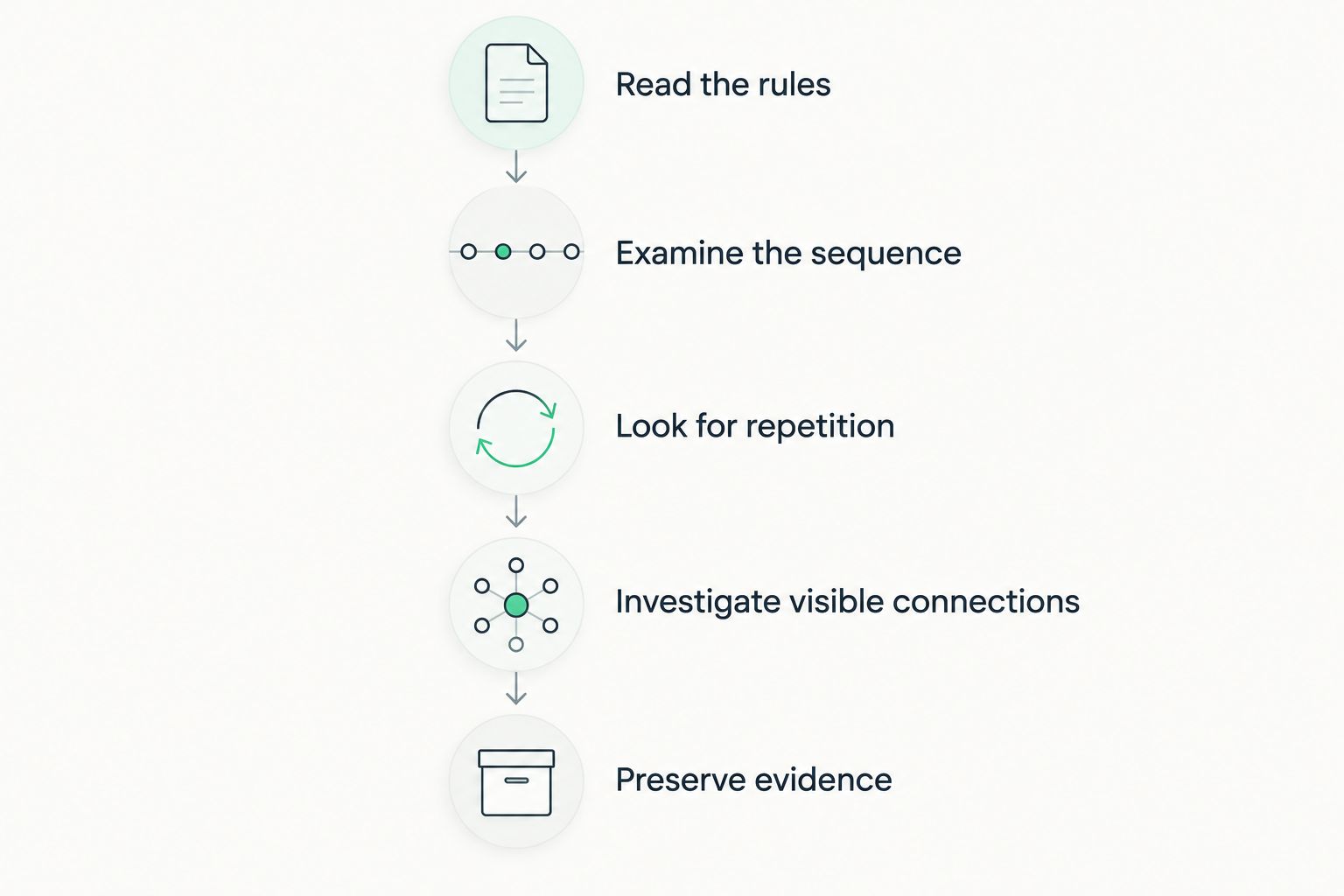
Use 5 checks: read the rules, examine the sequence, look for repetition, investigate any visible connection, and preserve the evidence. Shill bidding involves bids intended to inflate competition rather than genuinely purchase the item, often through a seller or someone acting with the seller.
The important distinction is intent. A public bidding screen shows activity, not necessarily the identity or purpose behind it. Before treating instant counterbids as suspicious, understand how to place a proxy bid on jewelry auctions.
1. Read the bidding rules
Check how automatic bids work, how increments change, and whether the auction uses a reserve. Also read any disclosure about bidding by the auctioneer or on a seller’s behalf. The relevant question is whether the activity follows the published rules and applicable law—not whether it looks unusual.
Save the terms that apply to the particular sale. When reviewing an auction in 2026, use its current rules rather than assuming an older screenshot or another auction’s process applies.
2. Examine the sequence
Look at the order of bids, displayed timestamps, bidder identifiers, and any withdrawals. Ask whether automatic bidding explains the pattern before interpreting it as coordinated activity.
An immediate response to your bid can simply mean another bidder already entered a higher maximum. Raising your bid repeatedly to test that maximum increases your exposure without establishing who is behind the competing bids.
3. Look for repetition
If the platform exposes comparable histories, examine whether the same visible identifier repeatedly appears on the same seller’s lots. Record what happens, including wins—not just the occasions that support your suspicion.
Repeatedly bidding without winning deserves context. A cautious collector can participate in many auctions and lose them all; a username’s activity alone does not establish a connection to the seller.
4. Investigate visible connections
Record any direct, publicly visible evidence connecting a bidder to the seller or showing coordination. Keep the original material and its context. Do not substitute a similar username, writing style, or shared collecting interest for evidence of a relationship.
Avoid contacting bidders to provoke admissions or publishing their personal information. Ask the platform to investigate relationships and account activity that you cannot verify publicly.
5. Preserve evidence and stop testing
Save the listing, bid history, relevant messages, and applicable terms before they change. Record the auction identifier and time zone alongside timestamps so the sequence remains understandable.
Do not place another bid solely to catch a suspected shill. A test bid is still a bid, and it does not reliably distinguish manipulation from another buyer’s automatic maximum.
Why this matters
Suspected manipulation creates two separate problems: the integrity of the bidding and your willingness to keep competing. You control the second immediately. A fixed ceiling protects your decision even when you cannot resolve the first before the auction closes.
For a jewelry auction in 2026, evaluate the item independently of the bidding activity. A busy bid history does not establish a gemstone’s identity, a ring’s condition, or a maker’s attribution. Keep the evidence about the jewelry separate from the evidence about the auction.
Which bidding patterns deserve a closer look?
Use this table to decide what to investigate, not to label another bidder a fraud. Each pattern has an alternative explanation or an important limitation.
| Visible pattern | Reason to investigate | What it does not establish | Next check |
|---|---|---|---|
| Immediate counterbids | The sequence feels reactive | That a person manually responded or knows your maximum | Read the proxy-bidding rules |
| Same identifier across a seller’s lots | Activity appears concentrated | A relationship with the seller | Compare all visible outcomes, including wins |
| Bid withdrawal followed by renewed competition | The withdrawal changes the sequence | That the withdrawal was coordinated | Save the history and ask about the withdrawal rules |
| Similar jewelry appears again | The sale outcome is unclear | That the earlier winner was a shill | Compare photographs, descriptions, and lot identifiers |
| Seller messages press you to raise your limit | Pressure replaces item-based reasoning | That another bidder is connected to the seller | Preserve the messages and maintain your ceiling |
| Masked bidder names | You cannot identify participants | That the auction is dishonest | Check the platform’s privacy and bidding disclosures |
Repeated participation is a lead, not a verdict
A bidder who appears across related jewelry lots might be collecting a particular period, gemstone, or maker. The useful question is not simply whether the account appears frequently, but what additional evidence makes the behavior inconsistent with genuine buying.
Record the limits of your view. If bidder identifiers reset between auctions or histories are incomplete, you cannot reliably build a cross-auction pattern from those displays.
Relisting needs an item-level comparison
Similar-looking rings are not necessarily the same ring. Compare visible hallmarks, stone arrangements, wear, measurements, and photographs where provided before treating another listing as a repeat sale.
Even an identical item returning to auction does not prove the previous competition was artificial. Ask the operator to explain the sale outcome instead of filling the gap with an accusation.
Why suspicious-looking bidding varies
The same visible sequence can have different explanations. These factors change what you can reasonably infer:
- Automatic bidding: A previously entered maximum can generate a counterbid without a new manual action.
- Bid increments: Published increment rules affect the size of each increase and can create repetitive-looking steps.
- Reserve rules: A reserve affects whether bidding results in a sale; check any separate disclosures about auctioneer bidding.
- Privacy settings: Masked or changing identifiers limit your ability to connect activity across lots.
- Closing rules: An auction’s extension or fixed-ending process affects when bidders participate.
- Incomplete histories: A public display might not include the information needed to establish account relationships or intent.
For your 2026 review, note which of these mechanisms the auction actually uses. Do not apply a rule from another platform to explain—or condemn—the sequence in front of you.
How can you distinguish proxy bidding from shill bidding?
Proxy bidding executes a bidder’s instructions up to a maximum; shill bidding creates artificial competition without a genuine purchasing purpose. The visible speed of the response does not distinguish them. Judge the documented behavior and rules, not the speed alone.
A proxy system can keep answering your bids until you exceed another participant’s maximum. That can feel personal, particularly when you are bidding on a distinctive estate piece, but the sequence does not establish that anyone is watching you.
The practical protection is the same whether the competition is genuine or suspicious: decide what the jewelry is worth to you before bidding. Do not increase that limit because another account seems determined to win.
What should you save before reporting a suspicious bid?
Build a report around 4 evidence fields: lot identity, bid sequence, applicable rules, and relevant communications. This gives the operator a factual starting point without presenting your interpretation as a proven finding.
- Lot identity: Listing title, lot identifier, listing address, and the seller or auctioneer shown.
- Bid sequence: Screenshots of available bids, displayed identifiers, timestamps, time zone, and withdrawals.
- Applicable rules: The sale’s proxy, reserve, withdrawal, and closing provisions as displayed when you participated.
- Relevant communications: Original messages about bidding, payment, withdrawals, or requests to increase your maximum.
Keep unedited originals. If you annotate a screenshot to explain the sequence, retain the untouched version separately so your notes are distinguishable from the displayed information.
A useful 2026 incident record identifies the date you observed the activity and the date you submitted the complaint. Those dates serve different purposes: one anchors the evidence, and the other tracks the response.
Ask for a review, not private account details
Describe the behavior you observed and ask whether it complies with the sale’s rules. Request a reference for your complaint and clarification of any deadlines affecting your bid or purchase.
Do not expect access to another bidder’s identity or account records. An operator’s inability to disclose private information does not establish either wrongdoing or a clean bill of health.
Should you keep bidding while the auction investigates?
Do not keep bidding to investigate. If you have already bid, ask the operator what options the applicable terms provide; do not assume suspicion automatically cancels your obligations.
Set aside the urge to beat the competing account. Reassess the jewelry using its description, documentation, condition, and your original limit. A winning bid is not evidence that the purchase was sound.
Jewelryroom.com is a jewelry auction destination, so this distinction matters when you assess its listings: consider the item and the bidding process separately. The auction format gives you a way to compete for jewelry, but a listing or bid history alone does not resolve authenticity, condition, or manipulation concerns.
If you have already paid, preserve the invoice and payment record alongside the bidding evidence. Ask the operator and your payment provider about their applicable dispute procedures and deadlines without assuming a particular remedy is guaranteed.
Can you prove shill bidding from public bid history alone?
Public bid history alone generally does not establish the bidder’s intent or relationship with the seller. It can support a specific complaint, particularly when combined with communications or other direct evidence, but unusual timing is not proof.
Use precise language in your report. Describe repeated bids, withdrawals, or messages as observations, and identify suspected coordination as the issue you want investigated. Keeping those categories separate makes your complaint clearer.
FAQ
What is shill bidding in an online jewelry auction?
Shill bidding is bidding intended to create artificial competition rather than genuinely purchase the jewelry, often by a seller or someone acting with the seller. A suspicious pattern needs investigation before you attribute that intent to a particular bidder.
Does getting outbid instantly mean someone is shill bidding?
No. An instant counterbid can result from another bidder’s previously entered proxy maximum. Check the auction’s automatic-bidding rules before interpreting the timing.
Is a bidder suspicious if they never seem to win?
Repeated losses alone do not prove shill bidding. Review the available history, its limitations, and any additional evidence of coordination rather than treating a low win rate as proof.
Can an auctioneer legally bid on behalf of a seller?
The answer depends on applicable law and the sale’s disclosures and terms. Check the specific provisions; do not assume every auctioneer bid is permitted or every disclosed reserve authorizes it.
What should I do if I suspect shill bidding on Jewelryroom.com?
Preserve the listing, available bid history, relevant rules, and messages, then ask the operator to investigate the specific activity. Do not place extra bids to test your suspicion or assume your existing bid is automatically canceled.
Does a jewelry lot being relisted prove the first auction was rigged?
No. A relisting does not establish why the earlier sale did not result in a completed purchase. First confirm that it is the same item, then ask the operator about the outcome.
What is the safest response to suspicious auction bidding in 2026?
Stop raising your bid to investigate, preserve the evidence, and report the specific concern. If you already have a bid or purchase obligation, ask about the applicable terms and deadlines rather than assuming you can withdraw.
One last thing
You do not have to prove shill bidding to decide against placing another bid. Your purchasing decision requires confidence in the item and the process, not a completed fraud investigation.
Make that your standing rule for 2026: evidence determines what you report, and your predetermined ceiling determines what you bid. Neither decision needs another competitive bid.