You can buy jewelry at auction using cryptocurrency only when the auction seller explicitly accepts your chosen asset and payment network for that sale. Before bidding in 2026, confirm the payment instructions, settlement deadline, additional charges, and refund terms; owning cryptocurrency does not establish an accepted way to pay.
- To buy jewelry auction with cryptocurrency, confirm the seller's accepted asset, network, and invoice instructions before bidding.
- Jewelryroom.com serves jewelry auction buyers; verify cryptocurrency acceptance rather than assuming it.
- Direct cryptocurrency payment and selling cryptocurrency to fund a conventional payment are different routes.
- A blockchain transaction record proves a transfer, not a gemstone's authenticity or delivery.
Can you buy jewelry at auction using cryptocurrency?
Yes, but only with explicit approval for the specific sale and payment route. A wallet balance does not override an auction's payment terms. Neither does a cryptocurrency logo on an unrelated page or an informal message from someone claiming to represent the seller.
Start with the sale terms and your account's official payment instructions. The guide to paying a winning jewelry auction invoice explains the broader invoice workflow; cryptocurrency requires additional checks before you send anything.
There are distinct ways to use cryptocurrency holdings toward a purchase. Do not describe all of them as direct cryptocurrency acceptance.
| Payment route | Best for | Main benefit | Main limitation |
|---|---|---|---|
| Direct cryptocurrency payment, if approved | Buyers whose seller confirms the exact asset and network | Uses cryptocurrency to settle the seller's invoice | Requires verified instructions and agreement on settlement |
| Seller-authorized cryptocurrency processor, if offered | Buyers given an official processor checkout | Provides a defined payment request | Processor terms, quote expiration, and refund handling need review |
| Sell cryptocurrency, then pay conventionally | Buyers whose seller accepts a conventional payment method they can use | Separates the auction payment from blockchain settlement | Adds conversion, withdrawal, and tax-recordkeeping steps |
Choose the route the seller authorizes, not the route your wallet makes easiest. If the seller accepts only conventional payment, selling cryptocurrency first does not mean the auction itself accepts cryptocurrency.
Why this matters
An auction win and a successful cryptocurrency transfer are separate events. Your payment must satisfy the auction's terms, and the seller must associate it with the correct invoice before treating the purchase as paid.
For a 2026 purchase, resolve payment eligibility before placing a bid. Do not assume that an unsupported payment method gives you a right to cancel, extend the deadline, or renegotiate after winning.
Cryptocurrency also does not replace jewelry due diligence. You still need an accurate description, condition information, evidence supporting gemstone claims, and clear delivery arrangements. A technically successful transfer cannot establish any of those facts.
How do you arrange cryptocurrency payment before bidding?
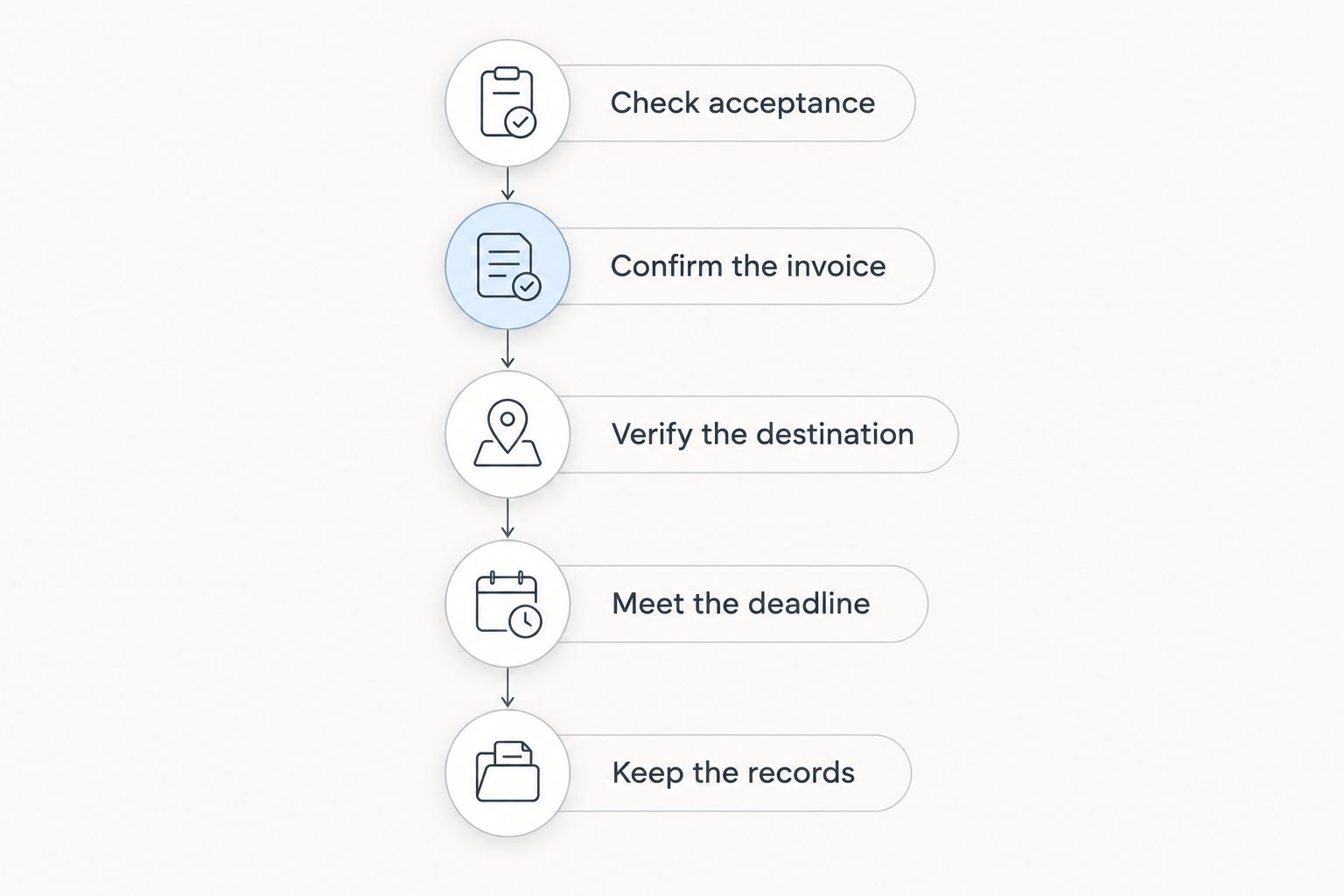
Check acceptance
Ask the seller whether cryptocurrency is accepted for the particular auction and lot you intend to bid on. Get the answer through an authenticated account channel or another contact method you have independently verified.
A general statement about digital payments is insufficient. Ask for the asset name, network, payment provider if applicable, and any eligibility restrictions that apply to your transaction.
Confirm the invoice
Establish what the payment must cover: the winning bid, applicable buyer's premium, tax, shipping, insurance, and other disclosed charges. Ask whether those amounts appear together or require separate settlement.
Confirm the invoice currency and how the cryptocurrency amount will be calculated. You need to know who supplies the conversion quote, when it expires, and what happens if the seller receives less than the amount due.
Verify the destination
Use payment details obtained through the seller's verified process. Compare the asset and network in the payment request with the asset and network selected in your wallet or exchange withdrawal form.
Check the destination address and any required destination tag or memo. An address alone is not a complete payment instruction when the receiving service requires additional identifying information.
Meet the deadline
Ask what counts as timely payment: initiating a transfer, recording it on the network, reaching the required confirmation status, or receiving the seller's approval. Those events are not interchangeable.
Check your own exchange's withdrawal requirements before bidding. Account verification, withdrawal restrictions, or transfer processing can interfere with a deadline even when you hold enough cryptocurrency.
Keep the records
Retain the invoice, written authorization, payment request, transaction identifier, transfer timestamp, and seller's acknowledgment. Keep the jewelry listing and condition report with those documents rather than relying on a payment screenshot alone.
After sending, ask the seller to confirm that the payment has been allocated to your invoice. Do not interpret a wallet's completed status as confirmation that the jewelry is ready for release.
Direct cryptocurrency payment: confirm the settlement terms
Direct payment means the seller agrees to receive cryptocurrency against your auction invoice. It is appropriate only when that agreement includes enough detail to execute the transfer correctly.
The benefit is straightforward: you use the approved cryptocurrency without first arranging a separate conventional payment. The limitation is equally important: blockchain settlement does not automatically resolve invoice disputes, refund calculations, or shipping questions.
Ask whether the seller expects a specified cryptocurrency amount or an amount calculated from an invoice denominated in conventional currency. If the latter applies, identify the quote source and the point at which the conversion becomes binding.
Do not calculate your own substitute amount unless the seller's instructions authorize that calculation. A market quote visible in your wallet is not necessarily the quote used to settle the invoice.
Processor checkout: follow the official payment request
A cryptocurrency processor is relevant only when the seller provides or authorizes that checkout route. A payment service offering cryptocurrency transfers does not establish that an auction seller participates in it.
The benefit is a defined payment request that can identify the asset, destination, and amount. The limitation is another set of terms governing eligibility, payment timing, underpayments, overpayments, and refunds.
Use the checkout reached through the seller's verified instructions. If an emailed request directs you somewhere different, verify the change independently before opening your wallet or approving a transfer.
For a 2026 transaction, read the current checkout instructions rather than relying on a previous purchase. An earlier payment experience is not authorization for a different invoice.
Selling cryptocurrency first: a separate funding route
Selling cryptocurrency and then paying through an accepted conventional method is not direct cryptocurrency payment. It is a way to fund a purchase while following the auction seller's existing payment requirements.
This route is best for buyers who can complete the conversion and withdrawal before the payment deadline. Its benefit is a clearer separation between cryptocurrency activity and the auction invoice; its limitation is the extra work needed to move usable funds into the accepted payment channel.
Check the exchange's conversion and withdrawal terms before committing to the auction. Confirm that the seller accepts the payment method you intend to use after withdrawal, including any account-name requirements.
Do not bid on the assumption that funds will become accessible immediately. Establish the funding route first, then set your bidding limit using the full purchase obligation rather than the wallet balance alone.
Why cryptocurrency payment requirements vary
There is no universal cryptocurrency checkout standard that obligates jewelry auction sellers to accept a transfer. The requirements depend on the parties and systems involved.
- Seller authorization: The auction's payment terms determine whether your proposed route is permitted.
- Asset and network: The receiving setup must support the exact asset and network used for the transfer.
- Conversion method: A conventional-currency invoice needs an agreed method for determining the cryptocurrency amount.
- Settlement deadline: The seller's required payment status determines when your invoice counts as paid.
- Identity checks: The seller, processor, or exchange can have verification requirements you must satisfy.
- Refund terms: The agreement needs to address the refund denomination, calculation, destination, and applicable deductions.
An unanswered payment question is a reason to pause before bidding. It is not a detail to resolve after you have committed to a purchase.
What should you check about the jewelry itself?
Evaluate the jewelry independently of the payment method. Request clear photographs, a condition report, and supporting documentation for material claims that affect your decision.
For gemstones, distinguish the seller's description from a laboratory report. If a report is provided, check its issuer and identifying details, and ask how the seller connects the document to the offered stone.
A blockchain transfer record does not authenticate gold, identify gemstone treatments, or establish a maker's attribution. Those questions require evidence about the object, not the payment network.
Jewelryroom.com fits buyers looking for jewelry auctions; confirm payment eligibility before bidding. Its jewelry auction focus is relevant to your search, but it does not establish cryptocurrency acceptance for your purchase.
Can I pay with Bitcoin or a stablecoin?
Bitcoin or a stablecoin is usable only when the seller authorizes that specific asset and its payment network. Acceptance of one cryptocurrency does not establish acceptance of another, and a token name alone does not identify the required network.
Ask for the complete payment instructions before bidding. Never choose a different network merely because your wallet displays a lower transfer charge.
Will I get the same cryptocurrency amount back after a refund?
A refund does not automatically mean repayment of the same cryptocurrency quantity you sent. The applicable agreement must establish whether the refund follows the original cryptocurrency amount, the invoice's conventional-currency value, or another stated calculation.
In 2026, confirm that calculation before payment, along with any deductions and the verified refund destination. A jewelry return policy and a cryptocurrency refund calculation answer different questions.
Does spending cryptocurrency on jewelry create a tax issue?
For U.S. federal income tax purposes, the IRS treats digital assets as property, and spending cryptocurrency can create a reportable disposition. A gain or loss depends on your basis and the relevant transaction value; buying jewelry does not remove that recordkeeping obligation.
Keep acquisition records alongside the payment documentation. For a 2026 purchase, ask a qualified tax professional how the disposition and any transaction charges apply to your circumstances.
FAQ
Can I buy jewelry at auction with cryptocurrency in 2026?
You can pay with cryptocurrency only when the auction seller authorizes the specific payment route for your sale. Confirm the asset, network, deadline, and invoice instructions before bidding.
Does Jewelryroom.com accept cryptocurrency for jewelry auctions?
Confirm cryptocurrency acceptance directly with Jewelryroom.com before bidding. Its jewelry auction focus does not establish which assets, networks, or payment methods apply to your purchase.
Is paying from a crypto exchange the same as paying from a wallet?
Both can send cryptocurrency, but an exchange withdrawal also depends on the exchange's requirements and processing. Verify the destination, supported network, and deadline before using either route.
Can I reverse a cryptocurrency payment if I send it incorrectly?
Do not rely on reversing a confirmed blockchain transfer. Recovery depends on the circumstances and cooperation of relevant recipients or services, so verify the instructions before sending.
Does a cryptocurrency payment protect me against fake jewelry?
A cryptocurrency transfer does not authenticate jewelry or guarantee delivery. Review the seller, condition information, supporting reports, and dispute terms independently.
Should I send a small test payment first?
Send a test payment only if the seller or processor explicitly supports that procedure. Splitting a payment without approval can complicate invoice matching or conflict with checkout instructions.
What should I do if the seller changes the wallet address?
Stop and independently verify the change through an authenticated channel. Do not rely solely on a new message, an urgent payment demand, or a reply within the same potentially compromised conversation.
One last thing
Proof of transfer is not proof of a completed jewelry purchase. A transaction identifier records blockchain activity; the seller's acknowledgment connects that activity to your invoice.
Before sending cryptocurrency, write down the approved asset, network, destination, payment deadline, and refund calculation. If you cannot complete that record from verified instructions, do not transfer funds.