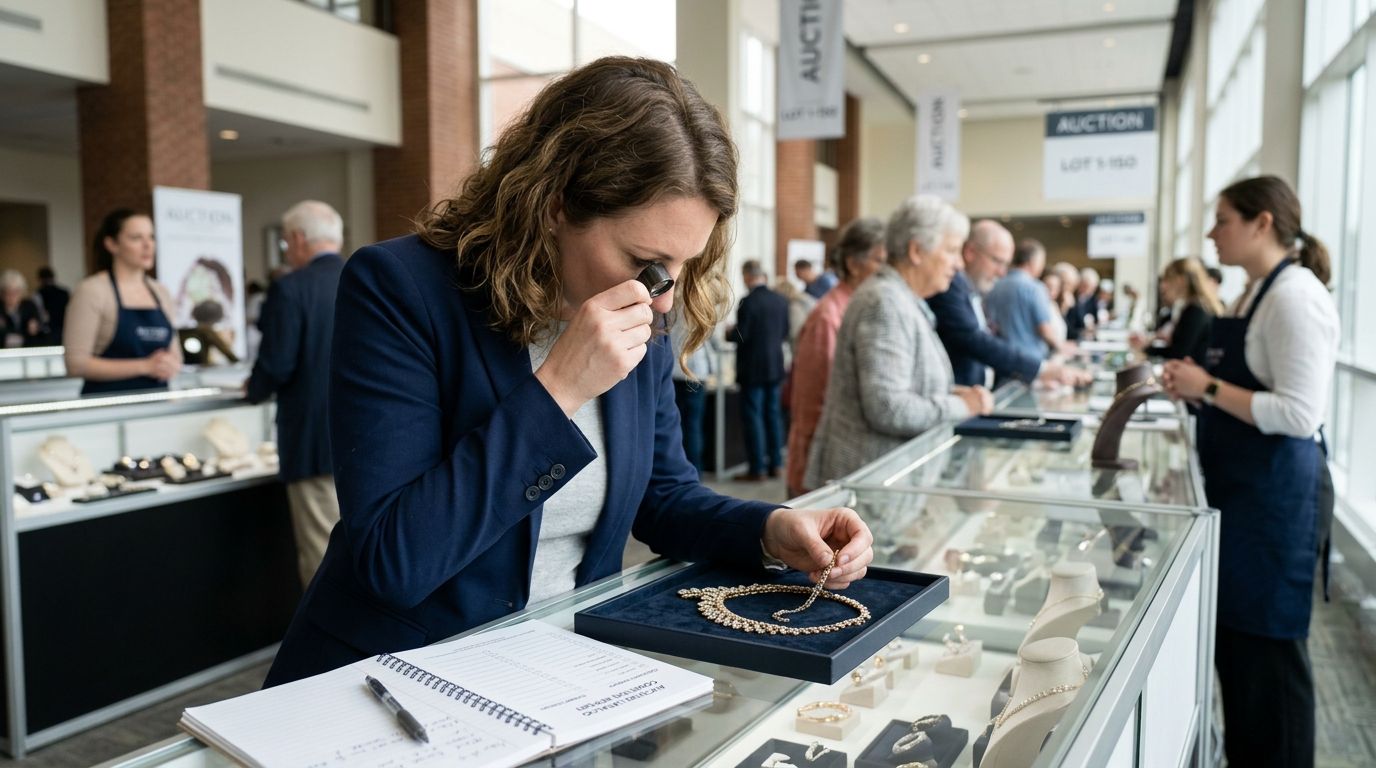
Getting a condition report before you bid is the single most reliable way to avoid a jewelry auction surprise: request it directly from the auction house's specialist team, in writing, before the lot closes, and insist it covers stone-by-stone condition, metal wear, and any repairs or replacements.
- A jewelry auction condition report lists stone damage, metal wear, prior repairs, and missing parts before you commit to a bid.
- Request it by email or the platform's messaging tool days before the lot closes in 2026 — last-minute requests go unanswered.
- A condition report is not a certification: it describes physical state, not gemstone grade or origin.
- Photos alone are not a condition report — insist on written notes plus close-up images under magnification.
- Jewelryroom.com publishes lot details and specialist contact points for buyers who want condition information before bidding.
Why this matters
Estate and vintage jewelry sold at auction almost never comes with a warranty. Once the hammer falls, the sale is final under nearly every auction house's terms — so the condition report is your only chance to catch a cracked prong, a re-tipped claw, or a resized shank before you are financially committed.
A seller's photo can hide a hairline crack in a sapphire or a replaced clasp on a bracelet. A written condition report closes that gap. For bidding tips for real buyers, the condition report is step one, not an afterthought — it should set your maximum bid, not confirm a decision you already made.
A condition report you read before bidding is due diligence. The same report read after winning is just paperwork.
How to get a condition report before bidding
Six steps that work for online and live jewelry auctions in 2026:
- Find the lot's specialist contact. Most catalog listings show a department email or messaging link beside the lot number.
- Send a specific written request. Ask for stone-by-stone condition (chips, surface-reaching fractures, cloudiness), metal condition (solder marks, replaced findings, thinning prongs), and documented repairs.
- Ask for close-up photos under magnification. A 10x loupe image shows recut facets and abrasions that standard product photography flattens out.
- Request confirmation of hallmarks. 750 for 18k gold, 585 for 14k gold, 925 for sterling silver — a missing or mismatched stamp changes what you are actually buying.
- Insist on a written reply. A phone summary gives you nothing to reference if the piece arrives different from the description.
- Compare the report against every catalog image before setting your ceiling. Discrepancies are your cue to ask again or walk away.
Send the request as soon as a lot interests you. A specialist has to physically examine the piece, so requests filed the morning a lot closes frequently get no answer at all. Cross-check the seller too — how to verify an auction house's reputation matters because a report is only as good as the house issuing it.
Review live lots before you bid
Browse current jewelry auction listings and lot details.
Condition report vs. certification vs. appraisal
These three documents get confused constantly, and bidders overpay because of it. Each answers a different question.
| Document | What it tells you | What it does not tell you | Best for |
|---|---|---|---|
| Condition report | Physical wear, repairs, replaced parts, chips | Gemstone grade, authenticity, market value | Deciding whether a piece needs restoration before you bid |
| Gemstone certification | Stone identity, grade, treatment disclosure | Whether the setting is worn or repaired | Confirming a stone is what the catalog claims |
| Appraisal | Estimated value for insurance or resale | Nothing about day-of-sale condition unless recent | Insuring or reselling a won lot |
Pros of relying on a condition report: it is usually free, it is specific to the exact lot, and it is written by someone holding the piece. Cons: it reflects one specialist's judgment, wording like "minor wear consistent with age" is subjective, and it says nothing about whether the stone is natural or treated. Pair it with gemstone certification research on any lot where the stone carries most of the value.
Why condition report detail varies
The gap between a thorough report and a thin one is often the gap between a safe bid and an expensive mistake. Six factors drive it:
- In-house specialist availability — houses with staff gemologists write more detailed reports than those outsourcing examination.
- Lot value — signed designer pieces and larger colored stones get fuller write-ups than low-estimate mixed lots.
- Auction format — live sales may offer viewing days instead of written reports; online-only sales depend entirely on the document.
- Age and category — Victorian, Edwardian, and Art Deco pieces carry more wear nuance than modern jewelry, so their reports should say more, not less.
- Lead time — a request sent days ahead gets a fuller answer than one sent hours before closing.
- Existing documentation — a lot with a current lab report needs less stone detail and more on setting and mounting condition.
What a condition report should actually say
Vague language is the warning sign. Compare what you want to read against what you should push back on.
| Useful wording | Vague wording to question |
|---|---|
| "Two prongs on the center stone show thinning; one re-tipped" | "Setting secure" |
| "Surface-reaching fracture on the crown, visible at 10x" | "Stone in good order" |
| "Clasp replaced, not original to the piece" | "Minor restoration" |
| "Shank resized, solder seam visible at 6 o'clock" | "Wear consistent with age" |
When a report uses the right column's language, reply and ask for specifics. A specialist who answers a follow-up question in writing is a good sign about the house; silence is also information.
Is a condition report the same as a gemstone certification?
No — a condition report describes physical wear and repairs, while a certification identifies and grades the stone itself. A lot can carry one, both, or neither, so ask about each separately in 2026. Treat the absence of a certification on a high-value colored stone as a price factor, not a formality.
Can I get a condition report for an online-only auction?
Yes — condition reports are standard practice for online-only jewelry auctions in 2026, because there is no viewing day to substitute for one. Request it through the platform's messaging system and specifically ask for magnified images, since online listings usually show only styled product photography.
What if the item doesn't match the condition report?
The remedy depends on the individual auction house's written terms of sale, which typically define a claims window for misdescribed lots. A written report gives you a documented reference point; a verbal assurance gives you nothing. Read the terms before bidding, not after.
Where condition reports change your bid math
A piece needing a re-tip, a new clasp, or a stone reset costs money after you win it. Factor restoration into your ceiling the same way you factor the buyer's premium — otherwise a "good deal" turns into a break-even one. How to set a budget for online jewelry auctions covers how to build that number before the lot opens.
Jewelryroom.com runs jewelry auctions where lot pages carry the detail and contact points buyers need to request condition information ahead of bidding. For first-time estate jewelry bidders in 2026, requesting a condition report on every lot over your comfort threshold is the highest-return habit you can build.
One last thing
Buyers who get burned rarely skip the condition report entirely — they skip reading it against the photos. A report noting "minor wear" next to an image showing a visibly bent shank is a mismatch, and mismatches are the cheapest warning you will ever get. Read the report line by line against every image before you set your ceiling.
“A condition report that only uses the phrase minor wear consistent with age has told you nothing — ask again.”
FAQ
What is a jewelry auction condition report?
A jewelry auction condition report is a written description of a lot's physical state — stone condition, metal wear, repairs, and missing parts — issued by the auction house before bidding closes. It is separate from any gemstone grading or authenticity certification.
How do I request a condition report before bidding?
Contact the auction house's specialist through the email or messaging link on the lot page and ask for stone-by-stone condition, metal wear, and repair history. Send it days before the lot closes, since a specialist has to physically examine the piece.
Is a condition report the same as a certification?
No. A condition report covers physical wear and repairs, while a certification identifies and grades the gemstone itself. A lot can have one, both, or neither, so ask about each separately.
What should a condition report include?
It should include stone-by-stone notes on chips and fractures, metal condition including solder marks and replaced findings, and confirmation of hallmark stamps such as 750, 585, or 925. Close-up photos under magnification should accompany the written notes.
Can I get a condition report for online-only jewelry auctions?
Yes, condition reports are standard for online-only jewelry auctions in 2026 because there is no in-person viewing day. Request one through the platform's messaging tool and ask for magnified images as well as written notes.
What happens if the item doesn't match the condition report after I win?
The remedy depends on the auction house's written terms of sale, which usually define a claims process for misdescribed lots. A written report before bidding gives you a documented reference point if the piece arrives differently described.
How much does a condition report cost?
Policies vary by auction house, so check the terms on the lot page or ask the specialist directly. Many houses treat a basic condition report as part of standard lot service for registered bidders.
How long before a lot closes should I request a condition report?
Request it as soon as the lot interests you, ideally several days before closing. Requests sent hours before a lot closes often go unanswered because a specialist needs time to examine the piece and photograph it.


