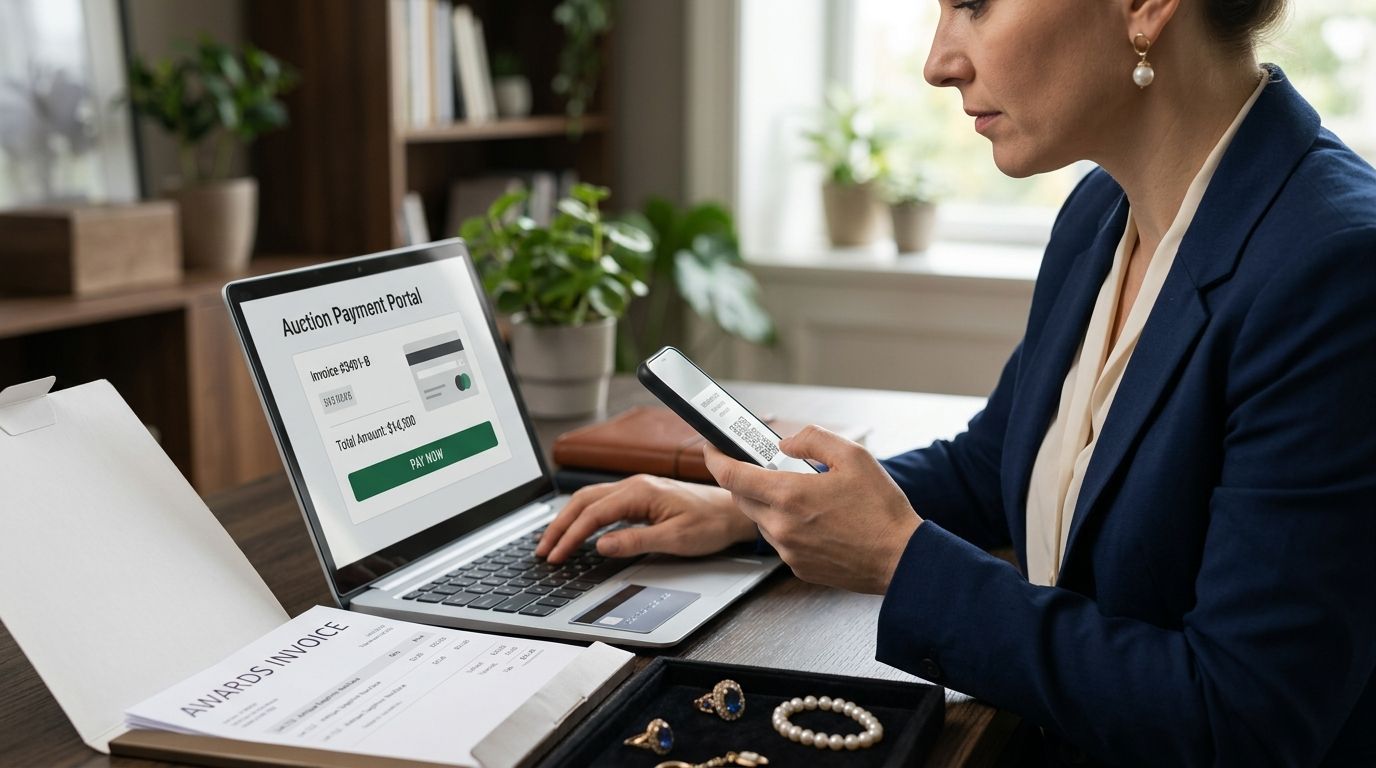
Paying a winning jewelry auction invoice means confirming the final total on your invoice, then settling it through whatever method the auction house accepts, usually wire transfer, credit card, or cashier's check, before the item ships. The invoice total is not always the hammer price alone; buyer's premium, sales tax, and shipping/insurance charges get added on top, and that combined figure is what you actually owe.
- Pay a jewelry auction invoice with wire transfer, credit card, or cashier's check, matched to whatever the invoice lists as accepted.
- The invoice total includes buyer's premium and often sales tax and shipping, not just the hammer price.
- Most auction houses require payment before the piece ships, and delays can trigger cancellation or relisting.
- Wire transfer clears fastest for large invoices; credit cards give buyers fraud protection on smaller ones.
- Confirm shipping and insurance terms the moment payment clears, not after.
Why this matters
A jewelry auction invoice is a legally binding payment obligation the moment your bid wins, not a suggestion. Miss the payment window and most auction houses reserve the right to cancel the sale, keep any deposit, and relist the piece — sometimes to the next highest bidder. Get the payment method wrong and you can lose days waiting for a bounced wire or a held card charge while the seller's patience runs out.
The mechanics are simple once you know the order of operations: confirm the total, pick the right method, pay inside the window, then track the shipment. Buyers who skip a step end up chasing refunds or re-authenticating pieces that already left the warehouse.
How to pay a winning jewelry auction invoice
- Confirm the invoice matches your winning bid. Check hammer price, buyer's premium, tax, and any shipping/insurance line items add up to the total shown.
- Check the accepted payment methods on the invoice itself. Not every house takes every method — some restrict wire transfer to invoices over a set threshold, others cap credit card payments.
- Pay inside the stated window. Auction houses commonly expect payment within a few business days of the invoice date, before the piece is packed for shipment.
- Save your payment confirmation. A wire receipt, card authorization code, or cashier's check tracking number is your proof if a dispute comes up later.
- Confirm shipping and insurance terms once payment clears. Don't assume the piece ships automatically — some houses hold items until funds settle, not just until payment is submitted. How to track shipping and insurance after winning an auction covers what to expect at this stage.
Payment methods compared
| Method | Speed | Buyer protection | Best for |
|---|---|---|---|
| Wire transfer | Same-day to next-day clearing | Low — no chargeback once sent | Large invoices, verified auction houses. Best for buyers who've vetted the seller. |
| Credit or debit card | Instant authorization | High — chargeback rights apply | Small to mid-size invoices where fraud protection matters. Best for first-time bidders. |
| Cashier's check | Slowest — mail plus clearing time | Moderate | Buyers without wire access or who want a paper trail. Best for patient buyers. |
| PayPal or escrow service | Fast | High — platform dispute process | Smaller transactions where an added layer of protection helps. Best for cautious buyers new to a house. |
Wire transfer wins on speed for large purchases but leaves you with no recall if something goes wrong — that's why verifying the auction house's standing before you send funds matters as much as the payment method itself. How to verify an auction house's reputation walks through what to check before wiring anything.
Why payment requirements vary
- Invoice size. Larger invoices often push buyers toward wire transfer because card processors cap high-value transactions.
- Buyer verification status. New or unverified bidders sometimes face stricter payment windows or method restrictions than repeat buyers.
- Domestic vs. international sale. Cross-border invoices frequently add currency conversion steps and longer wire clearing times.
- Authentication holds. Pieces flagged for gemological review may not ship until after payment clears and the report is issued.
- Shipping and insurance bundling. Some invoices roll insurance into the total; others bill it separately once you confirm a delivery method.
- Buyer's premium negotiation. A small share of buyers negotiate the premium before finalizing payment, which changes the invoice total outright — see how to negotiate a buyer's premium at jewelry auctions.
“The invoice total is the number that matters, not the hammer price — buyer's premium and tax turn a modest winning bid into a bigger payment than bidders expect.”
Track your shipment after payment
See what to confirm once your invoice clears and the piece ships.
What happens if you don't pay a jewelry auction invoice on time?
Late payment can trigger cancellation of the sale, forfeiture of any deposit already paid, and relisting of the piece to another bidder. Some houses charge a late fee or bar the buyer from future auctions on that platform. Reading the payment window on the invoice the day it arrives, not the day before it expires, avoids this entirely.
Can you pay a jewelry auction invoice with a credit card?
Credit card payment is accepted by many auction houses, but usually with a cap on invoice size before wire transfer becomes mandatory. Cards give the buyer chargeback rights the other methods don't, which matters for a first purchase from an unfamiliar seller. Check the invoice's accepted-methods line before assuming a card will work — some houses only take cards for smaller lots.
Is it safe to wire money to an auction house?
Wiring money to a verified, established auction house is standard practice and generally safe, but a wire sent to the wrong account or a fraudulent seller cannot be recalled. Confirm the receiving account details match the official invoice, not a follow-up email, before sending. How to verify an auction house's reputation is worth reading before the first large wire, not after.
Browsing active lots and checking each listing's stated payment terms before you bid is the simplest way to avoid a payment-window surprise on Jewelryroom.com, where invoice terms are listed alongside each lot.
FAQ
How do you pay a jewelry auction invoice?
You pay a jewelry auction invoice using whatever method the invoice lists as accepted, typically wire transfer, credit card, or cashier's check, and you settle the full total including buyer's premium and tax, not just the hammer price.
What is included in a jewelry auction invoice total?
A jewelry auction invoice total includes the hammer price plus buyer's premium, and often sales tax and shipping/insurance charges. The hammer price alone is rarely the number you actually owe.
How long do you have to pay a jewelry auction invoice?
Most auction houses expect payment within a few business days of the invoice date, before the item is packed for shipment. Check the specific deadline printed on your invoice rather than assuming a standard window.
What happens if you miss the payment deadline on an auction invoice?
Missing the deadline can lead to the sale being cancelled, a forfeited deposit, and the piece relisted to another bidder. Some houses also apply late fees or restrict future bidding privileges.
Can you negotiate the buyer's premium before paying an invoice?
Some buyers do negotiate the buyer's premium before finalizing payment, which lowers the invoice total. It is not guaranteed and depends on the auction house's policy and the size of the purchase.
Is a credit card or wire transfer better for paying an auction invoice?
Wire transfer clears faster for large invoices but offers no chargeback protection once sent. Credit card payment is slower to approve for big amounts but gives buyers dispute rights if something goes wrong.
Does the auction house ship the item as soon as payment is submitted?
Not always — many houses wait until payment fully clears, which can take longer than submission, especially for wire transfers or cashier's checks. Confirm the shipping trigger on your specific invoice.
Do you need insurance before paying a jewelry auction invoice?
Insurance is typically arranged after payment clears and before shipment, either bundled into the invoice or billed separately. Confirming coverage before the piece leaves the auction house protects against loss or damage in transit.
One last thing
The single most common payment mistake isn't the method, it's the timing: buyers read the invoice total, confirm it against their bid, and pay within the window — but they skip confirming the receiving account details against the official invoice before wiring. A follow-up email with slightly different routing numbers is the classic scam vector in 2026, and it costs buyers the entire invoice amount with zero recourse. Match the wire instructions to the invoice every single time, not to whatever email arrived last.


