
You can finance a jewelry auction purchase if an accepted credit payment or separately arranged loan lets you pay the auction invoice by its deadline. Approval alone is not enough: confirm the payment method, funding timing, borrowing terms, and any auction charges before you bid.
- To finance a jewelry auction purchase, confirm lender approval and auction payment acceptance before bidding.
- Credit cards, personal loans, and installment financing have different repayment terms; compare total repayment, not just installments.
- Jewelryroom.com jewelry auction buyers should verify current payment terms rather than assume financing is offered.
- Set your maximum bid after allowing for applicable auction charges and borrowing costs.
Why this matters
Winning an auction and arranging credit are separate commitments. An auction's payment deadline does not automatically change because your lender needs more information or has not released funds.
Before bidding at Jewelryroom.com, check the current auction terms and ask which payment methods apply to your purchase. A financing plan only works when the auction accepts the resulting payment and receives it on time.
For a 2026 purchase, use current auction instructions and current lending disclosures. An old payment screenshot or a previous loan approval does not establish the terms for your next bid.
Can you finance a jewelry auction purchase?
Yes, provided you arrange a compatible source of credit before the invoice becomes due. That can mean using an accepted credit card, paying with proceeds from a personal loan, or using an installment arrangement that explicitly covers the transaction.
There are 2 separate agreements to examine: the auction purchase agreement and the credit agreement. Neither replaces the other. A lender's willingness to lend does not establish what an auction accepts, and an accepted payment method does not establish your eligibility for credit.
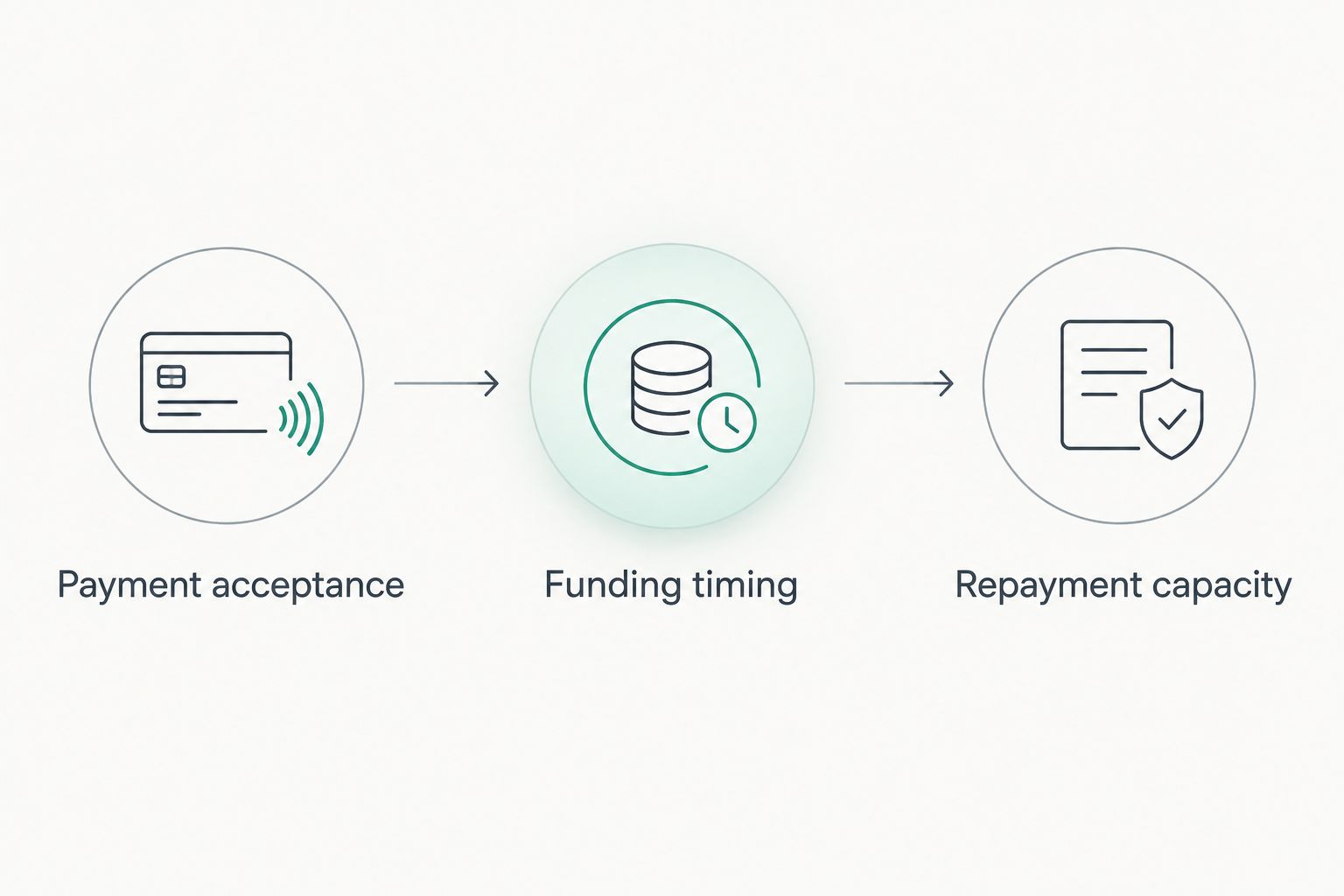
Use these 3 checks before bidding:
- Payment acceptance. Ask whether the auction accepts your intended payment method for the specific lot and invoice. Confirm any transaction restrictions, identity checks, or requirements for the payer's name.
- Funding timing. Establish when the money becomes usable and when the auction must receive payment. Distinguish an application decision from funds actually reaching your account.
- Repayment capacity. Read the credit agreement and test the scheduled payments against your existing obligations. Keep borrowing charges separate from the amount you can spend on the jewelry itself.
If any check remains unresolved, wait. Do not place a bid that depends on credit you cannot yet use.
Which financing route fits your payment deadline?
The table compares financing structures, not offers from a particular auction or lender. Each route requires its own approval and acceptance checks.
| Financing route | Best for | Main advantage | Main limitation | Verify before bidding |
|---|---|---|---|---|
| Credit card | Buyers with an accepted card and a repayment plan | Uses an existing credit account | Carrying a balance can add interest | Acceptance, usable credit, and purchase terms |
| Personal loan | Buyers who need funds in their bank account before paying | Separates borrowing from auction checkout | Approval and disbursement are separate steps | Net proceeds, funding date, and repayment terms |
| Installment financing | Buyers whose specific transaction qualifies | Divides repayment into scheduled installments | Eligibility is transaction-specific | Auction compatibility and final agreement |
| Auction-arranged payment plan | Buyers with a written arrangement from the auction | Sets out a transaction-specific payment schedule | Must not be assumed from general auction access | Written approval, deadlines, and release conditions |
No route wins simply because its installment looks smaller. Compare the amount borrowed, all required payments, applicable fees, and the consequences of missing a payment.
Credit cards: confirm acceptance before relying on credit
A credit card is a financing route only when the auction accepts it for your transaction and the issuer authorizes the payment. Having enough unused credit does not, by itself, confirm either condition.
Best for: buyers with an accepted card who can follow a defined repayment plan. The advantage is that you can use an existing account rather than arrange a separate loan. The drawback is that interest and other applicable charges can increase what you repay if you carry the balance.
Check the card agreement's purchase terms, grace-period conditions, and any promotional conditions. Ask whether the auction applies a payment-method charge, and include any confirmed charge in your spending limit.
For a 2026 auction, verify acceptance directly instead of relying on a card logo in an old listing. Do not assume that using a credit card creates an unconditional right to cancel an auction purchase or guarantees a successful dispute.
Personal loans: distinguish approval from usable funds
A personal loan can provide funds that you then use through an auction-approved payment method. The practical question is whether the net proceeds reach your account before you need to send payment.
Best for: buyers who can arrange funding before bidding and understand the full repayment obligation. The advantage is that the auction payment does not have to use a lender's checkout integration. The drawback is that loan processing, verification, and disbursement introduce separate timing requirements.
Compare the annual percentage rate, required payments, loan term, and any origination or early-repayment provisions. If a fee is deducted from the proceeds, verify that the amount reaching your account covers your intended payment.
Do not treat an eligibility estimate as completed funding. Read the final agreement and confirm the actual disbursement status before committing to an auction purchase.
Installment financing: eligibility must cover the transaction
Installment financing divides repayment according to a credit agreement. Access to an installment service elsewhere does not prove that it supports a particular jewelry auction invoice.
Best for: buyers whose specific purchase qualifies under a confirmed installment agreement. Scheduled payments can make the repayment timetable explicit. The limitation is that the merchant, transaction, amount, and borrower must satisfy the provider's applicable conditions.
Read whether the agreement charges interest, imposes fees, or changes treatment after a missed payment. Distinguish a genuine introductory interest rate from deferred-interest terms; the written agreement determines what happens when the promotional conditions are not met.
For Jewelryroom.com jewelry auctions, verify the actual payment instructions rather than assuming an installment provider is integrated. A financing advertisement is not confirmation that your invoice can be paid through that provider.
Auction-arranged payment plans: get the agreement in writing
An auction-arranged payment plan is relevant only when the auction explicitly agrees to one. Do not infer permission to pay later from registration approval, bidding access, or a discussion that never became a written agreement.
Best for: buyers with a transaction-specific arrangement confirmed before bidding. Its advantage is a defined schedule agreed with the auction. Its limitation is that the schedule, cancellation consequences, and release of the jewelry depend on the actual terms.
Ask when each payment is due, when ownership and possession transfer, and what happens if a payment fails. Confirm whether any deposit is refundable and whether the arrangement changes other purchase conditions.
Keep the written terms with your invoice. If the agreement does not answer a material question, resolve it before placing a bid rather than filling the gap with an assumption.
Why financing terms vary
Your borrowing terms and the auction's payment rules come from different sources. For a 2026 comparison, use the disclosures attached to the actual credit offer and the terms attached to the actual sale.
- Borrower eligibility. A lender's underwriting determines whether you qualify and which terms it offers. Another buyer's approval is not evidence of your eligibility.
- Credit structure. Revolving credit, a personal loan, and an installment agreement calculate repayment differently. Compare the written obligations rather than their labels.
- Repayment length. A longer schedule spreads payments further apart in time but does not establish lower total borrowing costs. Review total repayment alongside the installment amount.
- Fees and interest. Origination charges, purchase interest, late fees, and promotional conditions matter when they appear in your agreement. Do not assume that every product includes the same charges.
- Auction payment conditions. Accepted methods, invoice deadlines, and any payment restrictions determine whether the funding route works for the purchase.
- Funding and settlement. Loan approval, fund disbursement, payment initiation, and receipt by the auction are distinct events. Match the required event to the invoice deadline.
How do you set a bid limit when borrowing?
Set 1 maximum bid from your spending limit, not from the amount a lender approves. Credit approval measures access to borrowing; it does not tell you what a particular piece is worth to you.
Start with the amount you can repay without depending on a future resale. Then allow for applicable buyer's premium, tax, delivery, insurance, and any confirmed payment charges before determining how much remains for the bid itself.
Use the guide to setting a budget for online jewelry auctions to separate your bidding limit from the full purchase commitment. Keep borrowing costs visible as a separate part of the decision.
For your 2026 bidding worksheet, record:
- Your maximum auction payment, including applicable charges.
- The amount you intend to borrow and any cash contribution.
- The required repayment schedule and total repayment shown in the agreement.
- The payment deadline and confirmed funding status.
- A stop-bidding instruction that does not change during competition.
An affordable installment does not make an inflated bid sensible. Keep condition, authenticity documentation, and your intended use in the decision even after financing is approved.
Can I bid before my financing is approved?
Complete the 3 checks first: payment acceptance, funding timing, and repayment capacity. Bidding before those checks are complete leaves the purchase dependent on an unresolved credit decision.
For a Jewelryroom.com purchase, confirm both the relevant auction terms and your lender's final requirements. If the funding fails, do not assume that the bid or payment obligation disappears; the auction agreement determines your obligations.
Does financing let me return auction jewelry?
The 2 separate agreements still apply: financing terms govern borrowing, while the auction's terms govern the purchase and any return rights. Taking out credit does not itself create a return policy.
If a return is authorized, establish how the refund is processed and how it affects the credit balance. Follow the lender's payment instructions while the matter is being resolved rather than assuming scheduled repayments have stopped.
FAQ
Can I finance a jewelry auction purchase with a credit card?
Yes, if the auction accepts your card for the transaction and the issuer authorizes payment. Confirm acceptance, usable credit, applicable charges, and repayment terms before bidding.
Does Jewelryroom.com offer financing for auction purchases?
Confirm current financing and payment options directly with Jewelryroom.com before bidding. Do not treat access to an auction or a payment method as confirmation of a financing offer.
Is a personal loan better than a credit card for auction jewelry?
Neither is automatically better; compare the actual repayment terms and whether the funds meet the auction's deadline. A personal loan requires disbursement, while a card requires acceptance and transaction authorization.
Can I use installment financing after I win a jewelry auction?
Only rely on installment financing when the specific invoice and payment method qualify. Confirm eligibility before bidding rather than expecting approval after winning.
What happens if my loan is declined after I win?
A loan decline does not automatically cancel your auction purchase obligations. Read the auction terms and contact the auction promptly about the unpaid invoice.
Should I borrow based on an auction appraisal?
Do not use an appraisal alone to decide how much to borrow. An appraisal does not guarantee resale proceeds or provide the money needed for loan repayments.
What should I check before financing jewelry at auction in 2026?
Check payment acceptance, usable funding, the invoice deadline, and the complete repayment agreement. Set a maximum bid that allows for applicable auction charges and borrowing costs.
One last thing
Your financing limit is not your bidding limit. Write down the auction payment deadline beside the date your funding becomes usable; if the dates do not work, the financing route does not work.
Keep repayment independent of the jewelry's future resale. You should be able to explain how you will repay the debt without assuming appreciation, a quick buyer, or a successful return.