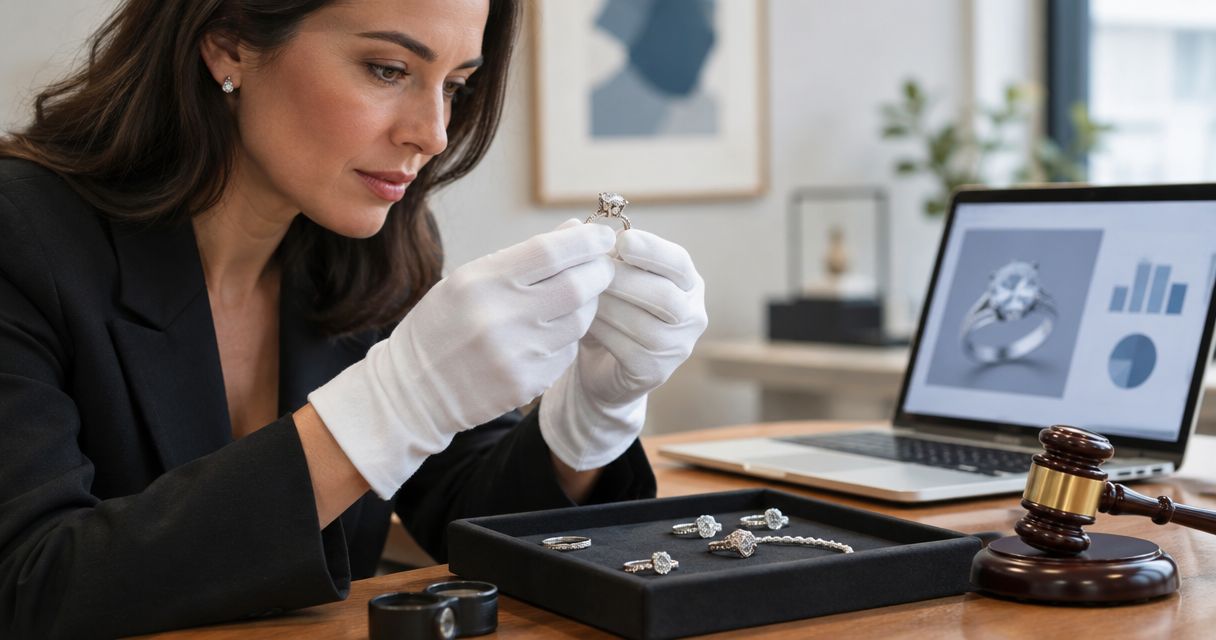
Yes, it is safe to buy an engagement ring at auction when you verify the ring’s identity and condition, assess the seller, and accept the written sale terms before bidding. The main risks are undisclosed damage, misunderstood gemstone descriptions, and purchase terms that leave you responsible for repairs or limit your options if something goes wrong.
- It is safe to buy engagement ring at auction only after checking identity, condition, seller credibility, and sale terms.
- A gemstone grading report does not establish the condition of an entire engagement ring.
- Jewelryroom.com jewelry auctions require the same lot-by-lot checks as any auction purchase.
- Skip a ring when essential questions remain unanswered before bidding closes.
Is it safe to buy an engagement ring at auction?
Auction buying is safe when the evidence supports the specific ring—not simply because the auction website looks credible. You need to establish what the ring is, whether it is suitable for wear, and what happens if the delivered item differs from its description.
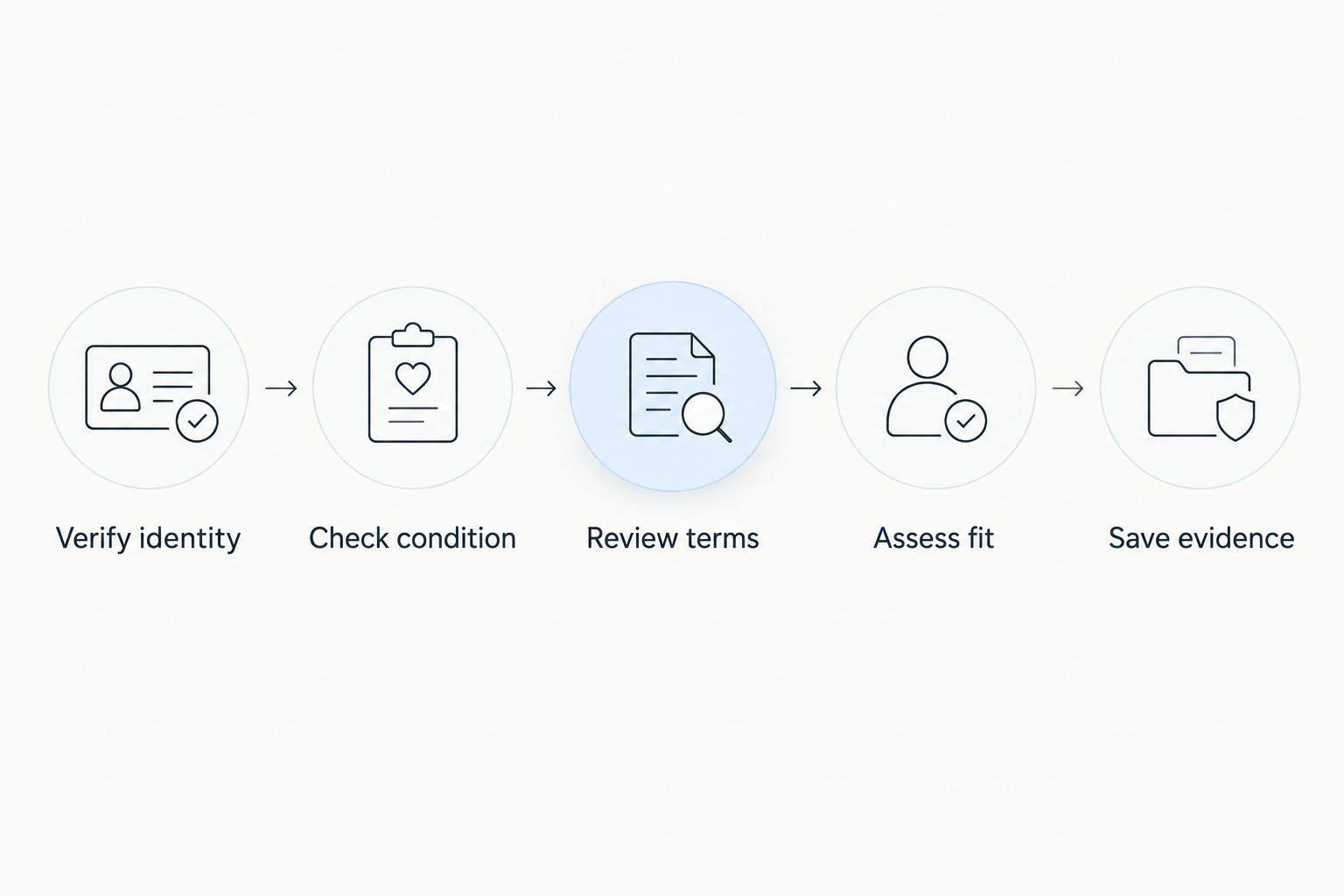
Use this 2026 buying checklist before committing:
- Verify identity. Establish the gemstone type, natural or laboratory-grown status, disclosed treatments, and metal description.
- Check condition. Request a written assessment of the stone, prongs, setting, band, and previous repairs.
- Review terms. Read payment requirements, additional charges, delivery arrangements, and the process for reporting discrepancies.
- Assess fit. Confirm the current ring size and ask a qualified jeweler whether the design permits the adjustment you need.
- Save evidence. Keep the listing, photographs, reports, seller answers, and applicable terms together.
Start with how to get a condition report before bidding. Request it early enough to read the response and ask follow-up questions without a closing countdown influencing your decision.
Why this matters
An engagement ring is both a purchase and an object intended for repeated wear. A genuine gemstone does not make a damaged setting secure, and an attractive ring does not establish that resizing is practical.
Your 2026 purchase decision should separate authenticity, wearability, and contractual protection. Evidence that answers one question does not automatically answer the others. Treat every unanswered essential question as a reason to pause.
Which documents actually protect your decision?
Different documents serve different purposes. Ask what each document covers and whether it describes the exact stone or ring in the auction lot.
| Evidence | Best for | Main benefit | Important limitation |
|---|---|---|---|
| Gemstone grading or identification report | Buyers checking gemstone identity and stated characteristics | Records the findings within the laboratory’s stated scope | Does not establish the whole ring’s present condition |
| Written condition report | Buyers assessing wear and repair needs | Describes observed damage, wear, and other condition issues | Scope and inspection methods differ; read qualifications |
| Appraisal | Buyers needing a valuation for a stated purpose | Connects an assessment to a valuation purpose and date | A valuation is not a promise of resale proceeds |
| Independent physical inspection | Buyers needing an assessment of the actual ring | Lets a professional examine the stone and setting together | Requires access and does not replace the sale terms |
These are complementary forms of evidence, not interchangeable guarantees. A listing with an appraisal still needs a clear gemstone description and a useful condition assessment.
How do you verify an auction engagement ring?
Read the description literally. Words such as diamond, laboratory-grown diamond, simulant, gold, and gold-plated identify materially different things; do not substitute your preferred interpretation for the seller’s wording.
Ask whether the stated weight belongs to the center stone or represents the combined weight of multiple stones. 1 carat equals 200 milligrams, but a weight figure alone does not tell you the stone’s diameter, quality, or identity. A mounted stone’s stated weight also needs clarification if it is described as estimated.
Metal descriptions need the same attention. 18-karat gold contains 75% gold by mass, while 14-karat gold contains approximately 58.3%. Those fineness descriptions do not establish the ring’s condition, maker, or whether a visible mark is genuine.
If a laboratory report accompanies the lot, compare its identifying details with the listing. Use the issuing laboratory’s own verification facility when available, and ask about discrepancies in shape, measurements, weight, or report number.
A matching report record is useful evidence, not proof that the photographed or delivered stone is the one examined. Where identification remains uncertain, arrange professional inspection rather than relying on an uploaded document alone.
What condition problems should you check before bidding?
Request clear views of the ring from above, both sides, and underneath. Ask for close photographs of the prongs, the lower band, and any area identified as repaired or damaged.
Your condition questions should cover:
- Stone damage: Ask about chips, abrasions, fractures, and visible damage near the stone’s edge.
- Setting security: Ask whether stones are loose and whether prongs are worn, bent, missing, or repaired.
- Band wear: Ask about thinning, cracks, distortion, and previous sizing work.
- Previous alterations: Ask about replacement stones, rebuilt settings, solder joins, and other disclosed changes.
- Wearability: Ask whether the ring needs work before normal use and whether a jeweler has assessed that work.
A photograph can reveal a concern, but it cannot establish everything about structural condition. Reflections can conceal surface details, and a face-up view says little about the underside of a setting.
Do not interpret the absence of a damage statement as a clean condition report. Ask directly. If the seller cannot answer a question that determines whether you would buy the ring, leave the lot alone.
Can you resize the ring after winning?
Resizing feasibility depends on the construction, metal, stone placement, condition, and amount of adjustment. A band with stones around its circumference presents different work from a plain lower band; neither should be assessed from ring size alone.
Give a jeweler the current size, required size, photographs, and available condition information before bidding. Do not buy on the assumption that every engagement ring can be resized. If inspection is necessary to decide, treat feasibility as unresolved until that inspection happens.
Why engagement ring auction safety varies
Auction safety varies with the evidence and terms attached to the individual transaction. Use these factors to decide whether a particular lot meets your requirements:
- Description precision: Explicit gemstone identity, metal details, measurements, and treatment disclosures reduce ambiguity.
- Inspection access: Physical examination provides information that photographs and written answers cannot fully replace.
- Condition detail: Specific observations about damage and repairs are more useful than a general description such as good condition.
- Seller accountability: Identifiable business details, consistent written answers, and a clear complaint process help you assess whom you are dealing with.
- Contract terms: The grounds, deadlines, and procedure for a claim determine what action you must take if something is wrong.
- Delivery responsibility: Written shipping, loss, damage, and insurance arrangements clarify responsibility while the ring is in transit.
For a 2026 purchase, read the terms attached to that sale rather than relying on an earlier transaction or a remembered policy. Save the version that applies when you bid.
How do you check the seller and payment instructions?
Confirm the business identity and contact details through the auction platform’s established channels. Read independent feedback for repeated complaints about descriptions, delivery, or dispute handling rather than treating a single enthusiastic review as decisive.
Compare the invoice with the lot you won. Verify the lot identifier, item description, payment recipient, and any additional charges before paying. Unexpected changes to payment instructions deserve direct confirmation through a contact method you already trust.
Do not assume a payment method guarantees reimbursement. Read the applicable provider’s eligibility rules and exclusions, and understand the auction’s payment requirements before bidding. A seller’s promise and a payment provider’s protection are separate matters.
What should you check in the auction terms?
Read beyond the headline return statement. Distinguish a change-of-mind return from a claim that an item was materially misdescribed, and identify the evidence and notification procedure each requires.
Check whether the sale terms address:
- The point at which a bid becomes binding.
- Additional charges beyond the successful bid.
- Payment deadlines and accepted methods.
- Collection, dispatch, transit protection, and delivery responsibility.
- The procedure for reporting damage or a description discrepancy.
- Any requirement to preserve the ring unchanged while a claim is assessed.
A premium, tax, delivery charge, or repair requirement affects your total commitment even though it says nothing about authenticity. Establish those obligations before choosing your bidding limit. Do not infer affordability from the bid displayed on screen.
Who should consider Jewelryroom.com jewelry auctions?
Jewelryroom.com suits auction buyers prepared to verify each engagement ring before bidding. The auction format is relevant when you want to assess a particular lot and are willing to read its documentation and terms.
The benefit is the opportunity to evaluate an individual ring rather than choose solely by a standardized product description. The limitation is the work: you must establish condition, fit, and purchase obligations for that specific transaction. Do not infer a guarantee, return right, or laboratory report from the platform name.
If that process fits how you want to shop, use Jewelryroom.com as a starting point. Apply the same evidence standard there that you would apply to any other jewelry auction.
Can you return an engagement ring bought at auction?
Auction returns depend on the applicable sale terms and legal rights, not on a general rule that every auction purchase is returnable. Read the distinction between buyer’s remorse and an item that does not match its description.
Before a 2026 bid, locate the notification procedure and any stated deadline. If the terms do not answer your concern, request clarification in writing before participating.
Is a diamond report enough to make the purchase safe?
A diamond report is not enough to establish that an entire engagement ring is safe to buy. It addresses the gemstone within its stated scope, not every issue involving setting security, band wear, fit, delivery, or sale terms.
Pair gemstone evidence with a condition assessment and transaction review. If the report and listing disagree, resolve the discrepancy before bidding.
What should you do when the ring arrives?
Compare the delivered ring with the saved listing and documents promptly. Preserve the packaging, invoice, and delivery records, and photograph anything that appears damaged or inconsistent.
Arrange a qualified jeweler’s inspection before wearing a ring whose structural condition remains uncertain. If you identify a possible discrepancy, follow the seller’s written notification procedure and preserve the evidence before authorizing resizing, polishing, or repairs.
FAQ
Is it safe to buy an engagement ring at auction in 2026?
Yes, buying an engagement ring at auction in 2026 is safe when you verify identity, condition, seller credibility, and sale terms before bidding. Skip a lot when an unanswered question could change your purchase decision.
Can an auction engagement ring be fake even if it has paperwork?
Paperwork alone does not prove that an auction engagement ring matches its description. Check the document’s scope and identifying details, and arrange professional examination when identity remains uncertain.
Does a diamond grading report cover the setting?
A diamond grading report does not establish the setting’s present condition. Request a separate condition assessment covering prongs, band wear, repairs, and stone security.
Can I resize any engagement ring bought at auction?
Not every engagement ring is suitable for the resizing you need. Ask a qualified jeweler to assess the construction, metal, stone placement, condition, and required adjustment before bidding.
What should I check before bidding at Jewelryroom.com?
Check the individual ring’s description, available reports, condition information, size, and applicable sale terms before bidding at Jewelryroom.com. Do not assume that a particular document or purchase protection applies unless it is stated.
Should I wear an auction ring as soon as it arrives?
Do not wear an auction ring immediately if its structural condition is uncertain. Have a qualified jeweler check stone security and setting condition, and preserve evidence if the ring appears inconsistent with its description.
One last thing
Ask which claim in the listing you would be unable to verify after winning. That question exposes the weakest part of the purchase before you commit. If the answer involves gemstone identity, wearability, or a right you consider essential, resolve it before bidding—not after the ring arrives.