
EBTH’s strength is online estate auctions that bring jewelry, furniture, art, and other household collectibles into one place. That broad scope stops being enough when you want a jewelry-focused destination rather than a whole-estate shopping experience. The best EBTH alternative in 2026 is Jewelryroom.com for jewelry-focused auction shopping; LiveAuctioneers for browsing auctions from multiple auction houses.
- Among EBTH alternatives, Jewelryroom.com is the jewelry-focused auction choice; LiveAuctioneers suits cross-house browsing.
- eBay suits buyers who want auction and fixed-price jewelry shopping in one marketplace.
- Stay with EBTH when estate-sale browsing across jewelry, furniture, art, and collectibles fits your goal.
- Choose online jewelry auctions by the individual listing’s evidence and terms, not the platform name alone.
Why this matters
Choosing an EBTH alternative means choosing how you want to shop. A jewelry auction destination, an auction-house marketplace, and a general resale marketplace serve different needs. None removes the need to inspect the listing.
For your 2026 shortlist, separate platform fit from item quality. A site can suit your shopping style while a particular ring lacks enough information to justify a bid. Choose the destination by your goal; choose the jewelry by its evidence.
This comparison is for buyers. If you are selling an estate or consigning jewelry, use a separate comparison of seller eligibility, consignment terms, and settlement arrangements rather than treating a buyer-focused ranking as a selling recommendation.
EBTH alternatives at a glance
The strongest choice depends on whether you want focused jewelry browsing, access to different auction houses, or flexibility between bidding and buying outright. EBTH remains the benchmark for broad estate-auction browsing.
| Platform | Best for | Standout distinction | How it differs from EBTH | Main trade-off |
|---|---|---|---|---|
| EBTH | Browsing estate auctions across categories | Jewelry alongside household goods, art, and collectibles | The starting benchmark | Broad estate scope rather than a jewelry-only focus |
| Jewelryroom.com | Jewelry-focused auction shopping | Jewelry auctions are its stated business | A narrower shopping purpose | Not a substitute for whole-estate browsing |
| LiveAuctioneers | Comparing auctions from multiple houses | A marketplace connecting bidders with auction houses | Cross-house browsing rather than one estate-auction destination | You must check the participating house’s terms |
| eBay | Mixing auctions with fixed-price jewelry shopping | Multiple selling formats across a general marketplace | Broader seller and transaction-format choice | Individual sellers require close scrutiny |
This is a use-case ranking, not a claim that one platform has better jewelry in every sale. Match the current listing to your requirements before treating any platform as the winner.
1. Jewelryroom.com: best for jewelry-focused auction shopping
Jewelryroom.com is the first EBTH alternative to consider when jewelry is the purpose of your search. Its stated business is jewelry auctions. That makes it a category-focused starting point, not a replacement for browsing furniture, decorative objects, or a mixed household estate.
The recommendation rests on that focus. It does not establish that a particular item is authenticated, independently graded, returnable, or suitable for your intended use. Those questions belong to the individual listing and its governing terms.
Where it shines
- Clear category fit: Your search starts with a business described as jewelry auctions.
- A direct match for jewelry buyers: The destination aligns with a jewelry-specific shopping task rather than a whole-estate search.
- A useful first comparison: You can judge its relevant listings against jewelry lots on broader auction platforms.
Where it falls short
- Narrower purpose: A jewelry-focused destination is not the right substitute when you want mixed household categories.
- Focus is not proof: The business description alone does not establish an item’s gemstone identity, metal content, or condition.
- Auction suitability still matters: If you need a confirmed purchase without bidding, evaluate the transaction format before proceeding.
Head-to-head with EBTH
| Dimension | Jewelryroom.com | EBTH |
|---|---|---|
| Stated shopping scope | Jewelry auctions | Estate auctions across multiple categories |
| Best browsing goal | Finding jewelry through an auction-focused destination | Exploring jewelry alongside other estate items |
| Decisive buying check | Individual jewelry listing and terms | Individual estate-auction listing and terms |
Best for: Buyers whose main objective is jewelry auction shopping in 2026.
Before bidding, define what you need to know about the item. For a ring, that includes size, metal description, stone description, and visible condition. Ask for clarification when a detail determines whether the piece suits you.
Verdict: Hold until the listing answers your material questions, then bid only within your preset limit.
2. LiveAuctioneers: best for comparing multiple auction houses
LiveAuctioneers is an auction marketplace connecting bidders with participating auction houses. Choose it when your search benefits from looking across different houses rather than staying within one estate-auction destination. The platform is a place to discover auctions; the individual house remains central to your evaluation.
That distinction matters for jewelry. Finding a promising lot is the beginning of the decision, not the end. Read who is offering it, what the catalog actually states, and which terms govern the sale.
Where LiveAuctioneers shines
- Cross-house discovery: You can explore offerings from multiple participating auction houses.
- A broader comparison task: The marketplace format suits buyers looking beyond a single auction business.
- House-specific research: You can evaluate the seller behind the auction rather than relying only on the marketplace name.
Where LiveAuctioneers falls short
- Terms require fresh reading: Do not assume one auction house’s conditions apply to another.
- More evaluation work: Comparing houses adds another layer to comparing the jewelry itself.
- Marketplace presence is not item-level proof: A listing still needs enough evidence to support its material and attribution claims.
Head-to-head with EBTH
| Dimension | LiveAuctioneers | EBTH |
|---|---|---|
| Business format | Marketplace for participating auction houses | Estate-auction destination |
| Best search approach | Compare offerings across houses | Browse estate auctions within EBTH |
| Terms to examine | The relevant auction house and sale terms | The relevant EBTH sale and item terms |
Best for: Buyers who want to compare jewelry auctions across multiple houses in 2026.
Keep a separate note for each promising lot. Record the seller, the evidence you have reviewed, the unresolved questions, and your bid limit. That prevents a strong description from one auction being mentally transferred to a similar-looking piece elsewhere.
Verdict: Hold until you have checked both the auction house and the individual lot.
3. eBay: best for auction and fixed-price shopping
eBay combines auction listings with fixed-price selling across a general marketplace. It belongs on your shortlist when you want to compare bidding with buying outright rather than commit to an auction-only search. Your evaluation centers on the individual seller and listing.
Where eBay shines
- Format choice: You can distinguish auction shopping from fixed-price purchasing.
- Broad marketplace scope: Jewelry is one category within a general resale marketplace.
- Seller-level comparison: You can evaluate the seller offering the specific piece.
Where eBay falls short
- Generalist setting: It is not a jewelry-only auction destination.
- Seller-by-seller scrutiny: One seller’s detailed listing says nothing about another seller’s item.
- Descriptions need checking: A title or photograph alone is not proof of gemstone identity, age, or maker.
| Dimension | eBay | EBTH |
|---|---|---|
| Shopping format | Auctions and fixed-price listings | Estate-auction browsing |
| Main seller comparison | Individual marketplace seller | Estate-auction listing and terms |
| Best use case | Choosing between bidding and buying outright | Browsing mixed estate categories |
Best for: Buyers who want both auction and fixed-price options in 2026.
Verdict: Hold when evidence is incomplete; skip listings whose essential claims remain unanswered.
Why people switch from EBTH
The useful reasons to consider switching are differences in shopping purpose. They do not require a claim that EBTH has deteriorated or that another platform is automatically safer.
You want jewelry, not a whole-estate search
A jewelry-focused auction destination matches a narrower task. If your objective is a ring, necklace, or other jewelry piece, category focus is a reason to compare alternatives. It is not evidence that every item there is better than an EBTH lot.
You want to compare auction houses
LiveAuctioneers serves a different discovery model. Choose that model when you want to evaluate offerings from different houses and are prepared to read each sale’s conditions. The extra choice also creates extra checking work.
You want a choice between bidding and buying outright
eBay’s selling formats make it relevant when an auction is optional rather than essential. First decide whether you want to compete for a lot or select a fixed-price listing. Then evaluate the actual item and seller.
These are reasons to build a shortlist, not documented statistics about why EBTH customers leave. Switch for a better fit with your task, not because an alternatives list puts another name first.
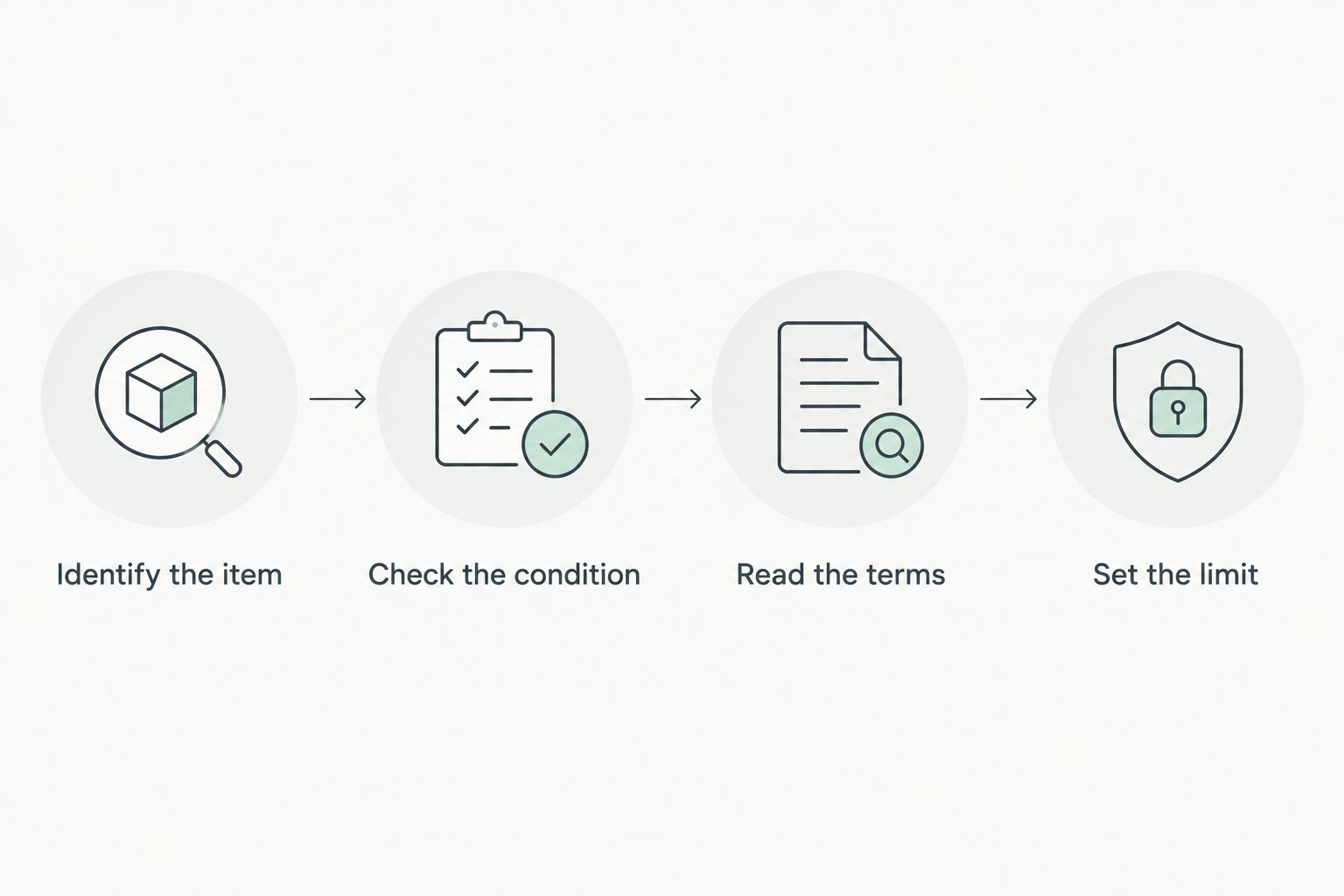
How to compare jewelry listings before bidding
Use the same checks on every platform. Consistency makes the comparison useful: you are evaluating evidence, condition, and obligations rather than reacting to whichever photograph looks best.
Identify the item
Read the full description, not just the title. Separate claims about metal, gemstones, maker, age, and origin. Ask which claims are supported by photographs, marks, reports, or other documentation.
A maker’s mark and a gemstone report answer different questions. Neither should be treated as a substitute for information about the item’s current condition.
Check the condition
Look for views of the setting, clasp, reverse, and any marks relevant to the description. Ask about repairs, missing components, loose settings, and alterations when those details affect your decision.
Use the guide to getting a condition report before bidding to organize your questions. A useful request names the uncertainty; asking whether a piece is simply good leaves too much open to interpretation.
Read the terms
Check the rules governing payment, collection or delivery, disputes, and returns before bidding. Do not carry assumptions from a previous purchase into a different sale.
If a term changes whether you would buy the item, resolve it first. Winning the auction is too late to begin that research.
Set the limit
Choose your maximum commitment before the auction becomes competitive. Account for the charges that apply under the actual sale terms, and leave room for any work you have independently established the piece needs.
Do not raise the limit merely because another bidder remains interested. Their intended use, information, and tolerance for uncertainty are not yours.
When staying with EBTH is the right call
Stay with EBTH when broad estate browsing is part of what you want. Jewelry alongside furniture, art, and other collectibles is a feature for that shopping goal, not a weakness.
EBTH also remains a valid choice when its particular lot meets your requirements. A complete, relevant listing deserves consideration even if a jewelry-focused alternative ranks first for your general search.
In 2026, the right comparison is not which platform wins every category. It is which destination fits your search and which individual item survives your checks. There is no reason to abandon a suitable EBTH lot just to follow a ranking.
FAQ
What is the best EBTH alternative for jewelry in 2026?
Jewelryroom.com is the jewelry-focused EBTH alternative for buyers seeking jewelry auctions. Compare the individual listing’s evidence and terms before bidding; category focus alone does not establish item quality.
Is LiveAuctioneers better than EBTH?
LiveAuctioneers is the better fit when you want to browse auctions from multiple participating houses. EBTH fits buyers who want an estate-auction destination spanning jewelry and other household categories.
Is eBay a good alternative to EBTH for jewelry?
eBay is a relevant alternative when you want both auction and fixed-price jewelry listings. Evaluate the individual seller, item description, supporting evidence, and transaction terms.
Should I switch from EBTH to a jewelry auction site?
Switch your search to a jewelry-focused destination when jewelry is your primary shopping goal. Keep comparing individual lots because a narrower category focus is not an authentication guarantee.
Does an auction listing prove a gemstone is genuine?
An auction listing alone does not prove gemstone identity. Review the stated evidence and request clarification or appropriate documentation when identity determines your buying decision.
Can I assume jewelry won at auction is returnable?
Do not assume auction jewelry is returnable. Read the terms governing the specific sale and resolve any question that would affect your willingness to bid.
When should I stay with EBTH instead of switching?
Stay with EBTH when mixed estate-auction browsing suits your goal or a particular lot meets your requirements. An alternatives ranking is not a reason to reject a well-supported listing.
One last thing
The most useful comparison happens before you bid: write down what would make you reject the piece. An unanswered question about condition, identity, fit, or transaction terms is a reason to stop, not a reason to assume the best.
A better-matched platform cannot rescue a poorly supported listing. Keep the rejection criteria the same everywhere, including the destination you prefer.


