Bidding on a diamond lot without checking the paperwork is how buyers end up with a stone that's a full color grade worse than advertised. Here's the exact process to authenticate a diamond before bidding at auction in 2026, so the number you bid matches the stone you actually receive.
- A verified GIA or AGS report number is non-negotiable before you authenticate a diamond before auction.
- Check the laser inscription under 10x magnification against the report number on the lot.
- Match the plot diagram to the stone's actual inclusions before you place a bid in 2026.
- No preview access or missing report number: treat the lot as unverified and skip it.
Why this matters
Auction listings describe diamonds. They don't always prove them. A photo and a carat weight in a catalog tell you almost nothing about clarity, color accuracy, or whether the stone in the case matches the paper attached to the lot.
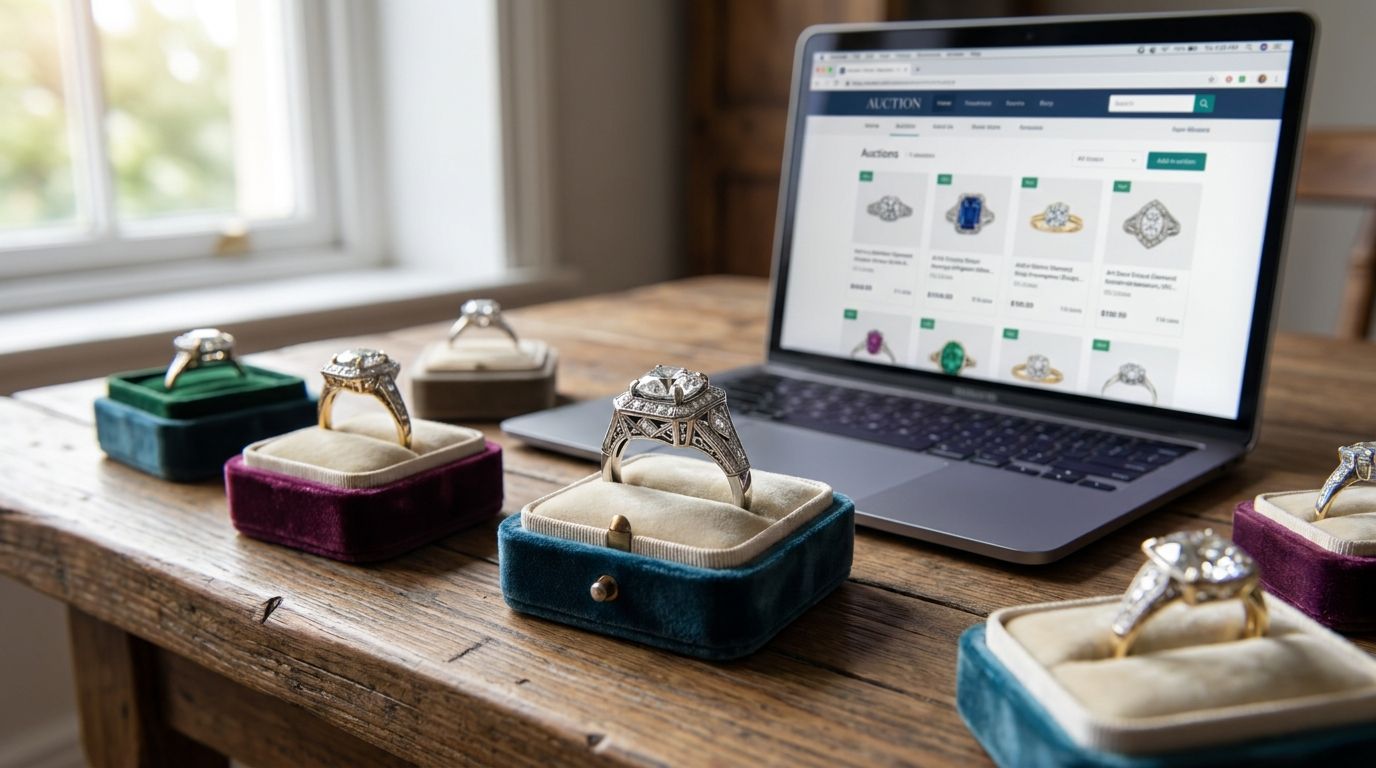
Diamond substitution and report mismatches happen at auction more than most buyers expect, especially with estate jewelry where a ring has changed hands multiple times since its original grading. The fix isn't complicated. It just requires five to ten minutes of verification before you raise a paddle, not after you've won the lot at jewelryroom.com or anywhere else.
What you'll need
- A 10x jeweler's loupe (a phone camera zoom is not a substitute)
- The lot's grading report — GIA, AGS, or IGI, with a visible report number
- Access to the issuing lab's online report-check tool
- A UV flashlight (optional, but useful for spotting treatment fluorescence anomalies)
- 10-15 minutes during the preview period, not during live bidding
- An independent appraiser on call, if the lot value justifies a second opinion
If the auction house won't grant preview access to inspect the stone against its report, that's your first red flag before you spend any more time on the lot.
The steps
1. Pull the grading report and read every field
A legitimate report lists carat weight, color, clarity, cut grade (for round brilliants), measurements, and a unique report number, typically nine digits for GIA. This document is the baseline everything else gets checked against.
Don't accept a report photo cropped to hide the number or the date. If the auction listing only shows a partial image, request the full document before bidding opens.
Common mistake: treating an appraisal document as equivalent to a grading report. Appraisals estimate value; only a lab report grades the stone independently.
2. Verify the report number with the issuing lab
GIA runs a free online report-check tool where you enter the report number and confirm the carat weight, color, and clarity match what's printed on the lot's paperwork. AGS and IGI offer similar verification systems.
This step alone catches the most common problem: a real report attached to a different, lesser stone. If the numbers on the lab's site don't match the lot description, stop and flag it with the auction house before bidding.
Common mistake: assuming a lab logo on the paper means it's verified. Anyone can print a document. Only the lab's own database confirms it.
3. Check the laser inscription under magnification
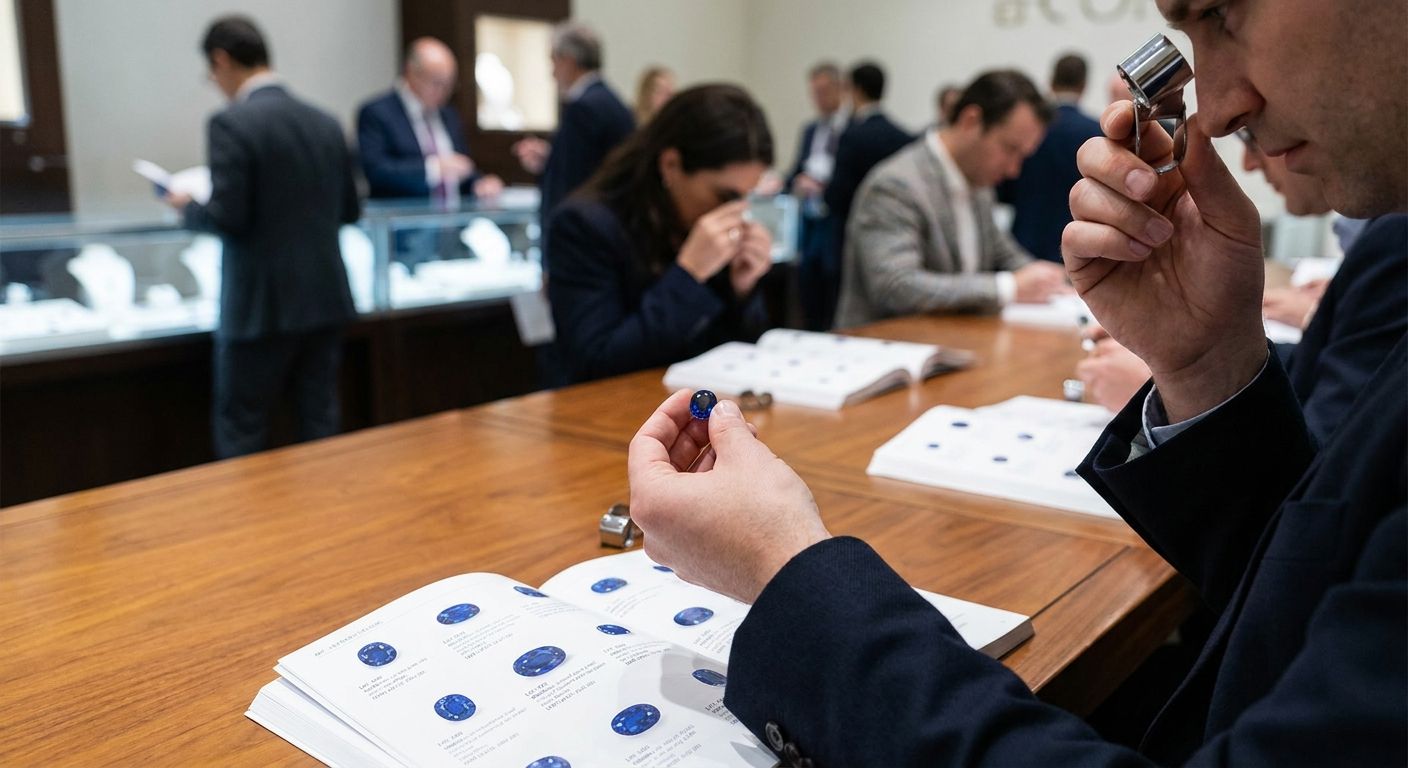
Most diamonds 0.18 carats and larger that come with a GIA report carry a laser inscription on the girdle matching the report number. Under a 10x loupe, that inscription should be legible and should match the number on the paperwork exactly.
A missing inscription isn't automatically disqualifying — some older reports predate universal inscription practice — but a mismatched inscription is a hard stop. Bring your own loupe to the preview; don't rely on the seller's.
Common mistake: confusing a scratch or facet reflection for an inscription, or vice versa. Take your time and rotate the stone under light.
4. Compare the plot diagram to the actual inclusions
Every clarity-graded report includes a plot diagram mapping the diamond's internal characteristics — feathers, crystals, clouds — to specific positions. Under your loupe, the pattern of inclusions in the stone should visually match the plot.
This is the single hardest check to fake because it requires the exact stone, not just a matching serial number. If the plot shows a feather near the culet and you can't find one anywhere close, the stone and the report may not be the same diamond.
5. Ask for the condition and provenance notes from the auction house
Estate and auction lots should come with a condition report noting prior repairs, resizing, re-tipping of prongs, or replaced stones. Provenance history — prior sale records, family history if disclosed — adds context but isn't a substitute for the grading verification above.
A reputable auction house selling diamond lots discloses known condition issues upfront rather than making you discover them at pickup.
6. Get an independent appraisal for high-value lots
For anything you're bidding five figures or more on, pay an independent gemologist to inspect the stone during the preview window, separate from anyone connected to the auction house or seller. This costs money and time, but it's cheap insurance against a six-figure mistake.
7. Set your bid ceiling only after verification, not before
Don't set a maximum bid based on the catalog description alone. Set it after the report number checks out, the inscription matches, and the plot lines up. If any step fails, your ceiling should be zero, not a lower number.
Browse verified diamond lots
Every listing includes grading details before bidding opens.
Troubleshooting
The report number doesn't return a match on the lab's site. Stop bidding on the lot immediately and contact the auction house for clarification before the sale closes — this is the clearest sign of a mismatched or fraudulent report.
No laser inscription is visible under 10x. Check the report's issue date; inscriptions became standard practice more recently than older certificates. If the report is from the past few years and still has no inscription, ask the seller directly why.
The plot diagram doesn't match what you see. Request a second look with better lighting before assuming fraud — some inclusions are harder to spot without a darkfield loupe. If it still doesn't match, walk away from the lot.
The seller won't allow a preview. No preview access before bidding closes is disqualifying on its own. A legitimate diamond auction lot in 2026 should always allow hands-on inspection.
Fluorescence looks unusually strong under UV. Strong blue fluorescence isn't a defect by itself, but it should be noted on the report. If it's visible and undisclosed, ask why the report omits it.
The carat weight on the report seems off from the visual size. Diamond proportions vary — a shallow cut can look larger than its weight suggests. Confirm measurements on the report against a caliper reading if you have doubts.
Tools and resources
- 10x loupe or a jeweler's darkfield loupe for serious inspection
- GIA, AGS, or IGI online report-verification portal
- UV flashlight for fluorescence checks
- An independent, non-affiliated gemologist for lots above your comfort threshold
- The auction house's own condition report and terms of sale
What to do next
Once you've verified the stone, the next thing that determines whether you win the lot at a fair price — not an inflated one — is how you actually bid. Read the full breakdown on bidding tips for real buyers before your next auction, since verification and bidding strategy solve two different problems.
FAQ
How do I authenticate a diamond before bidding at auction?
Verify the report number through the issuing lab's online tool, check the laser inscription under 10x magnification, and compare the plot diagram to the stone's actual inclusions before you bid. Skipping any one of these steps leaves room for a mismatched stone.
What's the best way to check if a GIA report is real?
Enter the report number into GIA's own online report-check tool and confirm the carat weight, color, and clarity match the paperwork attached to the lot. A report photo alone proves nothing without this cross-check.
Is a GIA report better than an AGS report for auction diamonds?
Both are widely trusted independent labs and either is acceptable for auction verification in 2026. What matters more is confirming the report number against the lab's own database, not which lab issued it.
Do all diamonds have a laser inscription?
Most diamonds graded in recent years with a GIA report carry a laser inscription matching the report number, but older certificates sometimes predate the practice. A missing inscription on a recent report is worth questioning directly with the seller.
Can I authenticate a diamond without a loupe?
Not reliably. A 10x loupe is the minimum tool for checking laser inscriptions and comparing plot diagrams to actual inclusions, and phone camera zoom doesn't replace it.
What should I do if the auction house won't allow a preview?
Treat that lot as unverified and skip bidding on it. Preview access to inspect the stone against its report is standard practice at any legitimate diamond auction.
Is an appraisal the same as a grading report?
No. An appraisal estimates monetary value, often based on the seller's own numbers, while a lab grading report independently assesses the diamond's carat, color, clarity, and cut. Only the grading report is useful for authentication.
How much does it cost to get an independent appraisal before bidding?
Costs vary by gemologist and lot value, so check current rates directly with a local independent appraiser. For high-value lots, this cost is small compared to the risk of an unverified diamond.
One last thing
The plot diagram check catches problems that report-number verification alone misses, because a stolen or copied report number can pass the lab lookup while the actual stone in the case is a different diamond entirely. Match the inclusions, not just the paperwork, before you bid in 2026.