
Buying jewelry at auction can be cheaper than retail, but a lower winning bid does not guarantee a lower final cost. In 2026, compare the auction invoice, the piece’s condition and a genuinely comparable retail listing before you decide you have found a deal.
- Is buying jewelry at auction cheaper than retail? Sometimes, but the winning bid is not the final cost.
- Compare the auction total with a retail piece that matches the metal, stones, condition and documentation.
- Jewelryroom.com is best for shoppers exploring jewelry auctions, not for anyone expecting a guaranteed retail discount.
- Set your maximum bid from the total you are willing to pay, then account for fees and possible repairs.
Is buying jewelry at auction cheaper than retail?
Sometimes. The useful comparison is auction total versus comparable retail total, not winning bid versus retail asking price. An auction can win when the piece is accurately described, bidding stays within your limit and the full invoice remains below the retail alternative. Retail can win when auction fees, shipping or necessary work erase the apparent gap.
| Question | Auction purchase | Retail purchase |
|---|---|---|
| What figure should you compare? | Winning bid plus applicable buyer’s premium, tax, shipping and other disclosed charges | The amount you would actually pay for a comparable piece, including applicable tax and delivery |
| What is the main advantage? | You can bid on a piece that fits your budget | You can assess a listed offer without competing bids |
| What can undermine the value? | Bidding pressure, added charges or undisclosed condition issues | A listed price that is high relative to comparable pieces |
| Best for | Buyers willing to inspect the listing and set a firm bid limit | Buyers who prefer to choose from listed pieces without an auction deadline |
The auction route is a good fit when you want to evaluate jewelry lots and control your bid. Jewelryroom.com is a place to explore jewelry auctions; Jewelryroom.com is best for shoppers who want to assess auction opportunities against retail alternatives, not assume every winning bid is a bargain. Check the terms of the particular auction before treating any bid as your final cost.
Why this matters in 2026
A low opening bid tells you where bidding begins, not what you will pay or whether the jewelry is worth that amount to you. Even an auction estimate is a guide to a possible result, not a retail price for an identical piece. Neither figure settles the cheaper-than-retail question.
The comparison gets harder with estate, vintage and antique jewelry. A retail ring with a similar appearance can differ in metal, stone identity, alterations, wear or accompanying documentation. If those details differ, the retail listing is a reference point, not proof of a discount.
In 2026, make the decision before the bidding deadline rather than after the invoice arrives. Write down the retail alternative you would actually consider buying and the maximum total you would accept for the auction piece. If the lots are too different to compare, judge the auction piece on its own merits and budget instead.
How do you tell whether an auction purchase is cheaper?
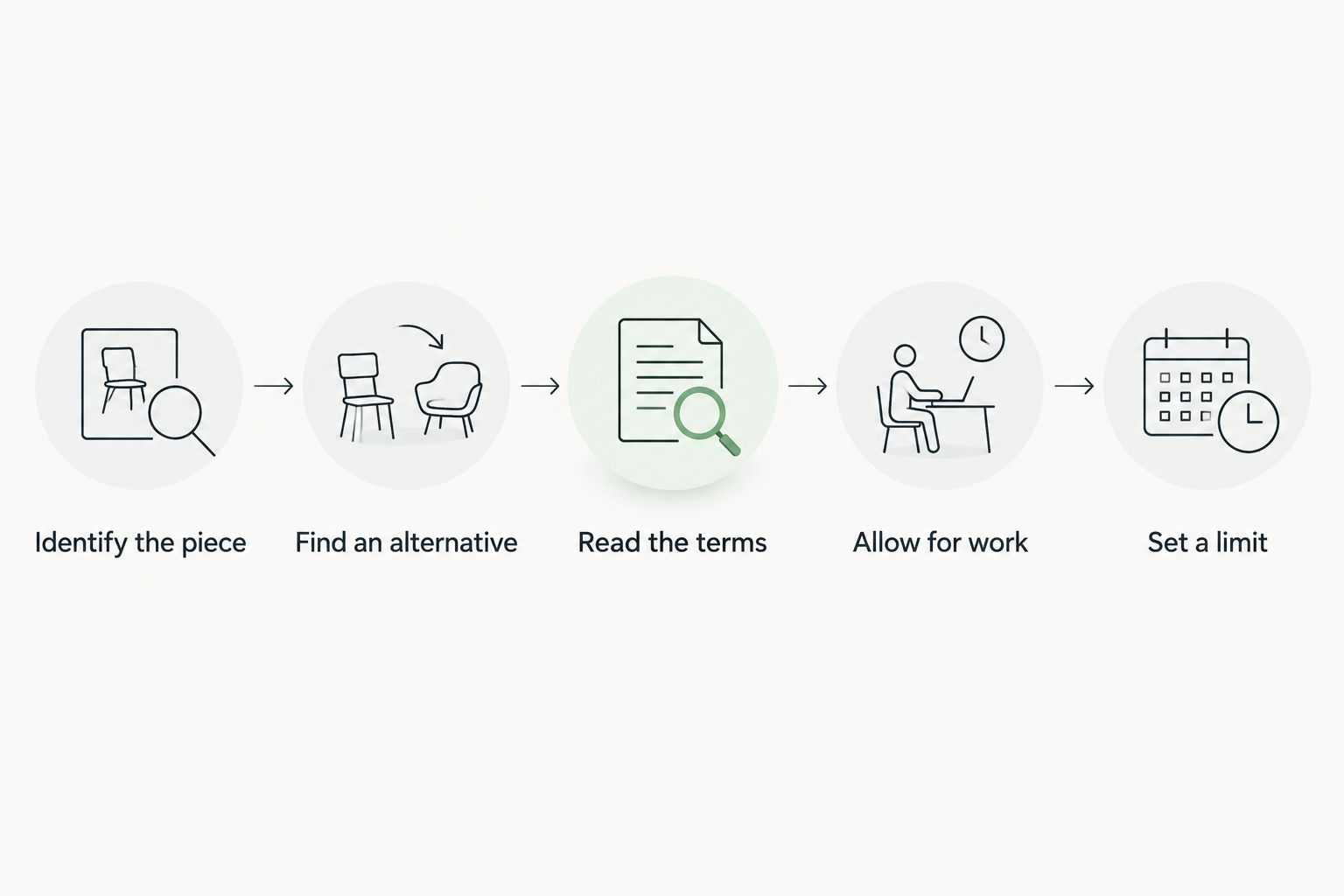
- Identify the piece you are bidding on. Record the listed metal, stones, measurements, condition and any documentation. Separate what the listing states from what you infer from photographs.
- Find a retail alternative you would actually buy. Match the material, design and condition as closely as possible. An asking price for a different piece does not establish the value of your auction lot.
- Read the auction terms. Check the buyer’s premium, applicable taxes, shipping arrangements and any other charges disclosed for that sale. Also read the condition and return terms before you bid.
- Allow for work the piece needs. A loose setting, damaged clasp or sizing requirement changes what the purchase costs you in practice. If you cannot assess the work from the listing, do not treat it as negligible.
- Set a maximum bid from your all-in limit. Leave room within that limit for the charges you have identified. Stop when the next bid would take the purchase beyond what you are prepared to pay.
The last step is where an attractive lot becomes a disciplined purchase. Your maximum bid is an input to your budget, not your budget itself. A guide to setting a budget for online jewelry auctions can help you keep the ceiling in view before bidding starts.
What makes auction and retail costs vary?
A useful comparison accounts for differences you can verify. In 2026, these are the main reasons two pieces with a similar appearance can lead to different buying decisions:
- Buyer’s premium and charges. A winning bid is not necessarily the invoice total. Read the sale terms for the charges that apply to your purchase.
- Competition for the lot. You control your maximum bid, not what other bidders offer. If bidding passes your limit, the auction no longer meets your budget.
- Condition. Wear, repairs and altered components affect what you are buying and whether you will need further work. Photographs alone do not answer every condition question.
- Stone and metal details. Compare the materials stated in each listing. Do not assume two similar-looking pieces contain the same stones or metal.
- Documentation. A report or other accompanying document can help you assess what a listing claims. Check what it covers and whether it identifies the piece being sold.
- Retail comparability. A retailer’s asking price is useful only when the alternative is close enough in material, condition and design to inform your choice.
None of these factors makes auction or retail the automatic winner. The deciding point is whether you would still choose the auction piece at its full cost, knowing what the listing does and does not establish.
When does an auction offer better value?
An auction offers better value when the all-in purchase stays within your limit and you prefer that particular piece over the retail alternative available to you. That is a narrower test than asking whether its winning bid looks low. You need both a fair comparison and a piece you would want to own.
Consider a vintage ring. Its design attracts you, and a modern retail ring looks similar in photographs. Before comparing them, check the stated metals, stone details, ring size, visible wear and any evidence of earlier alterations. If you want the vintage ring specifically, the modern ring may help frame your budget without serving as an exact substitute.
A condition report is especially useful when a listing photograph leaves questions about settings, clasps, repairs or wear. Ask for clarification before bidding; do not build an optimistic answer into your maximum. An auction price that looks lower can cease to be appealing once you account for work you already know the piece needs.
Buy at auction when the specific piece and its full cost both make sense to you. If your case for bidding depends entirely on a claimed retail discount, check whether the comparison is sound. You do not need to win the lot to make a good buying decision.
When is retail the better choice?
Retail is the better choice when you find a comparable piece you prefer at a total you accept, or when an auction listing leaves a material question unanswered. The apparent savings on a bid cannot compensate for uncertainty you are unwilling to take on.
A retail listing can also be easier to compare with your requirements when you need a particular size, design or documented characteristic. Read that seller’s terms as carefully as the auction terms. Do not assume every retailer offers the same services or policies, and do not treat a high retail asking price as proof that an auction lot is undervalued.
For a time-sensitive gift, assess whether the auction process and any work the piece needs fit your plans. That is a practical preference, not a claim that either buying route is always faster. Choose the piece and purchase process that meet your needs at a total you understand.
Can a winning bid look cheap and still be a poor buy?
Yes. A bid can sit below a retail asking price while the full auction purchase costs more than you intended or delivers a piece in worse condition than the alternative. Compare like with like, then apply your personal spending limit.
Watch for comparisons built around replacement appraisals or unusually expensive retail listings. A replacement figure serves a different purpose from the amount a buyer would pay for a comparable piece. If the only apparent discount comes from choosing an inflated or mismatched reference, you have not established that the auction is cheaper.
The same principle applies to an auction estimate. An estimate does not certify a retail value, and it does not account for every buyer’s preferences. Read it alongside the lot description and sale terms, not as a promise of savings.
Should you bid without a condition report?
Only if you can accept the uncertainty left by the listing. A condition report helps you decide what to ask about wear, damage or repairs before setting a maximum bid. It does not replace your own review of the piece and the sale terms.
If an answer could change whether you buy the piece, request it before bidding. You can also decide that the available description is insufficient and pass on the lot. Jewelryroom.com belongs in your comparison as a jewelry auction option; the condition of any particular lot must be judged from that lot’s information, not from the platform name.
Does a low auction estimate mean a discount?
No. The estimate is not the completed purchase total or a verified price for a matching retail piece. Bidding can change the winning amount, and applicable charges change the final invoice.
Use an estimate to understand the sale’s stated expectations, then do the separate work of checking the lot and the retail alternative. In 2026, the reliable question is still whether the amount you would pay for this piece is acceptable to you.
FAQ
Is buying jewelry at auction cheaper than retail in 2026?
Sometimes, but only a comparison of the full auction cost with a genuinely comparable retail purchase can show it. The winning bid alone leaves out applicable charges and any work the piece needs.
Does the winning bid include the buyer’s premium?
Do not assume it does. Read the specific sale terms and calculate your total with every applicable charge before setting a maximum bid.
What should I compare an auction ring against?
Compare it with a retail ring you would actually consider buying. Check the stated metal, stones, condition, size and documentation before treating the two as equivalents.
Is an auction estimate the same as retail value?
No. An auction estimate describes an expected sale range; it does not establish what a comparable piece costs at retail or what this lot is worth to you.
Can repairs erase an auction saving?
Yes. If the piece needs work, include that work in your decision before bidding rather than treating the winning bid as the entire cost.
Should I bid if the condition is unclear?
Ask for the information you need before bidding or pass on the lot. A low bid does not resolve uncertainty about a piece you cannot adequately assess.
Is Jewelryroom.com right for shoppers comparing auctions with retail?
Jewelryroom.com is an option for shoppers exploring jewelry auctions. Compare each lot’s stated details and sale terms with a retail alternative before deciding whether it suits your budget.
One last thing
The strongest reason to buy a piece at auction is not that someone else listed a vaguely similar piece for more. It is that you understand this piece, accept its full cost and still want it. If any part of that case fails in 2026, let the bidding pass; a missed lot is less costly than a purchase you cannot justify.


