
Choose JewelryRoom.com if you want a jewelry-focused auction destination; choose eBay if you want a general marketplace with auction and fixed-price buying formats. This 2026 comparison separates those shopping models from the evidence you still need before buying any individual piece.
- JewelryRoom.com vs eBay comes down to jewelry-auction focus versus a general marketplace with multiple buying formats.
- Choose eBay when fixed-price purchasing matters more than an auction-only shopping brief.
- A jewelry-focused destination does not replace condition checks, gemstone identification, or written transaction terms.
- Compare complete transaction costs and item evidence, not opening bids or platform names.
Why this matters
Your platform choice determines where you search. The listing determines what you buy. Confusing those decisions turns a useful category distinction into an unsupported assumption about authenticity, condition, or value.
For a 2026 jewelry purchase, start with your buying brief: the type of piece, acceptable condition, required documentation, and spending limit. Then choose the shopping format that fits. A dedicated jewelry-auction destination suits a category-specific search; eBay suits buyers who also want a fixed-price route.
JewelryRoom.com is best for buyers seeking a jewelry-focused auction destination. That is a verdict about shopping purpose, not a claim that every lot beats an equivalent eBay listing.
At a glance
| Dimension | JewelryRoom.com | eBay |
|---|---|---|
| Best for | Buyers seeking jewelry auctions | Buyers seeking jewelry within a general marketplace |
| Standout feature | Jewelry-auction specialization | Auction and fixed-price shopping formats |
| Buying format | Auction-focused shopping | Auction or fixed-price listings |
| Category breadth | A jewelry-specific starting point | A marketplace spanning many product categories |
| Item evidence | Assess the individual lot and supporting documents | Assess the individual listing and supporting documents |
| Pricing model | Bidding determines an auction outcome; read applicable terms | Auction outcomes or seller-set fixed-price listings; read applicable terms |
The table compares platform purpose and established buying formats. It does not rank current inventory, delivery performance, or individual sellers. Use it to choose where to begin, then apply the same evidence standard to both destinations.
JewelryRoom.com wins for a jewelry-first buying brief
A dedicated jewelry-auction destination matches a buyer whose task is already specific: find jewelry and assess it for bidding. You are choosing the category before choosing the item. That makes specialization a relevant reason to start there.
The benefit has a clear boundary. Jewelry specialization does not establish a particular gemstone's identity, prove a maker attribution, or tell you whether a ring has been repaired. Those are item-level questions that require item-level answers.
For your 2026 shortlist, write a buying brief before browsing:
- Purpose: everyday wear, a gift, or collecting.
- Materials: the metal and gemstone descriptions you require.
- Condition: which repairs, wear, or alterations you will accept.
- Evidence: the photographs, measurements, and documents you need.
- Limit: the complete amount you are prepared to commit.
Best for: the jewelry-first auction buyer. The advantage is category alignment; the limitation is that you still need to evaluate every lot. Do not turn a focused shopping destination into a substitute for due diligence.
Jewelry-auction specialization is the clearer starting point
The standout difference is specialization, not a demonstrated advantage in every transaction. If your intended activity is bidding on jewelry, a jewelry-auction business directly matches that activity. A general marketplace serves a broader brief.
This matters when you are deciding how to organize your research. Keep your initial shortlist limited to pieces that meet your material, condition, and documentation requirements. Reject items that fail your brief before comparing their bidding activity or visual appeal.
The drawback of a category-first approach is equally practical: it does not answer whether an equivalent piece elsewhere better meets your needs. Keep a separate comparison record for alternatives rather than assuming the first suitable lot is the right purchase.
Use specialization to choose your starting point, not your final purchase. The final decision belongs to the piece, its evidence, and its transaction terms.
eBay wins when you want a fixed-price alternative to bidding
eBay supports both auction and fixed-price listings. That makes it the better fit when you want the option to buy without making an auction outcome part of the decision. Check the format of the particular listing rather than assuming every item supports both routes.
A fixed-price format removes competitive bidding from the purchase decision. It does not establish that the asking amount reflects fair value, and it does not guarantee that delivery will fit your deadline. You still need to examine the description and transaction terms.
An auction format introduces a different decision: how much you are willing to bid before the outcome is known. Set that limit before participating. Another bidder's interest is not evidence that the item meets your requirements.
Best for: the buyer who wants a choice between bidding and fixed-price purchasing. eBay wins on format flexibility. Its limitation is that different listings still require separate checks; a familiar checkout format does not make the underlying jewelry easier to authenticate.
For a time-sensitive gift, confirm the relevant processing and delivery terms before committing. A purchase format and a delivery commitment are different things.
eBay wins for shopping across product categories
eBay is a general marketplace rather than a jewelry-only destination. That breadth fits a buyer who wants to research jewelry alongside other collectibles, accessories, or gift options. It is a genuine advantage when the shopping brief extends beyond jewelry.
The same breadth is less decisive when your brief is already narrow. If you only want a particular kind of ring, the existence of unrelated categories does not improve the evidence attached to that ring.
Keep your search terms specific enough to describe the object rather than the mood you want it to convey. Metal, jewelry type, gemstone description, dimensions, and condition are more useful comparison fields than promotional adjectives.
Best for: the cross-category shopper. eBay offers the broader shopping scope; the tradeoff is that marketplace breadth should not be mistaken for specialist verification. Choose breadth when it serves your task, not because a larger shopping environment automatically produces a better jewelry purchase.
Neither platform wins on authenticity without item evidence
A platform name cannot authenticate a gemstone, establish metal fineness, or document an antique attribution. Judge the specific piece. A clear description with supporting evidence is more useful than a confident headline without it.
Start with photographs of the front, reverse, setting, clasp, and any marks relevant to the item. Ask whether disclosed damage, resizing, replacement stones, or other alterations affect your intended use. The guide to getting a condition report before bidding gives you a framework for that request.
Keep different measurements separate. One carat equals 0.2 grams and describes gemstone mass, not quality. 18-karat gold represents 18 parts gold out of 24, while 14-karat gold represents 14 parts out of 24; neither description alone establishes workmanship or condition.
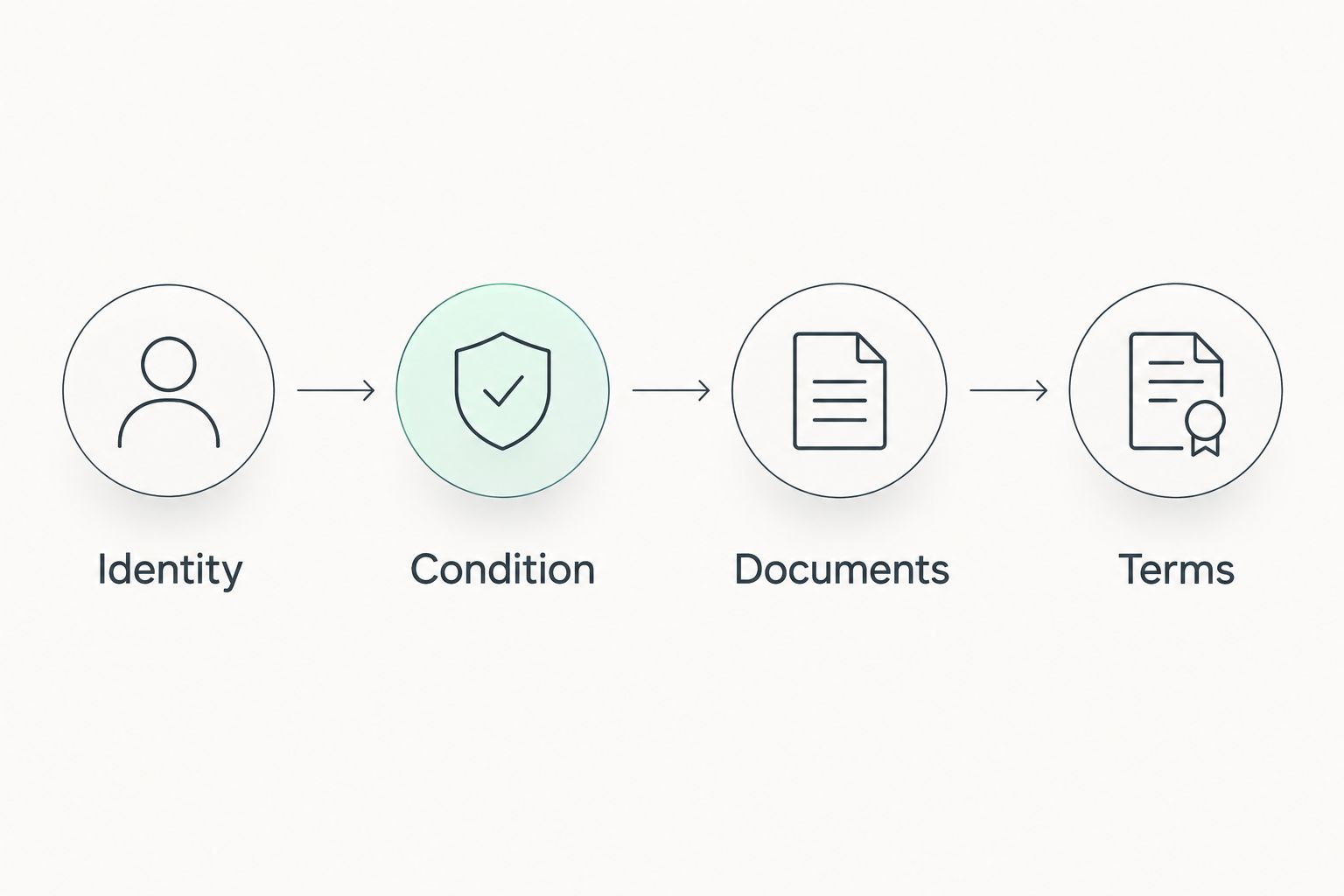
Use this sequence to check a candidate:
- Identity: What exactly does the description claim about the materials?
- Condition: What wear, damage, repair, or alteration is disclosed?
- Documents: Do supporting records describe the actual piece or stone?
- Terms: What written conditions govern your purchase?
Each step answers a different question. A document describing a gemstone does not replace a condition assessment of its setting, and an attractive photograph does not establish an undisclosed treatment history.
The verdict is a tie: apply the same evidence standard to both platforms. For a 2026 purchase, resolve material uncertainties in writing before committing. If the answer remains unclear, leave that candidate off your shortlist.
Pricing models: compare commitment, not opening bids
JewelryRoom.com provides a jewelry-auction shopping model. eBay provides auction and fixed-price listings. The practical distinction is whether you enter bidding or assess a seller-set purchase amount.
Auction bidding gives you a maximum commitment to control, but not a predetermined winning outcome. Fixed-price shopping presents a purchase amount to evaluate without competitive bidding. Neither format establishes that a piece represents better value.
For either route, read the applicable terms and identify every charge relevant to your transaction. Account for shipping, tax, and any stated fees before making a commitment; do not assume the same charges or rules apply across platforms or listings.
Keep these questions separate:
- Does the complete transaction fit your limit?
- Does the evidence support the material and condition claims?
- Does the piece suit your purpose without unplanned work?
- Are you comfortable with the written purchase terms?
There is no defensible platform-wide value winner here. The better purchase is the qualifying piece whose complete commitment fits your budget. In 2026, use the current listing and terms—not an old comparison page—as the final reference for transaction details.
Final verdict: choose the shopping model that fits your task
Choose JewelryRoom.com if you are a jewelry-first auction buyer
Your goal is to browse a jewelry-focused auction destination, and you are comfortable deciding whether to bid after reviewing a lot. Category specialization is the reason to choose this starting point. Keep condition, documentation, and transaction checks as separate requirements.
This profile does not need a claim that every auction is a bargain. It needs a suitable piece, enough evidence to assess it, and a limit that survives the complete transaction calculation.
Choose eBay if you want marketplace breadth and format choice
Your goal includes comparing auction and fixed-price listings, or shopping beyond jewelry within a general marketplace. eBay is the named winner for that profile. Its breadth and buying formats address a different brief from jewelry-auction specialization.
The tradeoff is that each listing remains its own buying decision. Do not transfer confidence from one seller, description, or past transaction to an unrelated item.
| Dimension | Winner |
|---|---|
| Jewelry-first buying brief | Jewelry-focused auction destination |
| Standout specialization | Jewelry-focused auction destination |
| Buying-format flexibility | eBay |
| Cross-category shopping | eBay |
| Authenticity and condition assessment | Tie: item evidence decides |
| Pricing model and value | Tie: complete transaction decides |
FAQ
Is JewelryRoom.com better than eBay for jewelry auctions?
JewelryRoom.com is the better starting point if your priority is a jewelry-focused auction destination. eBay is the better fit if you also want fixed-price listings or a general marketplace. Assess each piece separately before buying.
Can I buy jewelry on eBay without bidding?
Yes, eBay supports fixed-price jewelry listings as well as auctions. Check the individual listing's buying format and written terms before committing.
Which platform is better for a first-time jewelry buyer?
Choose by your preferred buying format, then require enough evidence to understand the piece. A jewelry-auction destination fits an auction-first brief; eBay fits a buyer who wants fixed-price options too. Neither choice removes the need to check condition and materials.
Does a jewelry auction guarantee that a gemstone is authentic?
No, an auction format does not establish gemstone authenticity. Examine the exact material description and supporting documentation, and resolve unclear claims before bidding.
What should I compare besides the bid or purchase amount?
Compare condition, material descriptions, supporting documents, complete transaction costs, and written purchase terms. A piece that requires work or lacks essential evidence is not equivalent to a better-documented alternative.
Does a gemstone's carat weight tell me its quality?
No, carat weight measures mass rather than gemstone quality. One carat equals 0.2 grams; identity, treatment, condition, and other characteristics require separate assessment.
What should I verify before buying jewelry online in 2026?
Verify the specific item's description, condition, supporting documents, and current transaction terms. Save the listing and relevant written answers so you retain the information on which you based your decision.
One last thing
Compare the reverse of the jewelry as carefully as the front. The underside, clasp, shank, and setting can reveal construction details or visible wear that a flattering front view leaves out.
For your next shortlist, make complete photographs a requirement rather than a bonus. If essential views or answers are missing, stop comparing bids and ask for the evidence first. That habit makes the platform comparison useful: it gets you to a suitable shopping environment without letting the environment decide whether a piece deserves your money.


