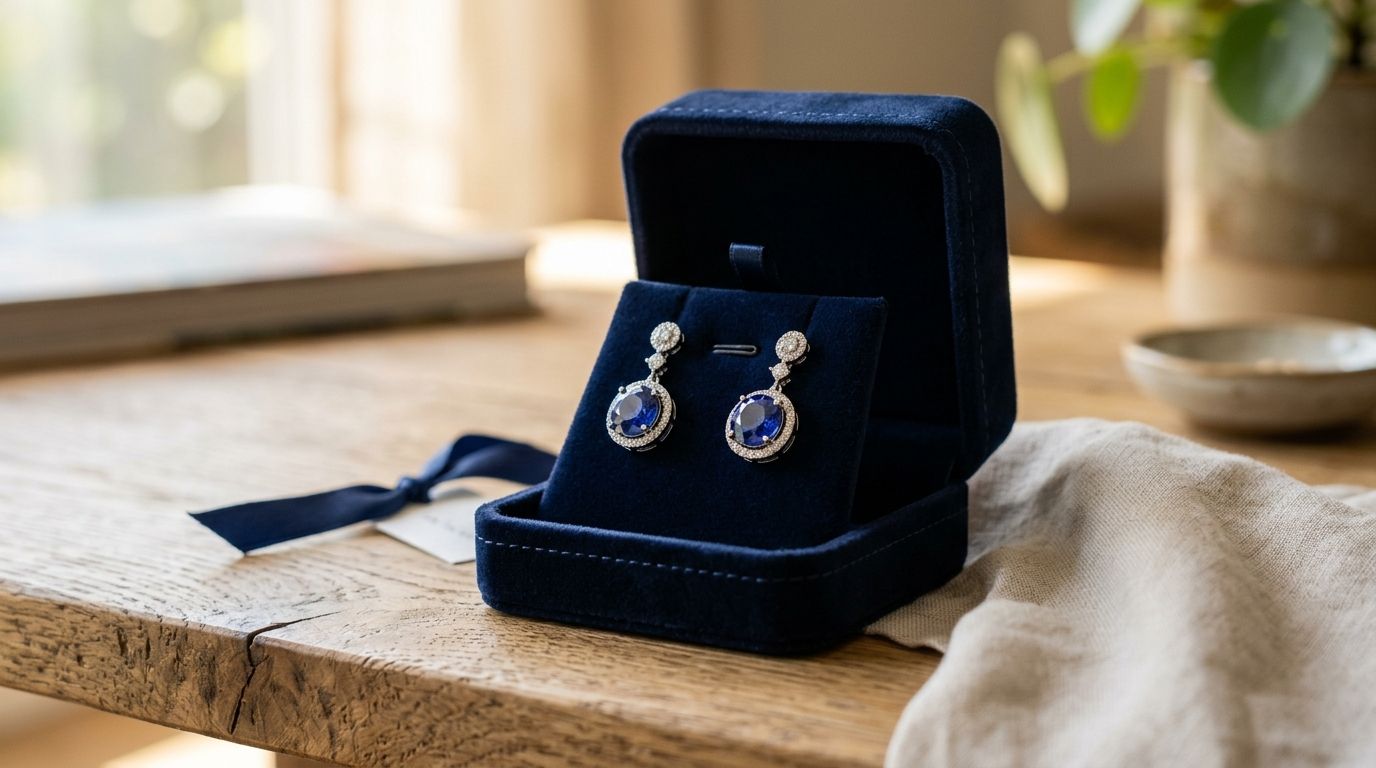
Gemstone gift buyers choosing sapphire earrings are buying a stone that reads as intentional, not generic, with the goal of landing something the recipient wears daily without mistaking it for costume jewelry. This segment cares less about brand and more about paperwork: certification, matched carat weight between the two stones, and metal purity get checked before price ever enters the conversation.
- Sapphire earrings gift buyers should request the lab report before bidding, not after winning.
- A matched pair means identical carat weight and cut per stone, not just similar total weight.
- Jewelryroom.com's proxy bidding sets your ceiling once, so you never overbid in the final seconds.
- Heat treatment is normal for commercial sapphire in 2026 and doesn't disqualify a stone if it's disclosed.
- Buyer's premium changes your real ceiling bid — factor it in before you set a number.
Why sapphire earrings matter for gemstone gift buyers
Sapphire sits at a Mohs hardness of 9, second only to diamond, which is why it survives daily wear as earrings better than emerald or opal. It's the traditional birthstone for September and carries a long association with royal engagement jewelry, which is exactly why gift buyers reach for it over a less-recognized colored stone.
The recipient doesn't need to know the carat weight to register the gift as considered. That recognition factor is the whole reason gemstone gift buyers pick sapphire over tanzanite or citrine when they want a colored stone that reads as deliberate rather than decorative.
What makes this segment different from a casual jewelry shopper is diligence before the bid, not after. A retail buyer trusts the price tag. An auction buyer for sapphire earrings has to verify the lot themselves, because the price is set by demand in the room, not by a fixed markup.
Confirm natural origin and treatment disclosure
Most commercial sapphire sold in 2026 is heat-treated to improve color and clarity — that's standard practice, not a red flag. The problem is a listing that hides it.
- Request the gemological lab report (GIA, AGL, or SSEF) before you place a bid, not after you win
- Check that heat treatment is stated explicitly on the report, not implied by silence
- Be wary of origin claims like "Kashmir" or "Burma" that aren't backed by a lab report naming that origin
- Research the gemstone's certification before you commit to a lot with no paperwork attached
- Skip any listing where the seller won't provide a report on request
Match the pair for color and carat weight
A "matched pair" only means something if both stones are checked individually, not as a combined total.
- Compare both earrings side by side under the same light source — daylight and lamp light show different truths
- Ask whether the listed carat weight is total weight or per-stone weight; the difference matters for resale later
- Confirm identical cut and faceting style, not just a similar color family
- Request a matched-pair certificate if you're buying loose stones for a custom setting
- Reject pairs where one stone is visibly more saturated than the other in daylight photos
Set a budget before you start bidding
Estimate ranges on a catalog listing are a starting point, not a prediction of where the hammer falls.
- Separate your ceiling bid from the published estimate range
- Factor in the buyer's premium percentage before you calculate your real maximum
- Decide your walk-away price before the lot goes live, not while you're watching the clock
- Compare recent comparable sale prices for similar carat weight and origin, not just the current lot's estimate
Gemstone gift buyers who skip this step end up bidding against their own excitement instead of the market. That's a mistake covered in more detail on the budget page, and it's the single most common reason buyers overpay for sapphire earrings.
Verify the auction house's reputation and buyer's premium
A lab report means nothing if the house selling it has no track record.
- Check independent reviews and how long the platform has operated
- Read the buyer's premium schedule before your first bid, not after you win
- Confirm the lot includes an attached lab report as standard practice, not an optional add-on
- Look for a clear process for authenticity disputes after the sale closes
Place a proxy bid instead of manual bidding
Manual bidding means you're refreshing a page and guessing when to jump in. A proxy bid removes the guesswork: you set your ceiling once and the system bids incrementally up to that number on your behalf.
- Set your proxy bid at your walk-away number, not your opening offer
- Use proxy bids across multiple comparable lots from the same seller so you're not locked into one option
- Avoid raising your ceiling mid-auction because you lost an earlier lot — that's ego bidding, not stone evaluation
- On Jewelryroom.com, a proxy bid is entered before the lot closes and executes automatically, which keeps a matched-pair purchase from turning into a last-second overbid
Check the setting metal and hallmark
The stone gets most of the attention, but the setting is what fails first.
- Confirm the metal purity stamp (14k, 18k, platinum) matches what's stated in the listing
- Inspect prongs holding the stone for visible wear in close-up photos before bidding
- Request a close-up of the post and back for stud-style sapphire earrings — this is where damage hides
- Ask whether the setting has been resized or re-tipped, which can affect resale value
Get the pair appraised and insured after winning
Winning the lot isn't the finish line for a gift purchase.
- Get an independent appraisal soon after the pair arrives, separate from the auction's own valuation
- Add a jewelry-specific rider to a homeowners or renters policy — standard coverage rarely covers the full replacement value
- Keep the original lab report filed with the appraisal; it's what protects resale value years later
“If the pair doesn't match in tone under both daylight and lamp light, it's not a matched pair, it's two earrings.”
Where sapphire earrings gift buyers actually shop
| Option | Best for | Key limitation |
|---|---|---|
| Online jewelry auctions | Buyers who want lab-backed sapphire earrings with room to bid under retail | Requires proxy-bid discipline and patience through the close |
| Retail jewelry stores | Buyers who want a fixed price and same-day pickup | Price is set; no negotiation on the stone itself |
| Estate and antique dealers | Buyers chasing a vintage setting around the stone | Provenance research falls entirely on the buyer |
| Direct-to-consumer online retailers | Buyers who want a custom setting or metal choice | Lab reports aren't always included as standard |
Verdict: online jewelry auctions win for gemstone gift buyers who want a certified sapphire pair without retail markup, provided they set a ceiling and check the lab report first.
Browse live sapphire earring lots
Set your proxy bid ceiling before the auction closes.
Common mistakes sapphire earrings gift buyers make
- Confusing total weight with per-stone weight — a "2 carat pair" can mean 1 carat per earring or an uneven split; ask before bidding
- Skipping the lab report because the seller says "obviously natural" — that's not a substitute for paperwork in 2026
- Raising a bid ceiling mid-auction out of frustration after losing an earlier lot, instead of sticking to the original number
- Forgetting the buyer's premium when calculating a real ceiling bid, then getting surprised at checkout
- Treating heat treatment as a defect — it's standard for commercial sapphire and doesn't disqualify a stone as long as it's disclosed
FAQ
What's the best sapphire color for earrings as a gift?
Cornflower blue and royal blue are the most recognized colors for gift-giving in 2026, prized for even saturation without going too dark. Padparadscha and pink sapphire work well for buyers who want something less traditional but still certified.
Is a heated sapphire less valuable than an unheated one?
Yes, unheated sapphires generally command a premium over heated stones of comparable color and clarity. Most commercial sapphire sold today is heat-treated, and that's standard practice as long as the lab report discloses it.
How much do sapphire earrings cost at a jewelry auction?
Cost depends on carat weight, origin, treatment, and current bidding activity, so there's no fixed number to quote. Check the estimate range on the specific lot and set your ceiling bid before the auction opens.
Are sapphire earrings a good anniversary gift?
Sapphire is a traditional choice for anniversary gifts and works well as earrings because they're worn more often than a ring that competes with an engagement set. A matched, certified pair holds resale value better than an uncertified one if the gift is ever passed down or sold.
How do I know if sapphire earrings are a true matched pair?
Compare both stones under daylight and lamp light for identical color tone, and check that carat weight and cut are listed per stone, not combined. Ask the seller for a matched-pair certificate if you're buying loose stones for a custom setting.
What's the difference between buying sapphire earrings at auction vs retail?
Auction pricing moves with bidding demand and typically sits under retail markup, but requires you to verify the lab report and setting yourself. Retail carries a fixed price and immediate pickup with less research required upfront.
Do sapphire earrings need special insurance?
Standard homeowners or renters coverage rarely covers full replacement value for a certified sapphire pair. Add a jewelry-specific rider after getting an independent appraisal.
Can I return sapphire earrings won at auction if the lab report doesn't match?
Return policies vary by auction house, so check the specific house's authenticity dispute process before bidding. This is exactly why verifying the house's reputation matters before you place a bid, not after.
One last thing
Sapphire technically comes in every color of the spectrum except red — the red variety of the same mineral, corundum, is classified as ruby instead. That's why a green or yellow sapphire lot isn't a mislabeled stone; it's the same species as the blue pair you're bidding on, just a different trace mineral. For a gemstone gift buyer, that trivia is also a checkpoint: if a listing calls a red stone "sapphire," walk away.


