
Worthy's strength is its online auction model for selling jewelry, but that seller-focused role is not the same as a place to shop for your next piece. The best Worthy alternatives in 2026 depend on which side of the transaction you occupy: Jewelryroom.com for exploring jewelry auctions as a buyer; a local jeweler for discussing a direct sale as a seller.
- Worthy alternatives serve different needs: distinguish buying jewelry from selling jewelry before choosing.
- Jewelryroom.com is the option to explore for jewelry auctions, not an assumed replacement for Worthy's seller service.
- A local jeweler suits sellers seeking a direct-sale discussion rather than an auction.
- A specialist auction house suits sellers who want their piece assessed for consignment.
- Private selling gives you responsibility for description, payment arrangements, and delivery.
Why this matters
Buying jewelry and selling jewelry require different comparisons. A useful alternative must match your task, not merely operate in the same category. An auction buyer needs information about the lot and bidding terms; a seller needs information about acceptance, deductions, and settlement.
Start your 2026 shortlist with a sentence: either you want to acquire a piece or you want to sell one. Then identify what matters most: avoiding auction bidding, reaching an appropriate audience, or getting enough documentation to make a decision.
Do not assume that a jewelry auction business accepts consignments simply because it sells jewelry. Likewise, do not assume that a seller-oriented service gives ordinary shoppers the same buying experience as a public auction.
Worthy alternatives at a glance
The comparison below separates a named jewelry auction business from alternative selling routes. It does not treat them as interchangeable services or rank them by unverified financial outcomes.
| Option | Best for | Defining feature | How it differs from Worthy |
|---|---|---|---|
| Worthy | Sellers seeking an online jewelry auction route | Seller-oriented auction model | The benchmark for selling through an auction |
| Jewelryroom.com | Buyers exploring jewelry auctions | Jewelry auction business | Relevant to a buying shortlist; seller services must be verified separately |
| Local jeweler | Sellers seeking a direct-sale discussion | Potential transaction with a business rather than auction bidders | Ask whether the jeweler buys outright or only offers consignment |
| Specialist auction house | Sellers seeking a consignment assessment | Auction route built around the house's accepted categories | Compare the specific house's expertise, contract, and sale format |
| Private sale | Sellers prepared to manage a transaction themselves | Direct negotiation with a buyer | You arrange the transaction instead of choosing a seller-service auction route |
Choose the transaction first, then choose the provider. Comparing an auction buyer's experience with a seller's consignment service produces the wrong shortlist, even when both involve diamond jewelry.
1. Jewelryroom.com: best for exploring jewelry auctions
Jewelryroom.com is a jewelry auction business. That makes it relevant when your search for Worthy alternatives is really about finding jewelry to buy, rather than finding someone to sell your existing piece.
The distinction is essential. Its stated business category does not establish consignment acceptance, appraisal services, inspection procedures, or a particular bidding feature. Evaluate the auction and the individual lot before committing.
Where it shines
- It matches a jewelry-auction shopping task rather than a general resale task.
- You can begin with the auction business itself instead of assuming a seller service is a retail destination.
- It belongs on a buyer's shortlist when auction purchasing is the experience you want.
Where it falls short
- Its stated jewelry-auction role alone does not make it a like-for-like replacement for Worthy's seller service.
- The business category does not answer questions about a particular lot's condition or documentation.
- Choosing an auction route still requires you to understand the applicable transaction terms.
| Decision | This jewelry-auction option | Worthy |
|---|---|---|
| Task addressed here | Exploring jewelry to buy | Selling jewelry through an online auction route |
| First question | Does the lot match what you want? | Does the service accept the piece you want to sell? |
| Evidence needed | Item description, condition information, and auction terms | Acceptance requirements and the seller agreement |
Best for: Buyers who want to explore jewelry auctions in 2026.
Before bidding, request the information that matters to your intended use. For a ring you plan to wear, that includes fit and condition; for a gemstone purchase, it includes the identity and treatment disclosures attached to that lot. A photograph is not a substitute for written answers.
Verdict: Buy only after the lot documentation and terms meet your requirements.
2. Local jeweler: best for discussing a direct sale
A local jeweler is a useful route when you want to ask a business about purchasing your jewelry directly. Confirm the transaction type first: buying outright, taking a consignment, and providing an appraisal are different services.
An appointment gives you an opportunity to discuss the physical piece. It does not establish that the jeweler will buy it, and a valuation is not automatically a purchase offer.
Where a local jeweler shines
- You can ask about a direct sale rather than defaulting to an auction.
- You can discuss the item in person when an appointment is offered.
- You can request a written explanation of the proposed transaction before accepting it.
Where a local jeweler falls short
- A direct offer does not provide an auction's competitive bidding process.
- The term jeweler does not establish buying expertise for every gemstone, maker, or period.
- A consignment proposal requires a different comparison from an outright purchase offer.
| Decision | Local jeweler | Worthy |
|---|---|---|
| Transaction route | Direct purchase if offered; otherwise confirm the proposal | Online jewelry auction route |
| Decision point | Whether to accept the written offer or agreement | Whether the auction service fits your selling goal |
| Comparison focus | What you receive and what obligations remain | Seller terms and auction process |
Best for: Sellers who prefer to discuss an outright sale with a business.
For your 2026 decision, request 3 written offers if you want a structured comparison. This is a shopping recommendation, not a claim that three offers guarantee a better result. Ask each business to describe the same transaction type so you do not compare an immediate purchase with an uncertain consignment outcome.
Verdict: Hold until you understand whether the proposal is a purchase, consignment, or appraisal.
3. Specialist auction house: best for a consignment assessment
A specialist auction house is the route to investigate when you want an auctioneer to assess whether your piece fits its sales. Match the house's stated jewelry expertise to your item rather than choosing by name recognition alone.
For signed or antique jewelry, ask how the proposed catalog description will address maker attribution, alterations, and supporting records. The assessment and contract matter more than a general promise of exposure.
Where a specialist auction house shines
- You can ask whether the item fits the house's jewelry categories.
- You can discuss how the piece would be described in a catalog.
- You can compare a consignment agreement with the seller terms of another auction route.
Where a specialist auction house falls short
- Submission does not establish acceptance into a sale.
- An estimate does not guarantee a completed sale or a particular result.
- Consignment requires attention to unsold-item terms as well as successful-sale terms.
| Decision | Specialist auction house | Worthy |
|---|---|---|
| Initial assessment | Ask whether the house accepts this category and item | Ask whether the service accepts your piece |
| Selling format | Confirm the proposed house and sale format | Online auction route |
| Contract review | Acceptance, catalog description, and consignment obligations | Applicable seller agreement and process |
Best for: Sellers seeking an auction assessment matched to a particular piece.
Ask what happens if the item does not sell, if an attribution changes, or if you withdraw it. Get the answers before handing over the piece, not after the proposed catalog entry arrives.
Verdict: Hold until the auction house confirms acceptance and supplies an agreement you understand.
4. Private sale: best for managing the transaction yourself
Private selling means finding a buyer and agreeing the transaction directly. It is a route rather than a single platform, and it gives you responsibility for the description, negotiation, and handover arrangements.
Where private selling shines
- You can discuss the transaction directly with the prospective buyer.
- You can decide whether to accept the negotiated terms.
- You can present the supporting records you possess without assuming an auctioneer will prepare the description.
Where private selling falls short
- You must manage questions about identity, condition, and ownership.
- You must establish acceptable payment and delivery arrangements.
- A disagreement requires a clear record of what both parties agreed.
Best for: Sellers prepared to handle the practical work of a direct transaction.
Do not describe a stone, maker, or historical attribution as established when your evidence does not support it. Keep the written description consistent with the documents you actually have, and separate known facts from unanswered questions.
Verdict: Skip if you do not want responsibility for managing the buyer relationship.
Why people switch from Worthy
The meaningful reasons to consider another route are differences in the transaction you want. This is not a claim about Worthy's customer behavior, service quality, or auction results.
- You want to buy. A seller-focused auction service does not answer the same question as a jewelry-shopping destination.
- You want a direct-sale discussion. Ask a buying jeweler about an outright purchase rather than choosing an auction by default.
- You want an item-specific consignment assessment. Discuss the piece with an auction house whose stated categories match it.
- You want to negotiate directly. Private selling changes who manages the description and transaction.
None of these reasons establishes that an alternative delivers a better result. They establish a better match between your goal and the route you investigate.
How to choose your route in 2026
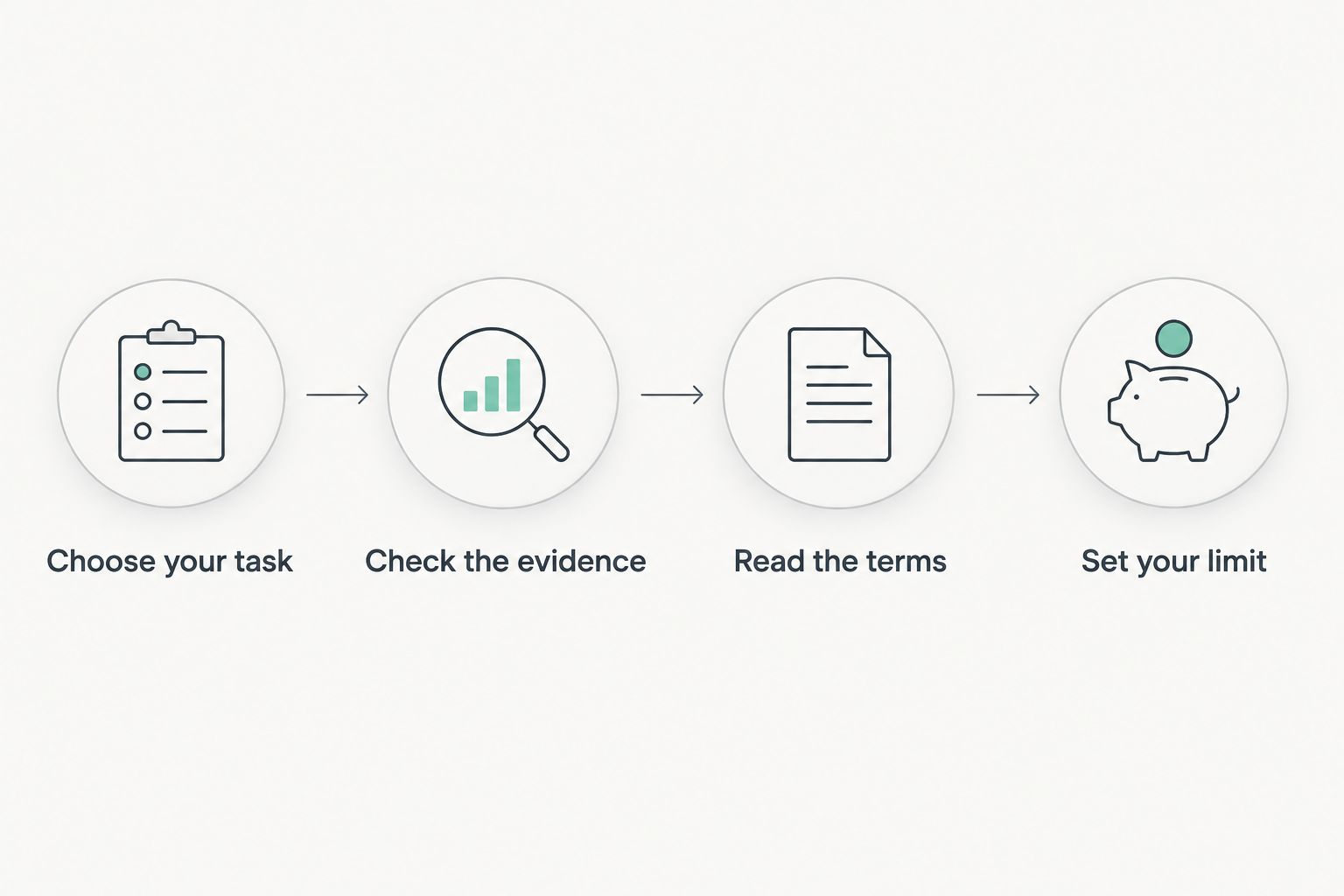
Use this sequence before opening an account, submitting an item, or placing a bid. It keeps a familiar brand name from making the decision for you.
- Choose your task. Write down whether you are buying or selling and what a successful transaction means to you.
- Check the evidence. Identify the documents and condition information needed to assess the specific piece.
- Read the terms. Review the obligations attached to bidding, selling, payment, delivery, or withdrawal.
- Set your limit. Decide what conditions would make you walk away before the transaction becomes urgent.
For buyers, a useful safeguard is 1 written checklist per lot. Include the description, unresolved condition questions, relevant documents, and transaction terms. Keep separate checklists when comparing pieces; evidence for one ring says nothing about another.
For sellers, compare 2 transaction types explicitly: outright purchase and consignment. Do not treat an auction estimate as equivalent to an offer to buy. Each document describes a different commitment.
If documentation is your sticking point, read how to get a condition report before bidding. Ask questions early enough to receive answers before making a commitment.
When staying with Worthy is the right call
Stay with Worthy on your shortlist when your goal is selling jewelry through an online auction route and its current acceptance requirements and seller agreement fit your piece. A different business model is not automatically an improvement.
Compare the agreement against your actual priorities. If you do not want to manage a private buyer, do not choose private selling merely because it sounds more direct. If you want an auction, do not substitute an outright-purchase offer without recognizing the change in transaction.
The right 2026 choice is the route you understand and want—not the longest alternatives list.
FAQ
What's the best Worthy alternative in 2026?
The best Worthy alternative depends on whether you want to buy or sell jewelry. Jewelryroom.com is a jewelry-auction option to explore as a buyer; a local buying jeweler is a route to investigate for a direct sale.
Is a jewelry auction business the same as Worthy?
No, sharing the jewelry-auction category does not establish the same service. Check whether the business serves buyers, accepts seller consignments, or offers the specific transaction you need.
Should I sell jewelry to a local jeweler instead of using an auction?
Choose a local jeweler for a direct-sale discussion if that transaction matches your goal. Confirm whether the proposal is an outright purchase or consignment before comparing it with an auction route.
Is an auction estimate the same as an offer to buy?
No, an auction estimate is not an offer to purchase your jewelry. Read the associated seller agreement and distinguish a projected auction outcome from a business's written purchase offer.
What should I check before buying jewelry at auction?
Check the individual lot's description, condition information, supporting documents, and auction terms. Resolve questions that affect your decision before placing a bid.
Can I sell jewelry privately instead of using Worthy?
Private selling is another transaction route, but you must manage the description, buyer discussions, payment arrangements, and delivery. Choose it only if you are prepared to handle those responsibilities.
When should I keep Worthy on my shortlist?
Keep Worthy on your shortlist when you want an online jewelry auction selling route and its current requirements fit your piece. Review the seller agreement rather than assuming another route produces a better outcome.
One last thing
A gemstone identification report and a condition report answer different questions. Evidence about a stone's identity does not establish that a clasp works, a setting is secure, or a ring has no repairs. Match each document to the question you need answered before buying or selling.


