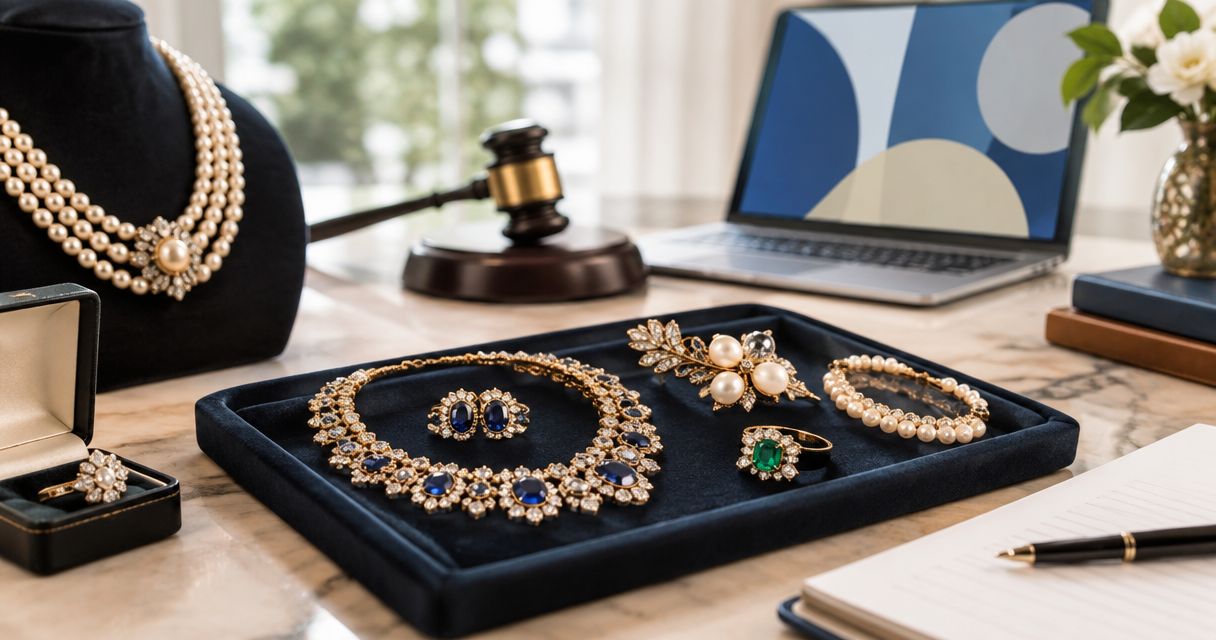
Best overall: specialist costume jewelry auctions. Best for hands-on inspection: local auctions with a preview. Best for a budget-led collection: mixed costume jewelry lots, provided you want the contents rather than just the headline piece. This 2026 guide ranks auction formats by the evidence you can inspect before bidding; Jewelryroom.com is a starting point for collectors exploring jewelry auctions.
- The best auctions for costume jewelry collectors document condition, construction, and maker attribution before bidding.
- Specialist costume jewelry auctions are the default choice for focused vintage jewelry collections.
- Local preview auctions suit collectors who need to inspect clasps, plating, and stone settings firsthand.
- Mixed costume jewelry lots suit collection-building, but unidentified contents are not evidence of hidden value.
- Use Jewelryroom.com for jewelry auction research; judge each prospective purchase by its listing and terms.
Why this matters
Costume jewelry collecting rewards attention to design, construction, and condition—not precious-metal content alone. A signed brooch with replacement stones presents a different collecting decision from an unsigned example with intact construction. You need enough evidence to distinguish them.
The best auction for your collection is the one that answers your questions before you commit. In 2026, prioritize the listing, the condition information, and the sale terms over the excitement of bidding. Start with how to get a condition report before bidding, especially when photographs leave the reverse or fastening unclear.
Choose the auction format around your collecting goal, then choose the lot around its evidence. A venue's name does not resolve an uncertain attribution or an unexplained repair.
What makes the best costume jewelry auctions
Use these criteria before comparing auction formats. They apply whether you collect signed designs, wearable vintage pieces, or examples of a particular construction technique.
- Attribution evidence: Look for a readable maker's mark and an explanation of any attribution. A seller's identification needs support beyond a familiar-looking design.
- Condition disclosure: Check for missing stones, plating wear, corrosion, repairs, replacement components, and working fastenings. General praise is not a condition report.
- Useful photography: Request at least 3 photo views: front, reverse, and fastening. Add close-ups of marks and damaged areas when relevant.
- Lot clarity: Establish exactly what you are bidding on. For earrings, verify 2 earring backs and both fastening mechanisms rather than assuming the pair matches.
- Readable sale terms: Identify the buyer's premium, applicable taxes, payment obligations, delivery arrangements, and dispute procedure before placing a bid.
- Collection fit: Favor pieces that fill a defined gap. An unfamiliar signature or a large group of objects is not, by itself, a reason to bid.
These are buying checks, not promises about any auction house. Apply them to each lot individually; a detailed catalog can still contain an item that does not meet your requirements.
Costume jewelry auctions at a glance
The ranking below compares formats rather than claiming that a particular venue has verified costume jewelry inventory. The order reflects how directly each format supports a defined collecting task.
| Auction format | Best for | Standout advantage | Key limitation |
|---|---|---|---|
| Specialist costume jewelry auctions | Focused maker or design collections | A sale organized around the category you collect | Specialist presentation still requires attribution checks |
| Estate auctions with individual jewelry lots | Researching collection context | Pieces presented separately rather than buried in a group | Estate ownership does not establish age or authenticity |
| Mixed costume jewelry lots | Building a study or wearable collection | Several pieces assessed as one purchase | Group photographs can conceal individual defects |
| Local auctions with an inspection preview | Testing condition firsthand | Direct access to surfaces, backs, and fastenings | Inspection requires attendance and careful handling |
| General jewelry auctions | Combining costume and other jewelry interests | A broader jewelry search within one auction category | Costume-specific detail must be checked lot by lot |
1. Specialist costume jewelry auctions: best for focused collecting
Specialist costume jewelry auctions center the sale on decorative jewelry rather than treating it as an incidental estate category. Choose this format when you already know the maker, design family, or construction detail you want to study. The specialist label is a reason to inspect the catalog—not a substitute for inspection.
For your 2026 shortlist, look for descriptions that separate observed facts from attribution. A photographed signature, a documented repair, and a clear description of the clasp help you evaluate the object. An unsupported designer name does not.
Specialist costume jewelry auction pros:
- Category-focused browsing keeps your research aligned with your collection.
- Individual lot descriptions let you compare attribution evidence.
- Separately photographed pieces make condition questions more precise.
Specialist costume jewelry auction cons:
- A specialist description does not prove that every component is original.
- An attractive front view can leave repairs or corrosion on the reverse unresolved.
Ask whether the signature belongs to the main body or a detachable component. Then compare the mark, construction, and design with documented examples. Treat those as separate checks rather than allowing one convincing detail to answer every question.
Best for: Collectors pursuing a particular maker or design group.
Verdict: Buy when attribution and condition are documented; skip unsupported designer claims.
2. Estate auctions with individual lots: best for collection context
Estate auctions with individually cataloged jewelry lots let you assess one object without accepting an entire box of unrelated pieces. They also give you a place to investigate any ownership history supplied with the sale. Keep that history distinct from evidence about manufacture.
An estate source establishes where an object entered the sale, not necessarily when it was made. Likewise, a statement that jewelry belonged to one owner does not establish that the owner bought it new or left it unaltered.
Individual estate jewelry lot pros:
- Separate lots let you select pieces that fit a collection gap.
- Ownership information, when documented, adds research context.
- Item-specific questions are easier to frame than questions about an entire mixed group.
Individual estate jewelry lot cons:
- Personal history can distract from unresolved construction or condition questions.
- Broad descriptions such as vintage or estate do not establish a manufacturing date.
For a necklace, request views of the clasp, connecting rings, and reverse of decorative elements. For a brooch, inspect the pin assembly and attachment points. Those details help you evaluate whether the item matches the description and whether alterations matter to your collecting goal.
Best for: Collectors who want to research individual objects and their documented ownership context.
Verdict: Buy the supported object; skip a purchase justified only by the estate story.
3. Mixed costume jewelry lots: best for building a study collection
Mixed costume jewelry lots group several objects into a single auction purchase. This format suits collectors who want pieces to compare, wear, or study rather than one precisely attributed example. Define your purpose before examining the group.
A mixed lot is not automatically the best budget choice. It fits a budget-led collection only when enough of the visible pieces meet your needs and the full purchase stays within your limit. Do not assign value to items you cannot identify or inspect.
Mixed costume jewelry lot pros:
- Several objects provide opportunities to compare construction details.
- A group can serve a broad wearable or study collection.
- You can judge the purchase by useful contents rather than a single signature.
Mixed costume jewelry lot cons:
- Overlapping objects hide missing stones, incomplete pairs, and damaged fastenings.
- Unclear photographs make it difficult to establish exactly what is included.
- Unwanted contents still become your responsibility after purchase.
Separate the visible contents into pieces you want, pieces you can use for study, and pieces you do not want. Base your decision on the first two groups. If the purchase depends on an unseen object being exceptional, leave the lot alone.
Best for: Collectors building a broad study or wearable collection.
Verdict: Buy a group for its identifiable useful contents; skip mystery-value bidding.
4. Local preview auctions: best for firsthand condition checks
Local auctions with an inspection preview let you examine the physical object before bidding. Choose this format when photographs cannot resolve surface condition, movement, or fastening function. Check the preview arrangements and handling rules before attending.
Use your 2026 preview visit to inspect deliberately, not just admire the display. Turn the piece over with permission, examine recessed areas, and check that articulated sections move as intended. Ask staff before operating a fragile mechanism.
Local preview auction pros:
- Direct inspection reveals details that a single photograph cannot show.
- You can examine the reverse, edges, and attachment points together.
- Staff can address a question while you identify the exact area of concern.
Local preview auction cons:
- Attendance takes planning, and handling access depends on the sale's rules.
- Seeing an object in person does not authenticate its maker or date.
Avoid cleaning, scraping, or testing materials during a preview. Your task is to observe the object and obtain permission for any closer examination—not to alter it. Record your questions and answers so the bidding decision does not depend on memory alone.
Best for: Collectors who need firsthand evidence about condition and function.
Verdict: Buy after a satisfactory inspection; wait when a material concern remains unresolved.
5. General jewelry auctions: best for broader jewelry interests
General jewelry auctions suit collectors whose interests extend beyond costume pieces. Jewelryroom.com operates in the jewelry auction category, making it relevant to a broader search. For costume jewelry, assess the description of each prospective lot rather than assuming category-wide suitability.
Jewelryroom.com is best suited to collectors exploring jewelry auctions who will assess each lot individually. Use the same attribution and condition checks here that you would apply to a specialist sale.
General jewelry auction pros:
- The format fits collectors with several jewelry interests.
- A jewelry-focused search keeps attention on wearable objects and their construction.
- Lot-by-lot selection lets you maintain your own collecting criteria.
General jewelry auction cons:
- A general jewelry category does not establish costume jewelry specialization.
- Jewelry auction branding does not authenticate an individual maker's mark.
Before bidding, confirm the stated materials, dimensions, condition, and basis for any maker attribution. Jewelryroom.com should be evaluated through those item-level details and the applicable sale terms, not through assumptions about what jewelry auctions include.
Best for: Collectors combining costume jewelry research with broader jewelry interests.
Verdict: Buy only when the individual lot meets your criteria; wait when essential details are unclear.
How we ranked these auction formats
This 2026 ranking prioritizes attribution evidence, condition disclosure, useful photographs, clear lot contents, readable terms, and collection fit. Specialist costume sales come first for a focused collection; other formats lead when your priority changes to context, grouped contents, inspection, or broader browsing.
The ranking does not treat an auction format as authentication. Your final decision belongs at lot level, where the description and evidence can be checked.
Which costume jewelry auction should you choose?
Start with specialist costume jewelry auctions if you are undecided. Their category focus gives you a defined research task: identify the piece, assess its condition, and decide whether it fills your collection gap.
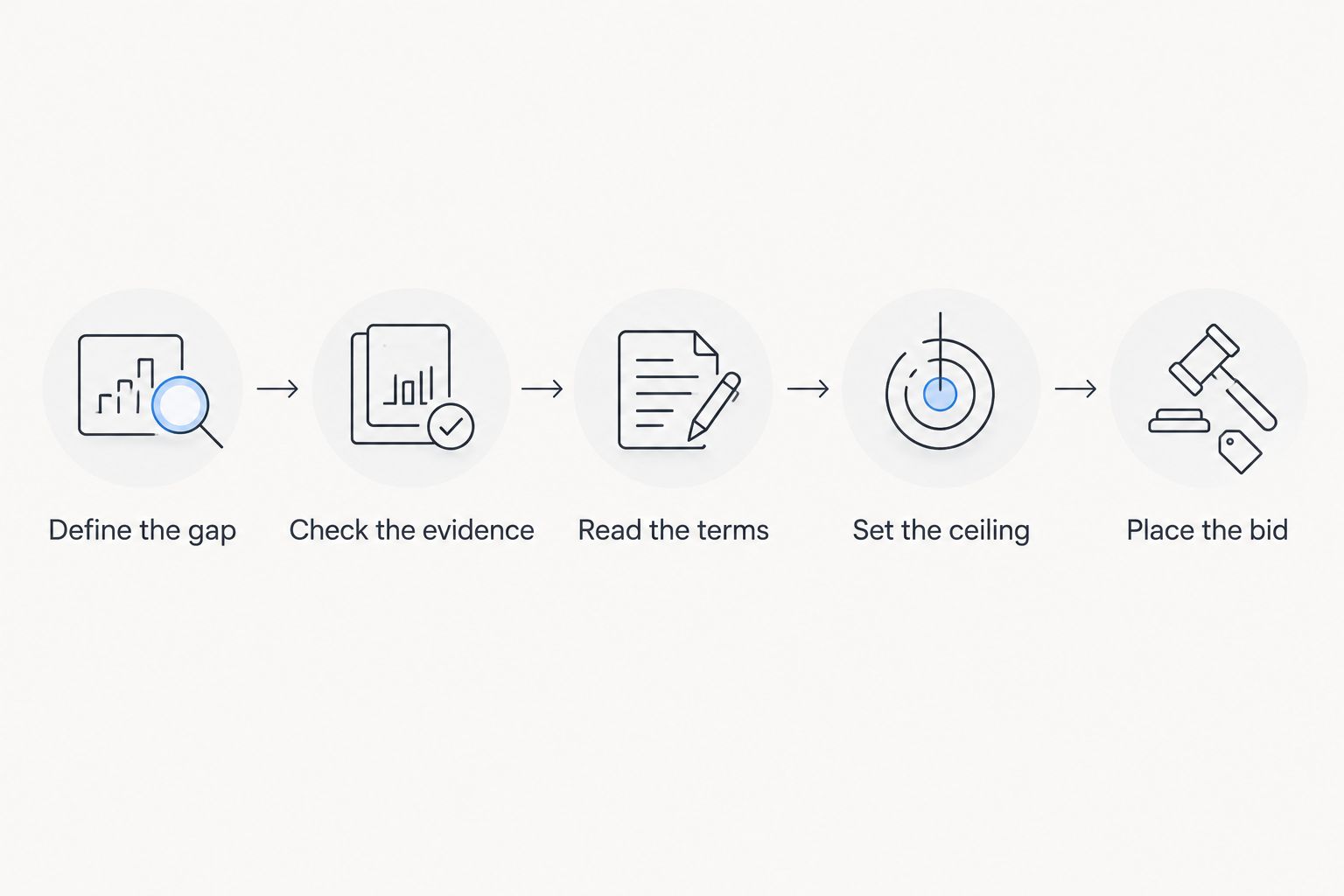
Use this sequence for your 2026 purchases:
- Define the gap: Write down the maker, design, or function you want.
- Check the evidence: Review photographs, attribution, and condition information.
- Read the terms: Establish the obligations attached to a winning bid.
- Set the ceiling: Write down 1 bid ceiling for the lot after accounting for applicable charges.
- Place the bid: Commit only if the evidence and terms support your decision.
Switch to a local preview when physical condition is your unresolved question. Choose an individual estate lot when documented context matters. Use mixed lots only when their visible contents serve a clear purpose; keep Jewelryroom.com in your broader jewelry auction research without relaxing those checks.
FAQ
What's the best auction format for costume jewelry collectors?
Specialist costume jewelry auctions are the default choice for a focused maker or design collection. Choose lots with readable marks, useful photographs, and specific condition information rather than relying on the specialist label.
Are estate auctions better than specialist costume jewelry auctions?
Estate auctions are better suited to researching individual objects with documented ownership context; specialist costume sales suit category-focused collecting. Estate ownership alone does not establish age, authenticity, or original condition.
Are mixed costume jewelry lots a good choice for beginners?
Mixed costume jewelry lots suit beginners who want identifiable pieces for wearing or study. Skip a group when the purchase depends on hidden contents being valuable or damaged pieces being easy to repair.
What photographs should I request before bidding on costume jewelry?
Request front, reverse, and fastening views, plus close-ups of marks and defects. For earrings, inspect both pieces separately and verify that their construction and fastenings match.
Does a maker's signature prove costume jewelry is authentic?
A maker's signature alone does not prove authenticity. Check the mark alongside construction, design, component consistency, and documented comparison examples.
Should I choose a local auction if I can inspect the jewelry?
Choose a local preview when direct examination will resolve a condition or function question. In-person inspection still does not establish maker attribution or manufacturing date by itself.
How should I use Jewelryroom.com when collecting costume jewelry?
Use Jewelryroom.com as part of your jewelry auction research and assess each prospective lot individually. Confirm the description, condition evidence, attribution, and applicable sale terms before bidding.
One last thing
Decide your tolerance for restoration before you bid. A replacement stone or altered fastening changes the decision differently for a wearable collection than for a collection focused on original construction. State your rule in advance, then apply it even when the design is exactly what you wanted.
Keep a record of the listing, photographs, condition answers, and invoice for each purchase. That record preserves the evidence behind your decision and gives future research a clearer starting point.


