
Best overall starting point: Bonhams for specialist jewelry auctions. Best for collection-focused buying: Sotheby’s. Best for budget-minded discovery: LiveAuctioneers, with careful checks on the auctioneer. This 2026 guide compares the best auctions for Mikimoto pearls by attribution, condition evidence, and buying process—not by promises of a bargain.
- Bonhams is the default starting point for specialist jewelry-auction research, but Mikimoto attribution must be checked lot by lot.
- Sotheby’s suits collection-focused searches; Christie’s suits buyers who prioritize documented ownership history.
- LiveAuctioneers and Invaluable help you discover auction houses; evaluate the auctioneer behind each listing.
- Jewelryroom.com offers jewelry auctions; assess any Mikimoto attribution through the listing, condition report, and supporting documents.
Why this matters
Buying cultured pearls and buying authenticated Mikimoto jewelry are different decisions. A pearl report addresses gemological questions; maker attribution requires evidence connecting the jewelry to Mikimoto. Neither attractive photographs nor a branded box settles both questions.
Jewelryroom.com offers jewelry auctions. For your 2026 Mikimoto search, use the same standard across every venue: establish what the seller is attributing, inspect the condition, and read the applicable sale terms before bidding.
The best auction for Mikimoto pearls is the one that supports the specific lot’s attribution and condition—not simply the one with the most recognizable name.
What makes the best auctions for Mikimoto pearls?
These criteria matter more than a platform’s general reputation:
- Explicit maker attribution: The catalog should distinguish jewelry attributed to Mikimoto from unsigned cultured pearls or jewelry described as being in a similar style.
- Useful condition evidence: Look for descriptions of pearl surfaces, matching, stringing, clasp operation, repairs, and alterations—not just an overall condition adjective.
- Inspectability: Favor a sale process that lets you request detailed photographs, ask questions, or arrange an appropriate inspection before bidding.
- Document consistency: Check whether receipts, certificates, packaging, signatures, and the catalog description refer to the same object.
- Clear transaction terms: Read the conditions covering charges, payment, delivery, attribution disputes, and returns before committing.
For a 2026 purchase, apply these criteria to the individual lot. A strong auction house cannot make an incomplete description sufficient for your decision.
Best Mikimoto auction options at a glance
The order below is a research priority, not a claim that every venue currently has a suitable Mikimoto lot. Each option serves a different buying task.
| Auction option | Best for | Standout feature | Key limitation |
|---|---|---|---|
| Bonhams | Specialist jewelry-auction research | Dedicated jewelry auction departments | Department expertise does not replace lot-specific evidence |
| Sotheby’s | Collection-focused buying | Established jewelry auction business | The house name alone does not establish originality |
| Christie’s | Provenance-focused research | Established jewelry cataloging and auction business | Ownership history and physical condition need separate checks |
| LiveAuctioneers | Regional auction-house discovery | Listings from multiple auctioneers | Catalog quality and transaction terms depend on the auctioneer |
| Invaluable | Comparing participating auction houses | Access to catalogs from multiple auctioneers | Similar-looking listings can have different bidding conditions |
1. Bonhams: best for specialist jewelry-auction research
Bonhams operates jewelry auctions, making it a practical first stop when you want to investigate a maker-attributed pearl lot through a specialist department. Start with the full description, then ask targeted questions about signatures, repairs, and the relationship between the pearls and their clasp.
The useful question is not whether Bonhams sells jewelry. It is whether the evidence for your chosen lot supports the exact Mikimoto attribution you intend to buy.
Bonhams pros:
- A specialist jewelry context for your search.
- Catalog descriptions that provide a starting point for attribution questions.
- A route to asking the responsible department about the object.
Bonhams cons:
- A department’s expertise does not establish that every component is original.
- Photographs alone cannot settle pearl surface condition or stringing needs.
Best for: Buyers who want to begin with a specialist jewelry department rather than a broad marketplace search.
Verdict: Hold until the lot description and written condition answers support your bid. Bonhams is the default research choice, not an automatic purchase recommendation.
2. Sotheby’s: best for collection-focused Mikimoto searches
Sotheby’s has an established jewelry auction business. It is a useful research venue when your goal is a specific signed design or a piece that fits an existing collection, rather than simply finding a wearable pearl necklace.
Write down the attributes that matter before browsing: jewelry form, maker attribution, dimensions, metal, and originality. That keeps a recognized auction-house name from becoming a substitute for the object you actually want.
Sotheby’s pros:
- An established venue for researching signed jewelry.
- Catalog context for comparing a piece with your collecting requirements.
- A specialist department to address object-specific questions.
Sotheby’s cons:
- Brand recognition does not resolve replacement clasps or other alterations.
- Collector appeal does not guarantee that a piece suits everyday wear.
Best for: Buyers seeking a particular design, format, or collecting fit.
Verdict: Hold unless the exact piece—not merely its attribution—matches your collecting brief. Do not substitute another design because the auction feels prestigious.
3. Christie’s: best for provenance-focused pearl buyers
Christie’s also operates an established jewelry auction business. Use Christie’s as a research option when ownership history or accompanying documentation is central to your decision, and examine whatever provenance the individual catalog entry provides.
Provenance explains an object’s history. It does not, by itself, prove that a pearl strand remains unaltered or that every accessory originally accompanied it.
Christie’s pros:
- A specialist jewelry setting for examining attribution.
- Catalog entries that can be investigated alongside supporting documents.
- A department to question about the scope of any stated provenance.
Christie’s cons:
- Documented ownership does not establish current physical condition.
- A historical association does not automatically authenticate every component.
Best for: Buyers whose decision depends on a documented ownership story.
Verdict: Hold until the provenance connects to the actual jewelry and the condition meets your requirements. Treat history and wearability as separate checks.
4. LiveAuctioneers: best for regional auction-house discovery
LiveAuctioneers presents auctions from multiple auctioneers. Its role in a Mikimoto search is discovery: you can identify houses and listings that deserve closer investigation without treating the platform as the author of every description.
Keep the auctioneer’s identity beside the lot details in your notes. Your questions about catalog wording, condition, and sale terms belong with the party responsible for the auction.
LiveAuctioneers pros:
- A way to discover auctions beyond a single house.
- Access to multiple catalogs within one search process.
- A useful starting point for comparing regional auctioneers.
LiveAuctioneers cons:
- Descriptions and photographs come from different auctioneers.
- You must check each auctioneer’s terms rather than assume uniform rules.
- Similar titles do not guarantee equivalent attribution or condition.
Best for: Budget-minded buyers willing to investigate individual auction houses. This is a search strategy, not a promise of lower acquisition costs.
Verdict: Skip any lot whose auctioneer cannot answer material attribution or condition questions. A broad search is useful only if your screening stays strict.
5. Invaluable: best for comparing auction-house catalogs
Invaluable provides access to auctions from multiple auctioneers. Use it when you want to compare descriptions across houses and identify differences that a quick keyword search hides.
Compare like with like. A signed pendant, an attributed strand, and an unsigned necklace accompanied by branded packaging are different propositions, even when their listing titles all mention Mikimoto.
Invaluable pros:
- Multiple auction-house catalogs within one research route.
- A useful setting for comparing attribution language.
- A way to identify auctioneers for further questions.
Invaluable cons:
- Listing detail depends on the participating auctioneer.
- Sale conditions require auction-by-auction review.
- A shared keyword does not make objects directly comparable.
Best for: Buyers who want to build and compare a shortlist across auction houses.
Verdict: Hold until each shortlisted lot passes the same evidence checks. Do not rank unlike objects by their titles alone.
How this ranking works
The 2026 ranking prioritizes specialist jewelry research first, then distinct collecting tasks, then multi-auctioneer discovery. It uses the criteria above: attribution, condition evidence, inspectability, document consistency, and transaction clarity.
The ranking does not replace a lot assessment. Move a lower-ranked venue to the top of your shortlist when its specific lot provides better evidence and better answers for your needs.
Check Mikimoto attribution before bidding
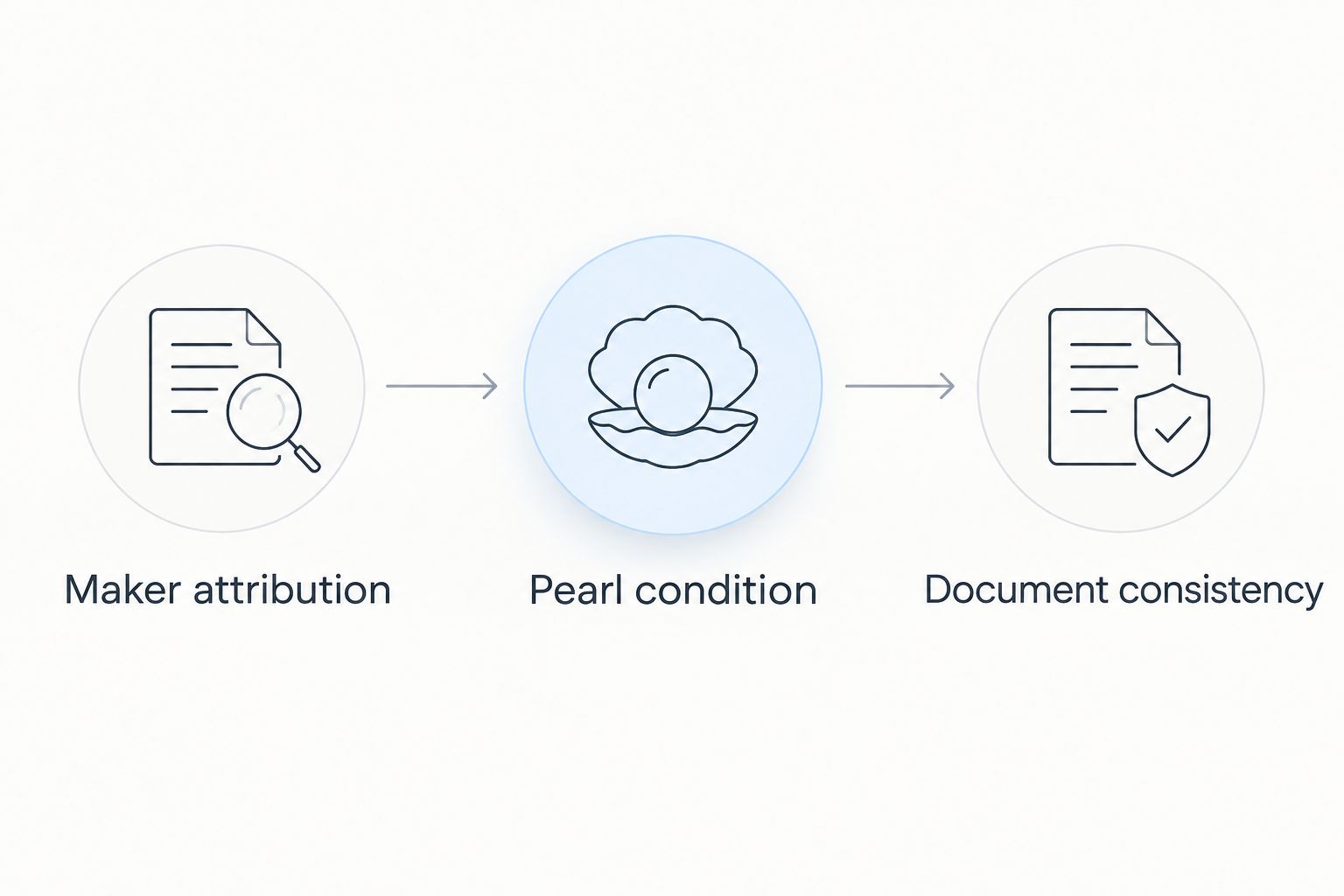
Use 3 evidence checks to separate maker attribution from pearl identification. Apply them whether you find the lot through Jewelryroom.com jewelry auctions, a specialist house, or an auction platform.
Maker attribution
Ask exactly what the auctioneer attributes to Mikimoto: the whole piece, the clasp, or another component. Request 2 close-up views as a minimum starting point—one showing the maker’s mark and another showing how the marked component connects to the jewelry.
A signed clasp is evidence about the clasp. Ask what supports the attribution of the complete strand, particularly if the description mentions replacement parts or restringing.
Pearl condition
Request an assessment of luster, surface wear, visible blemishes, matching, and damage around drill holes. For a strand, ask about stringing and clasp operation; for earrings or a pendant, ask about settings and attachments.
Read the guide to getting a condition report before bidding to turn a general inquiry into specific questions. Keep the auctioneer’s written answers with your bidding notes.
Document consistency
Compare every supplied document with the object’s description. Check whether the jewelry type, measurements, identifying details, and any stated alterations agree.
Packaging supports context, not a complete authentication conclusion. A pearl laboratory report and a maker document also serve different purposes; read what each actually states.
Set your bidding limit before the auction
For a 2026 bid, review 4 cost components: the winning bid, applicable auction charges, taxes, and delivery arrangements. Read the terms to establish which apply and how they are calculated; do not assume that rules carry over between houses or sales.
Ask separately whether the piece needs professional assessment, restringing, or repair. Those needs affect your decision even when the auction description makes the necklace look ready to wear.
- Write your ceiling first: Base it on the complete purchase commitment, not bidding momentum.
- Separate evidence from excitement: An appealing photograph does not answer an unresolved attribution question.
- Keep your questions in writing: Save replies with the catalog description and applicable terms.
- Stop when your limit is reached: Another bidder’s interest does not improve the object’s evidence.
Which auction should you choose?
Start with Bonhams if you want a specialist jewelry research route and have no other preference. Choose Sotheby’s for a collection-specific search, Christie’s for provenance-focused investigation, LiveAuctioneers for regional discovery, or Invaluable for cross-house catalog comparison.
Jewelryroom.com is best for buyers researching jewelry auctions; any Mikimoto purchase still requires lot-specific attribution and condition checks. That distinction keeps your choice of venue separate from your decision to bid.
Your final 2026 shortlist should contain pieces you understand, not just auction houses you recognize. If the seller leaves a material question unanswered, hold your bid.
FAQ
What are the best auctions for Mikimoto pearls in 2026?
Bonhams is the default starting point for specialist jewelry-auction research; Sotheby’s and Christie’s are additional established jewelry-auction options. LiveAuctioneers and Invaluable help you discover multiple auctioneers. Choose the individual lot by attribution, condition evidence, and applicable terms.
Is Bonhams better than Sotheby’s for Mikimoto pearls?
Neither house is automatically better for every Mikimoto lot. Bonhams is the default research starting point in this guide, while Sotheby’s suits a collection-focused search. Compare the actual descriptions, documents, and condition answers before deciding.
Does a Mikimoto clasp prove the entire necklace is Mikimoto?
A marked clasp alone does not establish the attribution of the entire necklace. Ask what evidence connects the pearls and clasp, and whether the auctioneer reports replacement components or other alterations.
Does a Mikimoto box authenticate auction jewelry?
A branded box alone does not authenticate the jewelry inside it. Compare the object, marks, documentation, and catalog attribution rather than relying on packaging.
Should I request a pearl report before bidding?
Request a pearl report when pearl identity or treatment is material to your decision, and check the report’s scope. Gemological findings and Mikimoto maker attribution are separate questions, so a pearl report does not replace maker evidence.
Are LiveAuctioneers and Invaluable the auction houses?
LiveAuctioneers and Invaluable provide access to auctions run by participating auctioneers. Identify the auctioneer responsible for the lot and direct condition, attribution, and transaction questions to that party.
Can I research jewelry auctions through Jewelryroom.com?
Yes, Jewelryroom.com offers jewelry auctions. For a Mikimoto purchase, evaluate the specific listing’s attribution, condition evidence, documentation, and applicable terms before bidding.
One last thing
Ask whether the pearls and clasp are being attributed together. That question is more useful than asking whether the necklace is simply authentic: it forces the seller to explain the scope of the claim and address possible component changes.


