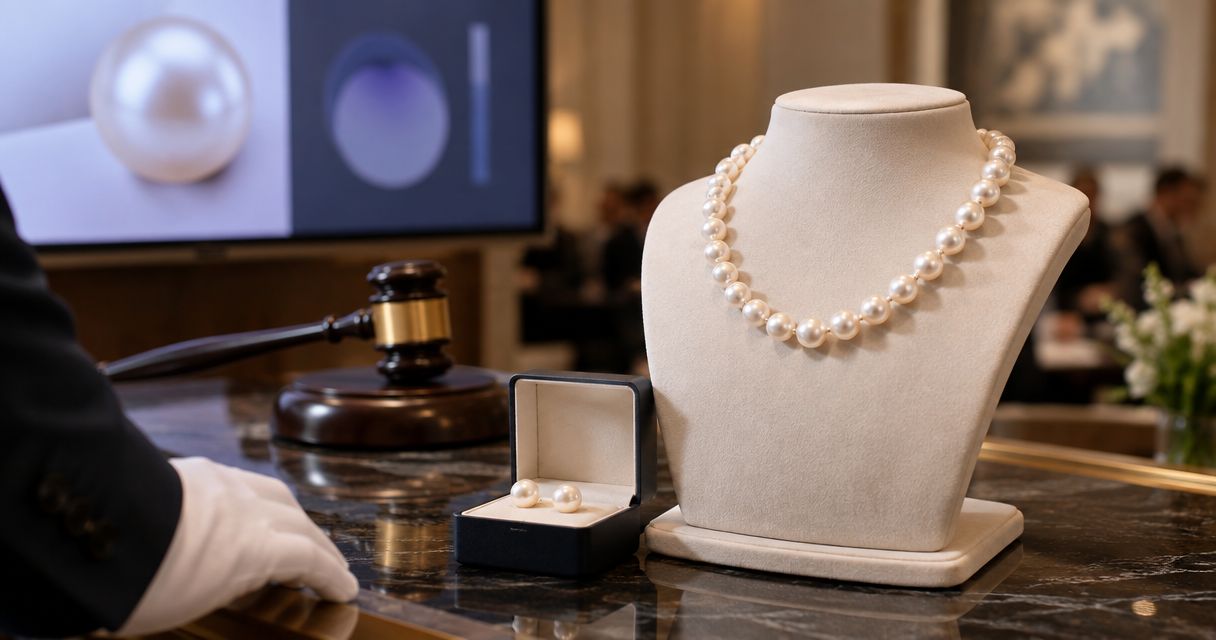
A Mikimoto pearl auction is a timed or live online sale where signed Mikimoto pearl jewelry changes hands below boutique retail price, provided the buyer can verify the hallmark, the nacre grade, and the paperwork before bidding closes. Luxury pearl collectors chasing Mikimoto lots in 2026 face a narrower risk than general estate jewelry buyers: hallmark fraud, unsigned "Mikimoto-style" strands, and inflated grading claims are the three things that separate a good buy from a costly mistake.
- Jewelryroom.com lists Mikimoto lots with condition reports — verify the hallmark stamp on the clasp before you bid.
- Nacre thickness and luster grade drive Mikimoto pearl auction value more than strand length or bead count.
- Buyer's premium adds real cost on top of the hammer price; calculate the total before setting a max bid.
- Unsigned strands marketed as "Mikimoto-style" are the most common misrepresentation risk in 2026 online auctions.
Why Mikimoto pearl auctions matter for luxury pearl collectors
Mikimoto, founded by Kokichi Mikimoto in 1893, built its name on cultured akoya pearls and later expanded into South Sea and black South Sea strands. That history is exactly why collectors pay a premium for the signature: a hallmarked Mikimoto clasp carries decades of grading consistency that unsigned pearls simply cannot claim.
Collectors in this segment do not shop by carat weight or price alone. They shop by documentation — hallmark placement, original box and papers, and a condition report that confirms the clasp and stringing haven't been swapped. A pearl auction platform built around published condition reports removes most of the guesswork that sinks first-time bidders on peer marketplaces.
The other reason this segment behaves differently: resale matters. A luxury pearl collector buying a Mikimoto strand in 2026 is often thinking about the piece's value in five or ten years, not just wearing it once. That means grading notes and hallmark verification aren't optional extras — they're the difference between an asset and a decoration.
How to buy at a Mikimoto pearl auction without overpaying or getting burned
Verify the Mikimoto hallmark before you bid
Every genuine Mikimoto piece carries an authentication mark, typically stamped inside or near the clasp. Confirm it exists and matches known placement before you place a single bid.
- Ask the auction listing for a close-up photo of the clasp stamp, not just the full strand
- Cross-check the hallmark style against the era the listing claims (vintage clasps differ from current production)
- Treat "Mikimoto-style" or "Mikimoto-inspired" wording as a red flag, not a synonym for authentic
- Confirm the box, if included, matches the era of the piece rather than a generic reproduction
- Request a gemstone certification style check when the listing mixes pearls with diamonds or colored stones
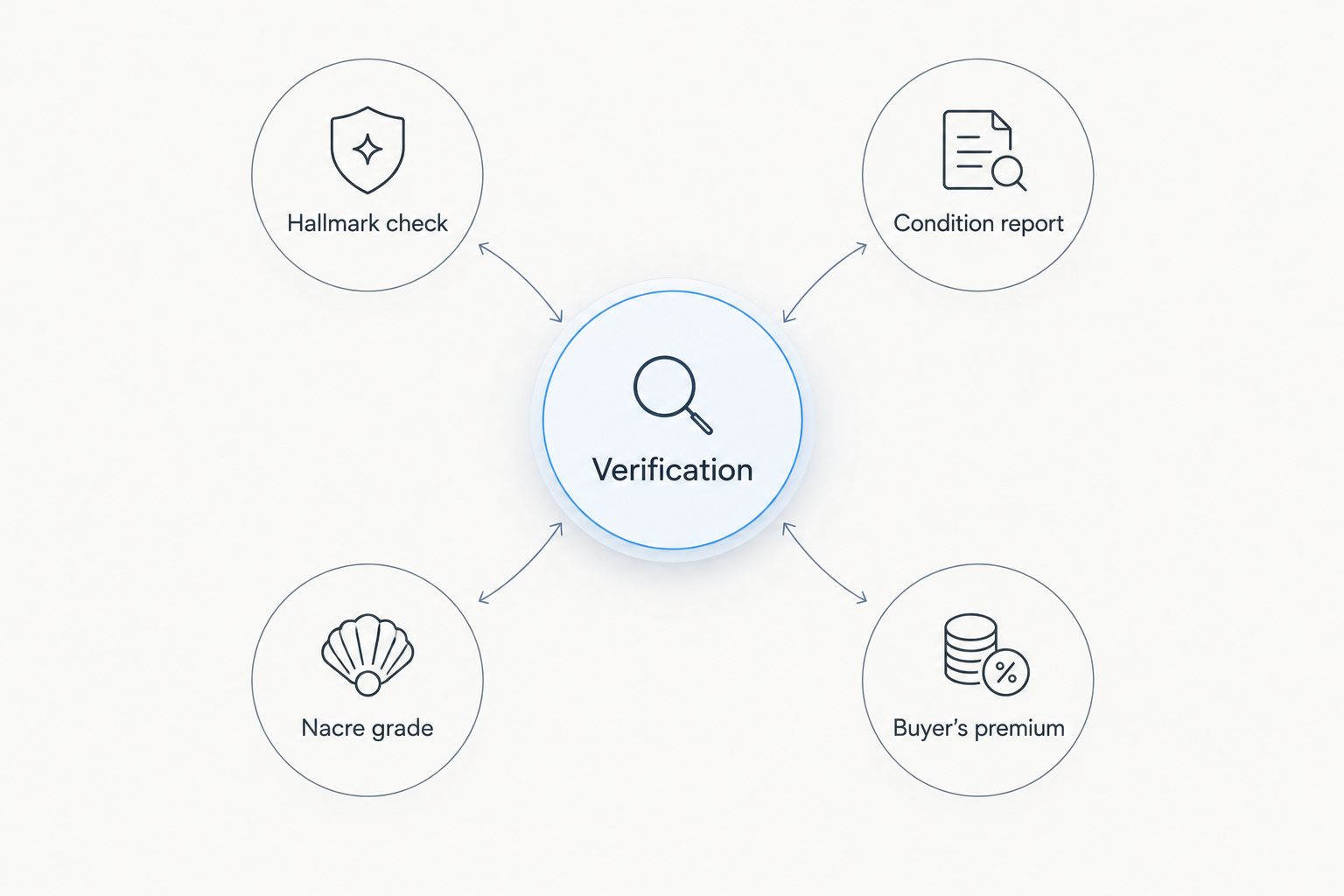
Request the condition report and grading notes
A condition report tells you whether the clasp, stringing, and knots are original or replaced — information no photo can fully convey.
- Ask directly whether the strand has been restrung, and when
- Confirm the report notes any drilling, chips, or surface abrasion on individual pearls
- Check whether the clasp is original to the piece or a later replacement
- Get the report in writing before bidding, not after you've won the lot
- Compare the condition report against the photos to catch discrepancies early
Assess nacre thickness and luster grade
Nacre thickness is what makes a cultured pearl durable and lustrous over decades — thin nacre chips and dulls faster than a well-nucleated strand.
- Ask for the nacre thickness rating if the listing includes lab grading
- Look for sharp, mirror-like reflections in photos rather than chalky or matte surfaces
- Check for consistent luster across the full strand, not just the largest pearls
- Note any mention of blemishes, circles, or surface pitting in the grading notes
Compare akoya, South Sea, and black South Sea strands
Mikimoto produces across all three pearl types, and each holds value differently for collectors.
- Akoya strands run smaller and are the classic Mikimoto signature look
- South Sea pearls are larger and typically command higher hammer prices
- Black South Sea (Tahitian-sourced) strands appeal to collectors seeking a darker, statement palette
- Match the type to how the piece will actually be worn or displayed, not just rarity
Set your maximum bid and calculate total cost
The hammer price is never the full cost. Calculating total cost including buyer's premium before you bid keeps you from winning a lot you can't actually afford.
- Add buyer's premium, shipping, and insurance to the hammer price before setting a ceiling
- Set your maximum bid before the auction starts, not while adrenaline is running mid-bid
- Leave a buffer for authentication or appraisal costs after the win
- Walk away once your calculated ceiling is hit — a signed Mikimoto strand will come up again
Track shipping and insurance after you win
A won lot isn't secured until it's insured and shipped correctly. Confirm the carrier, the insured value, and delivery signature requirements before the piece leaves the seller.
- Confirm the insured value matches your winning bid, not just the estimate
- Require signature confirmation on delivery for any lot over a few hundred dollars
- Photograph the package on arrival before opening, in case of a claim
- Keep the condition report and invoice together for insurance and future resale
Comparing channels for Mikimoto pearl auction buying
| Channel | Best for | Key limitation |
|---|---|---|
| Online timed auctions (e.g., Jewelryroom.com) | Collectors comparing multiple signed lots with published condition reports | Inventory turns over fast; a specific strand length or grade may not be listed every cycle |
| Major auction houses (Christie's, Sotheby's) | High-value single-owner collections and rare vintage Mikimoto sets | Higher buyer's premiums and longer settlement timelines |
| Mikimoto boutique or authorized dealer resale | Buyers who want manufacturer-backed paperwork | Retail markup; rarely discounted against auction hammer prices |
| Peer-to-peer marketplaces (eBay, Rubylane) | Budget buyers willing to do their own hallmark verification | Highest misrepresentation risk; sellers rarely provide grading documentation |
Verdict: a timed online auction with published condition reports is the best starting point for most luxury pearl collectors — it gives you documentation without the settlement delays of a major house or the guesswork of a peer marketplace.
Browse current Mikimoto pearl lots
Compare signed strands with published condition reports before you bid.
Common mistakes luxury pearl collectors make on Mikimoto lots
- Trusting listing titles over hallmark evidence — "Mikimoto-style" or "Mikimoto-inspired" wording is not a hallmark claim, and treating it as one is the single most common overpayment mistake in 2026 auctions
- Judging value by diameter alone — a large pearl with thin nacre and dull luster is worth less than a smaller strand with deep nacre and mirror luster
- Skipping the condition report — assuming a vintage clasp is original without written confirmation invites a resale dispute later
- Underestimating total cost — ignoring buyer's premium, shipping, and insurance turns a good hammer price into an overpay
- Bidding from a single photo — requesting a hallmark close-up before bidding catches most misrepresented lots before money changes hands
FAQ
What is a Mikimoto pearl auction?
A Mikimoto pearl auction is a timed or live online sale of signed Mikimoto pearl jewelry, where buyers bid against a published condition report and hallmark documentation instead of paying fixed retail price.
Is buying Mikimoto pearls at auction cheaper than retail?
Auction hammer prices are often lower than boutique retail, but buyer's premium, shipping, and insurance add to the total cost — calculate the full price before comparing it to retail.
How do I verify a Mikimoto pearl is authentic before bidding?
Request a close-up photo of the hallmark stamp near the clasp and compare it against the era the listing claims. A missing or mismatched hallmark is the clearest sign of a misrepresented lot.
What does buyer's premium add to a Mikimoto pearl auction win?
Buyer's premium is added on top of the hammer price and varies by auction house, so check the total cost calculation for the specific lot before setting your max bid in 2026.
How can I tell a real Mikimoto hallmark from a fake?
Compare the hallmark's placement and stamp style against the era the piece is dated to, and ask the seller for a magnified clasp photo rather than relying on a full-strand image alone.
Should I buy Mikimoto pearls without a condition report?
No — a condition report confirms whether the clasp and stringing are original, which directly affects both authenticity and resale value. Skipping it is the fastest way to overpay.
What's the difference between akoya and South Sea Mikimoto pearls?
Akoya pearls are smaller and represent Mikimoto's classic signature look, while South Sea pearls run larger and typically command higher hammer prices at auction.
Can I return Mikimoto pearls won at auction if the hallmark doesn't match?
Return policies vary by auction house, so review the specific terms for the lot before bidding and raise any hallmark mismatch with the seller immediately after delivery.
One last thing
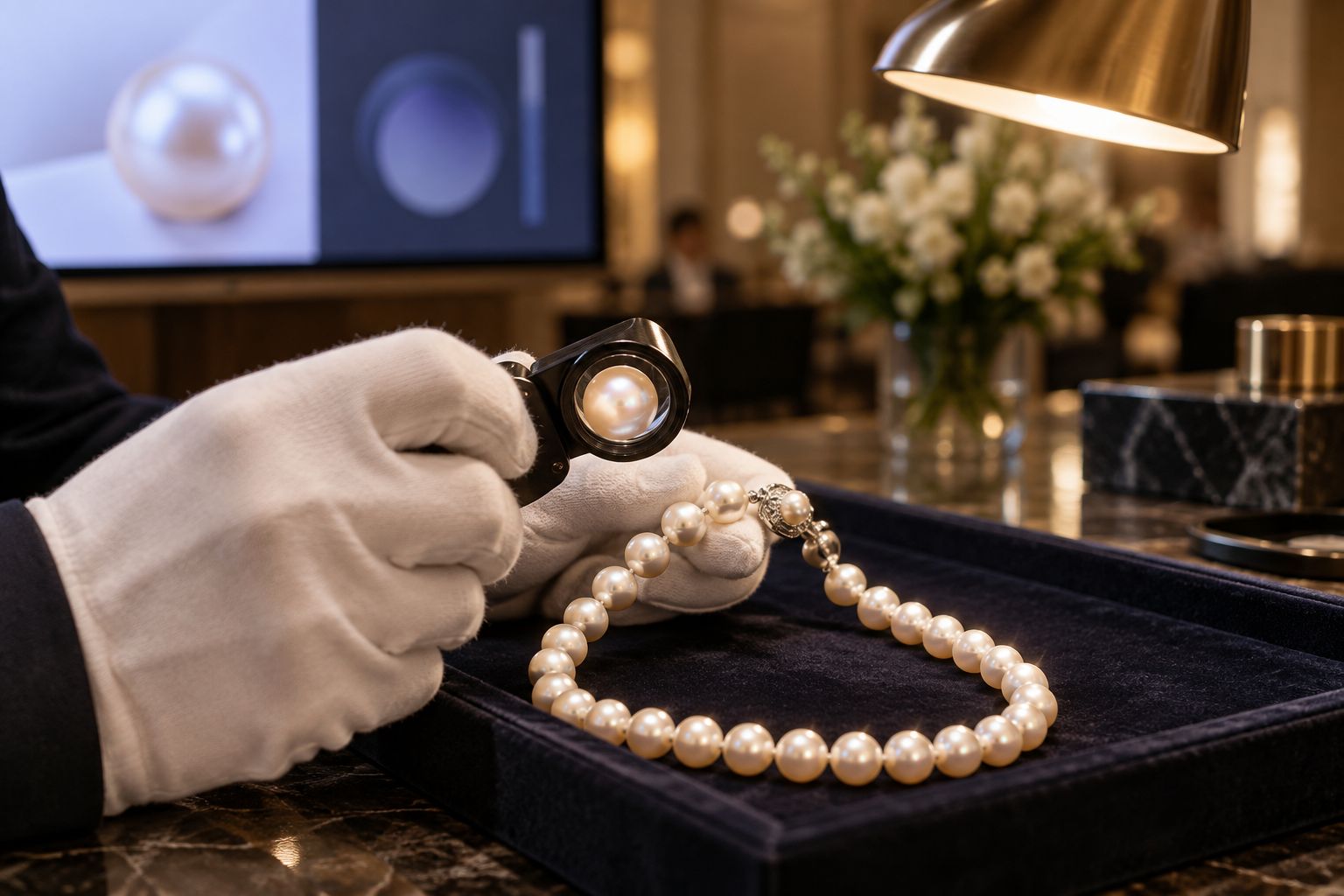
The hallmark on a genuine Mikimoto piece is almost always on the clasp, not on a tag or box insert — check the metal itself under a loupe before you trust any paperwork that comes with the lot. Box and papers matter for resale, but the stamped clasp is the one thing a counterfeiter has to get exactly right, and it's the one thing most bidders never actually look at closely before bidding on a Mikimoto pearl auction in 2026.


