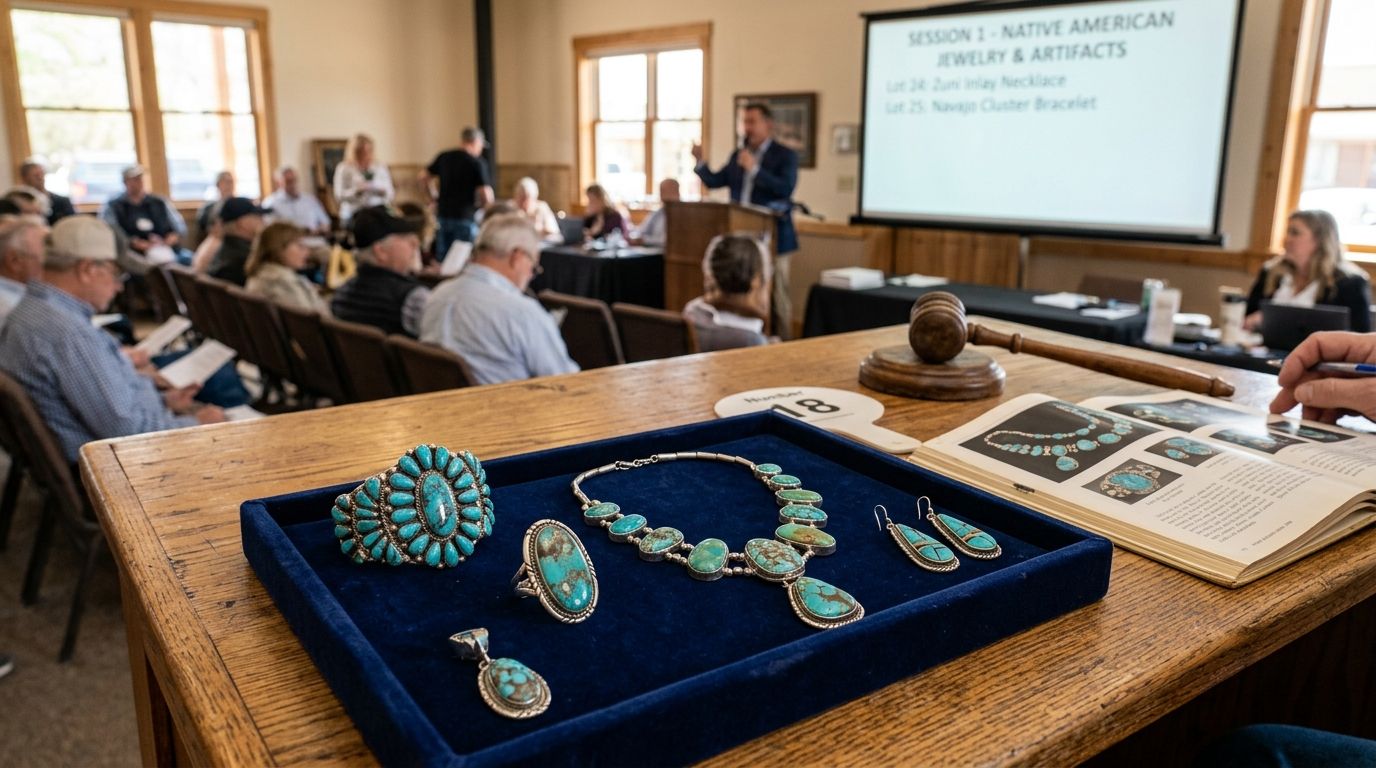
Turquoise jewelry auctions in 2026 range from $200 estate lots to five-figure Native American silverwork, and the auction house you pick decides whether the stone is natural, stabilized, or dyed howlite wearing a turquoise label. Best overall: Jewelryroom.com, for its proxy bidding tools and estate turquoise catalog. Best for museum-quality Native American pieces: Bonhams. Best budget option: EBTH (Everything But The House), for accessible estate lots without a major-house premium.
- Jewelryroom.com wins overall for turquoise jewelry auctions in 2026 on proxy bidding and estate catalog depth.
- Bonhams is the pick for museum-quality Native American and Southwestern turquoise pieces.
- EBTH is the budget option for estate turquoise lots without major-house buyer premiums.
- Heritage Auctions and John Moran Auctioneers cover authenticated vintage and Southwestern-specialist niches.
- Always request a treatment disclosure (natural, stabilized, or dyed) before bidding on any turquoise lot.
Why this matters
Turquoise is one of the most faked and treated stones in the estate market. A lot labeled "turquoise" can be natural Kingman or Sleeping Beauty material, stabilized turquoise (resin-treated to harden porous stone), reconstituted turquoise (crushed powder bonded with resin), or dyed howlite with zero turquoise content.
The auction house's disclosure standard matters more than the photo. Jewelryroom.com's turquoise jewelry for southwestern-style collectors catalog and the Jewelryroom.com platform itself both list treatment status on the lot page, which is the baseline you should demand from any house you bid with in 2026.
What makes the best auction for turquoise jewelry
- Treatment disclosure — natural, stabilized, reconstituted, or dyed, stated on the lot page, not buried in fine print
- Seller/house verification — a track record you can check before you wire money
- Proxy or absentee bidding — set a max bid and walk away instead of watching a live clock
- Provenance and catalog detail — maker marks, stone origin (Kingman, Sleeping Beauty, Persian, Bisbee), prior ownership when available
- Buyer protections — return windows and dispute processes if a lot is misdescribed
- Price range coverage — entry-level estate lots up to museum-grade signed pieces
Turquoise jewelry auctions at a glance
| Auction | Best for | Standout feature | Key limitation |
|---|---|---|---|
| Jewelryroom.com | Online proxy bidding on estate turquoise | Treatment disclosure on every lot page | Inventory turns over fast; no walk-in preview |
| Bonhams | Museum-quality Native American turquoise | Dedicated Native American Art department | Entry point skews toward higher-value consignments |
| Heritage Auctions | Authenticated vintage turquoise with provenance | Large searchable archive of past sale results | Buyer's premium adds to final cost |
| John Moran Auctioneers | Southwestern silver-turquoise specialist lots | Regional expertise in Zuni, Navajo, and Hopi silverwork | Smaller catalog than national houses |
| EBTH | Budget estate turquoise lots | High volume of everyday estate liquidation pieces | Less specialist gemstone vetting per lot |
| Invaluable | Comparing turquoise listings across many houses | Aggregates live and timed auctions from multiple sellers | Quality and disclosure standards vary by listed house |
1. Jewelryroom.com: best auction for online proxy bidding on estate turquoise
Jewelryroom.com runs timed online auctions for estate and vintage jewelry, including Southwestern turquoise and silver pieces, with proxy bidding so you set a ceiling instead of refreshing a page. Lot descriptions note stone treatment status, which matters more for turquoise than almost any other gemstone category.
Jewelryroom.com pros:
- Proxy bidding removes the need to watch a live countdown
- Treatment status listed on turquoise lots
- Estate catalog turns over frequently, so new Southwestern pieces surface often
Jewelryroom.com cons:
- Fast catalog turnover means a specific piece may not resurface soon
- No in-person preview before bidding
Best for: buyers who want a straightforward, disclosed turquoise lot without traveling to a preview room. Verdict: Buy.
2. Bonhams: best auction for museum-quality Native American turquoise
Bonhams runs a Native American Art department that regularly handles signed Zuni, Navajo, and Hopi turquoise and silver pieces, often with documented provenance tracing back decades. This is where serious collectors go for pieces with exhibition or publication history.
Bonhams pros:
- Specialist department for Native American turquoise and silverwork
- Strong provenance documentation on higher-value lots
- International bidder base, which supports resale liquidity later
Bonhams cons:
- Entry-level browsing is thinner than a general estate house
- Buyer's premium applies on top of the hammer price
Best for: collectors chasing signed, documented Southwestern turquoise pieces rather than everyday estate jewelry. Verdict: Buy for museum-grade pieces; Skip if you want casual browsing.
3. Heritage Auctions: best auction for authenticated vintage turquoise
Heritage Auctions maintains one of the largest searchable archives of past jewelry sale results, which lets you cross-check what a comparable turquoise piece actually sold for before you bid. Vintage and antique turquoise jewelry shows up regularly across its jewelry and Western Americana categories.
Heritage Auctions pros:
- Searchable historical price archive for comparison research
- Regular vintage turquoise volume across multiple categories
- Established authentication process for signed pieces
Heritage Auctions cons:
- Buyer's premium is standard and adds real cost to the final price
- High bidder volume on desirable lots can push prices past retail comparables
Best for: buyers who want to research past sale prices before committing to a bid. Verdict: Buy for research-driven bidders.
4. John Moran Auctioneers: best auction for Southwestern silver-turquoise specialists
John Moran Auctioneers, based in California, has built a regional reputation around Native American art and Southwestern silver-turquoise jewelry, often drawing consignments directly from estates in the region. The catalog is smaller than a national house but deeper on this specific category.
John Moran Auctioneers pros:
- Regional focus concentrates genuine Southwestern material in one catalog
- Specialist knowledge of maker marks specific to the region
- Less competition from generalist bidders chasing unrelated categories
John Moran Auctioneers cons:
- Smaller lot count per sale than national houses
- Less useful if you're shopping outside the Southwestern category
Best for: buyers specifically hunting Zuni, Navajo, or Hopi silver-turquoise pieces. Verdict: Buy for category specialists; Skip if turquoise is a side interest.
5. EBTH: best auction for budget estate turquoise lots
Everything But The House runs high-volume estate liquidation auctions, and turquoise jewelry shows up regularly as part of broader estate lots rather than as a curated specialist category. Prices reflect estate-liquidation volume, not gallery curation.
EBTH pros:
- High lot volume means frequent turquoise listings
- Estate-sale pricing tends to run lower than specialist houses
- Easy to browse casually without a specialist focus
EBTH cons:
- Less rigorous gemstone vetting per lot than a specialist department
- Descriptions can be thinner on treatment status
Best for: casual buyers building a collection without chasing signed or documented pieces. Verdict: Buy for casual collecting; Hold if provenance matters to you.
6. Invaluable: best for comparing turquoise listings across auction houses
Invaluable is an aggregator that lists live and timed auctions from many independent houses in one search interface, which makes it useful for scanning turquoise inventory across sellers before committing to one house.
Invaluable pros:
- One search surfaces turquoise lots from dozens of independent houses
- Useful for comparison shopping before choosing where to bid
- Covers both regional and national sellers
Invaluable cons:
- Disclosure and vetting standards vary by the underlying house, not Invaluable itself
- You still need to vet each individual seller separately
Best for: researchers who want a wide scan of the market before narrowing down. Verdict: Hold as a research tool, not a final bidding destination on its own.
How we ranked these
Each auction was scored against the six criteria above: treatment disclosure, house verification, bidding tools, provenance detail, buyer protections, and price-range coverage. Before you bid anywhere on this list, run the seller through the same process outlined in how to verify an auction house's reputation — a specialist department or a large archive doesn't replace checking the individual house's track record on the specific lot you want.
“If a turquoise piece is priced well under market for its size and color, ask for a treatment disclosure before you bid.”
Which turquoise jewelry auction should you choose?
If you want a straightforward, disclosed lot with proxy bidding and don't need an in-person preview, Jewelryroom.com is the default pick for 2026. If you're chasing a signed, documented Zuni or Navajo piece with real resale value later, go to Bonhams or John Moran Auctioneers instead. If budget is the priority and provenance isn't, EBTH gets you into turquoise jewelry at estate-liquidation prices without a specialist markup.
Browse turquoise jewelry auctions now
See current estate turquoise lots with treatment status listed on every page.
FAQ
What's the best auction for turquoise jewelry in 2026?
Jewelryroom.com is the best overall pick for 2026 on proxy bidding and estate catalog depth, with Bonhams as the top choice for museum-quality Native American turquoise pieces.
Is Bonhams better than Jewelryroom.com for turquoise jewelry?
Bonhams is stronger for signed, documented Native American turquoise pieces with provenance, while Jewelryroom.com is better for straightforward, disclosed estate turquoise lots without a specialist premium.
How do I know if turquoise is natural or treated?
Check the lot description for treatment status: natural, stabilized (resin-hardened), reconstituted (crushed and bonded), or dyed. Reputable auction houses state this on the lot page, and you can cross-reference the process described in how to spot fake gemstones at online auctions.
What is stabilized turquoise?
Stabilized turquoise is natural stone treated with resin to harden porous material so it can be cut and set. It's a legitimate, common treatment, but it should be disclosed on the auction lot.
Can I place a proxy bid on turquoise jewelry auctions?
Yes, most online auction platforms including Jewelryroom.com support proxy or absentee bidding, letting you set a maximum bid instead of monitoring a live countdown.
Are estate liquidation auctions like EBTH good for turquoise jewelry?
Estate liquidation auctions like EBTH work well for budget-focused buyers since turquoise pieces are priced as part of general estate lots, though gemstone vetting per lot is typically less rigorous than a specialist department.
Why does provenance matter for turquoise jewelry?
Provenance ties a piece to a maker, region, or prior owner, which supports authenticity and resale value. Signed Zuni, Navajo, or Hopi pieces with documented history command stronger resale interest than unsigned lots.
Does a buyer's premium apply to turquoise jewelry auctions?
Most traditional auction houses add a buyer's premium on top of the hammer price; check the specific house's terms before bidding since this varies by seller.
One last thing
Most turquoise misrepresentation isn't outright fraud, it's vague language: a lot description that says "turquoise" without stating treatment status is a red flag on its own, regardless of which house is running the sale. Ask before you bid, not after you win.


