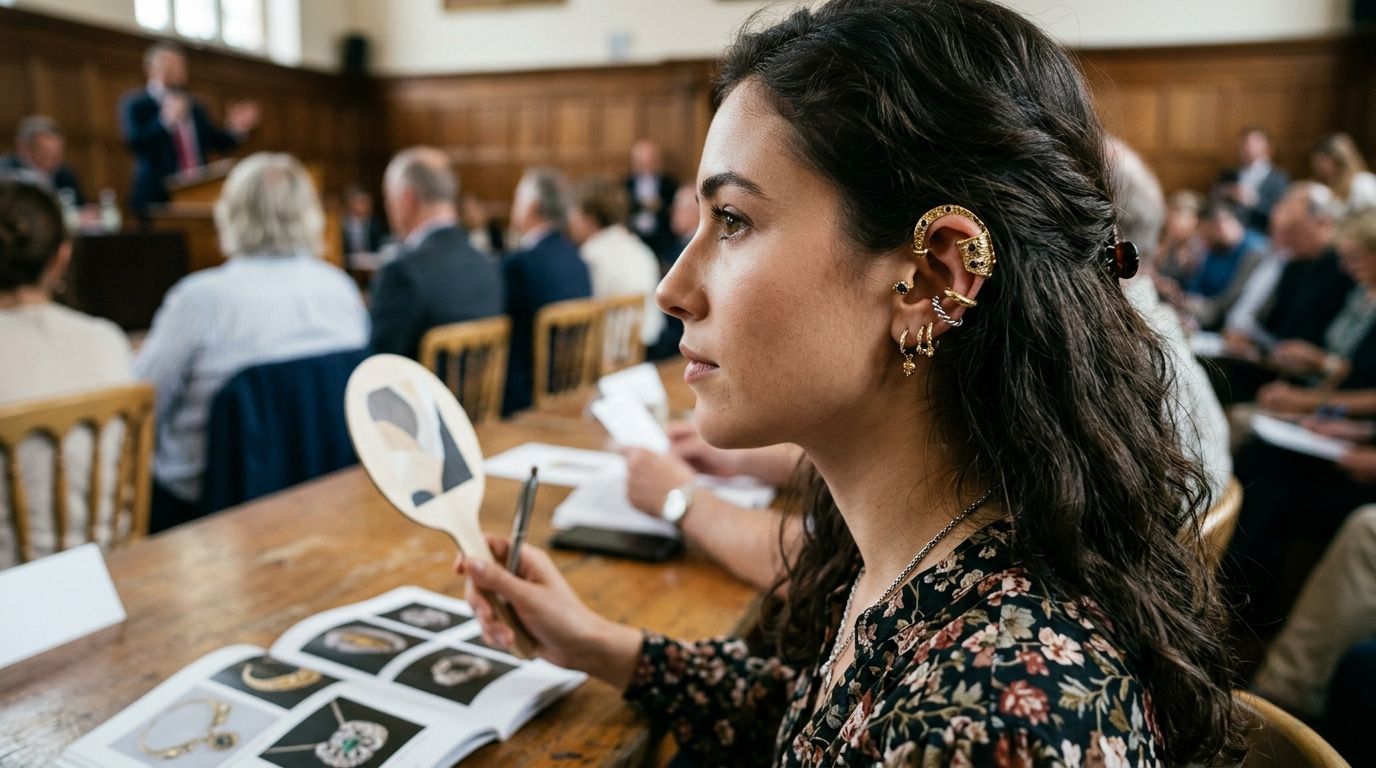
Edgy vintage-style buyers’ ear cuff auction strategy is a way to assess jewelry lots with the aim of finding a distinctive cuff you can wear comfortably. In 2026, fit and condition matter as much as appearance: Jewelryroom.com is best for vintage-style buyers starting a jewelry-auction search and prepared to inspect each listing before bidding.
- For an ear cuff auction, inspect the opening, contact edges and condition before deciding whether to bid.
- Jewelryroom.com is best for vintage-style buyers starting a jewelry-auction search, not for skipping lot-by-lot checks.
- An unsigned vintage cuff prioritizes character; a signed cuff adds an attribution claim you must verify.
- Set a maximum bid only after reading the condition details and auction terms.
Why ear cuff auctions matter for vintage-style buyers
An ear cuff can make a strong visual statement without committing you to a matched pair of earrings. At auction, though, the photograph that sells the look rarely answers the questions that determine whether you will wear the piece: how it grips, where it touches the ear and whether an old repair has changed its shape.
Treat the cuff as an object first and a styling idea second. A compelling silhouette is not enough if the listing leaves the opening, reverse or contact points unseen. In 2026, the useful question is not whether a cuff looks vintage in a photograph. It is whether the seller’s evidence supports its stated age, condition and wearability.
Jewelryroom.com gives jewelry-auction shoppers a starting point for that search. The decision still belongs to the individual lot: read its description and terms, request clarification where needed and pass when a question central to your purchase remains unanswered.
How to evaluate an ear cuff auction lot
Define the look you actually want
Start with a short description of the effect you want on your ear. Sculptural metal, visible stones and a darkened finish create different looks; calling all of them edgy makes it harder to reject a lot that is dramatic but wrong for you. Save examples outside the auction platform, then write down the features you would recognize in a plain catalog description.
Separate style from age. A contemporary cuff can suit a vintage-inspired outfit, while an older cuff can look restrained when worn. Neither choice needs a historical claim to work. If period authenticity matters to you, make it a separate requirement that the listing must support.
- Choose one dominant feature: shape, surface texture or stone setting.
- Decide whether you want a single statement cuff or something to pair with other earrings.
- Record the finishes you like without assuming a dark finish is original patina.
- Mark age or designer attribution as a requirement only if you intend to verify it.
Check how the cuff is meant to sit
A cuff’s profile does not tell you how it will sit on an ear. Look for photographs showing the opening and the surfaces that touch skin. If the lot shows only a front-facing image, ask for more before treating the cuff as wearable. A clear photograph of the opening is more useful than another styled front view.
Compare the shape with your intended placement, but do not assume that an adjustable-looking opening should be bent to fit. Metal fatigue, previous alterations and decorative settings can make adjustment a poor decision. Ask whether the cuff has been altered rather than testing that question after a winning bid.
- Request 3 views: front, reverse and opening.
- Identify the contact edges that will rest against the ear.
- Check whether stones or projecting details affect the intended placement.
- Ask whether the opening or curve has been reshaped.
Read the condition description before the estimate
Condition has a direct bearing on both appearance and use. Read the lot description for repairs, missing elements, looseness and changes to the finish. Then compare those words with the photographs. If a worn edge appears smooth in one image and rough in another, ask which view reflects its current state.
A written condition report is more useful than an assumption drawn from age. Use the questions in this guide to getting a condition report before bidding to frame your request. For a 2026 ear cuff auction, ask about the points your ear will touch, not just the most visible decoration. A report can describe observed condition; it does not guarantee fit on your ear.
- Ask whether any stones, settings or decorative parts are loose.
- Request a description of repairs and replaced components.
- Check for dents or roughness at the opening and contact edges.
- Compare the written account with each photograph.
Verify material and attribution claims
A listing can use vintage, antique, silver, gold-tone and signed to describe different things. Read each term literally. A gold-tone description is not a claim of solid gold, and a signature in a photograph does not, by itself, establish who made the cuff. Ask what evidence supports a claim that matters to your decision.
Inspect any visible marks alongside the seller’s written description. If the piece is described as belonging to a particular period or maker, look for an explanation of that attribution. If no explanation is available, decide whether you still want the cuff for its design alone. That distinction keeps a styling purchase from quietly becoming an unsupported authenticity bet.
- Match material wording in the title to the detailed description.
- Ask for a clear image of any mark or signature mentioned.
- Separate documented attribution from a visual resemblance.
- Decide whether the design still works for you without the attribution.
Compare the entire lot, not just the cuff
An ear cuff can appear alone, as part of a pair or among other jewelry. Establish exactly what the winning bid includes before comparing lots. A photograph containing multiple objects is not a substitute for the lot description. Read the description, count the included pieces and ask about any mismatch.
This is also where style can distract from condition. A single cuff with a striking profile is a different purchase from a matched pair whose members show different wear. Neither is automatically better. Choose based on what you intend to wear, and inspect every included piece rather than letting the strongest photograph stand for the whole lot.
- Confirm whether you are bidding on 1 cuff, a pair or a group.
- Match every pictured item against the written lot contents.
- Check each included cuff for its own repairs and wear.
- Compare lots on documented details, not image styling alone.
Set a maximum bid from the evidence
Decide your limit before the auction becomes competitive. Start with what you know about the cuff, then account for the auction’s stated buyer charges and any other applicable terms. If an essential condition or attribution question is unanswered, do not fill the gap with an optimistic assumption. Lower your limit or pass.
Keep 1 written maximum bid for each lot. That limit is a decision tool, not an estimate of what the cuff is worth to everyone else. In 2026, the same rule applies whether you are bidding on a signed piece or an unsigned cuff you simply want to wear: your limit must reflect the evidence available before bidding, not the pace of the auction.
- Read the auction terms before setting your limit.
- Record your maximum bid outside the live bidding screen.
- Revisit the limit only when new lot information changes your assessment.
- Stop when the next bid would exceed your written limit.
Plan what happens if you win
Before placing a bid, check the lot’s payment, collection and delivery terms. Also decide how you will examine the cuff when it arrives: compare it with the listing, document any difference and avoid trying to adjust its shape before you understand its condition. Auction terms determine what options are available if the piece does not match your expectations.
Jewelryroom.com is a starting point for a jewelry-auction search, not a substitute for checking the terms attached to a particular lot. A cuff can clear every style test and still be the wrong bid if the condition is unclear or the terms do not suit you. Finish these checks while you can still walk away.
- Save the lot description and photographs for reference.
- Read the stated payment and delivery terms.
- Check how the auction handles questions about a lot after sale.
- Plan to inspect the cuff before attempting any adjustment.
Which ear cuff auction option fits your goal?
Compare options by the claim you are buying, not by visual impact alone. An unsigned cuff can be the right choice when design leads. A signed cuff calls for more attribution work. A contemporary cuff with vintage styling serves a different purpose: it can deliver the look without requiring a claim of historical age.
| Option | Best for | What to inspect first | Key limitation |
|---|---|---|---|
| Unsigned vintage cuff | Buyers who prioritize shape and wearability | Opening, repairs and evidence supporting its stated age | No maker attribution to rely on |
| Signed vintage cuff | Buyers who care about a named maker | Signature image and basis for attribution | A visible mark alone does not establish authenticity |
| Contemporary cuff with vintage styling | Buyers who want the look rather than period provenance | Fit, materials and condition description | Does not meet a requirement for an older piece |
Best overall approach: choose the option whose claims you can verify and whose condition supports how you intend to wear it. None of these categories makes a poorly documented lot a safe bid. In 2026, the most useful comparison is between the evidence attached to specific lots, not between broad style labels.
Common mistakes vintage-style ear cuff buyers make
Mistaking styling for evidence. A dramatic photograph establishes that a cuff looks good from one angle. It does not establish its age, material or condition. Return to the description and ask for the missing views before bidding.
Treating all darkening as desirable patina. A darkened surface can be part of the look you want, but a photograph alone does not explain how that finish came about. Ask about refinishing or alteration when the surface is central to the purchase.
Assuming a cuff will fit because it has an opening. The opening’s shape, the contact edges and the cuff’s balance all matter. If the listing cannot show them clearly, pass rather than planning to reshape the piece after delivery.
Paying for an attribution you have not checked. If a period or maker name drives your decision, request the supporting details. If the answer is thin, judge the cuff as a design you like, not as a documented example of that claim.
Changing your limit mid-auction. Competition adds no information about a cuff’s condition. Your 2026 maximum bid should change only when new evidence changes the lot you thought you were buying.
FAQ
What should I check first in an ear cuff auction?
Check the opening, reverse and contact edges first. Those views help you assess wearability and condition beyond the front-facing catalog photograph.
Is a signed vintage ear cuff better than an unsigned one?
A signed cuff is better only if maker attribution matters to you and the claim has support. An unsigned cuff can be the stronger choice when its design and condition better suit your goal.
How can I tell whether an auction ear cuff will fit?
You cannot confirm fit from a front photograph alone. Ask for clear views of the opening and contact edges, and do not assume the cuff can safely be reshaped.
Does a dark finish prove an ear cuff is vintage?
No. A dark finish alone does not establish age or explain whether the surface has been altered; read the description and ask about the finish if it affects your decision.
Should I request a condition report for an ear cuff?
Yes, request one when the listing does not resolve condition questions that affect your bid. Ask specifically about repairs, loose elements and the surfaces that touch the ear.
How do I set a maximum bid for an ear cuff auction?
Set a written limit after reviewing the lot evidence and the auction’s stated terms. Reduce that limit or pass if an important question remains unanswered.
Can a contemporary cuff work with vintage-style jewelry?
Yes. A contemporary cuff can deliver a vintage-inspired look, but it is not a substitute when you specifically want an older piece with supported provenance.
One last thing
For a 2026 ear cuff auction, make the reverse photograph your final check before bidding. It is easy to admire the front and forget the part that meets your ear; the reverse brings fit, repairs and construction back into the decision. If you cannot see it clearly, request the view or leave the lot alone.


