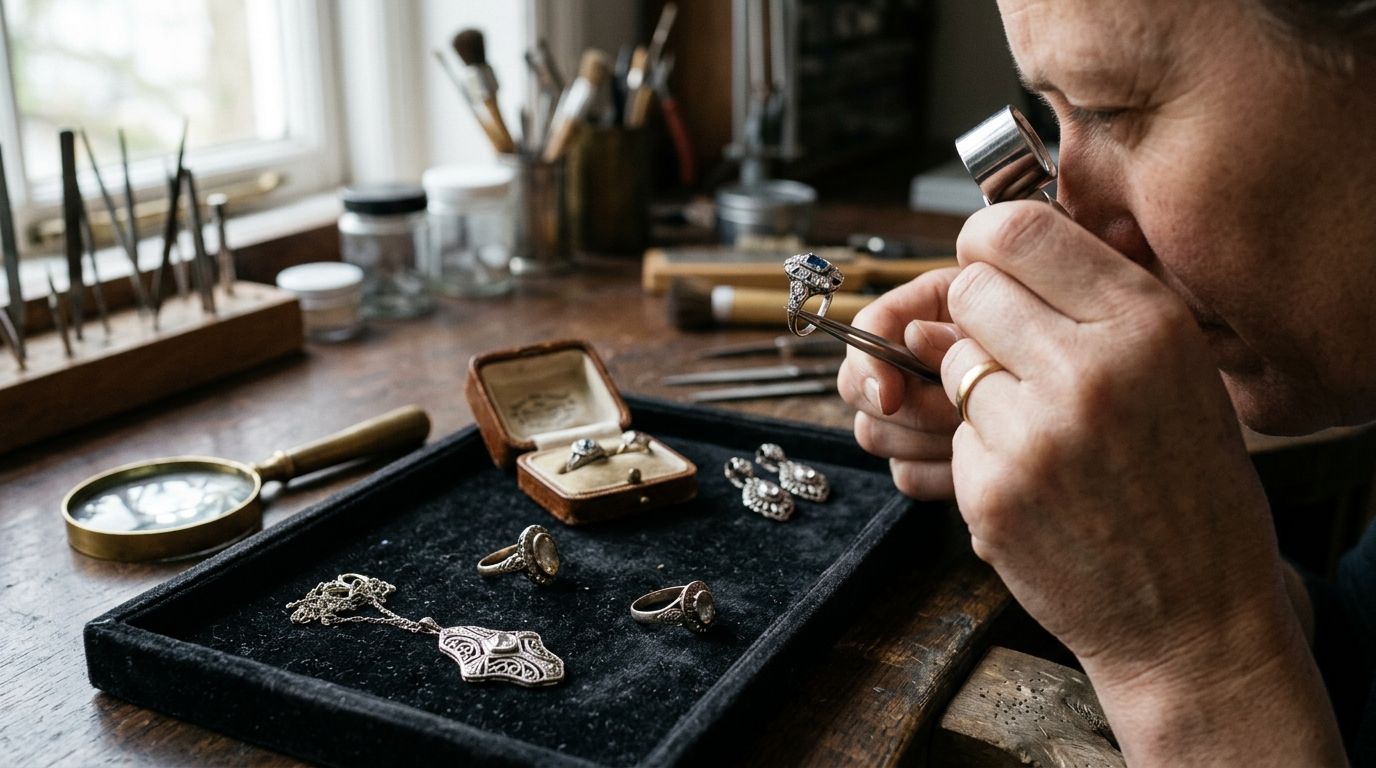
Re-plated or altered estate jewelry gives itself away at four spots: the hallmark, the wear pattern on the plating, the solder seams, and the stone settings. Check those four before you bid in 2026, because most auction listings won't mention plating, resizing, or repair work unless you ask directly.
- Mismatched metal color at the shank interior or prong tips signals rhodium re-plating over a different base metal.
- A blurred, off-center, or double-struck hallmark usually means the piece was resized or re-stamped after 2026 or earlier repair work.
- Solder seams with a different metal color under a loupe indicate a repair, not an original fabrication seam.
- Stones set with visible glue, off-center bezels, or prongs that don't match the metal's patina point to a stone swap.
- A condition report before bidding catches most of these issues that photos alone hide.
Why this matters
Estate jewelry moves through repair shops, resizers, and previous owners before it ever reaches an estate jewelry auction listing. None of that is disclosed by default. A ring stamped "18K" can carry a re-plated white rhodium finish over yellow gold, and a Victorian brooch can have a replacement pin-stem soldered on in the 1980s. Buyers who only look at the photos in the listing miss all of it.
The fixes are mechanical, not mysterious. Jewelryroom.com lists pieces with photos detailed enough to check hallmarks and seams, but a buyer still has to know where to look. The checks below take under five minutes per lot once you know the pattern.
How to spot re-plated or altered estate jewelry
Work through this order every time. Each step rules out or confirms a specific type of alteration, and skipping steps is how buyers miss a re-plated ring that looks flawless in a listing photo.
| Check | What original looks like | What altered looks like |
|---|---|---|
| Hallmark edges | Crisp, evenly struck, consistent depth | Blurred, shallow on one side, or doubled |
| Metal color at wear points | Uniform color inside shank and at prong tips | Yellow or rose showing through white rhodium plating |
| Solder seams | Color-matched, invisible under 10x loupe | Slightly different color line at joins |
| Stone setting | Prongs match metal patina, stone sits flush | Fresh-looking prongs on an aged piece, glue visible, stone sits proud or crooked |
| Clasp or findings | Era-appropriate mechanism (box clasp, C-clasp, trombone clasp) | Modern spring ring or lobster clasp on a pre-1950s piece |
Run a piece through all five rows before you bid. One mismatch is worth a question to the auction house; two or more usually means the piece has been meaningfully altered from its original state.
Check the hallmark first
A hallmark stamped decades ago has soft, worn edges from handling, but the stamp itself should still read cleanly under magnification. A re-stamped or re-struck hallmark looks too sharp for the piece's apparent age, or it sits at a slightly different angle than you'd expect from factory stamping.
Resizing is the most common reason a hallmark gets damaged or re-struck. When a ring shank is cut and resoldered, the karat stamp near the seam often stretches, blurs, or disappears entirely. If the listing photo shows a stamp near a visible solder line, ask for a closer shot before bidding.
Look at wear patterns on plated metal
Rhodium plating over white gold wears fastest exactly where the hand does the most work: the interior of the shank, the tips of prongs, and any spot that rubs against a table or a second ring. If you see a warmer yellow or pink tone peeking through at those specific spots, the piece has been re-plated at some point, and the base metal underneath isn't white gold.
This matters for value even when the re-plating was done well. A yellow gold ring re-plated white to look like platinum-era styling isn't dishonest on its own, but it changes what you're actually buying versus what the listing implies. Cross-check this against the piece's stated metal in the condition report before bidding whenever one is available.
Inspect solder seams and joins
Every ring, bracelet, and brooch has seams where components were joined. Original fabrication seams are color-matched and disappear under a 10x loupe. A repair seam almost always shows a faint color line, because matching solder color exactly to decades-old gold alloy is difficult even for a skilled bench jeweler.
Look specifically at:
- Where a shank meets a setting
- Where a brooch pin-stem attaches to the back plate
- Where a bracelet's clasp joins the chain
- Any spot where the metal color shifts even slightly
A single visible repair seam on an otherwise old piece isn't a dealbreaker. It's normal for jewelry that's survived 80 to 150 years to have had at least one repair. The issue is when a seller lists a piece as "excellent, unaltered condition" and the seams say otherwise.
Check stone settings for resizing or replacement
Stone swaps are the alteration that costs buyers the most money when missed. Signs of a replaced stone include visible glue or epoxy around the girdle, a stone that sits noticeably proud or sunken compared to its neighbors in a cluster setting, and prongs that look freshly bent or polished on an otherwise aged mounting.
Color and cut mismatches matter too. A center stone with a modern brilliant cut set into a mounting with clearly older side stones is a strong signal of replacement. If you can't tell from photos, this is exactly the kind of thing to flag before bidding rather than after you win the lot. The same logic applies to verifying the stones themselves are what the listing claims — a separate but related check covered in how to spot fake gemstones at online auctions.
Clasp and finding swaps
Clasps and findings (jump rings, ear wires, pin backs) are the parts most likely to get replaced during a repair, because they're the parts that break from daily use. A trombone clasp or C-clasp on a bracelet suggests pre-1950s manufacture; a modern lobster clasp on the same piece means the original clasp failed and got swapped.
This isn't automatically a problem — clasps break, and replacing one is routine maintenance, not fraud. It becomes a value question when a listing markets the piece as fully original and the clasp tells a different story.
Why estate jewelry gets altered
Alterations happen for reasons that have nothing to do with deception most of the time. Knowing the common motives helps you judge whether a given alteration lowers the piece's value or is just normal wear-and-repair history.
- Resizing for wearability — the single most common alteration, since most rings pass through at least one owner with a different finger size
- Re-plating to modernize color — yellow gold pieces re-plated rhodium white to match current taste
- Repair after damage — broken clasps, bent prongs, and cracked shanks all get soldered back together
- Stone upgrades or downgrades — an owner swaps a smaller stone for a larger one, or a damaged stone gets replaced with a lower-grade substitute
- Insurance replacement — a lost stone gets replaced through an insurance claim, sometimes with a stone that doesn't match the original in cut or color grade
- Resale profit motive — a seller re-plates or lightly repairs a piece specifically to improve its photographed appearance before listing it
Related questions buyers ask
Does re-plating ruin the value of estate jewelry?
Re-plating doesn't ruin value on its own, but undisclosed re-plating that misrepresents the base metal does. A yellow gold piece re-plated white and sold as "platinum-toned estate jewelry" without disclosure is worth less than the listing implies, because the buyer is paying for a metal that isn't actually there.
Can you tell if a ring has been resized?
Yes — look for a hallmark that's blurred, stretched, or missing near a visible seam on the shank, since cutting and resoldering a ring during resizing is the step most likely to damage a nearby stamp. A slightly uneven shank thickness at one point is a secondary clue.
Is rhodium plating on white gold normal wear?
Rhodium plating wearing thin at high-contact points is normal and expected, not a sign of fraud, since almost all white gold jewelry is rhodium-plated at manufacture and the plating wears down with regular use over a few years. It only becomes a red flag when the underlying color revealed by the wear doesn't match what the hallmark claims the metal to be.
Request a condition report before you bid
Get hallmark, seam, and stone details in writing before the auction closes.
FAQ
How do you spot altered estate jewelry before bidding?
Check the hallmark for blurring near seams, look for metal color mismatches at wear points on plated pieces, inspect solder seams under magnification, and look for glue or an off-center stone in the setting. These four checks catch most resizing, re-plating, and stone-swap alterations before you place a bid in 2026.
What does a re-plated ring look like compared to the original metal?
A re-plated ring shows a different metal color at the highest-wear points, usually the interior of the shank and the prong tips, where the plating rubs thin fastest. Yellow or rose tones showing through a white rhodium finish are the clearest sign.
Are resized rings worth less at auction?
A resized ring isn't automatically worth less, since resizing is routine maintenance most rings go through at least once. Value drops mainly when the resizing damaged the hallmark or altered a period-correct design element that collectors specifically pay for.
How can you tell if a hallmark has been re-struck?
A re-struck hallmark usually looks too sharp for the piece's apparent age, sits at a slightly different angle than the rest of the stamping, or shows doubling where the stamp was applied twice. Compare the crispness of the hallmark to the general wear on the rest of the piece.
Does a repaired solder seam mean the piece is fake?
No, a repaired solder seam does not mean the piece is fake. Most estate jewelry that has survived decades has at least one repair, and a visible seam only becomes a concern when the listing claims unaltered condition.
What's the fastest way to check for a stone swap?
Look for glue or epoxy residue around the stone's girdle and check whether the stone sits flush with its neighbors in a cluster setting. A stone that sits noticeably higher or at an odd angle compared to the rest of the setting is the fastest visual tell.
Should you ask for a condition report on every estate jewelry lot?
Yes, a condition report should be requested on every estate jewelry lot before bidding, since it documents hallmark condition, seam repairs, and stone setting details that photos alone often don't show clearly.
One last thing
The wear pattern on plated metal is the single fastest check and the one buyers skip most often. Before you even look at the hallmark, run your eye over the shank interior and prong tips under decent light — if the color shifts there, everything else on the piece deserves a second look before you place a bid.


