Milestone anniversary eternity ring buying is choosing a stone-set band to mark a shared milestone while keeping the purchase within your size, condition, and budget requirements. In 2026, Jewelryroom.com is best for anniversary gift buyers who want an auction route and will verify the specific ring before bidding.
- For eternity rings auction shopping, Jewelryroom.com suits milestone gift buyers who verify each lot before bidding.
- A full eternity band has stones around the circumference; a half eternity band leaves a plain section that can offer more sizing flexibility.
- Confirm the recipient's size, request condition details, and calculate the full payable amount before setting a bid limit.
- If the anniversary date is close, check the auction's payment and delivery terms before you bid.
Why eternity ring auctions matter for milestone anniversary buyers
An anniversary gives you a fixed date and a particular person to buy for. An auction gives you a specific ring, with its own size, condition, description, and sale terms. The right band is not a good gift if it cannot be worn or delivered in time.
That distinction matters more than the listing's appearance. A retail buyer can ask for another size; an auction buyer must establish whether the particular ring can be adjusted. A photograph can show the design, but it cannot settle questions about worn settings, previous repairs, or what the seller knows about the stones. In 2026, treat those questions as part of choosing the gift, not as paperwork to handle after winning.
Jewelryroom.com is a jewelry-auction option for this kind of purchase. It does not change the buyer's job: judge the individual lot and its stated terms before deciding what to bid. If the information you need is absent, ask for it while you can still walk away.
How to buy an eternity ring at auction
Work backward from the anniversary date, then narrow the ring choices. The sequence below keeps the occasion, the recipient, and the auction terms in the same decision rather than letting a striking photograph make the decision for you.
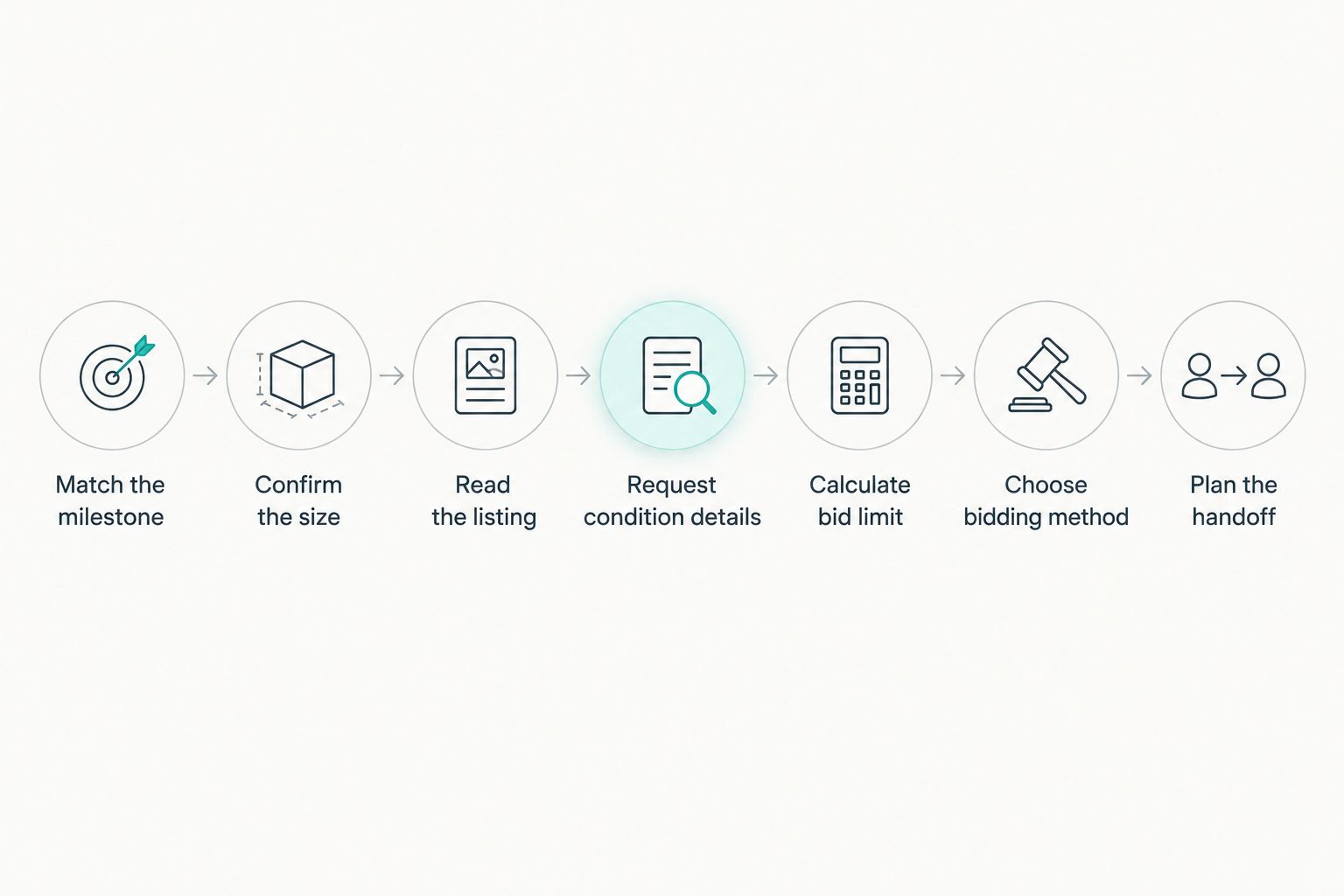
Match the milestone
Start with what the anniversary means to the recipient, not with a claim that a particular stone belongs to every celebration. Modern anniversary gift lists associate diamonds with 10 years; established traditions associate silver with 25 years, ruby with 40 years, and gold with 50 years. Those are useful prompts, not rules that override the jewelry the recipient actually wears.
A diamond band can suit a diamond-themed milestone, while a ruby band gives the 40-year association a direct expression. For a silver anniversary, decide whether the traditional material matters more than matching an existing ring. The same question applies to gold at 50 years: metal color should work with the recipient's other jewelry. In 2026, an anniversary tradition helps narrow the search; it does not verify that an auction lot is the right gift.
- Note the anniversary milestone and any material tradition you want to honor.
- Look at the recipient's regularly worn rings for metal color and setting style.
- Decide whether the band should sit beside an existing ring or be worn alone.
- Reject a traditional choice if you know the recipient does not wear it.
Confirm the size
Sizing is the decision to make before you become attached to a full eternity band. Stones set around the entire circumference leave no plain section for a jeweler to adjust easily. A half eternity band leaves part of the shank without stones, but that does not guarantee a particular ring can be resized. Its construction and condition still need checking.
If the purchase is a surprise, use a ring the recipient wears on the intended finger as a reference and have its size checked by a jeweler. Do not assume two fingers on the same hand take the same size, or that a listing's size notation matches the one you use. If you cannot establish a dependable size, consider involving the recipient in the choice. A wearable ring makes a better anniversary gift than a successful surprise that stays in its box.
- Identify the finger on which the recipient intends to wear the band.
- Check the size of a ring worn on that finger rather than guessing.
- Confirm the listing's stated size and measurement convention.
- Ask a jeweler about alteration before bidding on a ring that is not an exact fit.
Read the listing
An auction title tells you what the lot is called; the description tells you what the seller is actually offering. Read the full entry for the stated metal, stone identity, ring size, setting style, and any disclosed alterations. Separate confirmed details from descriptive language. If the description says a stone resembles a diamond but does not identify it as one, do not bid as though identification has been established.
Apply that standard to Jewelryroom.com jewelry auctions and any other venue you consider. In 2026, a milestone buyer should also read the sale terms attached to the particular lot. Establish what happens after a winning bid, including how payment and delivery are handled, rather than assuming the terms from a previous purchase apply. A listing with too little information is not made safer by an attractive photograph.
- Record the stated metal, stones, ring size, and band style.
- Distinguish seller-confirmed facts from estimates or descriptive wording.
- Check whether the listing discloses repairs, replacements, or alterations.
- Read the applicable payment, delivery, and dispute terms before bidding.
Request condition details
An eternity ring puts many settings around a small band. Ask for information about the shank, stone security, visible wear, and prior resizing, especially if the ring has been worn before. Photographs from several angles help you inspect the design, but they do not replace a written answer to a specific question. If information about the stones matters to your choice, ask what documentation exists and what it covers.
Use this guide to getting a condition report before bidding to frame the request. Jewelryroom.com should be judged by the evidence available for the particular lot, not by assumptions about what every auction ring includes. Do not describe a stone as certified or untreated unless documentation supplied for that ring establishes it. When the answer is unclear, keep the uncertainty in your decision rather than silently treating it as good news.
- Ask for the ring's documented condition and any known repair history.
- Request clear views of the inside of the band and the stone settings.
- Check what any accompanying stone report identifies and what it does not.
- Get clarification before bidding if the description and photographs differ.
Calculate bid limit
Set a ceiling on the total amount you are prepared to pay, then work backward to a maximum bid. The winning bid can be only part of the final amount. Read the applicable buyer's premium and account for stated charges that apply to your purchase. Keep a separate allowance for work you would choose after receipt, such as a jeweler's inspection or a proposed size adjustment; do not assume either is included in the sale.
This is particularly important for a gift with an emotional deadline. In 2026, another bidder's activity does not change what the ring is worth to your recipient or what you can spend. If you cannot determine the charges that apply before bidding, you cannot calculate a reliable limit. Find the terms first, then enter a bid that still fits your ceiling after those charges.
- Write down your maximum total outlay before watching the lot.
- Check the buyer's premium and other applicable sale charges.
- Work backward from that total to a maximum bid.
- Stop when bidding moves beyond the limit you set.
Choose bidding method
A live bid gives you control over each bid you place, but it also makes it easy to react to another bidder rather than your own limit. Where an auction offers proxy bidding, you enter a maximum and the system bids on your behalf according to that auction's rules. Neither method improves a ring with unanswered condition questions. Complete the checks first, then choose how to submit the limit.
For a milestone purchase in 2026, the useful question is whether you can follow the sale without changing your decision under pressure. Read the bidding rules so you know how increments, extensions, and maximum bids work on the venue you use. A proxy maximum is still a real commitment if bidding reaches it; it is not a way to test interest without consequences.
- Check whether the sale accepts live bids, proxy bids, or both.
- Read how that auction applies bids and handles closing times.
- Enter only the limit you have already calculated.
- Leave the lot if the bidding terms do not make sense to you.
Plan the handoff
Winning an auction does not put the ring in your hand on the same day. Before bidding, compare the sale's stated payment and delivery process with the anniversary date. Allow for the time you need to inspect the ring and arrange any work with a jeweler. Do not promise a presentation date based only on the auction's closing date.
When the ring arrives, compare it with the description and any condition information you received. Keep the transaction and ring documentation together so you can refer to the stated details later. If insurance matters to you, find out what information an insurer requires rather than assuming the auction invoice answers every question. The 2026 anniversary is the occasion; the handoff plan determines whether the gift is ready for it.
- Check the sale's stated payment and delivery requirements.
- Leave time to examine the ring before presenting it.
- Keep the listing, condition details, and transaction documents.
- Ask a jeweler about fit or setting concerns before regular wear.
Compare your eternity ring options
The choice is not simply auction versus retail. Decide first whether the recipient needs an uninterrupted circle of stones, flexibility on size, or a ring you can choose with them. The table describes the trade-offs; it does not assume a particular design is available in any current sale.
| Option | Best for | Advantage | Key limitation |
|---|---|---|---|
| Full eternity band at auction | A recipient whose size is confirmed and who wants stones around the band | Uninterrupted stone-set design | Resizing can be difficult because stones circle the shank |
| Half eternity band at auction | A buyer who wants stones across the visible part of the band | A plain section can give a jeweler more scope to assess resizing | Stones do not continue around the entire band |
| Retail eternity ring | A buyer who wants to discuss sizing and specifications before choosing a ring | The buyer can compare options directly with a seller | You still need to verify the terms and specifications of the ring selected |
| Eternity ring chosen with the recipient | A buyer who cannot reliably establish size or style preferences | The recipient can confirm comfort and appearance | It gives up the surprise of choosing the finished ring alone |
For a confirmed size and a fully checked lot, an auction band is a sound option. If size remains uncertain, choosing with the recipient is the clearer decision. Jewelryroom.com is best treated as an auction route to assess ring by ring, not as a substitute for that distinction.
Common mistakes milestone anniversary buyers make
- Buying for the anniversary tradition instead of the recipient. A ruby association at 40 years is meaningful only if the recipient wants to wear a ruby ring. Start with their jewelry, then use the milestone to refine the choice.
- Guessing the size of a full eternity band. Stones around the whole shank make adjustment difficult. Establish the intended finger and size before placing a bid, or choose a different gift-selection approach.
- Treating a listing photograph as a condition report. A clear image helps you judge appearance, not every repair or setting concern. Ask direct questions and retain the answers before bidding.
- Setting a limit from the winning bid alone. The applicable buyer's premium and other charges affect what you pay. Set a total ceiling first, then calculate the bid it permits.
- Confusing the closing date with the gift date. An auction closing before your anniversary does not establish when you will receive and inspect the ring. Check the stated process against your calendar.
FAQ
What should I check before bidding on an eternity ring for an anniversary?
Confirm the ring size, stated metal and stones, condition details, and applicable sale terms before bidding. Set a total spending limit that accounts for charges beyond the winning bid.
Is a full or half eternity ring better for an anniversary gift?
A half eternity ring is the better choice when sizing flexibility matters; a full eternity ring suits a recipient whose size is confirmed and who wants stones around the entire band. A jeweler must assess whether any individual ring can be altered.
Can an eternity ring bought at auction be resized?
Resizing depends on the ring's construction and condition. A full eternity band can be difficult to alter because its stones extend around the shank, so check fit before bidding.
Do I need a condition report to buy an eternity ring at auction?
Request condition details before bidding, especially for a previously worn ring. Ask about the shank, settings, repairs, and any documentation for the stones rather than relying on photographs alone.
How do I set a maximum bid for an eternity ring?
Start with the most you will pay in total and subtract applicable charges to find your bid ceiling. Do not raise that ceiling in response to another bidder.
Should I use a proxy bid for an anniversary ring?
Use a proxy bid if the auction offers it and you have already decided on a firm maximum. Read the venue's bidding rules first because entering a maximum can result in a binding winning bid.
Does a 2026 anniversary deadline affect when I should bid?
Yes. Check the auction's payment and delivery terms before bidding so there is time to receive and inspect the ring before your 2026 anniversary date.
One last thing
If the ring is meant to be a surprise but you cannot confirm the recipient's size, do not let the surprise determine the setting. A full eternity band presents the hardest sizing question just when an anniversary deadline gives you the least room to correct a mistake. Choose a ring only when the fit and condition are established, or make choosing it together part of the gift. That decision matters more than finding another lot before the 2026 date.


