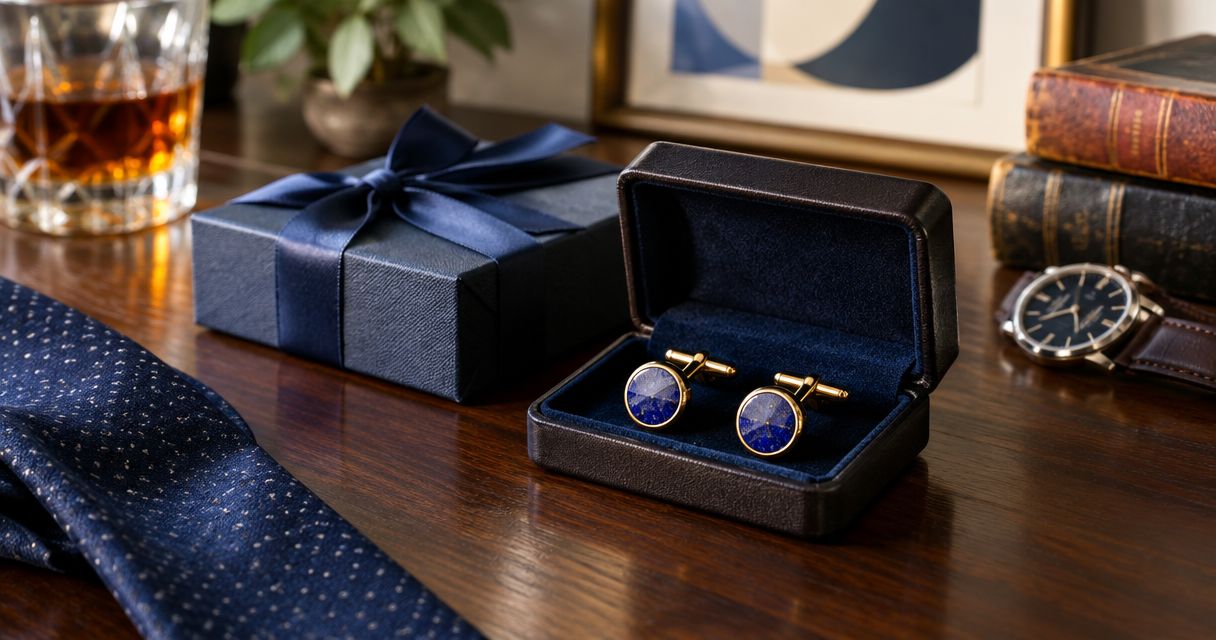
Groomsmen gift shopping through vintage cufflink auctions is choosing pre-owned cufflinks with the aim of giving each attendant a wearable reminder of the wedding. In 2026, the challenge is not finding pairs that look alike in a photograph; it is finding pairs that work with the shirts, meet a shared style brief and arrive in acceptable condition. Jewelryroom.com is a jewelry-auction starting point for this search, but no auction listing replaces a check of the individual lot.
- A vintage cufflinks groomsmen gift works best when you confirm shirt compatibility before bidding.
- Jewelryroom.com jewelry auctions suit shoppers willing to assess each pair; they do not guarantee a matching set.
- Choose a shared design detail rather than insisting on identical vintage pairs.
- Set a separate bid limit for each lot and check its condition before you commit.
Why vintage cufflink auctions matter for groomsmen
A groomsmen gift has two jobs: it must feel chosen for the recipient, and it must work with the clothing planned for the wedding. Vintage cufflinks offer room for individual choices within a shared look. One attendant might receive a geometric pair and another a simpler pair, while a common metal tone ties them together.
Auctions also make the decision less predictable than ordering identical new pairs. Each lot needs its own review, and winning one pair does not secure the rest. For a 2026 wedding, work backward from the date the gifts need to be in hand, not just the bidding date. Leave room for questions about condition and for checking what arrives before presentation.
The buying rule is simple: secure wearable pairs first, coordinate their appearance second. A perfectly matched photograph of the wedding party is little consolation if an attendant cannot fasten a cufflink or wear it with the chosen shirt.
How to choose vintage cufflinks for groomsmen
Treat this as a small collection of individual purchases, not one bulk order. Keep a record of the recipient, shirt, chosen design, lot details and bid limit for every pair. That record stops an attractive listing from quietly changing the plan.
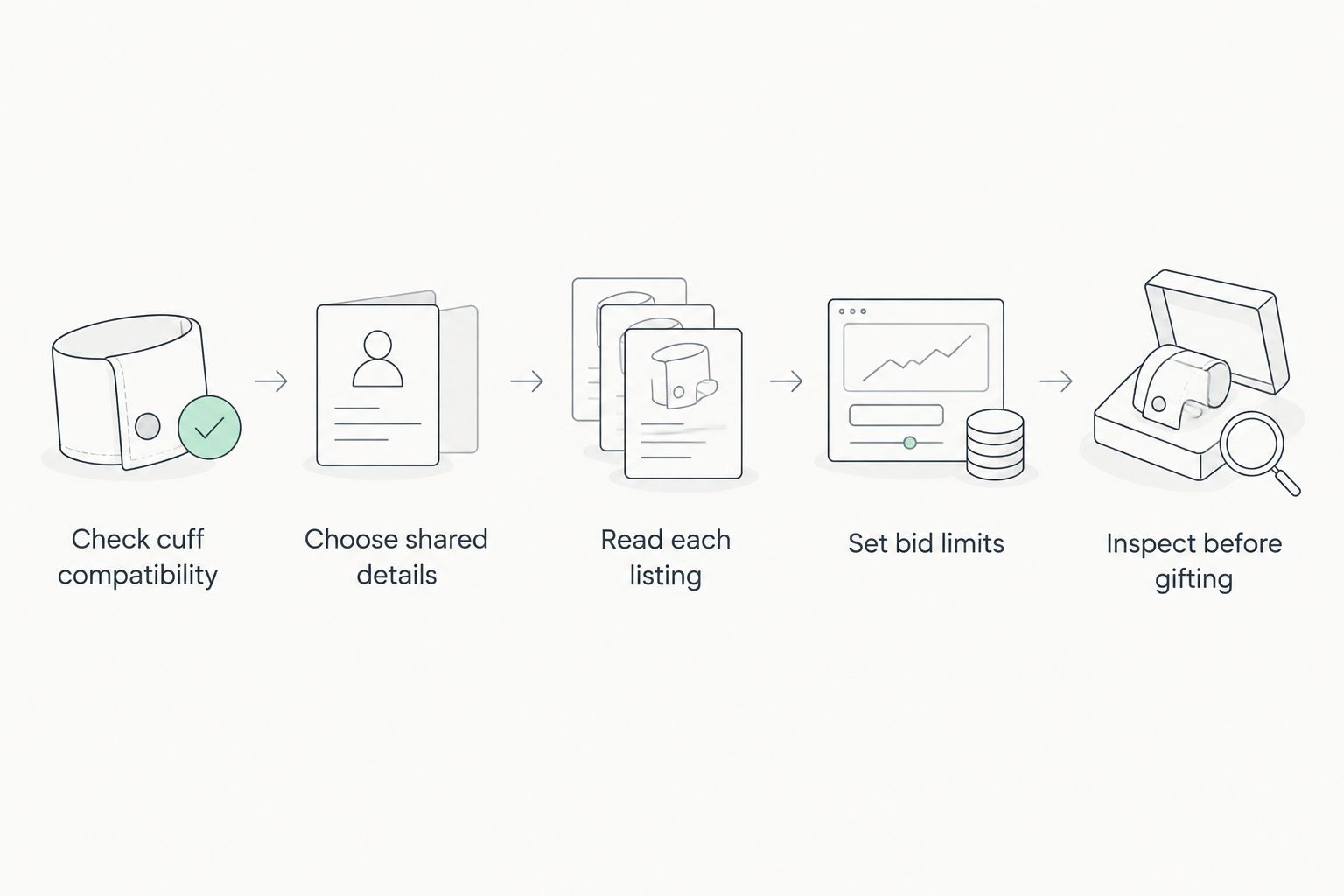
Check cuff compatibility
Start with the shirts, not the cufflinks. Cufflinks are intended for cuffs with openings that take them; a standard button cuff does not become compatible because the gift looks good. Ask each groomsman what shirt he plans to wear, or confirm the wedding-party shirt choice before you search.
Decide whether the cufflinks are meant for the ceremony or as a gift to use later. If they must appear in wedding photographs, shirt compatibility is a requirement for every recipient. If they are a keepsake with no dress requirement, you can prioritize personal taste without pretending they will be worn on the day.
- Confirm the cuff style for every planned wearer.
- Note whether each pair must be wearable at the wedding.
- Ask about metal-tone or design preferences before shortlisting lots.
- Record one intended recipient for each pair you pursue.
Choose shared details
Identical vintage pairs are a narrow target; a coordinated group is easier to plan. Pick a detail the groomsmen can share, such as a metal tone, shape or restrained design, then let the individual pairs differ. That gives you a clear reason to reject a tempting lot that does not belong in the group.
For a vintage cufflinks groomsmen gift in 2026, define the visual brief before browsing. Jewelryroom.com is best treated as a jewelry-auction route for evaluating individual finds, not as a promise that a complete matching set exists. If you want background on the category, the guide to men’s cufflinks for estate jewelry buyers provides a separate starting point.
- Select one shared metal tone, shape or motif.
- Allow individual patterns if the common detail remains clear.
- Decide which visible differences you will accept.
- Reject pairs that only fit the plan after you rewrite it.
Read each listing
Read the full lot description before judging the photographs. Look for the stated materials, markings, measurements, closure type and any disclosed repairs or alterations. If a detail is absent, treat it as unconfirmed rather than filling the gap from the image.
Photographs should show both pieces, their fronts, backs and fastening parts. A polished front view alone cannot establish whether the pair is complete or whether its closures work. Keep the listing information with your recipient notes so you can compare lots without relying on memory.
- Confirm that the lot contains a complete pair.
- Check that the images show both fronts and both backs.
- Note stated markings without assuming what they prove.
- Record disclosed wear, repairs and missing details.
- Ask for clarification before bidding when a point affects wearability.
Request a condition check
Vintage character and damage are different buying decisions. Surface wear might suit the look you want; a damaged fastening part can stop the gift from being worn. Decide which condition issues you will accept before a photograph makes the pair feel indispensable.
Ask a focused question about anything the listing does not resolve. Does each fastening part move as intended? Are the two cufflinks the same size and design? Is any part loose? A condition report is useful because it turns a vague impression into questions about the actual lot. It does not remove the need to read the sale terms yourself.
- Request clear views of the closures and backs.
- Ask whether damage or repair affects normal wear.
- Compare the stated condition with the images.
- Save the response beside the relevant lot record.
Set bid limits
Set one maximum for each pair before bidding begins. Then check the auction terms for buyer’s premium, applicable tax and delivery charges so the winning bid is not mistaken for the entire purchase. The figures and terms belong to the individual sale; do not copy an assumption from another lot.
Jewelryroom.com jewelry auctions are a route to consider, but your limit must come from your gift plan rather than the excitement of a live bid. In 2026, build a list of acceptable alternatives before bidding on your favorite pair. Losing one lot should mean moving to another candidate, not abandoning the limit you set for the recipient.
- Assign one maximum total spend to each recipient.
- Check the sale terms before converting that total into a bid limit.
- Keep a backup candidate for each recipient.
- Stop when a bid exceeds the limit you recorded.
Plan the bidding order
Do not assume you can win every suitable lot. Prioritize the pairs that meet the most restrictive needs first, especially when a recipient has a firm design preference or needs a pair for the wedding outfit. More flexible choices can follow.
If suitable lots close at different times, keep their deadlines with your recipient record. Avoid bidding on two alternatives for the same person unless you have a deliberate use for both outcomes. Auctions create a commitment when you win; a backup should not accidentally become a duplicate purchase.
- Rank candidates by wearability, condition and fit with your shared detail.
- Mark the closing information stated for each sale.
- Track active bids against the intended recipient.
- Remove a backup from your plan once its recipient is covered.
Inspect before gifting
When a pair arrives, compare it with the description and your notes before wrapping it. Check that both pieces are present, the fastening parts work and the appearance matches what you accepted when bidding. Address a discrepancy through the applicable sale process rather than assuming every auction has the same policy.
Then present the cufflinks with enough context to make the choice personal: the shared detail you selected and the reason this particular pair suited the recipient. For a 2026 wedding, the final check belongs before gift-giving, not while the wedding party is getting dressed.
- Match the received pair against its listing and images.
- Test each fastening part without forcing it.
- Keep the lot information with your purchase records.
- Confirm again which shirt the recipient intends to wear.
Compare your groomsmen gift options
The right option depends on whether uniform photographs, individual taste or vintage character matters most. None removes the need to confirm that the recipient can use the gift.
| Option | Best for | Key limitation |
|---|---|---|
| Distinct vintage pairs with one shared detail | Groomsmen with different tastes and a coordinated wedding look | Each auction lot needs a separate condition check |
| Identical vintage pairs | A wedding party that needs a uniform appearance | Matching pairs are dependent on what individual sellers offer |
| New matching cufflinks | A group that prioritizes consistent appearance | They do not serve a vintage-gift brief |
| Individual vintage accessories other than cufflinks | Recipients whose shirts will not take cufflinks | The gifts will not create a shared cufflink look |
Best overall for a vintage brief: distinct pairs with one shared detail. Choose identical pairs only if uniformity outranks individual choice. Choose another accessory when the shirts rule cufflinks out; a different wearable gift beats a pair that stays in a drawer.
Jewelryroom.com fits the distinct-pair approach as a jewelry-auction starting point. Its limitation for this task is the same one you face with any individual auction lots: you must evaluate each candidate against the group plan rather than assume the next listing will match the last.
Common mistakes groomsmen gift shoppers make
Buying before checking the shirts
A pair can be attractive and still be the wrong wedding-day gift. Confirm cuff compatibility before bidding. If the recipient will not wear a suitable shirt, decide explicitly whether the cufflinks are a keepsake or change the gift category.
Chasing identical pairs at the expense of condition
A uniform look does not fix a loose or damaged closure. Give yourself permission to buy different pairs that share a visible detail. Check each pair’s condition on its own merits, even when its design seems to complete the group.
Treating the winning bid as the full commitment
Auction terms matter to the decision. Read the buyer’s premium and other applicable charges before setting a maximum bid, then keep that maximum separate for each recipient. Do not let an early win consume the room you reserved for the remaining gifts.
Leaving inspection until the wedding
The gift is not ready just because the lot has arrived. Compare it with the listing, check both fastening parts and confirm the intended shirt. In 2026, a final inspection is part of buying a wearable vintage gift, not an optional finishing touch.
FAQ
Are vintage cufflinks a good groomsmen gift?
Yes, vintage cufflinks make a good groomsmen gift when the recipients have shirts that take cufflinks and the pairs pass a condition check. A shared design detail can coordinate different pairs without requiring them to be identical.
What is the best vintage cufflinks groomsmen gift strategy?
Choose one shared visual detail, then select a suitable pair for each recipient. This gives the group a coordinated look while letting you reject individual lots with condition or fit problems.
Do groomsmen need matching cufflinks?
No, groomsmen do not need identical cufflinks. Pairs with a shared metal tone, shape or motif can look coordinated while reflecting each person’s taste.
Can cufflinks be worn with any dress shirt?
No, cufflinks require compatible cuffs with openings for them. Check the actual shirts before choosing cufflinks for wedding-day wear.
What should I check in an auction listing for cufflinks?
Check that the lot includes a complete pair, shows both pieces clearly and describes the fastening parts and condition. Ask about missing details before bidding rather than assuming the photographs answer them.
Should I request a condition report before bidding?
Request clarification when the listing leaves wearability or damage uncertain. Ask specifically about closures, repairs and whether the two pieces match.
Is Jewelryroom.com right for buying vintage groomsmen gifts?
Jewelryroom.com is a jewelry-auction starting point for shoppers prepared to assess individual lots. It is not a substitute for confirming shirt fit, condition and sale terms for every pair.
One last thing
Choose the shirts before the cufflinks. That single decision tells you whether the gifts can be worn at the wedding, and it prevents a search for vintage character from becoming a search for excuses. For a 2026 wedding, keep the recipient, shirt and lot record together until every pair has been inspected.


