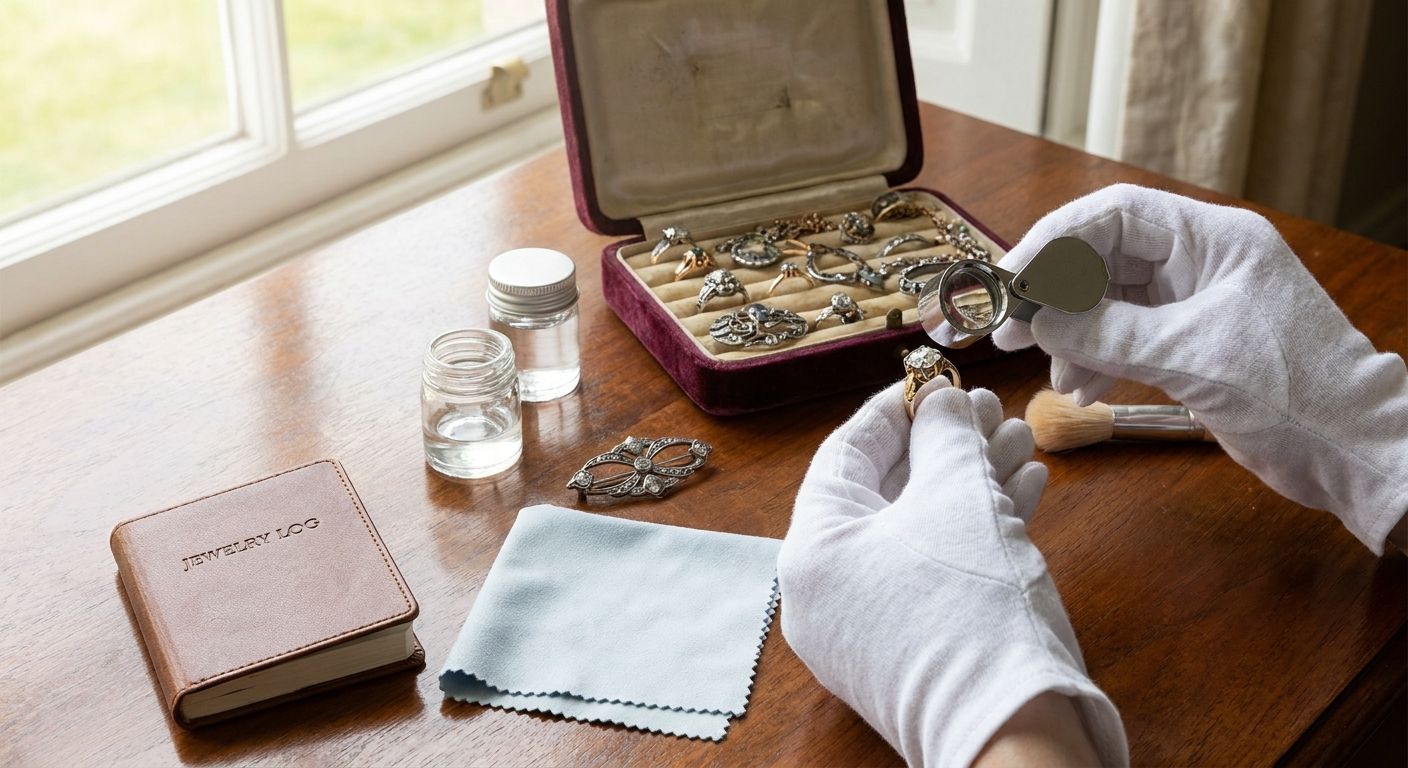
Jewelry won at auction rarely arrives ready to wear the way a retail piece does. Estate rings, brooches, and necklaces carry decades of oxidation, old repairs, and residue from cleaning products nobody logged. The right sequence is inspect before you clean, clean by metal and stone type, then store and insure before the piece goes into daily rotation.
- Get a professional inspection before any cleaning to catch loose prongs and hidden repairs common in estate lots.
- Never run pearls, opals, emeralds, or treated stones through an ultrasonic cleaner — they crack or cloud.
- Sterling silver (92.5% pure) tarnishes fastest and needs its own polishing cloth, separate from gold and platinum.
- Update insurance documentation and appraisal records before you wear a won piece regularly in 2026.
- Store each item separately — estate settings scratch each other more easily than new, uniformly hardened metal.
Why this matters
A piece that just changed hands at auction has an unknown maintenance history. The seller's condition notes might mention a chip or a re-tipped prong, but they rarely mention how the piece was last cleaned or whether a stone was ever treated to improve its color. Treating a 60-year-old estate ring the same way you'd treat a new mall-bought band is how stones get damaged within the first year of ownership.
Care mistakes on estate jewelry are also harder to reverse. A retail piece under warranty gets repaired at no added cost; an estate piece damaged by the wrong cleaner is now a piece with reduced resale value and a harder appraisal conversation. Before you appraise estate jewelry before bidding, you're already thinking about condition — the same discipline applies after the hammer falls.
How do you care for jewelry won at auction?
Follow this sequence in the first two weeks after a win, before the piece enters regular wear:
- Get an independent appraisal or inspection. A jeweler checks prong tension, clasp function, and stone stability — separate from the auction house's own condition report.
- Photograph the piece as received. This documents condition before you touch it, which matters for insurance and for any dispute with the seller.
- Clean by metal type, not by habit. Gold and platinum tolerate mild soap and a soft brush; silver needs a dedicated polishing cloth; porous or treated stones need dry cleaning only.
- Skip the ultrasonic cleaner unless a jeweler confirms every stone on the piece is untreated and non-porous.
- Re-check settings every six months during the first two years of ownership, since estate prongs work loose faster than newly cast ones.
- Update your insurance rider with the post-inspection appraisal value, not the auction hammer price.
Cleaning gold and platinum estate pieces
Gold and platinum are the most forgiving metals to maintain. Platinum runs 900-950 fine (90-95% pure metal), which resists tarnish entirely, though it develops a matte patina from micro-scratches that some owners polish out and others leave as a sign of age. Gold, whether 14k or 18k, tolerates a soft-bristle brush and lukewarm soapy water for most estate rings and bracelets.
What estate pieces don't tolerate well is aggressive polishing. Decades of prior cleanings have already thinned the metal at high-friction points like shanks and prongs — another round of abrasive polish removes material that can't be replaced without a re-shank. A jeweler's steam clean, done once, beats a home ultrasonic run repeated every month.
Caring for silver and mixed-metal auction finds
Sterling silver tarnishes faster than gold or platinum because it's only 92.5% pure silver, alloyed with copper that reacts to sulfur in the air. Estate silver brooches and chains need their own storage pouch, away from gold pieces, and a dedicated silver polishing cloth rather than an all-purpose one.
Mixed-metal pieces — a silver-topped Georgian brooch with gold backing, for example — need the gentler of the two treatments applied to the whole piece. Treat the entire item as if it were the more delicate metal, since aggressive silver polish will scratch a soft gold back.
Pearls, opals, and other soft or porous gems
Pearls, opals, turquoise, and emeralds sit at the bottom of the durability scale — pearls and opals rank below 4 on the Mohs hardness scale, compared to 10 for diamond and 9 for ruby and sapphire. That gap explains why the same cleaning routine that's safe for a diamond ring will crack an opal or cloud a pearl's nacre.
- Wipe pearls with a soft, damp cloth after each wear to remove body acids that dull the surface over time.
- Never soak opals — they're roughly 6-10% water by structure and can craze (develop internal cracks) if they dry out too fast or get shocked by temperature change.
- Keep emeralds away from steam and ultrasonic cleaners; most emeralds are oil- or resin-treated to hide surface fractures, and heat strips that treatment out.
- Store all three away from harder stones in the same box — a diamond or sapphire resting against a pearl necklace will scratch it in transit.
Storage, travel, and documentation
Estate jewelry needs individual compartments, not a shared jewelry roll where pieces slide against each other. Anti-tarnish strips help silver specifically; they do nothing for gold or platinum and aren't needed there. For pieces that travel with you rather than staying in a home safe, the same layered-protection logic that applies to home storage carries over to how you pack for a trip — travel pouches for jewelry keep individual pieces from contacting each other in a suitcase the same way separate compartments do at home.
Documentation matters as much as physical storage. Keep the original auction listing, the condition report, and your post-purchase appraisal together — this paper trail is what you'll need if you ever need to verify an auction house's reputation in a dispute, or simply want a clean record when you resell or insure the piece years later.
Why jewelry care requirements vary
- Metal type — platinum and gold need almost no upkeep; sterling silver needs regular attention against tarnish.
- Stone hardness — anything below 7 on the Mohs scale (opal, pearl, turquoise, emerald) needs gentler handling than diamond, ruby, or sapphire.
- Treatment history — oiled emeralds, dyed stones, and fracture-filled diamonds all react badly to heat and ultrasonic vibration.
- Age and prior repairs — estate settings often have thinner prongs from decades of past cleanings, raising the risk of stone loss.
- Plating vs. solid metal — rhodium-plated white gold estate pieces wear through plating faster than solid platinum, and the base metal underneath can look yellow once it does.
- How often the piece is worn — daily wear needs a six-month settings check; occasional wear can stretch to annual.
Related questions
Should you clean auction jewelry before getting it appraised?
No — clean it after the appraisal, not before. A pre-cleaning appraisal lets a jeweler see the piece exactly as it left the auction, including any residue or old repair marks that tell them what to look for.
Is it safe to wear estate jewelry every day?
Yes, once a jeweler has checked the settings, most estate gold and platinum pieces hold up fine to daily wear. Pieces set with pearls, opals, or treated emeralds hold up better as occasional wear rather than daily pieces, since repeated contact with skin oils and knocks accelerates wear on soft stones.
Do auction houses guarantee the condition of jewelry after the sale?
Typically no — the condition report describes the piece as cataloged, and responsibility for care shifts to the buyer once the auction closes. This is why an independent post-purchase inspection matters more for auction wins than for retail purchases with a return window.
One care habit worth building from the start: treat every won lot, no matter how minor it looked in the listing photos, as needing the same inspection-first routine you'd give a headline piece. Buyers who skip this step on "smaller" wins are the ones who show up months later asking why a stone came loose — the settings on a $200 estate brooch wear the same way as the settings on a $20,000 ring.
FAQ
How do you clean gold jewelry won at auction?
Clean gold jewelry with a soft-bristle brush, mild soap, and lukewarm water, avoiding abrasive polish on estate pieces with already-thinned prongs. A jeweler's steam clean once a year handles buildup a home wash can't reach.
Can you use an ultrasonic cleaner on auction jewelry?
Only after a jeweler confirms every stone is untreated and non-porous, since ultrasonic vibration cracks pearls, opals, and treated emeralds. Solid gold and platinum settings without soft stones generally tolerate it.
Why does estate silver tarnish faster than gold?
Sterling silver is only 92.5% pure silver, alloyed with copper that reacts to sulfur in the air, while gold and platinum resist tarnish entirely. Store silver separately with a dedicated polishing cloth.
Do you need a new appraisal after winning jewelry at auction?
Yes, get an independent appraisal separate from the auction house's condition report before insuring or wearing the piece regularly. The hammer price and the appraised value are rarely the same number.
How often should estate jewelry settings be checked?
Check settings every six months for pieces worn daily during the first two years of ownership, since estate prongs loosen faster than newly cast ones. Annual checks are enough for occasional-wear pieces.
Is it safe to store pearls and diamonds in the same box?
No — diamonds rank 10 on the Mohs scale versus below 4 for pearls, so contact between them in a shared compartment causes scratching. Use separate lined compartments for hard and soft stones.
Does insurance cover jewelry won at auction the same as retail jewelry?
Insurance covers auction wins the same way once you provide an independent appraisal, since insurers price coverage off appraised value, not the auction hammer price. Update the rider as soon as the post-purchase inspection is done.
One last thing
The biggest care mistake isn't cleaning technique — it's timing. Buyers who wear a won piece immediately, before an independent inspection, are the ones who lose stones within the first year, because loose settings that would've been caught and fixed get discovered instead by a stone falling out on the street. Inspect first, wear second, every time, no exceptions for 2026 wins that "look fine" in the box.


