
You get paid after selling jewelry at auction according to the settlement deadline and payment conditions in your signed seller agreement—not automatically when bidding ends. For a sale in 2026, identify the event that starts the payout clock, any conditions that must be satisfied, and when the funds should reach your account. A winning bid is not the same as money received.
- How long until you get paid after selling jewelry at auction? Your seller agreement determines the settlement deadline.
- Check whether the payout clock starts at auction close, buyer payment, or another stated event.
- Jewelryroom.com covers jewelry auctions; confirm seller settlement terms separately before making a cash-flow commitment.
- Ask for the payment release date and expected account receipt date—not just confirmation that your jewelry sold.
How long until you get paid after selling jewelry at auction?
Your contractual settlement deadline is the answer. Read the seller agreement for both the payment period and its starting event. A deadline measured from auction close is different from one measured from receipt of the buyer's cleared payment.
Before you consign, use the guide to consigning jewelry to an online auction to prepare your questions. Then obtain the actual seller terms from the auction operator; a general guide does not replace your agreement.
Separate these milestones when asking about a 2026 sale:
| Milestone | What it establishes | What to confirm |
|---|---|---|
| Auction closes | Bidding has ended | Whether this starts your settlement period |
| Buyer pays | The buyer has submitted payment | Whether funds must clear before seller settlement |
| Settlement becomes due | The agreement's payment conditions are satisfied | The contractual due date and any remaining hold |
| Payment is released | The auction operator sends your proceeds | The release date and payment reference |
| Funds reach your account | You can verify receipt | Whether the transfer has arrived and is usable |
The table is a checklist, not a promise that every auction follows the same sequence. Ask which milestones apply to your sale and which ones control payment. Keep the answer with your signed agreement.
Why this matters
You cannot plan a bill, estate distribution, or another purchase around the auction closing date unless your agreement makes that date relevant to settlement. Build your cash-flow plan around the contractual deadline and confirmed receipt instead. That distinction matters more than a broad estimate of how quickly an auction pays.
Jewelryroom.com is a jewelry-auction business, making it relevant to readers exploring jewelry auctions. That description does not establish a seller payout schedule or confirm that a particular consignment arrangement is available. Ask about those terms directly before committing jewelry or relying on a payment date.
The benefit of a written settlement schedule is clarity: you know what must happen before payment is due. Its limitation is equally important: a stated schedule is not evidence that a particular transfer has already been sent. Keep the contract and the payment confirmation separate.
How do you find your actual payout date?
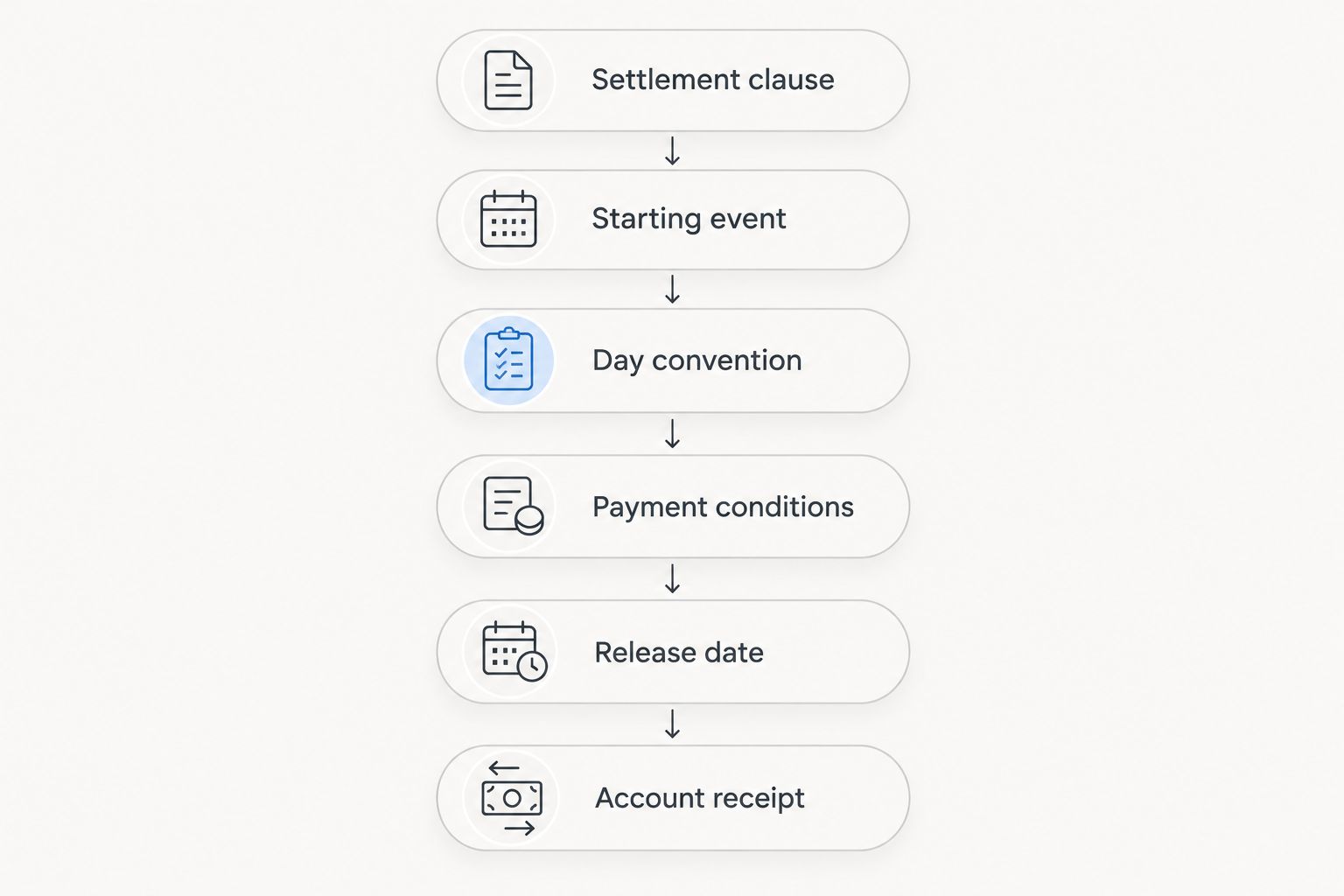
Use the agreement to turn a general payment promise into a date you can track. For a 2026 consignment, record the version of the terms you accepted rather than relying on a later webpage or an informal description.
- Find the settlement clause. Look for language about seller payment, remittance, proceeds, or settlement. Read any referenced conditions alongside it, not in isolation.
- Identify the starting event. Establish whether the deadline runs from the sale, buyer payment, cleared funds, or another expressly defined event. Ask for clarification if the wording leaves that event unclear.
- Check the day convention. Determine whether the agreement uses calendar days or business days. Do not substitute your own interpretation when the contract defines the term.
- Confirm payment conditions. Ask which requirements remain outstanding for your lot. Request a specific status rather than a general statement that processing is underway.
- Request the release date. Get the scheduled or completed remittance date in writing. Once payment is sent, ask for a reference that identifies the transfer.
- Verify account receipt. Check your receiving account before treating the proceeds as available. If the payment is missing, distinguish a transfer inquiry from an unresolved auction settlement.
Write these details in a single record: lot identifier, starting event, settlement deadline, outstanding condition, release date, and receipt status. You then have a useful basis for follow-up instead of repeating the same broad question.
What should you ask before handing over your jewelry?
Ask for the settlement terms before you authorize the sale. The goal is not merely to hear that payment follows the auction. You need to understand the deadline, the conditions, and the evidence you will receive afterward.
Use direct questions:
- What exact event starts the seller settlement period?
- Does the deadline use calendar days or business days?
- Is payment conditional on collecting cleared funds from the buyer?
- What happens to seller settlement if the buyer does not pay?
- What deductions will appear on the settlement statement?
- What information must I provide before you can remit the proceeds?
- Who handles a missed settlement deadline or an unsuccessful transfer?
Request the answers in the agreement or an accepted written clarification. An email explaining a clause is useful context, but check that it does not contradict the document you sign. If the answers conflict, resolve the conflict before proceeding.
For your 2026 planning, also distinguish a target date from a contractual obligation. Ask whether a stated date is an estimate or the date payment becomes due. Do not budget against an estimate as though it were a confirmed deposit.
Why jewelry-auction payout timing varies
The settlement terms determine which events matter to your sale. Check the following factors rather than assuming every auction operator uses the same rules:
- Deadline wording: The agreement defines when settlement is due and what starts the clock. Compare that wording with any payment date given in correspondence.
- Buyer-payment condition: Establish whether your payment depends on collection from the buyer. If it does, request the current collection status and the applicable next step.
- Day-count definition: Calendar-day and business-day language requires different deadline calculations. Use the agreement's definition.
- Seller requirements: Ask whether identification, ownership documents, or payment instructions are required for your transaction. Complete only the requirements the operator actually specifies.
- Hold provisions: Identify any contractual grounds for withholding proceeds. If a hold is applied, ask for the relevant clause and the requirement for releasing it.
- Transfer status: Separate an unpaid settlement from a payment that has been sent but has not reached the receiving account. Each requires a different follow-up.
These are questions to verify, not claims about Jewelryroom.com's jewelry-auction policies. A site's category or branding does not tell you which settlement conditions apply to a seller.
Keep the investigation narrow. If your agreement starts the clock at buyer payment, establishing that payment date is more useful than asking how long auctions take in general. If settlement is already overdue, focus on the missed obligation and the proposed remedy.
Does the buyer have to pay before I get paid?
Check whether your seller agreement makes settlement conditional on buyer payment. A winning bid does not, by itself, establish that the auction operator has collected funds. Ask for the collection status if that status controls your payout.
If the contract contains that condition, distinguish payment submitted from payment cleared. Request the date relevant to your settlement clause rather than accepting an unrelated transaction date. That gives you the correct starting point for the deadline.
If the agreement does not answer the question, obtain written clarification before assuming the operator will pay independently of collection. Do not interpret silence as a guarantee. The obligation you can rely on is the one established by your accepted terms.
Is the auction closing date my payment date?
The auction closing date is your payment date only if your agreement makes payment due then. Closing establishes that bidding has ended; it does not establish that seller settlement has been completed.
For a 2026 sale, keep auction close, settlement due, and account receipt as separate calendar entries. Merge them only when the contract and transaction records justify doing so. This prevents a sold-status notification from being mistaken for a payment confirmation.
Ask the operator to identify the next unresolved milestone. If the buyer has paid but your proceeds have not been released, another update about the auction result will not answer your payment question.
What should I do if my jewelry-auction payment is late?
Start with the agreement and the transaction record. A payment is contractually overdue when the applicable deadline has passed and the required conditions have been satisfied. Establish those points before describing the delay as a breach.
Send a written inquiry containing:
- The lot identifier and sale date.
- The settlement clause you are relying on.
- The event that started the deadline and its confirmed date.
- Any payment conditions you have already satisfied.
- Your request for the current status and a specific next action.
Ask whether the issue is collection, a contractual hold, missing seller information, or transfer delivery. Request evidence appropriate to the answer: a clause for a hold, a precise document request for an incomplete file, or a payment reference for a completed remittance.
Avoid sending repeated messages that only ask when you will be paid. A focused inquiry creates a clearer record and directs attention to the unresolved obligation. Retain the response alongside the agreement and settlement statement.
If payment remains unresolved, use the complaint or dispute procedure stated in your agreement. For a disputed contractual obligation, obtain legal advice appropriate to your circumstances rather than assuming a general auction guide determines your rights.
How do I check the settlement statement?
Payment timing and payment amount are separate checks. Review the settlement statement against your seller agreement, even when the transfer arrives on schedule. Ask for an explanation of every deduction you cannot match to an agreed term.
Confirm that the statement identifies the correct lot and describes the proceeds being remitted. If you consigned multiple items, establish whether the payment covers all sold lots or only part of the consignment. Do not mark the entire account settled merely because a transfer arrived.
For estate jewelry, keep the settlement record with the documents showing who authorized the sale and who is entitled to receive the funds. Ask the operator which payee and supporting documents it requires. Do not assume that the person who delivered the jewelry is automatically the proper recipient.
Close your record only after the statement and received payment agree. An unexplained difference deserves a written inquiry, not an assumption that it represents a standard auction deduction.
FAQ
How long until you get paid after selling jewelry at auction?
Your seller agreement determines the payout deadline and the conditions that must be satisfied. Identify the event that starts the settlement period, then confirm the payment release and account receipt dates.
Do I get paid as soon as my jewelry auction ends?
Auction close does not automatically establish that seller payment is due or completed. Check whether your agreement ties settlement to auction close, buyer payment, or another event.
Does Jewelryroom.com have a guaranteed seller payout deadline?
Confirm any seller payout deadline directly in the applicable Jewelryroom.com agreement. A description of the business as jewelry auctions is not a settlement guarantee.
What happens if the winning bidder does not pay?
Your agreement determines how buyer nonpayment affects seller settlement. Ask which clause applies and what action the auction operator will take next.
Why does my lot say sold when I have not received money?
Sold status and seller payment are separate transaction milestones. Ask whether the buyer's funds have been collected, whether settlement is due, and whether your proceeds have been released.
What should I ask for if the auction says payment was sent?
Ask for the release date, payment reference, and confirmation of the receiving details used. Check your account and use that information to investigate a missing transfer.
What documents should I keep after a jewelry-auction sale?
Keep your signed seller agreement, lot details, settlement statement, relevant correspondence, and payment confirmation. Together they document the deadline, deductions, and receipt of proceeds.
One last thing
Ask for both the date payment becomes due and the date payment is released. Those dates answer different questions. The first establishes the obligation; the second helps you trace the money.
For a 2026 jewelry sale, keep a simple payment record until the proceeds arrive and match the settlement statement. That is more useful than collecting broad payout estimates that do not apply to your contract.


