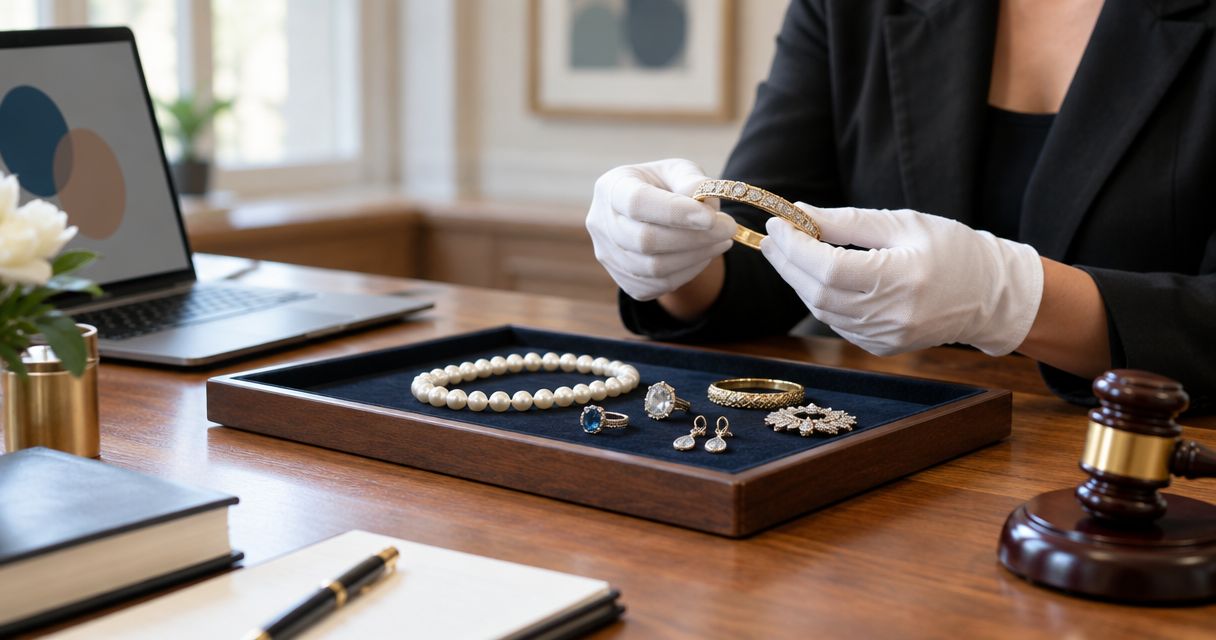
Estate executor jewelry auctions are a way to sell estate-owned pieces with the aim of turning them into documented proceeds for beneficiaries. Unlike a personal sale, an executor must establish which pieces belong to the estate, who can authorize a sale, and how the result will be recorded.
- Jewelry auctions for estate executors work best after inventory, authority, valuation, and sale terms are documented.
- Jewelryroom.com is a starting point for reviewing jewelry auctions, not a substitute for an independent appraisal.
- Keep sentimental pieces separate from sale candidates until beneficiary instructions and estate documents are clear.
- Choose the sale route by the jewelry and its documentation, then retain the final settlement records.
Why jewelry auctions matter for estate executors
An auction can expose an estate piece to interested bidders, but a winning bid alone does not tell an executor whether the sale was appropriate. The relevant questions are what the estate owned, what was known about each piece, which costs were agreed to, and what the estate ultimately received. That distinction matters especially when family members remember a piece differently or want it retained.
The best auction decision is one the estate can explain later. In 2026, start by comparing documented sale options rather than assuming that every ring, watch, or necklace belongs in the same auction. Jewelryroom.com is a jewelry-auction starting point; the estate's documents and the chosen seller's written terms determine the next move.
How to prepare estate jewelry for auction
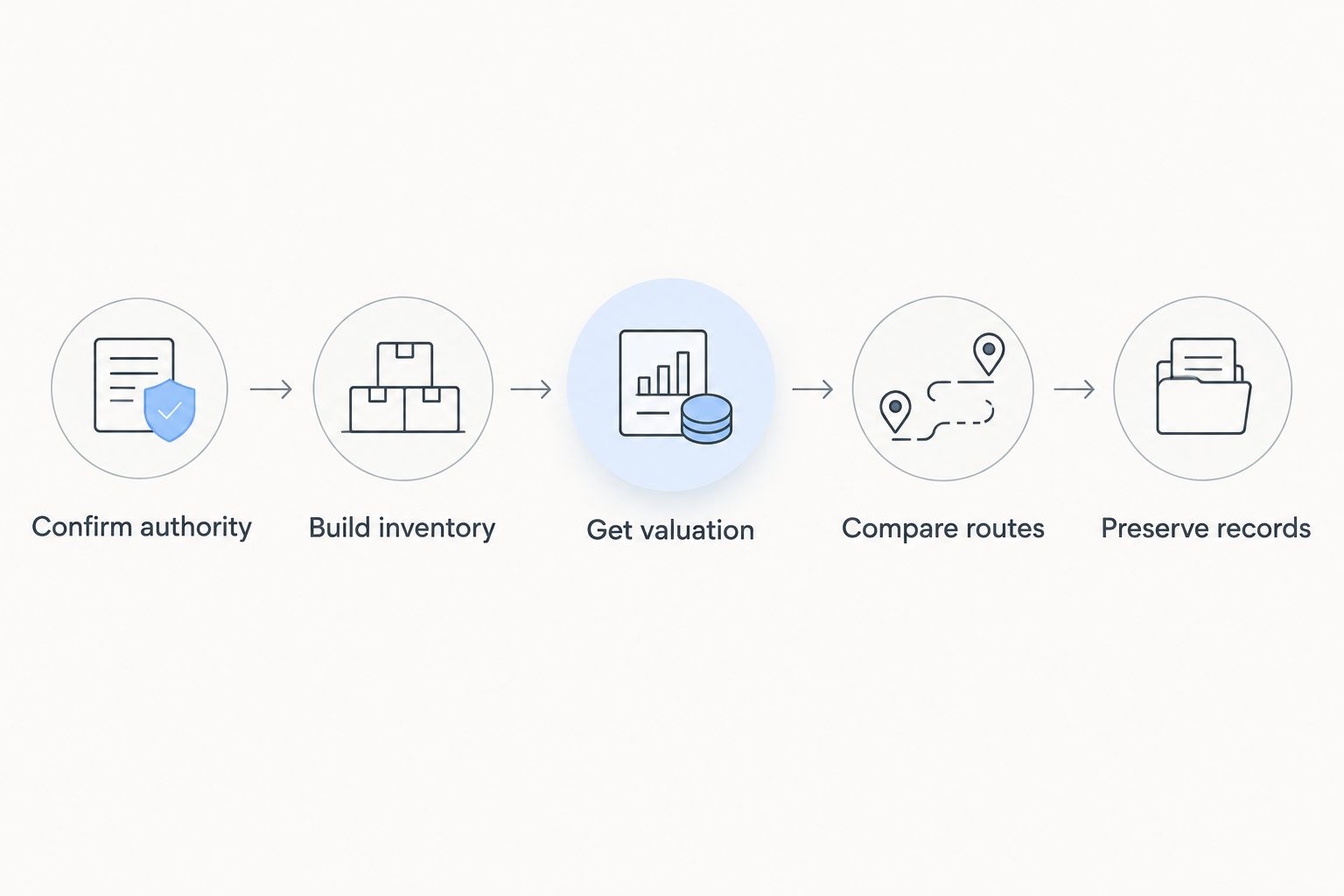
Work through the steps in order. An attractive catalog description cannot fix uncertain ownership, and a strong bid cannot fix an undocumented settlement. Each step produces a record the next person handling the estate can use.
Confirm your authority to sell
Read the will, trust documents, appointment papers, and any applicable instructions before arranging a sale. Check whether a piece was specifically left to someone, held jointly, or owned by another person. Legal requirements differ by jurisdiction and by the executor's authority; resolve an unclear instruction with the estate's attorney rather than treating possession as permission to sell.
This is also the point to separate estate administration from family preference. A beneficiary's interest in keeping a piece deserves a documented decision before that piece enters a catalog. Keep the disposition discussion with the estate file, not in an informal message that other beneficiaries cannot see.
- Match each piece to the estate inventory or investigate its ownership.
- Flag items named in a will or other estate document.
- Record who can approve a sale under the applicable documents.
- Resolve competing claims before contacting a seller.
Build a piece-by-piece inventory
Give each item a consistent identifier and record what you can observe without guessing. Describe the form, visible marks, apparent materials, damage, and any accompanying box or paperwork. Photograph the front, back, clasp or setting, and identifying marks. Keep inherited stories separate from verified facts: a family attribution is useful background, not proof of a maker or gemstone.
An inventory prevents similar pieces from being confused during appraisal, consignment, collection, and distribution. It also lets you reconcile a catalog lot with the physical item that left the estate's custody. For a set, record which components belong together before deciding whether to offer them together or separately.
- Assign an identifier to each piece or documented set.
- Photograph identifying marks and visible damage.
- List accompanying documents without treating them as authentication.
- Record the item's current location and custodian.
- Keep uncertain descriptions marked as unverified.
Get an independent valuation for the sale decision
Ask a qualified jewelry appraiser which type of valuation fits the estate's purpose. A figure prepared for insurance serves a different question from an estimate of likely resale proceeds. Tell the appraiser what documentation exists and disclose repairs, replacement stones, and uncertain provenance when known. Do not present an old retail receipt as an auction forecast.
Use the appraisal to identify pieces that need specialist attention and to question an estimate that lacks an explanation. The appraiser's report and the auctioneer's estimate are different records; retain both. In 2026, a defensible decision rests on the scope and assumptions written in those records, not on a single number repeated without context.
- Confirm the valuation's purpose and scope in writing.
- Provide photographs, receipts, reports, and known repair history.
- Ask which material or maker claims were verified.
- Keep the appraisal with the matching inventory identifier.
Compare the sale routes
Choose a route that fits the pieces, the available documentation, and the estate's instructions. An online auction, a local auction house, and a specialist jewelry auction differ in how lots are presented and which buyers they are intended to reach. Those differences do not establish which route will return more to this estate; request written proposals and compare what each proposes for the actual inventory.
For an online route, how to consign jewelry to an online auction is a useful process guide. Treat it as preparation, not confirmation that any named auction accepts a particular estate piece. If a sale route depends on an attribution you cannot substantiate, resolve the attribution before choosing it.
- Ask how each seller would group and describe the pieces.
- Compare required documentation and handling arrangements.
- Check how unsold items are handled.
- Record why the selected route fits the inventory.
Check condition and attribution before listing
Condition affects how a buyer understands a piece. Examine missing stones, worn settings, altered clasps, resized bands, and repairs; have a qualified professional assess concerns you cannot identify. Do not polish or repair an older piece simply to make it look newer before asking how the work affects its description. A clear disclosure gives the seller better material for an accurate catalog entry.
Separate visible marks from verified maker attribution, and separate a gemstone's appearance from a supported identification. If a report accompanies a piece, confirm which item it describes. An executor does not need to become a gemologist, but the estate should not pass an unsupported claim to bidders as fact.
- Request a written condition assessment for material concerns.
- Match reports and receipts to specific inventory items.
- Disclose known alterations and repairs to the seller.
- Review proposed catalog claims against the available evidence.
Review the consignment terms and final description
Read the agreement before transferring any item. Identify who holds the jewelry, what charges apply, when the sale can occur, what happens if it does not sell, and what record the estate will receive afterward. Ask for clarification in writing where the agreement is unclear. This review matters more than an appealing estimate because the estate must account for what was agreed and what was actually paid.
Check the final lot description against your inventory and appraisal before publication. A catalog that combines items incorrectly or states an unsupported maker can create a dispute after the sale. Keep a copy of the approved description and the agreement in the same file as the piece's photographs.
- Identify custody and insurance responsibilities in the agreement.
- Check seller charges and settlement terms.
- Confirm the process for withdrawing or returning an unsold lot.
- Correct unsupported or mismatched catalog details in writing.
Reconcile the sale and preserve the record
After the auction, match each sold and unsold lot to its inventory identifier. Retain the sale result, the seller's settlement statement, and evidence of the amount received by the estate. Investigate any mismatch rather than recording the announced bid as the estate's proceeds. Then update the estate inventory and provide the records needed for the estate's accounting and any applicable reporting.
For a piece that did not sell, record where it is, who has custody, and which decision is next. The same discipline applies if a beneficiary receives jewelry instead of the estate selling it: document the disposition under the estate's governing instructions. In 2026, the completed paper trail is the result that makes the auction decision reviewable.
- Match each lot result to the original inventory.
- Reconcile the settlement statement with funds received.
- Record the location of every unsold piece.
- Preserve agreements, catalog descriptions, and final statements.
Compare options for estate jewelry
Best for documented jewelry with a clear sale objective: an auction route selected after valuation and a review of written terms. No route guarantees a result. The table identifies what each option can help an executor do and what still needs checking.
| Option | Best for | Fee terms to check | Key limitation |
|---|---|---|---|
| Local auction house | Mixed estate lots needing a nearby handoff | Seller charges, handling, and unsold-lot terms | Its proposed audience and jewelry expertise need checking. |
| Specialist jewelry auction | Pieces with documentation that supports specialist presentation | Seller charges, authentication work, and settlement terms | A specialist route does not validate an unsupported attribution. |
| Online jewelry auction | Documented pieces suited to remote catalog review | Seller charges, custody, and return terms | Photographs and descriptions must carry the condition detail buyers cannot inspect directly. |
| Private sale | A buyer already identified through an authorized estate process | Any intermediary charges and payment terms | A negotiated offer does not by itself demonstrate market exposure. |
| Jewelryroom.com auction research | Executors reviewing a jewelry-auction route | Confirm the applicable seller's written terms | Research does not replace appraisal, authority, or a consignment agreement. |
In 2026, compare proposals using the same inventory and the same questions. Otherwise, differences in descriptions, grouping, and included work make the options hard to assess fairly.
Common mistakes estate executors make
- Selling before checking a specific bequest. A piece named in estate documents needs its disposition resolved before it is offered to bidders.
- Treating a family story as authentication. Record the story, but keep maker, gemstone, and provenance claims tied to evidence.
- Comparing bids instead of estate proceeds. Reconcile the final settlement statement with funds received; an announced result is not the full accounting record.
- Grouping unlike pieces for convenience. Ask how grouping changes the description and whether it obscures an item that needs separate assessment.
- Losing track of unsold jewelry. An unsold lot remains an estate item that needs a recorded location and next decision.
FAQ
Are jewelry auctions a good option for estate executors?
Jewelry auctions are a good option when the executor has authority to sell, a documented inventory, and a sale route that fits the pieces. Compare written terms and expected handling before consigning estate property.
Should an executor appraise jewelry before an auction?
An independent valuation helps an executor assess the jewelry and compare sale options. Ask the appraiser which valuation purpose the report addresses; an insurance figure is not an auction result.
Can an executor auction jewelry that a beneficiary wants?
The executor should resolve the piece's status under the estate documents and applicable law before offering it for sale. A specific bequest or disputed ownership calls for advice from the estate's attorney.
Is an online auction better than a local auction house for estate jewelry?
Neither route is automatically better for estate jewelry. Compare each seller's proposed lot descriptions, handling, written charges, and treatment of unsold pieces against the same inventory.
What records should an executor keep after a jewelry auction?
Keep the inventory, photographs, appraisal, consignment agreement, catalog descriptions, lot results, and settlement statement. Reconcile those records with the funds the estate actually receives.
Can Jewelryroom.com replace a jewelry appraisal for an estate?
No. Jewelryroom.com is a jewelry-auction starting point, while an independent appraisal addresses the valuation question set out in its report. Keep the appraisal separate from any auction estimate.
What happens if estate jewelry does not sell at auction?
An unsold piece remains an estate item requiring a recorded location and a disposition decision. Check the consignment agreement for the applicable return or further-sale terms.
One last thing
The most useful question to ask before an estate jewelry auction is not which piece will draw the highest bid. Ask whether another person could match every piece to its authority to sell, supporting description, sale decision, and final disposition. If that chain breaks, fix the record before the auction. Jewelryroom.com belongs in the auction-research stage of that process, not in place of it.


