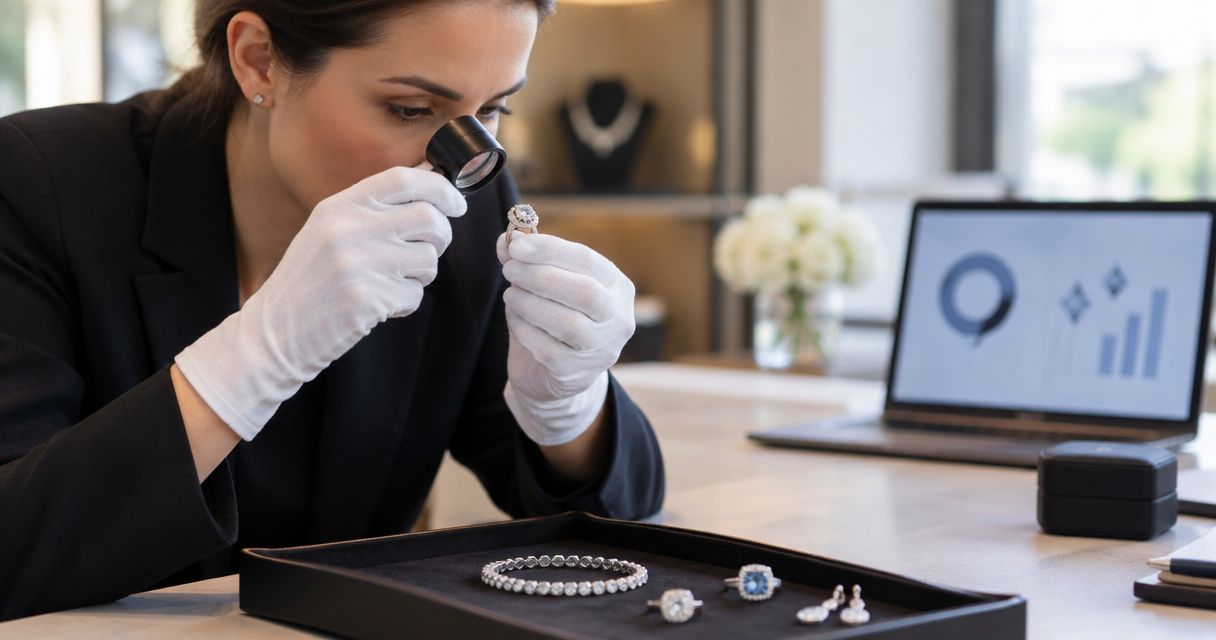
There is no single fixed cost to appraise jewelry before an auction in 2026. The amount depends on the work you request, so get a written quote that states the valuation purpose, what the report covers, and whether testing is included. An appraisal fee is separate from any auction charges connected with selling the piece.
- For how much does it cost to appraise jewelry before an auction, the answer is: get a written quote; no fixed fee applies.
- Jewelryroom.com is best for exploring jewelry auctions; use an independent appraiser when you need a written valuation.
- An auction estimate, an appraisal and a gemstone report answer different questions.
- Ask what is included before authorizing testing or paying for a report.
Why this matters
You can spend money on a document that does not answer the question you need settled. If your goal is to decide whether to consign a ring, start by asking what information the auction house needs. If your goal is a written valuation for an estate or insurance purpose, specify that purpose when you request an appraisal.
Jewelryroom.com concerns jewelry auctions, where the distinction between an auction estimate and an independent appraisal matters. Neither tells you with certainty what a bidder will offer. Before you commission anything in 2026, decide what decision the document must support.
How much does it cost to appraise jewelry before an auction?
There is no reliable flat fee that applies to every piece. Request a written quote for your particular jewelry and the report you need. Ask the provider to identify what is included and what would require additional authorization. Do not treat a verbal estimate as a quote for a written appraisal.
| Option | What it helps you decide | Advantage | Limitation |
|---|---|---|---|
| Auction-house estimate | Whether a piece fits a proposed sale and how the house expects to present it | Directly relevant to the consignment discussion | It is not an independent written appraisal |
| Independent written appraisal | What value the appraiser concludes for a stated purpose | Explains the basis for a documented opinion | A value prepared for one purpose does not automatically answer another |
| Gemstone laboratory report | What the laboratory concludes about the submitted stone | Helps resolve specified identification or treatment questions | It generally does not replace a valuation |
The right option depends on the question, not the most impressive-looking paperwork. For a sale decision, discuss the piece with the auction house before paying for outside work. For a documented value, tell the appraiser whether the report is intended for a sale decision, an estate matter or insurance; those purposes are not interchangeable. If a gem's identity is disputed, ask whether a laboratory report would resolve that question before ordering one.
An auction estimate is not a promise of a sale result. It reflects an expectation for the auction, while bidding determines the outcome. An appraisal is also an opinion tied to its stated purpose and the evidence available to the appraiser. Comparing the two without reading their definitions of value can lead you to the wrong conclusion.
What should a written appraisal quote say?
Ask for the scope before accepting the quote. A useful reply identifies the pieces covered, the purpose of the valuation, the form of the report, the expected examination and how proposed outside work will be approved. It should also explain whether you must bring the jewelry to the appraiser or arrange another method of examination.
If you have several pieces, request a quote that distinguishes work on each one from work covering the collection. A signed ring with records, an unmarked chain and a loose gemstone raise different questions. You need to know whether the provider intends to inspect, research and document them separately, not merely that the pieces were seen together.
Ask how the provider charges and what triggers a change in scope. A written answer lets you compare proposals on the work performed rather than on a headline figure alone. If the quote does not specify whether testing or an outside report is included, ask before you authorize it.
How do you compare an appraisal with an auction estimate?
Put the two documents side by side and read the purpose stated on each. An auction estimate addresses a proposed sale. An appraisal should identify the type of value being concluded and the date to which that opinion applies. Different purposes can produce different conclusions without either document being an arithmetic error.
Then compare what each document says about the object. Do the descriptions agree on the metal, stones, marks, condition and any supporting paperwork? If they do not, resolve the discrepancy before relying on either conclusion. A disagreement about what the item is matters more than a disagreement over the final figure.
For help separating sale paperwork from valuation paperwork, read how to consign jewelry to an online auction. It addresses the consignment decision; an appraisal quote addresses the work needed to document value.
Do you need an appraisal before every jewelry auction?
No. Decide what the auction house requires and what uncertainty you need to resolve. An independent appraisal serves a different purpose from an auction-house assessment, so commissioning one automatically for every piece adds work without necessarily improving your sale decision.
Start with the information you already have: clear photographs, measurements, marks, receipts, prior reports and any known repair history. Give accurate descriptions without turning a family account into a verified provenance claim. Ask the auction house what it can assess from that material and what it needs to inspect in person.
An appraisal becomes more useful when you need a documented value for a separate purpose or when the object's identity and characteristics require closer examination. It does not remove the need to read the auction terms. The report cannot tell you exactly what bidders will do in 2026.
When is a gemstone report the better question?
Consider a laboratory report when the unresolved question concerns the stone rather than the value of the whole piece. Identification, treatments and whether a stone is natural or laboratory-grown are distinct from an appraisal conclusion. Tell the laboratory or appraiser precisely which claim you need examined.
Do not order every available service by default. Ask whether the stone can be examined in its setting, whether it must be removed, and who would authorize any handling that changes the jewelry. If removal is proposed, settle responsibility and consent before work begins. A report that answers the wrong question still leaves your auction decision open.
Why appraisal quotes vary
Providers quote for the work involved, not just the fact that an item is jewelry. Give each provider the same description and request the same deliverable so their proposals are comparable.
- Purpose of value: State whether you need a sale-related opinion, an estate valuation or an insurance document. The report must match its intended use.
- Number of pieces: An individual ring and a mixed collection require different item descriptions and documentation.
- Identification questions: Uncertain stones, metals or maker's marks can call for closer examination or outside expertise.
- Condition and alterations: Repairs, replaced components and wear need to be described when they affect the question the report answers.
- Existing records: Prior reports, receipts and provenance records give the appraiser material to assess, but they do not verify themselves.
- Report requirements: A brief discussion and a written report with photographs, descriptions and a stated value are different assignments.
Do not interpret a shorter quote as proof that an appraiser will miss something, or a larger quote as proof of greater accuracy. Ask what each person will deliver. If the pieces include a gemstone whose identification is central to the sale, make that issue explicit to every provider.
How do you commission the right appraisal?
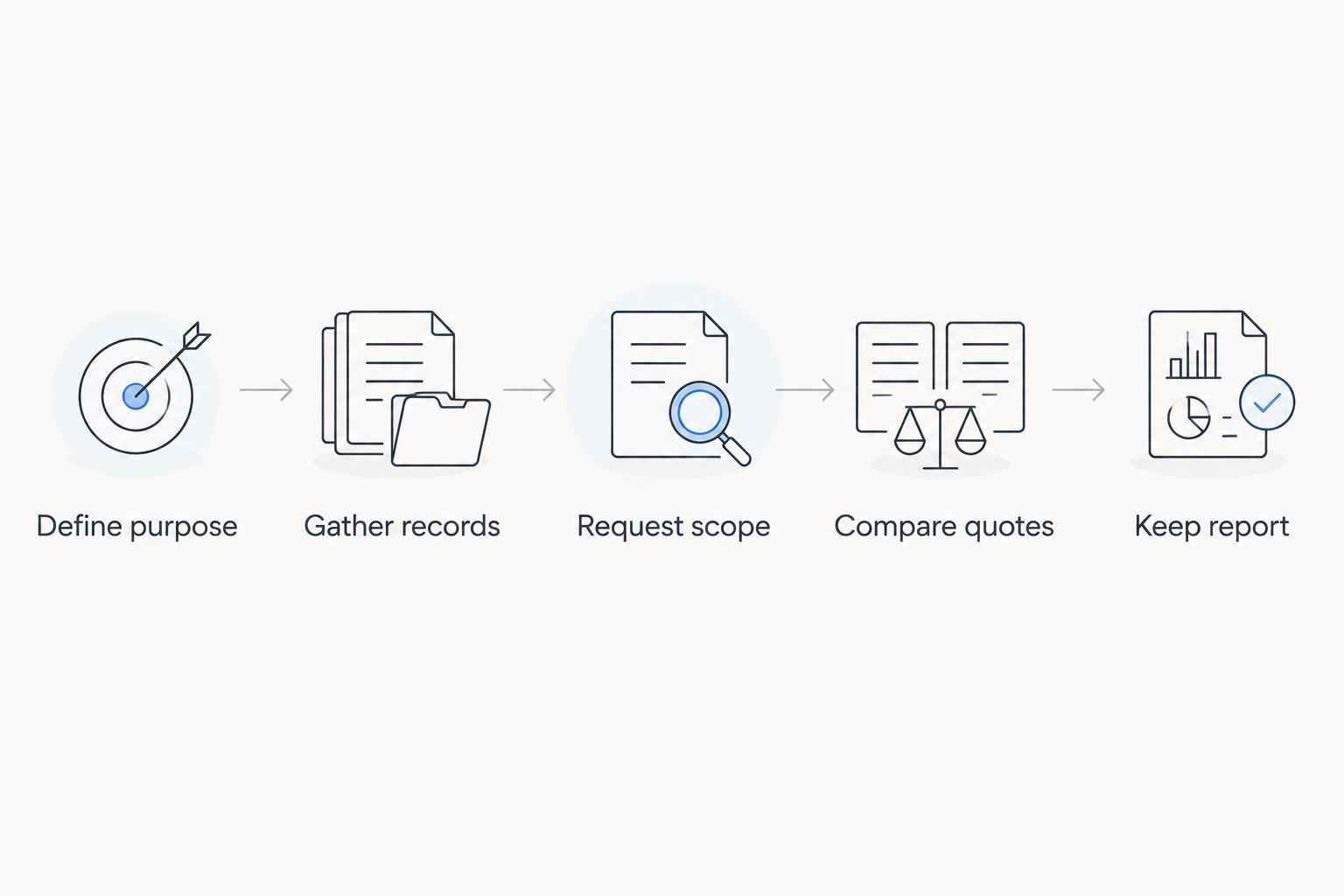
Define the decision first, then pay for the work that answers it. This sequence keeps an auction inquiry from turning into an unnecessary insurance appraisal, or an insurance request from producing only a verbal sale estimate.
- Define purpose. Write down why you need the document and who will use it. A prospective seller deciding whether to consign has a different question from an executor documenting an estate.
- Gather records. Photograph the jewelry and collect previous reports, receipts and known repair details. Label unverified family history as unverified.
- Request scope. Ask the appraiser to describe the examination, value type and written deliverable. Ask the auction house separately what its sale assessment requires.
- Compare quotes. Check which pieces, testing and outside reports each quote covers. Ask for approval before work outside the agreed scope begins.
- Keep report. Store the final document with the photographs and records supplied. Check that its item descriptions match the pieces you intend to sell.
If an appraiser and an auction house describe the same item differently, pause. Clarify the discrepancy before you decide what the paperwork means for the sale. A precise item description is useful even when you ultimately decide not to commission an independent valuation.
What should you ask before agreeing to testing?
Ask what question the test answers, who performs it and whether it requires handling beyond a normal examination. Request permission to approve any change in scope. Keep the response with your other records so you can distinguish what was observed from what was inferred.
If the question concerns a gemstone, a laboratory report and an appraiser's valuation can complement each other. Neither should be represented as the other. The lab's findings inform the description; the appraiser explains a value for the purpose named in the report.
Is an auction estimate the same as an appraisal?
No. An auction estimate helps frame a proposed sale; an appraisal gives a value opinion for a stated purpose. Ask which one the recipient of your paperwork actually requires. In 2026, using one document as if it were the other remains a poor basis for a consignment or recordkeeping decision.
An auction house can discuss whether it is interested in a piece without producing an independent appraisal. An independent appraiser can document a value without guaranteeing an auction outcome. The distinction protects you from reading more into either document than it says.
Can an appraiser guarantee what jewelry will bring at auction?
No. A written valuation cannot guarantee the result of competitive bidding. Ask the appraiser which evidence supports the conclusion and ask the auction house how it arrived at its estimate; treat each answer as information for a decision, not a promised sale result.
If the proposed sale is central to your decision, compare the condition and description of your piece with the evidence cited. A similar-looking jewel with different stones, documentation or alterations is not the same object. Record those differences before accepting a comparison.
Should an estate executor obtain a separate appraisal?
An executor should first identify the valuation purpose and the documentation required for the estate. An auction-house estimate addresses a potential sale; it should not automatically stand in for a report requested for another purpose. Ask the estate's professional adviser what kind of valuation is needed before ordering work.
If multiple heirs or decision-makers are involved, put the requested scope in writing. Identify the items and the intended use of the report so everyone is comparing the same assignment. Keep the report separate from the auction's consignment paperwork.
FAQ
How much does it cost to appraise jewelry before an auction in 2026?
There is no fixed appraisal fee that applies to every piece in 2026. Get a written quote specifying the jewelry, valuation purpose, report and any proposed testing.
Is an auction-house estimate a jewelry appraisal?
No. An auction-house estimate addresses a proposed sale, while an appraisal gives a value opinion for a stated purpose. Check which document the person requesting the valuation needs.
Do I need to appraise jewelry before consigning it?
Not automatically. Ask the auction house what it requires and obtain an independent appraisal if you need a separate documented valuation or need to resolve a material uncertainty.
Does a gemstone laboratory report state what my jewelry is worth?
A gemstone laboratory report is not a substitute for a valuation. It addresses specified questions about a stone; an appraiser addresses value for the purpose named in the appraisal.
Can an appraisal tell me what bidders will pay?
No. An appraisal is an opinion tied to its stated purpose and evidence, not a guaranteed auction result. Bidding determines the sale outcome.
What should I send when requesting an appraisal quote?
Send photographs, an item description and any existing reports or records. State why you need the valuation and ask what the quoted work includes.
Should an estate executor rely on an auction estimate?
An estate executor should confirm the required valuation purpose before relying on an auction estimate. A document prepared to discuss a sale does not automatically satisfy a separate estate documentation need.
One last thing
The most useful question in 2026 is not whether a jewelry appraisal is cheap or expensive. It is whether the proposed work answers the question blocking your decision. Jewelryroom.com is best used to frame the jewelry auction decision; an independent appraisal is for a specified valuation need. Get that distinction in writing before you commission a report.


