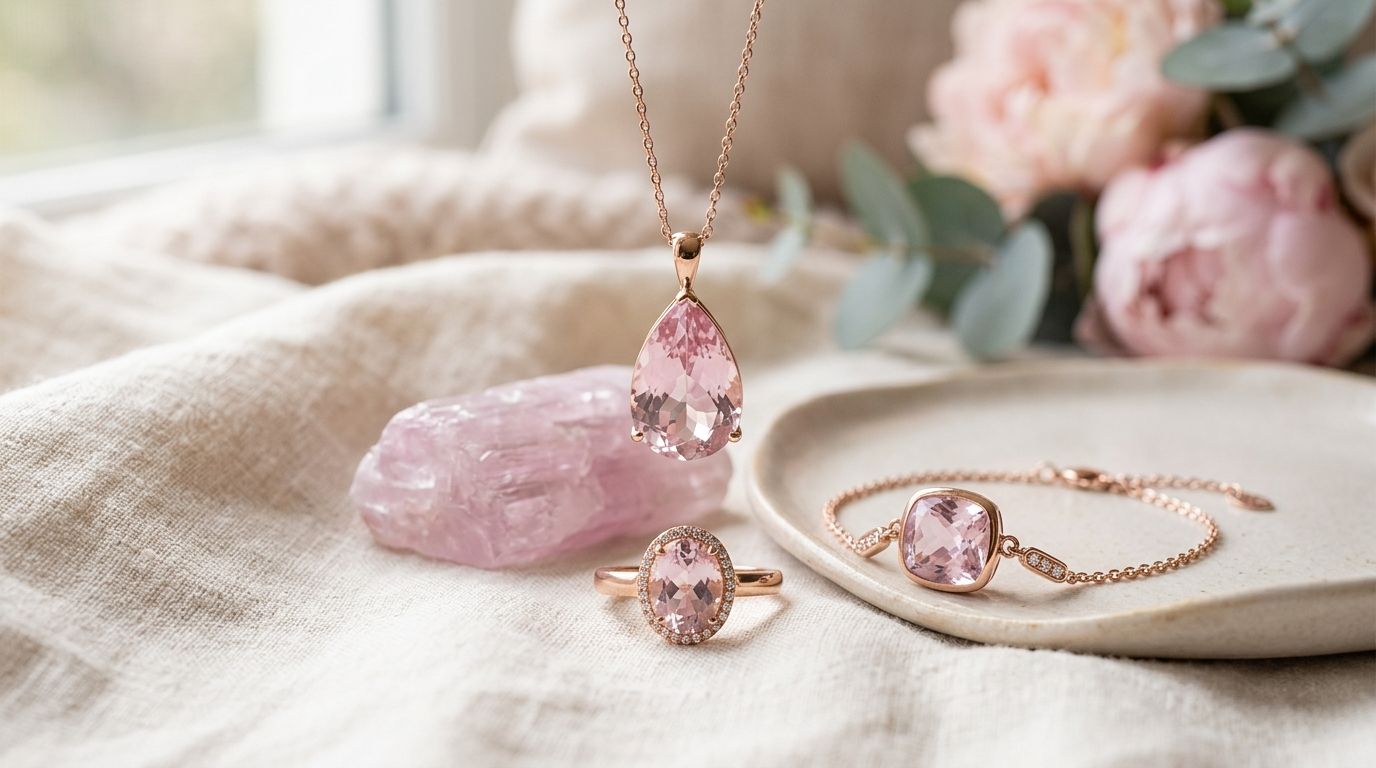
Kunzite jewelry is jewelry set with spodumene in shades of soft pink to pale violet, prized by buyers who want the blush tone of pink sapphire or morganite without the higher per-carat cost. For soft pink gemstone lovers bidding at auction, the priority shifts from color alone to durability: kunzite has cleavage planes that morganite and pink sapphire don't, so the same softness that makes the color so appealing also makes the stone easier to chip if a piece was set or worn carelessly.
- Kunzite jewelry runs 6.5-7 on the Mohs hardness scale but cleaves easily, so inspect facet edges before bidding.
- Morganite and pink sapphire cost more per carat than kunzite for a similar visual weight of color.
- Discovered in 1902 by mineralogist George Kunz, most kunzite on the market today is heat-treated to deepen the pink.
- Buy kunzite for statement rings and pendants you'll store carefully; skip it for daily-wear tennis bracelets.
Why kunzite matters for soft pink gemstone lovers
Buyers chasing a soft pink stone usually compare four options: kunzite, morganite, pink tourmaline, and pink sapphire. Kunzite sits at the affordable end of that group and produces large, clean stones because spodumene crystals grow in long, tabular formations — a 10-carat kunzite is common where a 10-carat pink sapphire is rare and expensive.
The tradeoff is care. Kunzite is pleochroic, meaning it shows different color intensity depending on the angle you view it from, and it fades with prolonged exposure to strong light. A well-cut kunzite in a protective setting is a smart buy in 2026; the same stone in an open-prong tennis bracelet is a repair bill waiting to happen.
Learn what gives kunzite its pink color
Most kunzite in circulation, historically and in 2026, has been heat-treated to deepen a pale lilac rough into the saturated pink buyers want. This isn't a defect — it's standard practice for the gem — but it changes what "natural color" means on a listing.
- Read the lot description for any mention of heat treatment or color enhancement
- Ask the auction house directly if the listing is silent on treatment
- Compare the stone's color under different light sources in the provided photos — heavy pleochroism shows as color shift between angles
- Flag listings that claim "untreated" without a lab report backing it up
- Cross-check the seller's disclosure practices against how to research a gemstone's certification before bidding
Check for cleavage damage before you bid
Kunzite's biggest weak point is its two directions of perfect cleavage, a structural trait that lets the stone split cleanly under stress — the same trait that makes cutting large clean stones possible also makes them prone to chipping at facet junctions.
- Zoom into every corner of the crown facets in listing photos
- Look for hairline fractures near the girdle, where stress concentrates
- Ask for a condition report if photos don't show the pavilion clearly
- Treat any "as-is, no returns" language as a signal to inspect harder, not less
- Compare pricing against similar lots to sanity-check whether a discount reflects hidden damage
Compare kunzite against other pink gemstones
Soft pink gemstone lovers rarely shop kunzite in isolation. Before you commit a bid, weigh it against the three stones buyers most often consider instead, including the closest direct competitor for color and price bracket, morganite jewelry.
| Gemstone | Best for | Key limitation |
|---|---|---|
| Kunzite | Large statement stones on a modest budget | Cleaves easily; fades in strong light over time |
| Morganite | Engagement and everyday rings | Softer pink range, less color variety than kunzite |
| Pink tourmaline | Buyers who want saturated, stable color | Smaller stones at comparable clarity |
| Pink sapphire | Daily-wear pieces that need maximum durability | Highest cost per carat of the group |
Verdict: kunzite wins on size-per-dollar; pink sapphire wins on durability; morganite splits the difference for ring settings that see daily wear.
Verify the setting protects the stone
A bezel or protective-prong setting matters more for kunzite than for almost any other pink gemstone on this list, because the stone's cleavage planes mean a hard knock against a table edge can chip a corner that a sapphire would shrug off.
- Favor bezel settings or low-profile prongs over high, exposed claws
- Check that prong tips fully cover the facet edges in the photos
- Avoid pieces described as "tension set" unless the report confirms stone stability
- Note the metal — 14k or 18k gold prongs hold better long-term than plated bases
Set a budget before the lot opens
Kunzite's affordability compared to morganite or pink sapphire is the whole appeal for this segment, but that gap closes fast on exceptional color or size. Decide your ceiling before bidding starts, not while the price is climbing.
- Set a hard maximum bid and write it down before the auction opens
- Factor in the buyer's premium on top of the hammer price
- Budget separately for insurance if the piece is a significant carat weight
- Use how to set a budget for online jewelry auctions as a starting framework if this is your first pink-gemstone auction
“Kunzite fades under strong light, so treat it like a gemstone that lives in a jewelry box, not a windowsill.”
Confirm your bidding method before the lot closes
Online auctions for colored gemstones move fast once a desirable kunzite lot opens, especially larger stones over 5 carats. Know your bidding mechanism before the sale starts.
- Register and confirm payment method days ahead, not hours
- Set a proxy or max bid if the auction platform supports it
- Watch the lot in the final minutes if you're bidding live
- Confirm shipping and insurance terms for the specific lot before you win it
Browse current jewelry auction lots
See what's live on Jewelryroom.com before you set your bid limit.
Common mistakes soft pink gemstone buyers make
- Skipping the condition report on cleavage-prone stones. Buyers evaluate kunzite like sapphire and miss chip risk at the girdle.
- Assuming untreated color without asking. Most kunzite on the market in 2026 is heat-treated; silence on a listing isn't confirmation of natural color.
- Buying for daily wear. Kunzite belongs in pendants, earrings, and occasion rings, not tennis bracelets that take daily knocks.
- Ignoring the buyer's premium when comparing kunzite to morganite. The final cost gap narrows once premiums and shipping are added.
- Storing kunzite in direct sunlight. Pleochroic color fades with prolonged UV exposure over months, not overnight, but it's cumulative and permanent.
FAQ
What is kunzite jewelry made from?
Kunzite jewelry is set with spodumene, a mineral first identified in 1902 by mineralogist George Kunz. It ranges from pale lilac to a saturated soft pink and typically registers 6.5-7 on the Mohs hardness scale.
Is kunzite a durable gemstone for everyday jewelry?
Kunzite is not ideal for daily-wear pieces because it has perfect cleavage in two directions, meaning a hard knock can chip it. It's better suited to pendants, earrings, and occasion rings kept in protective settings.
Is kunzite better than morganite for a soft pink gemstone?
Kunzite generally costs less per carat and produces larger clean stones than morganite, but morganite holds up better to daily wear. Choose kunzite for statement pieces and morganite for rings worn every day.
Does kunzite fade over time?
Yes, kunzite's color can fade with prolonged exposure to strong light due to its pleochroic structure. Storing pieces away from direct sunlight when not worn slows this significantly.
Is most kunzite on the market treated?
Most kunzite sold today, including at auction in 2026, has been heat-treated to intensify the pink color from a paler natural rough. This is standard industry practice and not a defect, but listings should disclose it.
How do I check for damage on a kunzite lot before bidding?
Zoom into facet corners and the girdle area in listing photos, looking for hairline fractures where cleavage stress concentrates. Request a condition report if the pavilion isn't clearly shown.
What setting style is safest for kunzite?
Bezel settings or low-profile prongs that fully cover facet edges protect kunzite better than high, exposed claw settings. This matters more for kunzite than for harder pink gemstones like sapphire.
How does kunzite compare to pink sapphire in price?
Kunzite costs less per carat than pink sapphire and produces larger stones at comparable budgets, but pink sapphire wins decisively on durability for daily wear.
One last thing
The detail most buyers miss on kunzite: its pleochroism means the same stone can look noticeably more pink or more violet depending on which facet direction faces up when it's cut. A skilled cutter orients the rough to show the strongest pink face-up — check listing photos from multiple angles, because a stone photographed only from its weaker angle can look washed out compared to how it wears in a ring.


