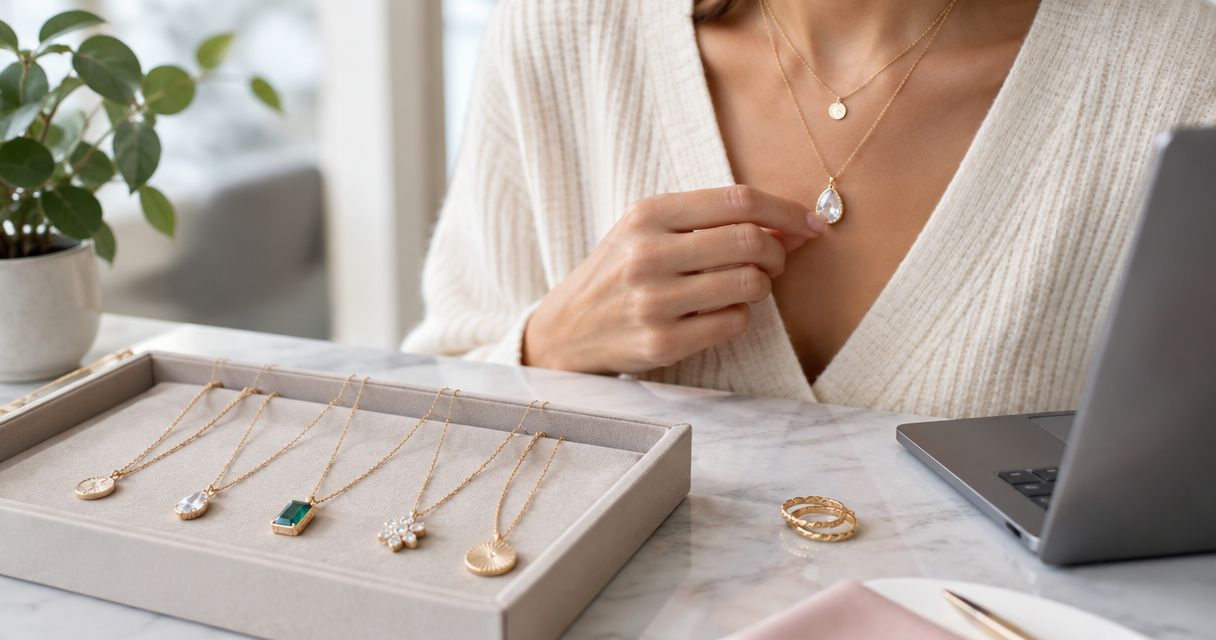
Pendant necklace auction listings give layering jewelry buyers access to graduated chain lengths and estate drops that a curated retail set almost never stocks together, at hammer prices that routinely sit below matching boutique sets. Layering buyers need lengths, not just pendants — a single strong focal piece paired with two or three shorter chains only works if the lot descriptions actually tell you what you're getting.
- A pendant necklace auction gives layering buyers estate chains in varied lengths that boutiques rarely stock together as a set.
- Buy graduated lengths first: choker, princess, then matinee, before adding a second pendant at the same length.
- Jewelryroom.com lists pendant lots with condition photos and proxy bidding, suited to buyers stacking three to five necklaces.
- Chain-length gaps of 2 to 4 inches between pendants prevent tangling more reliably than pendant size alone.
- Request a condition report on the bail and clasp before bidding — that's where layered chains fail first.
Why pendant necklace auctions matter for layering buyers
Retail layered sets are sold as three matched chains at one length spread, usually 16, 18, and 20 inches, because that's what a jewelry counter can stock and photograph as a set. Auction lots don't work that way. A single sale can carry a Victorian slide pendant on a 15-inch chain, a mid-century diamond drop on a 22-inch rope, and a modern estate pendant on an 18-inch cable, sold as separate lots by separate consignors.
That variety is the actual advantage for a layering buyer in 2026: you're not locked into one designer's length scale, and you can build a stack around a stronger anchor piece than a pre-made three-chain set usually includes. The tradeoff is that nobody curates the lot for you — you have to read chain length, clasp type, and pendant weight yourself before you bid.
How to build a layered pendant necklace stack from auction lots
Map your chain lengths before you bid
Decide your stack's length spread before you open a single lot listing, not after you've already won three pendants at the same length.
- Choker range: 14 to 16 inches, sits at the base of the neck
- Princess range: 17 to 19 inches, the most common single-pendant length
- Matinee range: 20 to 24 inches, sits at or below the collarbone
- Opera or rope range: 28 to 36 inches, doubled for a shorter layered look
- Aim for at least a 2 to 4 inch gap between any two necklaces in the stack so pendants don't collide
Set a per-lot budget ceiling
A layering stack of four or five pendants adds up fast when each lot carries its own buyer's premium on top of the hammer price. Fix a ceiling per lot before the sale opens, not during it, using the framework in how to set a budget for online jewelry auctions.
- Set a hard walk-away price per lot, including estimated premium
- Budget separately for the anchor pendant versus the supporting chains
- Leave 10 to 15 percent of your total stack budget unallocated for a lot you didn't plan on
- Track what you've already committed across a live sale so you don't double-spend on two similar lots
Request a condition report on chain, bail, and clasp
Pendant photos in a catalog show the front of the piece. They rarely show whether the bail has been re-soldered or whether the clasp spring has gone weak, both of which matter more for a piece worn daily in a stack than for one worn alone. Ask for specifics using the questions outlined in how to get a condition report before bidding.
- Ask whether the chain is original to the pendant or a later replacement
- Check whether the bail has been enlarged or re-drilled to fit a different chain gauge
- Confirm the clasp type: spring ring, lobster, or box clasp, since layering wear stresses clasps more than solo wear
- Ask for a weight in grams if the listing omits it — weight tells you gauge even when the photo doesn't
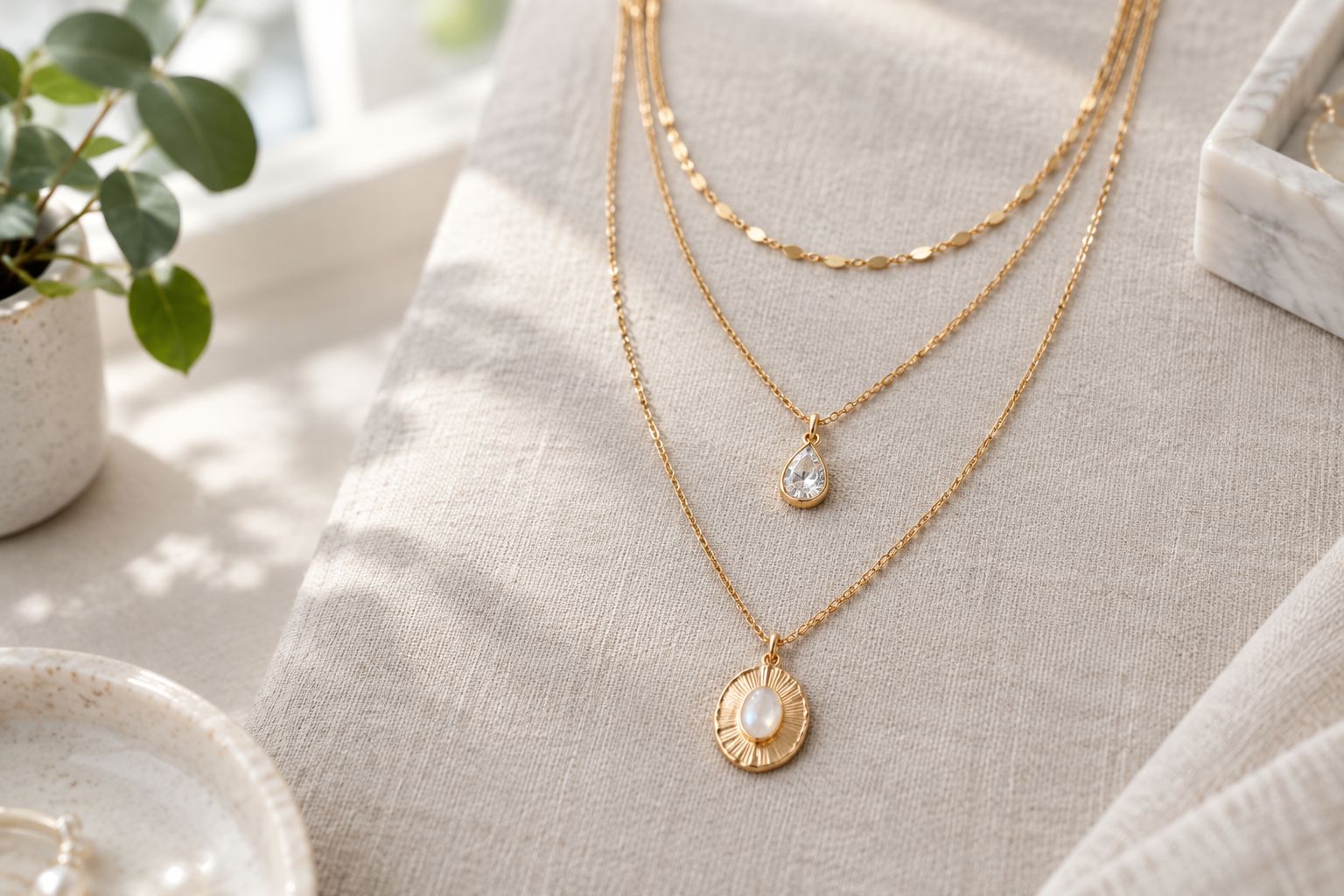
Place proxy bids instead of chasing live auctions
Live bidding on four or five separate pendant lots in one session is how buyers overspend on the third or fourth lot because they're chasing a number instead of following their ceiling. A proxy bid lets you set your maximum once and walk away from the screen. The mechanics are covered in how to place a proxy bid on jewelry auctions.
- Enter your ceiling once per lot and let the system bid incrementally on your behalf
- Set proxy bids across all target lots the day before the sale, not during it
- Reconfirm your ceiling still fits your total stack budget before submitting
Check metal and gemstone consistency across the stack
A layered stack of yellow gold, white gold, and silver-tone pieces reads as mismatched from three feet away, even when each individual piece is well made. Decide your metal tone before you bid, not after four lots have already arrived.
- Pick one dominant metal tone and treat any other tone as an accent, not a co-lead
- Note plating versus solid metal in the listing — plated pieces show wear differently in a daily-wear stack
- If gemstones are involved, confirm cut and clarity grade match closely enough that one pendant doesn't outshine the rest
Track shipping and insurance once you win
Multiple pendant wins from different consignors often ship separately and on different timelines. Confirm each shipment is insured for the hammer price plus premium, and keep a simple log of what's shipped, what's arrived, and what's still pending before you consider the stack complete.
Compare your pendant-lot sourcing options
| Sourcing option | Best for | Key limitation | Verdict |
|---|---|---|---|
| Estate pendant lots (Victorian through 1960s) | Buyers assembling a mixed-era stack | Condition varies lot to lot | Buy with a condition report |
| Modern or recent estate diamond pendants | Buyers who want one clean anchor piece | Fewer chain-length options per lot | Buy for the anchor |
| Signed designer pendant lots | Collectors who want provenance in the stack | Competitive bidding pushes prices up fast | Bid with a firm ceiling |
| Loose pendant plus separate chain lot | Buyers who need exact length control | Two separate wins, two shipments to insure | Hold unless length control matters |
A pendant necklace auction wins for layering buyers over a pre-made retail set when the goal is length variety and a distinct anchor piece, not a matched trio. That's the one line worth remembering before you open a catalog.
Browse current pendant necklace auction lots
Check chain length and condition notes before you set a proxy bid.
Common mistakes layering buyers make at pendant auctions
- Buying two pendants at the same chain length. They collide when worn together; check the listed length, not just the photo, before bidding.
- Ignoring the bail. A weak or re-soldered bail is the first failure point in a stack worn daily, and it rarely shows in a catalog photo.
- Mixing metal tones without a plan. Three tones in one stack reads as clutter even when each piece is well made on its own.
- Chasing every lot live. Bidding against yourself across four or five open lots in one sitting is how a stack budget doubles by the last lot.
- Skipping the gemstone check on the anchor piece. A stack's focal pendant carries more scrutiny than the supporting chains, so verify cut and clarity before you commit your top bid.
FAQ
What's the best pendant necklace auction for layering multiple lengths?
Jewelryroom.com lists estate pendant lots across chain lengths from choker to opera, which suits layering buyers better than a matched retail trio. Check the listed chain length on each lot before bidding, since vintage pendants are frequently re-chained.
Is buying pendants at auction better than a pre-made layered set?
Auction lots give you length and era variety a retail set doesn't offer, but you assemble the stack yourself instead of buying it pre-matched. That works better for buyers who already know their length spread and metal tone.
How much does a pendant necklace cost at auction in 2026?
Hammer prices for estate pendants vary by era, metal, and gemstone, and commonly land below comparable retail tags, though buyer's premium adds to the final total. Set a per-lot ceiling that includes the premium before you bid.
How do I know a pendant's chain will hold up to daily layering?
Check the clasp type and bail condition in the listing or condition report; spring rings and thin bails wear faster under daily layered use than box clasps and reinforced bails. Ask the auction house directly if the listing doesn't specify.
Should I bid live or place a proxy bid on pendant lots?
Proxy bidding across multiple pendant lots keeps you from chasing a live sale and overspending on the third or fourth piece. Set your ceiling per lot the day before the sale, then let the system bid on your behalf.
What metal should I stack with if my existing necklaces are mixed gold tones?
Pick one dominant tone and treat any other metal as an accent piece, not a co-lead, in the stack. Mixing three tones without a plan reads as mismatched even when each pendant is well made.
How do I check a pendant's gemstone before bidding?
Request certification details or a condition report that notes cut, clarity, and any treatment history before you bid on a gemstone pendant. Anchor pieces in a layered stack draw more scrutiny than the supporting chains, so verify this one first.
Can chain length really change how a pendant necklace auction lot performs in a stack?
Yes — a 2 to 4 inch gap between necklace lengths in a stack prevents pendants from tangling or overlapping awkwardly. Two pendants at the same length in one stack is one of the most common layering mistakes buyers make at auction.
One last thing
Rope and box chains distribute stacking stress across more contact points than fine cable chains, which is why estate rope-chain pendants tend to survive daily layered wear longer than delicate cable-chain pieces of the same era. If you're choosing between two otherwise similar lots for your anchor piece in 2026, the chain construction matters as much as the pendant itself.


