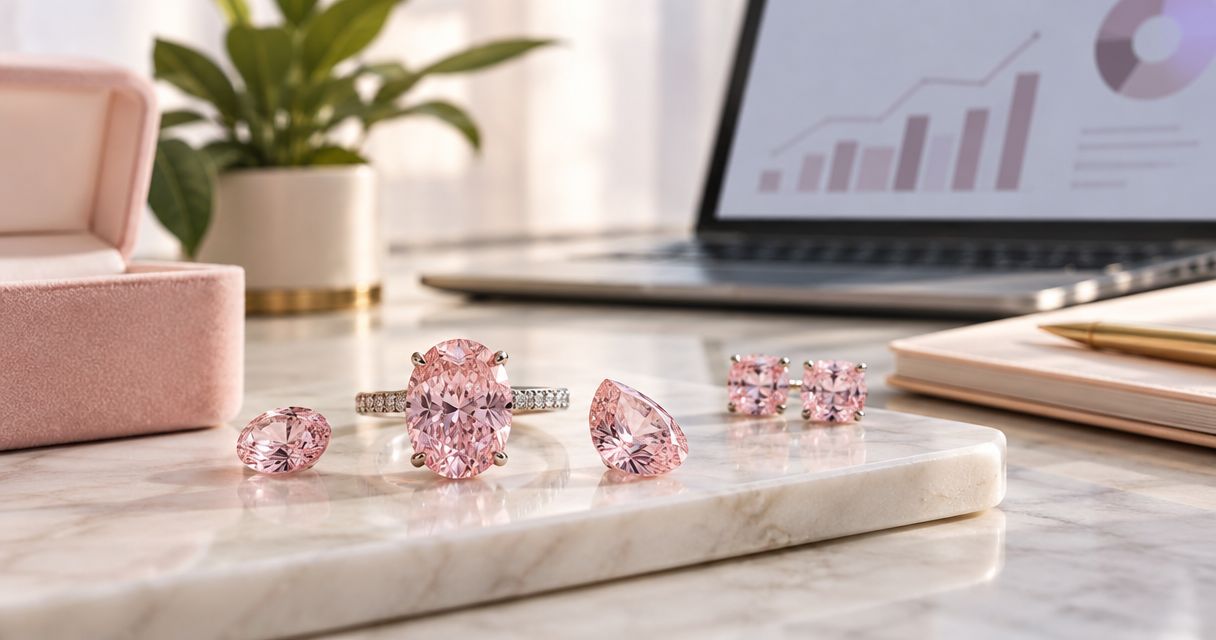
Portfolio-diversifying investors buying pink diamond jewelry are adding a rare, physical asset that moves independently of equities and bonds, with the goal of protecting capital against inflation while holding something they can also wear or display. This segment cares less about matching a wedding ring and more about rarity data, certification, and resale liquidity than the average retail buyer does.
The supply story matters more here than the setting. Colored diamonds for serious investors explains why fancy-color stones behave differently than white diamonds in a portfolio, and pink is the tightest sub-market inside that category.
- Pink diamond jewelry holds a price floor that white diamonds don't have, tied to a supply source that closed in 2020.
- GIA-certified natural pink diamonds resell better than lab-grown or heavily treated pink stones in 2026.
- Skip the certification review or the buyer's premium math and you overpay before the hammer even falls.
- Auction acquisition avoids gallery markup but demands more due diligence per lot than retail buying does.
Why pink diamond jewelry matters for portfolio-diversifying investors
Rio Tinto closed the Argyle diamond mine in Western Australia in November 2020. That single mine had supplied roughly 90% of the world's pink diamonds for decades. No comparable deposit has replaced it, which means the supply side of pink diamond jewelry is now effectively fixed while global wealth looking for hard assets keeps growing.
That's the whole investment case in one paragraph. A closed mine plus rising demand is the textbook setup for a scarce asset, and it's why pink diamond jewelry gets treated differently from other colored stones on the auction floor.
Investors in this segment aren't buying based on how a stone photographs. They're buying based on GIA color grade, carat weight, and how many comparable stones sold in the last few auction cycles — the same due diligence you'd apply to any illiquid alternative asset.
Verify the color grading before you bid
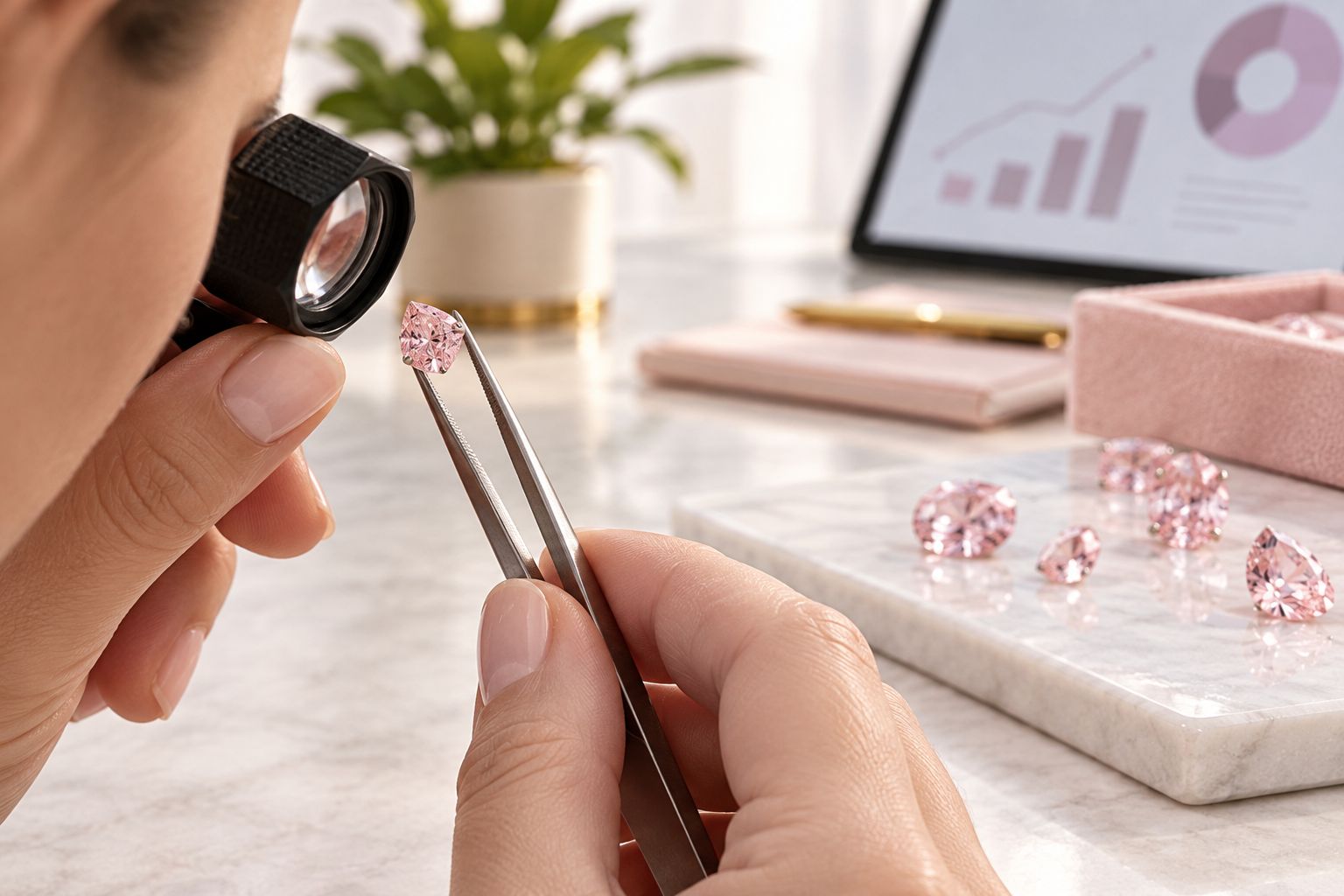
The word "pink" on a listing tells you almost nothing. GIA grades fancy-color diamonds on a scale that runs from Faint through Fancy Vivid, and the difference between a Fancy Light Pink and a Fancy Vivid Pink of the same carat weight can separate an average lot from a standout one.
- Check the color grade against GIA's fancy-color scale, not the listing description
- Request the color origin statement — natural versus treated
- Cross-reference the certificate number directly with GIA, not through a third party
- Note any color modifiers (brownish, purplish, orangy pink) that pull the grade down
- Compare the grade to recent comparable auction results before setting your ceiling
Confirm carat weight and cut against comparable sales
Carat weight drives price non-linearly in colored diamonds — a jump from 1 to 2 carats in the same color grade can multiply price well beyond a simple doubling. Cut quality matters more for saturation retention in pink stones than it does for white diamonds.
- Pull the exact carat weight from the certificate, not the catalog rounding
- Check the cut grade or, for older stones, the proportions listed in the report
- Look at how the cut style (cushion, radiant, oval) affects visible color saturation
- Compare against at least three recent comparable lots before bidding
Check the certification and treatment history
Treatment history is the single biggest value-killer in colored diamonds. HPHT (high pressure, high temperature) treatment and irradiation can both shift a pale stone toward pink, and a treated stone trades at a fraction of a natural one with the same visible color.
How to research a gemstone's certification before bidding walks through how to pull and verify a report before you place a bid, which matters more for pink diamonds than for almost any other stone on the auction floor.
“If the certificate doesn't specify treatment status, treat the stone as suspect.”
- Confirm the lab (GIA, GIA-affiliated, or independent) issuing the report
- Look for an explicit natural-color statement, not just a color grade
- Ask for treatment disclosure in writing if the listing doesn't specify it
- Check the report date against the stone's last known sale
Set a hard budget that includes the buyer's premium
The hammer price is not the final cost. Auction houses add a buyer's premium on top of the winning bid, and that percentage changes what a "good deal" actually looks like once it's added.
How to set a budget for online jewelry auctions covers how to build that premium into your ceiling before the auction starts, not after you've already won the lot.
- Calculate your all-in ceiling (hammer plus premium) before bidding opens
- Compare that all-in number against retail-equivalent pricing for the same grade
- Leave a margin for shipping, insurance, and any lab re-verification costs
- Walk away automatically once your ceiling is hit — no exceptions mid-auction
Browse current pink diamond lots
See GIA-graded pink diamond lots listed with full certification details.
Place your bid with a ceiling, not a wish list
Proxy bidding removes the emotional overbid that happens when two collectors chase the same lot in real time. Setting a maximum in advance and letting the system bid incrementally on your behalf keeps you inside the budget you already calculated.
- Set your maximum bid before the lot opens, not while it's live
- Confirm whether the platform bids incrementally or requires manual re-entry
- Track the current bid against your ceiling throughout the auction window
- Never revise your maximum upward once bidding starts
Insure the stone before it ships
A pink diamond in transit with no coverage is a liability, not an asset. Shipping loss or damage claims get denied fast when there's no policy in place before the carrier picks up the package.
- Confirm coverage starts before the item leaves the seller, not on delivery
- Get an independent appraisal for insurance purposes separate from the auction estimate
- Check whether the policy covers full replacement value or hammer price only
- Photograph and document the piece the moment it arrives
Track resale liquidity through comparable results
Pink diamond jewelry is not a liquid asset in the way a stock is. Resale depends on finding a buyer who wants that specific color grade and carat combination, which can take longer than investors expect going into 2026.
- Track comparable lot results across at least two auction cycles before assuming a resale value
- Note whether comparable sales cluster by color grade or by carat weight
- Factor in a realistic holding period — measured in years, not months
- Reassess resale value annually against fresh comparable data
Comparison: acquisition options for this segment
| Option | Best for | Liquidity | Key limitation |
|---|---|---|---|
| Natural GIA-certified pink diamond (loose or set) | Long-hold portfolio diversification | Resellable, but a thin, specialist market | Price swings hard on color and clarity combinations |
| Pink diamond engagement rings or set jewelry | Buyers who want wearable value | Lower resale liquidity than loose stones | Setting metal and design add cost without adding stone value |
| Lab-grown pink diamonds | Buyers who want the look, not the hedge | High retail liquidity, weak collector resale | Doesn't carry the rarity premium natural stones hold |
| Pink gemstone alternatives (morganite, kunzite) | Buyers priced out of diamond entirely | Wide retail availability, low entry point | Not treated as a hedge asset by serious collectors |
| Certified auction lots | Investors wanting graded stones without gallery markup | Depends on lot competition and estimate accuracy | Requires full due diligence per lot before bidding |
Verdict: natural, GIA-certified pink diamond jewelry bought through certified auction lots is the strongest fit for portfolio-diversifying investors in 2026 — lab-grown and treated stones don't carry the same rarity premium, and gemstone alternatives like morganite or kunzite serve a different buyer entirely.
Common mistakes portfolio-diversifying investors make
- Bidding on the word "pink" instead of the grading report. A Fancy Light Pink and a Fancy Vivid Pink are not the same asset, even at identical carat weight.
- Ignoring treatment disclosure. An HPHT-treated or irradiated stone trades at a fraction of a natural one with the same visible color.
- Forgetting the buyer's premium in the cost math. Comparing a bare hammer price to retail pricing overstates the discount.
- Assuming instant liquidity. Pink diamond jewelry can take multiple auction cycles to find the right buyer at the right price.
- Shipping before insurance is confirmed. A loss in transit with no active policy is an unrecoverable cost, not a bad break.
FAQ
What is pink diamond jewelry?
Pink diamond jewelry uses natural or treated pink fancy-color diamonds, graded by GIA on a scale from Faint to Fancy Vivid. Natural, untreated stones with high color saturation and larger carat weight carry the highest value in 2026.
Is pink diamond jewelry a good investment in 2026?
Natural, GIA-certified pink diamonds hold investment appeal because the largest historical supply source, the Argyle mine, closed in November 2020. That fixed supply against ongoing demand supports long-term price floors better than most colored gemstones.
How much does GIA certification matter for pink diamonds?
It matters more for pink diamonds than for almost any other stone, because color grade and treatment status drive value more than clarity does. An uncertified pink diamond should be treated as unpriceable until a report exists.
What's the difference between natural and lab-grown pink diamonds?
Natural pink diamonds formed underground over geologic time and carry the rarity premium tied to a limited, now-shrinking supply. Lab-grown pink diamonds are chemically identical but manufactured, and they trade at retail-level liquidity with little collector resale value.
How liquid is pink diamond jewelry compared to other investment assets?
Pink diamond jewelry is far less liquid than stocks or bonds. Resale depends on finding a buyer who wants that specific color grade and carat combination, which can take a holding period measured in years.
What is the buyer's premium at a jewelry auction?
The buyer's premium is a percentage added on top of the winning hammer price, paid by the buyer to the auction house. It changes the true cost of a lot and should be built into your bidding ceiling before the auction opens.
Can pink diamonds lose value?
Yes, especially treated or lab-grown pink diamonds, which don't carry the rarity premium of natural stones. Even natural stones can underperform if bought above comparable auction results without accounting for the buyer's premium.
How do I insure a pink diamond bought at auction?
Get an independent appraisal separate from the auction estimate and confirm coverage begins before the piece leaves the seller, not on delivery. Full replacement value coverage matters more than hammer-price-only policies for a scarce asset.
One last thing
The Argyle mine closure in November 2020 didn't just tighten supply — it ended the source that had produced roughly 90% of the world's pink diamonds for decades, with no comparable deposit found since. That's the single fact that separates pink diamond jewelry from most other colored gemstone categories going into 2026: the supply side isn't just tight, it's structurally closed.


