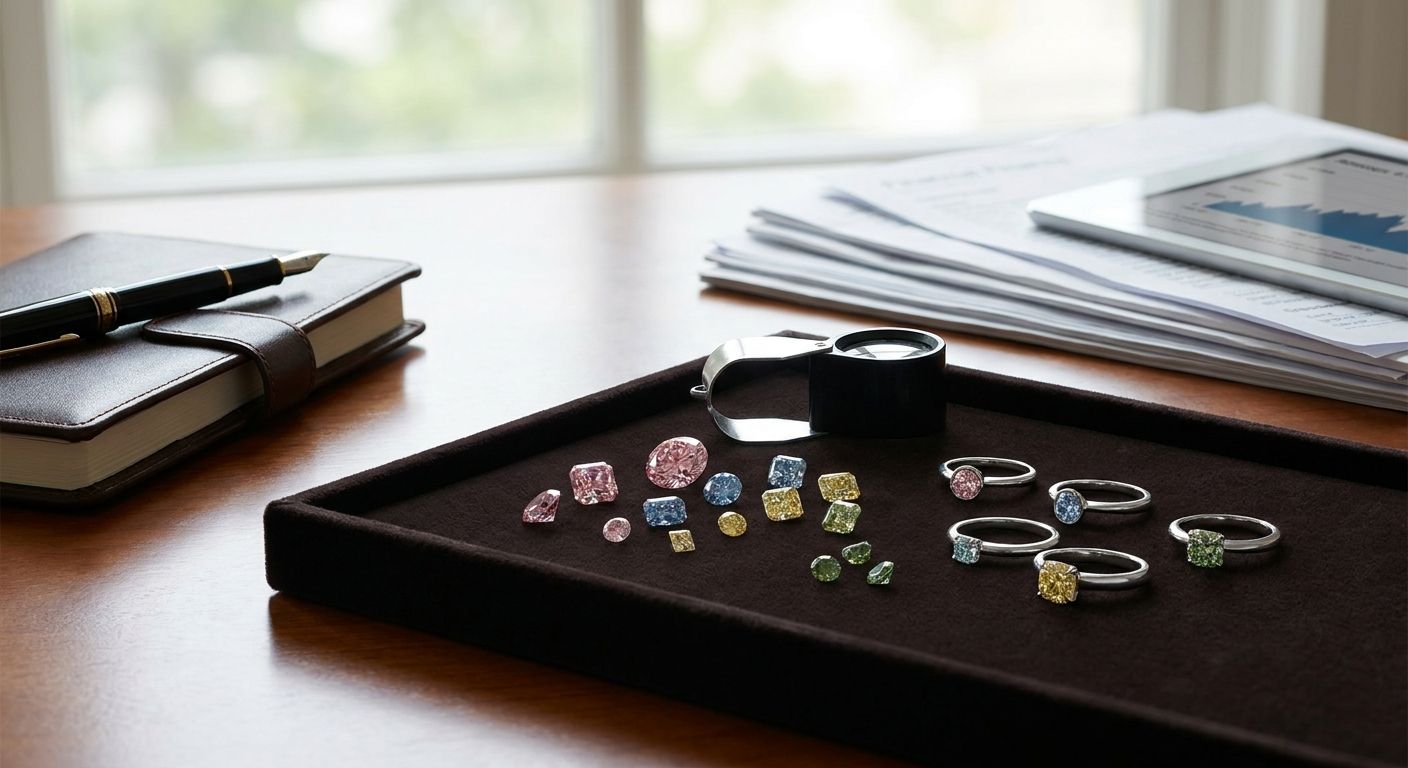
Colored diamonds for serious investors means treating fancy-color stones as a portfolio asset, not a fashion purchase — buying against GIA color grading, documented provenance, and a resale plan instead of buying against a pretty hue. This segment cares less about wearability and more about certification, rarity, and exit liquidity, which changes almost every step of the buying process compared to a bridal-ring shopper.
- Fancy Vivid and Fancy Intense grades carry the strongest resale premium in colored diamonds investment for 2026.
- GIA color grading (Faint to Fancy Vivid, 9 intensity levels) is the baseline document — never buy on a dealer's in-house grade.
- Treated stones (HPHT, irradiated) belong in a different price tier than natural-color diamonds and should be disclosed in the catalog listing.
- Jewelryroom.com auctions list treatment status and lab reports in the catalog, which matters more for this segment than for casual buyers.
- Investment-grade colored diamonds typically start around 1.00 carat — smaller stones rarely hold resale value regardless of hue.
Why colored diamonds investment matters for serious investors
Colorless diamonds move on the D-to-Z scale and depreciate the moment they leave a retail case. Colored diamonds don't follow that curve because supply is fixed by geology, not by cutting choices — a Fancy Vivid pink or blue stone can't be manufactured by a better cut.
That scarcity is exactly why the segment gets targeted by inflated grading claims and undisclosed treatments. Before you evaluate a single lot, authenticate a diamond before bidding using the lab report number, not the catalog description alone.
The quotable rule for this segment: a colored diamond without an independent GIA colored-diamond report is a fashion purchase, not an investment, no matter what the auction house calls it.
Update your grading checklist before you bid
Color grading on fancy diamonds isn't a single letter — it's hue, tone, and saturation stacked together, and small shifts in any one axis move the price bracket significantly.
- Confirm the GIA colored diamond report number matches the physical stone, not just the lot description
- Read hue first (pink, blue, yellow, green), then intensity (Faint through Fancy Vivid)
- Ask whether the color is natural or the result of HPHT/irradiation treatment
- Check the report date — older reports on resold stones sometimes predate updated grading standards
- Cross-reference carat weight against the report; auction photos distort scale
Check for treatment and origin disclosure
Treated colored diamonds are real diamonds, but they trade in a different market entirely, and pricing them like natural-color stones is the single most common overpay in this category.
Before bidding, appraise estate jewelry before bidding to catch undisclosed treatment on older estate pieces, where paperwork is thinner than on modern lots.
- Look for the words "treated," "HPHT," or "irradiated" anywhere in the lot description or lab report
- Request the full GIA report, not a summary sheet — summaries sometimes omit treatment notes
- Compare the stone's price against natural-color benchmarks for the same hue and intensity
- Ask the auction house directly if treatment status is unclear; a straight answer is a good sign
- Walk away from listings that describe color as "enhanced" without specifying the method
Confirm provenance and chain of custody
Provenance does two jobs for an investor: it supports resale value later, and it flags stolen or conflict-sourced stones now. Both matter more for colored diamonds than for colorless ones because the pool of comparable sales is smaller and buyers scrutinize history harder.
Running a background check on the seller matters as much as the stone itself. Verify an auction house's reputation before you register to bid, especially for lots without a named prior owner.
- Ask for documented ownership history, even partial
- Confirm the stone isn't tied to an active dispute or insurance claim
- Check whether the auction house names the mine of origin or region
- Cross-check the lot against any public stolen-gem databases you have access to
- Favor houses that publish full catalog photography over houses that use stock imagery
Set a hard budget before the auction opens
Colored diamond auctions move fast once a Fancy Vivid stone comes up, and emotional bidding erases the investment logic in about thirty seconds. Set the number before the sale starts, not during it.
- Decide your absolute ceiling in writing before the auction date
- Separate your "walk away" price from your "stretch" price and don't blur them mid-bid
- Factor buyer's premium into your ceiling, not just the hammer price
- Build in a margin for authentication or independent appraisal after the win
- Never revise the ceiling upward once bidding is live
Place bids through a proxy, not live emotion
Proxy bidding removes the adrenaline problem entirely — you set the max, the system executes it, and you're not in the room reacting to another bidder's increment.
For investors, this is the faster, calmer path once the grading and provenance checks above are done. Place a proxy bid once you've locked your ceiling from the previous step.
- Enter your absolute maximum, not your target price, so the system never asks you to react live
- Set proxy bids only after grading and provenance checks are complete
- Avoid last-minute proxy increases triggered by a rival bidder notification
- Confirm the increment structure before submitting — some houses round up aggressively
- Keep a written record of your proxy amount for tax and resale documentation later
Browse current colored diamond lots
Review catalog listings and lab report details before you register to bid.
Insure and store the stone after you win
Winning the lot is the easy part. A colored diamond with no insurance rider and no secure storage plan is an unprotected asset the moment it leaves the auction house.
- Add the stone to a scheduled jewelry policy using the GIA report as the valuation document
- Store loose investment stones in a bank safe deposit box, not a home safe, when values are significant
- Re-appraise every few years, since colored diamond market values move independently of colorless diamond indexes
- Keep the GIA report, auction invoice, and any provenance documents together in one file
- Photograph the stone under standardized lighting for your own resale records
Track resale liquidity before you buy
Liquidity is the part investors skip and regret. Colored diamonds sell well at major auction houses and specialist dealers, but the buyer pool is thinner than for colorless diamonds, and unusual hues can sit longer between sales.
- Check whether the hue and intensity you're buying has recent comparable sales, not just historical ones
- Favor GIA-certified stones over uncertified ones specifically because certification widens your future buyer pool
- Avoid rare but obscure hues unless you're comfortable holding for years
- Ask the auction house what resale or consignment support they offer for previously purchased lots
- Build a relationship with more than one reputable house so you're not locked into a single resale channel
Comparing colored diamond investment options
| Option | Best for | Key limitation |
|---|---|---|
| Fancy Vivid colored diamonds | Investors prioritizing long-term resale premium | Highest entry cost, thinnest supply |
| Fancy Intense colored diamonds | Investors wanting rarity with a broader buyer pool | Price gap to Fancy Vivid can be steep for marginal color difference |
| Fancy Light colored diamonds | Investors easing into the category | Lower resale ceiling than Vivid or Intense grades |
| Colorless investment-grade (D-F, IF-VVS1) | Investors wanting a deeper, more liquid resale market | Misses the scarcity premium colored stones command |
Verdict: Fancy Vivid and Fancy Intense colored diamonds with GIA reports and documented provenance are the strongest buys for 2026; uncertified or treated stones in any hue are a skip regardless of price.
Common mistakes serious investors make
- Chasing hue over saturation grade — a Fancy color name means little without the intensity grade behind it
- Accepting an auction house's in-house grading letter instead of an independent GIA colored diamond report
- Buying treated stones at natural-color prices because the catalog description was vague about method
- Ignoring carat thresholds — chasing a rare hue under 1.00 carat rarely pays off on resale
- Skipping the liquidity check and discovering the buyer pool for an unusual hue is far smaller than expected
FAQ
What's the best colored diamond for investment in 2026?
Fancy Vivid and Fancy Intense graded diamonds with a GIA colored diamond report carry the strongest resale premium in 2026, particularly in pink, blue, and vivid yellow hues.
Is colored diamonds investment better than colorless diamond investment?
Colored diamonds command a bigger rarity premium, but colorless investment-grade diamonds (D-F, IF-VVS1) resell in a deeper, more liquid market. Pick based on whether you value scarcity or liquidity more.
Are treated colored diamonds a bad investment?
Treated stones (HPHT or irradiated) trade at a different price tier than natural-color diamonds and should never be priced as if they were natural. They're not automatically bad, but paying natural-color prices for a treated stone is a loss the day you buy it.
How do you verify provenance before bidding on a colored diamond?
Request documented ownership history from the auction house and confirm the stone isn't tied to a dispute or claim. Favor houses that verify their own reputation with published catalog photography and full lab reports.
Can you resell colored diamonds easily?
GIA-certified stones in common Fancy hues resell more easily than uncertified or unusually rare hues, but the buyer pool is thinner than for colorless diamonds across the board.
What carat size do investors look for in colored diamonds?
Investment-grade colored diamonds typically start around 1.00 carat; smaller stones rarely hold resale value even in a desirable hue.
Is buying colored diamonds at auction risky?
The risk sits in skipping authentication and provenance checks, not in the auction format itself. Verified lots with GIA reports and documented ownership history carry the same risk profile as any private-treaty purchase.
Should I use proxy bidding for colored diamond auctions?
Yes, for investment purchases. Proxy bidding locks in your ceiling before the sale starts and removes the emotional overbidding that colored diamond auctions tend to trigger.
One last thing
The grading gap between Fancy Intense and Fancy Vivid on the same hue often moves the price bracket more than a jump in carat weight — investors who fixate on size over intensity grade routinely overpay for the wrong variable. Check the intensity grade before the carat number, every time.


