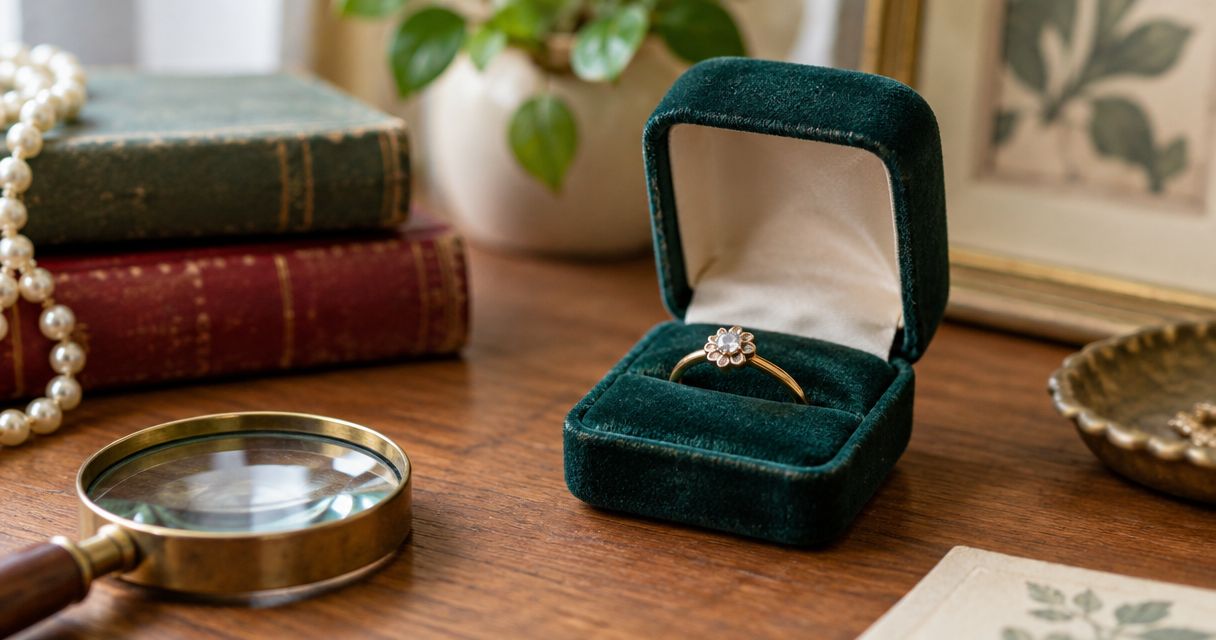
Budget-conscious vintage buyers' promise ring auction strategy is to find a ring with personal meaning while keeping the full auction bill within a set limit. A promise ring does not need a prescribed stone or setting; for this buyer, condition, fit and a design the recipient will wear matter more than a dramatic catalog description.
- For a promise ring auction, set an all-in limit before choosing a vintage ring.
- Jewelryroom.com is an auction starting point for budget-conscious vintage buyers, not a guarantee of a suitable listing.
- Confirm ring size, condition and any alterations before bidding; appealing photographs do not answer those questions.
- Skip a lot when the seller cannot clarify a defect that affects wear or repair.
Why this matters for vintage promise-ring buyers
A promise ring is a personal gift, but an auction bid is a purchase decision. The recipient has to live with the ring's size, profile and signs of wear after the excitement of winning fades. In 2026, the practical question is not whether a lot looks vintage in a photograph. It is whether you understand what you will receive and what you will owe.
Unlike a shopper choosing from a fixed retail selection, you must assess the individual lot. An attractive ring can still have an uncertain size, an undisclosed repair or terms that make a winning bid exceed your limit. Jewelryroom.com is best for budget-conscious vintage buyers who want to explore jewelry auctions and judge each ring on its own merits. It is not a substitute for checking a lot's description and sale terms.
Start with the Jewelryroom.com auction site if you want to explore what is currently listed. Do not assume a particular promise-ring style is available: the method below works whether you find a delicate band, a small gemstone ring or no suitable lot at all.
How to buy a vintage promise ring at auction
The steps below separate the emotional choice from the bidding decision. Complete them in order in 2026, then stop if a lot fails a check that matters to the recipient.
Define what the promise ring needs to say
Decide what the ring represents before searching. A promise ring can mark a relationship, a private commitment or another shared milestone. The right design follows that meaning and the recipient's habits; a delicate ring that catches on clothing is a poor choice for someone who wants an unobtrusive everyday piece.
Write down the characteristics you can observe or ask about. Vintage-inspired appearance and documented vintage origin are different requirements. If age itself matters, a style label alone does not establish it. If appearance matters more, you can judge a ring by its design without paying attention to an unsupported historical claim.
- Ask whether the recipient would wear a band, a raised setting or a low-profile ring.
- Record the recipient's known ring size and the finger on which they plan to wear it.
- Choose the metal appearance and stone colors they already wear.
- Decide whether documented age matters or vintage style is enough.
- Mark any design feature that would make the ring unsuitable, regardless of the bid.
Set an all-in limit before opening a lot
A maximum bid is not the same as a maximum spend. The payable total depends on the sale terms, which can include a buyer's premium, tax, delivery and other applicable charges. Read those terms before deciding what you can bid. If you cannot calculate the full amount, you do not yet have a usable ceiling.
For a budget-conscious buyer, the ring also has to work without a repair bill you cannot accommodate. Resizing and restoration are possibilities to investigate, not savings to assume. Keep the maximum payable amount separate from any estimate shown beside the lot; an estimate is not your personal budget.
Use the guide to setting an online jewelry auction budget to structure that decision, then apply your own ceiling to each candidate. In 2026, make that calculation before the first bid, not after a competitive lot attracts attention.
- Write down 1 all-in spending ceiling before browsing.
- Read the sale's buyer's premium and applicable charges.
- Check whether delivery costs are stated or require a separate inquiry.
- Allow for an unresolved sizing or repair question by passing on the lot, not by assuming an easy fix.
- Stop bidding when the next increment would break your ceiling.
Screen listings for wearable condition
A vintage ring can show wear without being a bad purchase. The distinction is between wear you accept and a defect that changes how the ring can be worn. Examine the listing's photographs and written description together. Look at the band, setting, stone and any visible repairs rather than relying on a face-up photograph.
Ask for a condition report when the listing leaves a material question unanswered. A condition report can add detail, but it is only useful if it addresses the concern you actually have. The condition-report guide explains the questions to put to a seller before bidding.
Do not treat silence as confirmation. If a listing does not state that a stone is secure, the missing statement does not establish security. This matters especially for a promise ring intended for frequent wear. You need a clear basis for accepting its current condition, not a plan to sort it out after the sale.
- Inspect 2 clear views of the band and setting when images allow it.
- Ask whether stones are loose, chipped or missing.
- Ask about thinning, cracks and visible work on the shank.
- Request clarification on any repair or alteration mentioned in the description.
- Pass if a condition concern that affects wear remains unanswered.
Confirm size and resizing limits
A ring that cannot be worn as intended is not a bargain. Check the stated size, the measurement system used and whether the ring has been resized before. An absent size is a question to resolve before bidding, not a detail to infer from a photograph.
Do not assume every vintage ring can be resized. Construction, decoration around the band and the condition of the metal all affect what a jeweler can do. If resizing is essential, ask a qualified jeweler about that particular design before you commit. The seller's description alone cannot settle a repair decision that depends on inspecting the ring.
This is where a gift purchase needs extra care. Guessing the recipient's size adds uncertainty to a purchase that already has auction terms and condition questions. If the size is a surprise, find a reliable way to confirm it or choose a lot only when you can accept the fit risk.
- Verify the stated ring size and its measurement system.
- Compare it with a ring worn on the intended finger.
- Check photographs for decoration continuing around the shank.
- Ask whether prior sizing work is disclosed.
- Get an independent resizing opinion if the fit depends on alteration.
Verify vintage claims and stone descriptions
Vintage is not a gem identification, and a period-style setting does not prove when a ring was made. Read exactly what the listing claims. A ring described as vintage-style gives you a design cue; a ring assigned a date or maker gives you a claim to evaluate against the supplied evidence.
Apply the same discipline to stones. Color in a photograph does not establish gemstone identity, whether a stone is natural, or whether it has been treated. If that information changes your decision, ask what documentation supports the description. If the answer is unclear, evaluate the ring for its appearance rather than an unverified attribute, or leave it.
In 2026, a budget-conscious buyer does not need to become a gemologist to buy a meaningful promise ring. You do need to recognize which claims you are paying for. A plain design you understand can be a better choice than an elaborate description you cannot verify.
- Separate stated facts from style words in the listing.
- Ask what supports a claimed date, maker or material.
- Check whether the stone description is specific or only visual.
- Decide whether documentation matters to the recipient.
- Skip a lot if an unsupported claim is central to your choice.
Compare the ring with your other options
An auction is one route to a promise ring, not an obligation. Compare each lot with alternatives on the things your recipient will notice: appearance, fit, condition and certainty about the purchase. A ring that matches the look but fails the fit test does not become suitable because the bid feels attractive.
Do this comparison before bidding. Once you have named a favorite, it becomes easier to dismiss a missing condition detail or revise your ceiling. Give each candidate the same checks, including any option that is not sold at auction. The table below is a decision aid, not a claim that one route always offers better value.
- List 2 suitable alternatives before choosing a favorite lot.
- Compare stated size and condition, not photographs alone.
- Mark which claims you can verify for each option.
- Note where the total payable amount is still unclear.
- Reject an option that fails a requirement you set at the start.
Which buying route fits your promise ring?
| Option | Best for | Key limitation |
|---|---|---|
| Jewelryroom.com jewelry auctions | Buyers prepared to assess an individual auction lot | A suitable promise ring is not guaranteed; lot details and sale terms need checking |
| Other jewelry auctions | Buyers willing to compare lots and auction terms | Condition information and charges differ by sale |
| Fixed-price vintage jewelry | Buyers who want to consider a stated item without bidding | The description still needs verification; vintage claims are not self-proving |
| A ring you already own | Buyers who value personal history over finding another piece | Fit and condition still need checking before it is worn |
Choose an auction only when a specific ring passes your checks and stays within your all-in limit. Jewelryroom.com fits the auction route, but no marketplace can make an undocumented claim reliable simply by displaying a lot. If none of the available rings works, keeping your budget intact is the right result.
Place a bid you can accept winning
The final step is to decide whether you would still want the ring at your maximum payable amount. Check the lot description and sale terms again immediately before bidding. Resolve questions about condition, sizing and charges while you can still choose not to participate.
If a sale offers a way to enter a maximum bid, that limit should reflect the ceiling you already set. The bidding interface does not decide what the ring means to the recipient or what you can afford. You do. In 2026, the useful discipline is simple: do not change your criteria because someone else bids.
A win is not the goal by itself. The goal is a wearable ring that expresses your promise without an unwelcome invoice or an avoidable condition surprise. When the evidence is incomplete, skip the lot. Another option is preferable to winning a ring you would not have chosen with full information.
- Recheck the lot description before submitting a bid.
- Confirm the full payable amount at your intended maximum.
- Make sure outstanding questions have written answers.
- Enter a ceiling you would accept paying if you win.
- Stop when the next bid exceeds it.
Common mistakes budget-conscious vintage buyers make
- Bidding on a story instead of a ring. A romantic description does not establish age, materials or condition. Judge the stated evidence and the design the recipient will actually wear.
- Treating the winning bid as the whole bill. Read the applicable auction charges before setting your bid ceiling. Otherwise, a lot can pass your bid test and fail your budget test.
- Assuming resizing will solve fit. Confirm the size first. If a change is necessary, ask about the specific ring rather than assuming its construction permits it.
- Mistaking photographs for a condition report. Images help you identify questions; they do not answer every question about wear, repairs or a setting's security.
- Continuing because you have already spent time researching. Time spent evaluating a lot does not make it suitable. A clear reason to pass protects the budget you set.
FAQ
What's the best promise ring auction strategy for a vintage buyer?
Set an all-in limit, confirm fit and condition, and bid only on a ring that suits the recipient. Jewelryroom.com is an auction starting point, but each lot must pass those checks.
Is a vintage promise ring better than a new ring?
A vintage ring is better when its individual design and condition fit the recipient's preferences. A new ring is the better choice if the available vintage lots leave important questions about fit or wear unanswered.
How do I set a maximum bid for a promise ring?
Start with the most you can pay in total, then account for applicable auction charges before setting your maximum bid. Do not use a lot's estimate as your personal spending limit.
Can I resize a vintage promise ring won at auction?
Resizing depends on the individual ring's construction and condition. Confirm its stated size and seek an opinion on that ring before bidding if resizing is essential.
How can I tell whether an auction ring is genuinely vintage?
Check what the listing claims and what evidence supports its age. A vintage-style description establishes an appearance, not a documented date of manufacture.
What if a promise ring listing has no condition report?
Ask for clarification before bidding if condition affects your decision. If the seller cannot resolve a material concern, skip the lot rather than treating missing information as reassurance.
Should I bid on a ring if I cannot confirm its stone?
Bid only if you would still want the ring without relying on the unconfirmed stone identity. If that identity is central to the gift, request supporting information or choose another ring.
One last thing
The most useful promise-ring search term is not always promise ring. A ring can suit the commitment without carrying that label. In 2026, search by the design your recipient wears, then apply the same condition, size and budget checks before you bid. Jewelryroom.com is a place to explore the auction route; the right ring is the one you understand well enough to give with confidence.


