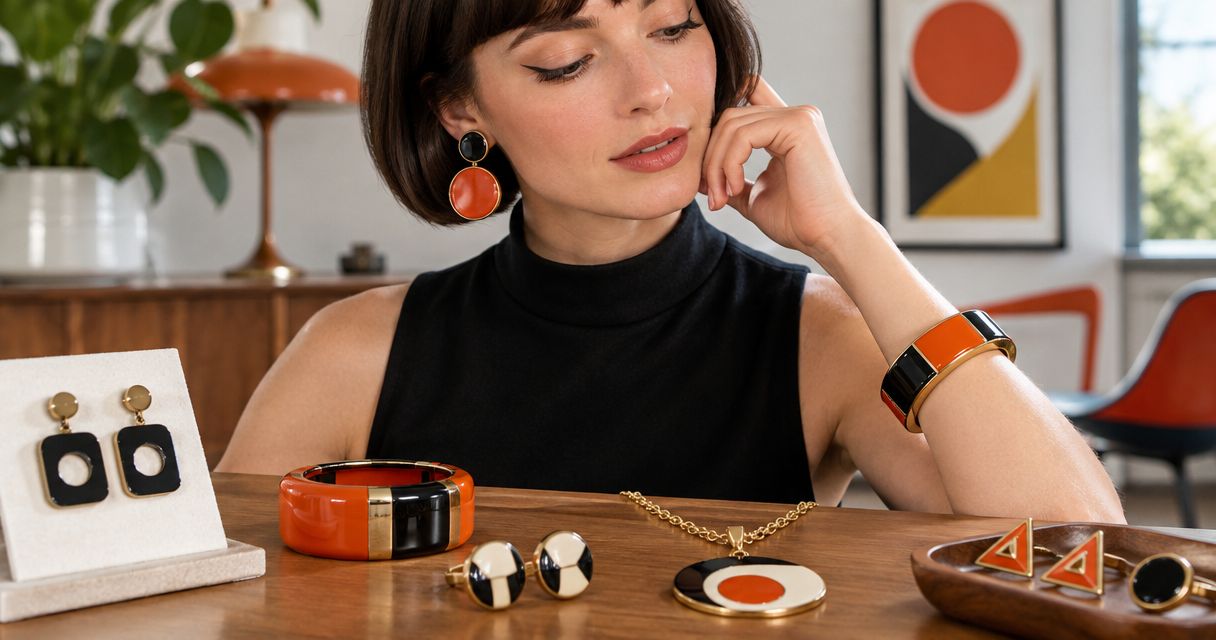
Retro geometric style buyers collect 1960s mod jewelry for its architectural gold work and Pop Art color blocking, chasing pieces that read as sculpture first and gemstone showcase second. This guide breaks down what separates a period-correct 1960s mod jewelry auction find from a modern reissue, and how to bid on one in 2026 without overpaying for a piece that isn't what the listing claims.
- 1960s mod jewelry auction value in 2026 tracks designer attribution first, carat weight a distant second.
- David Webb, Andrew Grima, and Cartier Paris anchor the segment; unsigned mod-style pieces sell for far less.
- Re-polished textured gold is the top red flag — Florentine and bark finishes can't be faked after buffing.
- Specialist platforms like JewelryRoom.com catalog era, maker, and condition data that general marketplaces skip.
- Hinge and clasp hardware date a piece faster than the stone does — check tube hinges before hallmarks.
Why 1960s mod jewelry matters for retro geometric style buyers
This segment isn't chasing what most estate jewelry buyers want. Prong-set solitaires and the symmetrical scrollwork of Retro-era jewelry from the 1940s don't interest a retro geometric style buyer the way a hammered gold disc cuff or an asymmetric starburst brooch does. The appeal sits in the shape and surface, not the certificate.
The 1960s mod movement broke from that symmetry on purpose. Jewelers working through the decade pulled from Pop Art and Op Art: bold geometric shapes, brutalist surface textures, and color-blocked enamel replaced the softer floral motifs that dominated a generation earlier. That shift is exactly why best auctions for mid-century modern jewelry searches and 1960s mod-specific searches overlap so heavily — the two collector pools are chasing the same design era from different angles, one focused on furniture and interiors, the other on wearable pieces.
Buying into this look in 2026 means learning to spot the difference between an original mod-era piece and the wave of "retro geometric" reissues that houses have produced steadily since the 1990s. The two can look identical in a thumbnail photo. They are not close in value, and a lot description that glosses over hallmarks or hinge type is usually hiding that gap.
How to vet and bid on 1960s mod jewelry
Learn the design vocabulary before you bid
1960s mod jewelry uses a specific visual language, and knowing it stops you from mistaking a generic "retro-style" costume piece for the real thing. The vocabulary is consistent across houses even when the individual designs differ wildly.
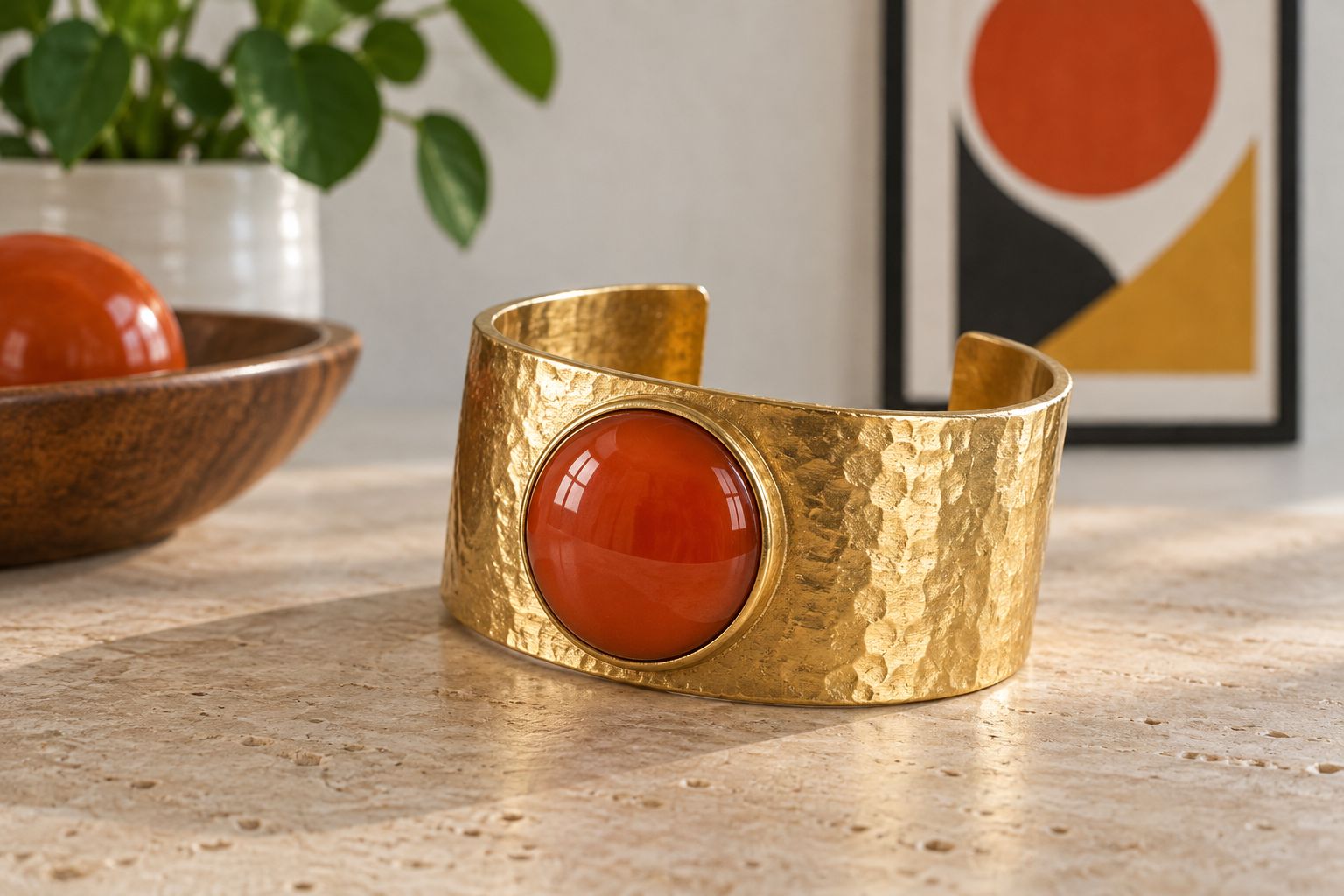
- Geometric discs and interlocking circles in brushed or hammered 18k gold
- Asymmetric brooches and cuffs with no mirrored pair
- Cabochon-cut stones — turquoise, coral, lapis — set flush rather than raised
- Enamel color-blocking in bold, Pop Art-adjacent palettes
- Textured "Florentine" or "bark" finishes across the gold surface
Identify the designers and houses that defined the look
Attribution drives value in this segment more than stone weight does. A handful of houses set the template for the entire decade, and knowing their names before you bid changes what you're willing to pay for a lot.
- David Webb — bold enamel and gold animal and geometric motifs
- Andrew Grima — textured, sculptural gold with rough-cut stones
- Cartier Paris — geometric gold link necklaces and architectural cuffs
- Van Cleef & Arpels — angular gold and gemstone combinations
- Georg Jensen — Scandinavian modernist silver and gold from the same era
Unsigned "mod style" pieces still sell, but they compete on design alone with none of the attribution premium attached. If a lot description leans on best auctions for signed designer jewelry as a reference point, that's usually a sign the auction house takes attribution seriously enough to note it — worth checking before you register to bid.
Check condition on textured gold and enamel work
Re-polishing kills a mod piece's value because the entire point of a Florentine or bark texture is the tool marks left in the metal. A buffed-smooth "mod" cuff has usually been reworked, and that erases the exact surface pattern the design depends on.
- Ask for close-up photos of the texture taken under raking light
- Check enamel sections for hairline cracks or fill repairs
- Confirm cabochons sit flush and haven't been re-glued or re-set
- Request a written condition report before you bid, not after you win
- Look for solder marks around hinges that signal a past repair
Verify hallmarks and date the piece
A "750" or "18K" stamp confirms gold purity, not the decade. Cross-check the maker's mark and any design registration number against published records for the house before you assume a piece is period-correct.
- Match the maker's hallmark against known house records
- Check hinge and clasp type — tube hinges and box clasps read as period-correct for the 1960s, while spring-loaded lever clasps often signal a later repair
- Look for a design registration or pattern number stamped inside the piece
- Cross-reference the auction house's condition notes against published retrospectives on the designer
Set a budget band before you start bidding
Mod-era pieces span a wide range depending on designer attribution, gold weight, and gemstone content. Decide your ceiling before the live session starts, not while the lot is open and the price is climbing.
- Set separate ceilings for signed versus unsigned pieces
- Add the buyer's premium into your top number before bidding, not after you win
- Decide up front whether resale value or wearability matters more to you
- Set aside a smaller reserve for shipping and insurance on oversized statement pieces
Bid at a specialist auction platform
As of 2026, general marketplaces still bury 1960s mod jewelry auction listings inside thousands of generic "vintage style" tags. A platform built around estate and vintage jewelry, like JewelryRoom.com, catalogs lots with era, maker, and condition data attached — which cuts the research time down before you ever place a bid.
- Filter by era and designer instead of scrolling generic vintage tags
- Read the lot's condition notes in full before you register to bid
- Use a proxy or maximum bid instead of chasing a live session
- Confirm the return policy on signed pieces before you pay the invoice
Browse mod-era auction lots now
See current catalogued estate jewelry lots on JewelryRoom.com.
Confirm shipping and insurance for statement-size pieces
Bold cuffs, disc necklaces, and oversized brooches from this era carry real gold weight and unconventional shapes that a standard jewelry insurance rider doesn't always cover well.
- Get a written appraisal that names the designer, not just "gold jewelry"
- Insure the piece before it ships, not after it arrives at your door
- Ask what shipping insurance the auction house includes versus what you add separately
- Photograph the piece against a plain background as soon as it arrives, before it leaves the box
Where to bid on 1960s mod jewelry: option by option
JewelryRoom.com wins for buyers who want catalogued 1960s mod jewelry auction lots with maker and condition data attached, instead of driving to an estate sale to check the texture in person.
| Option | Best for | Key limitation |
|---|---|---|
| General online marketplaces (eBay, Etsy) | Casual browsing and reproduction pieces | Minimal hallmark vetting; "mod style" tags mix period pieces with modern reissues |
| Specialist auction platforms (JewelryRoom.com) | Buyers who want catalogued lots with maker and condition notes | Live sessions move fast; proxy bidding discipline required |
| Estate sales and in-person auctions | Buyers who want to check gold weight and hinge action directly | Geographically limited; travel required to inspect the lot |
| Vintage dealer boutiques | Buyers who want a vetted piece with no bidding involved | Markup sits over hammer price with less price transparency |
“If the texture is gone, the piece has been reworked — 1960s mod jewelry lives or dies on its surface.”
Common mistakes retro geometric style buyers make
- Mistaking a 1990s or 2000s "mod revival" reissue for a period-correct 1960s piece, especially when the listing photos are low-resolution
- Chasing carat weight over designer attribution, which is backwards for this segment and leaves you overpaying for the wrong feature
- Buying a re-polished piece because the surface looks clean instead of intentionally textured
- Skipping the hallmark cross-check and trusting the auction description alone, even when the house is unfamiliar
- Ignoring hinge and clasp hardware, which dates a piece faster and more reliably than the gemstone does
FAQ
What makes a piece qualify as 1960s mod jewelry?
A 1960s mod jewelry auction lot typically shows bold geometric shapes, brushed or hammered textured gold, asymmetric composition, and flush-set cabochon stones rather than raised prong settings. The look breaks from the symmetrical Retro-era jewelry of the 1940s on purpose.
Is 1960s mod jewelry a good buy in 2026?
Signed pieces from David Webb, Andrew Grima, and similar houses hold their design premium well into 2026 because attribution, not stone weight, drives demand in this segment. Unsigned mod-style pieces are a design purchase, not an investment purchase.
Which designers defined the 1960s mod jewelry look?
David Webb, Andrew Grima, Cartier Paris, and Van Cleef & Arpels each produced signature geometric and textured-gold lines during the decade. Georg Jensen's Scandinavian modernist work from the same period overlaps stylistically.
How do I tell a period-correct piece from a modern mod-style reissue?
Check the hinge and clasp hardware first — tube hinges and box clasps read as period-correct for the 1960s, while spring-loaded lever clasps often point to a later repair or reissue. Cross-check the maker's hallmark and any design registration number against published house records.
What should I check before bidding on textured gold jewelry?
Ask for close-up photos of the texture under raking light, since a re-polished surface erases the Florentine or bark finish the design depends on. Also check enamel sections for hairline cracks and confirm cabochons haven't been re-glued.
Is a 1960s mod jewelry auction safer than a general marketplace?
A specialist auction platform that catalogs era, maker, and condition data reduces the research burden compared to a general marketplace where 'vintage style' tags mix period pieces with reproductions. You still need to read the condition report yourself before bidding.
Can a 1960s mod jewelry piece be resized without losing value?
Resizing a ring band is usually low-risk, but reworking a textured gold cuff or brooch to change its shape or clasp can flatten the original tool marks and reduce value. Ask the auction house or a jeweler familiar with the era before altering anything.
Do unsigned 1960s mod-style pieces have any value?
Unsigned pieces can still be attractive on design alone, but they sell at a real discount to signed examples from houses like David Webb or Andrew Grima. Treat an unsigned piece as a wearable design purchase rather than a collectible investment.
One last thing
Original 1960s mod cuffs and brooches were often designed asymmetrically on purpose — a mismatched pair of earback settings or an off-center brooch pin isn't damage, it's the design. Don't mark a lot down in your own head for asymmetry the designer put there deliberately in 1960s mod jewelry; mark it down for re-polished texture, replaced clasps, and missing hallmarks instead. Those are the flaws that actually move the price.


