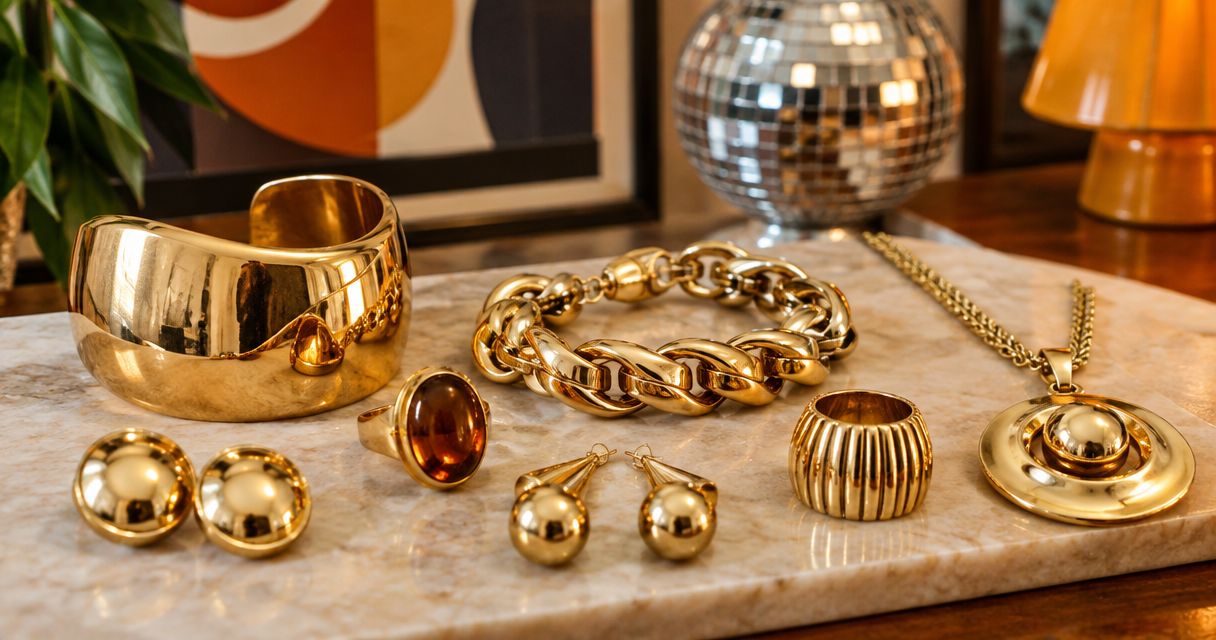
A 1970s jewelry auction is the fastest way to build a collection of disco-era bold metal jewelry — heavy gold-tone cuffs, chain-link necklaces, and sculptural cocktail rings — without paying the markup a vintage retail shop adds before the piece ever reaches the case.
- A 1970s jewelry auction beats retail vintage shops on price for bold metal pieces once you check hallmarks first.
- David Webb, Bulgari, Verdura, and Buccellati defined disco-era bold gold; unsigned pieces sell for a fraction of signed ones.
- Re-plating is the top risk on 1970s gold-tone chains and cuffs — magnet-test every heavy lot before bidding.
- Set a per-lot bid ceiling before the auction opens; buyer's premiums add real cost on statement pieces in 2026.
Bold metal collectors shopping a 1970s jewelry auction chase scale and metal texture over carat weight — heavy tubogas bracelets, chain-link chokers, sculptural cuffs, and chunky cocktail rings made roughly between 1970 and 1979. This segment cares more about weight-to-hand feel and hallmark purity than about a certified stone, which changes what to check before bidding compared to a diamond or colored-gemstone buyer.
Why 1970s jewelry auctions matter for bold metal collectors
Auction houses often catalog disco-era bold metal lots under mid-century modern jewelry auctions instead of a straight "1970s" tag, so check both search terms before assuming a category is thin. As of 2026, that overlap means either term surfaces roughly the same pool of chunky gold cuffs, chain necklaces, and geometric cocktail rings, so narrowing your search to one label alone leaves inventory on the table.
Retail vintage shops routinely mark up disco-era gold jewelry two to three times over what the same piece brings at auction, because the shop absorbs research and authentication cost before the piece reaches the case. A 1970s jewelry auction skips that markup and hands the research job to you — hallmark photos, a stated gram weight, and a condition report on request instead of a fixed retail tag.
On Jewelryroom.com, 1970s jewelry auction listings for bold gold-tone pieces typically include hallmark close-ups and a stated gram weight — two data points a flea market table or estate sale almost never gives you. That documentation is the real value of buying through an auction instead of a case: you get to verify before you commit, not after.
How to build a 1970s bold metal jewelry collection
Identify the hallmark styles that define disco-era bold metal
Learn to recognize the category before you start bidding, so you're not guessing at a listing's era from one photo angle.
- Tubogas ("gas-pipe") bracelets and chokers — flexible ribbed metal tubing
- Chain-link necklaces and bib chokers in heavy yellow gold or gold-tone base metal
- Sculptural cuffs with hammered, brushed, or high-polish finishes
- Chunky signet and cocktail rings in geometric or organic-abstract shapes
- Mixed-metal medallions and coin-set pendants
Learn the makers who defined the look
Signed pieces from the right maker carry a real premium over unsigned lots of the same style, and knowing the names tells you when a listing is underpriced against comparable auction results.
- David Webb — enamel-accented bold gold in animal and geometric motifs
- Bulgari — tubogas bracelets and coin jewelry
- Verdura — sculptural, hand-hammered gold cuffs
- Buccellati — textured "rigato" gold finish on rings and bracelets
- Georg Jensen — Scandinavian minimalist bold silver and gold pieces
- Unsigned factory pieces — same silhouette, a fraction of the hammer price, but no maker's mark to authenticate against
Check for re-plating and metal substitution before you bid
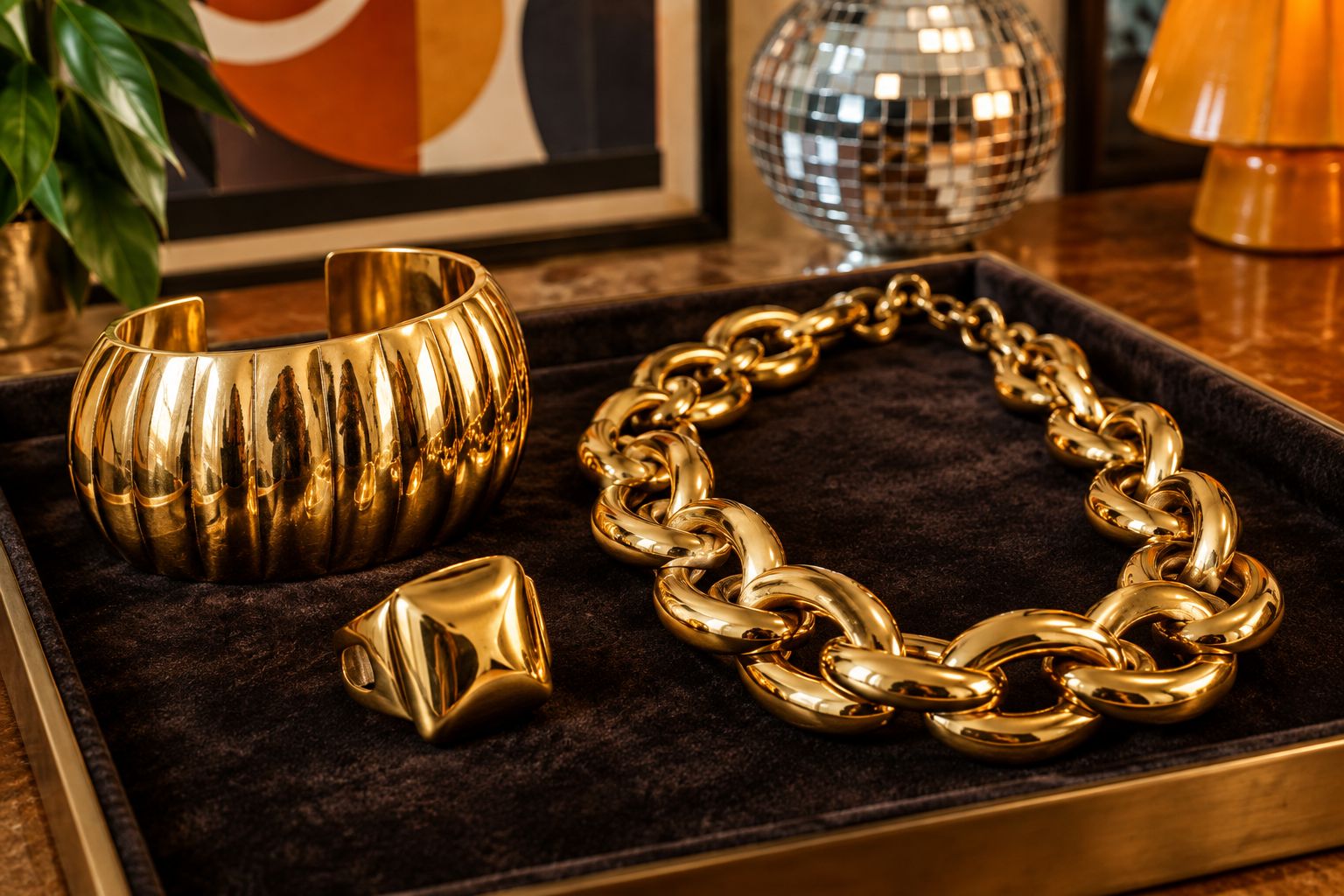
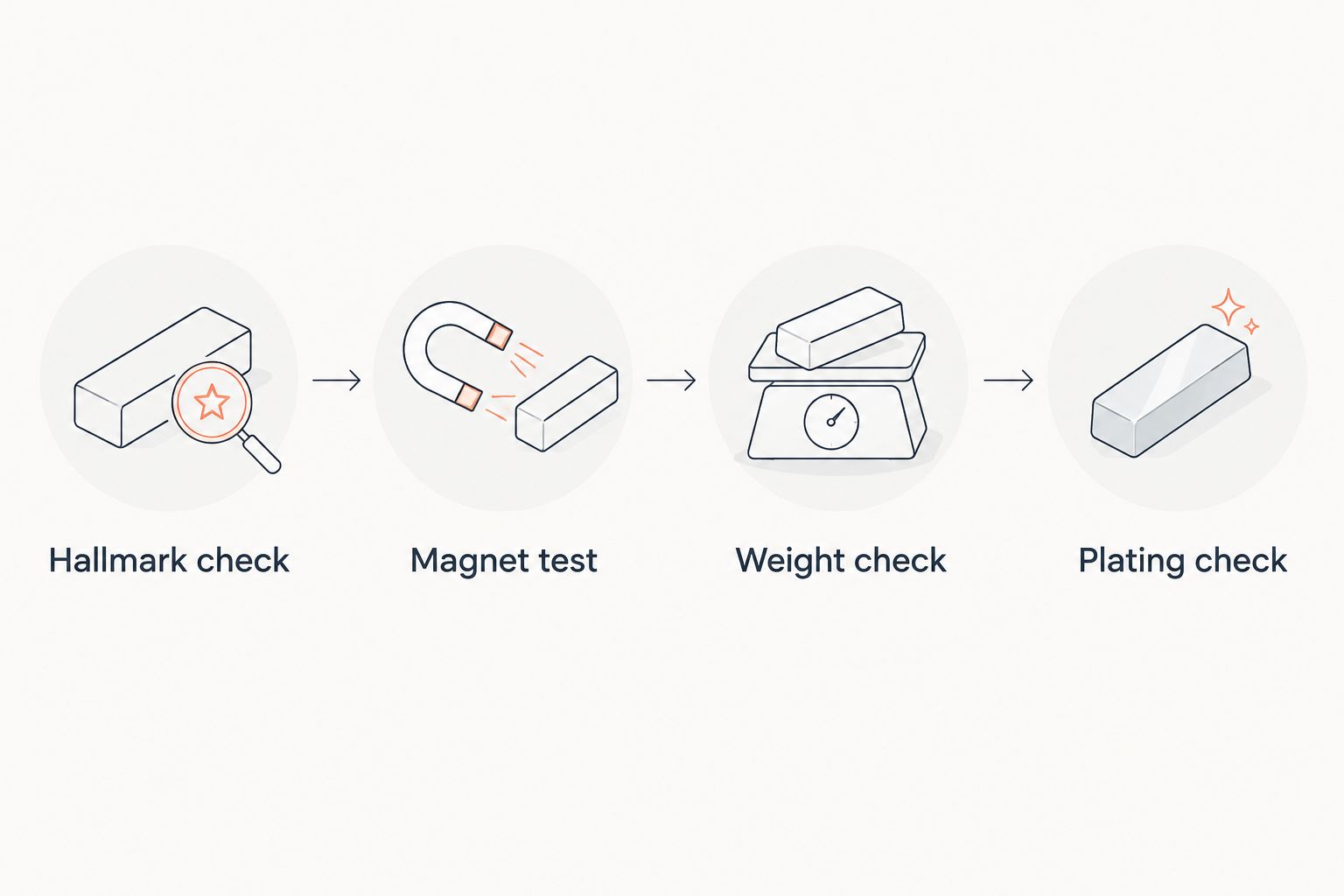
Disco-era bold metal jewelry is one of the most re-plated categories in estate auctions. Heavy gold-tone pieces get a fresh plate before consignment to hide surface wear, and the new plating hides a base-metal core that weighs almost the same as solid gold in the hand. Before you place a bid on any 1970s jewelry auction lot in this style, run through how to spot re-plated or altered estate jewelry.
“If a bold metal cuff feels heavier than its size suggests, check for a base-metal core before you bid.”
- Magnet test — a magnet that grips means a steel or brass core, not solid gold
- Check the hallmark stamp for sharpness — re-plating often blurs or erases the original stamp
- Compare catalog photos at multiple angles for uneven plating thickness at joints and clasps
- Ask the auction house for an acid test or XRF reading on unsigned heavy pieces
- Weigh the piece against published gram weights for the same model, when a reference exists
Set a bid ceiling before the auction opens
Bold metal lots draw competitive bidding because they photograph well on a screen, and a buyer's premium on top of the hammer price pushes the real cost 15% to 25% higher than the last number you see. Decide your ceiling using how to set a budget for online jewelry auctions before the lot opens, not while you're mid-bid in 2026.
- Calculate hammer price plus buyer's premium plus shipping insurance before you commit
- Set a hard stop and walk away once you hit it, even on a signed piece
- Track three to five comparable past auction results for the same maker or style
- Leave room in the budget for a professional cleaning or clasp repair after you win
Track weight, hallmark, and provenance once you win
Documentation matters as much after the win as before it, especially on pieces you plan to insure or resell later.
- Photograph the hallmark and any maker's mark immediately on arrival
- Log the gram weight against the catalog listing to confirm you received the described piece
- File the condition report and any provenance documents with your insurance record
- Note the maker (or "unsigned") in your own inventory — it drives resale value more than any other factor
Browse current 1970s jewelry auction lots
Check hallmark photos and gram weights before you place a bid.
Where to find 1970s disco-era bold metal jewelry
| Option | Best for | Key limitation |
|---|---|---|
| Online estate jewelry auctions (e.g., Jewelryroom.com) | Signed and unsigned disco-era pieces with catalog photos and stated gram weight | Bidding is remote — you rely on photos and a condition report, not hand inspection |
| Major auction houses (Sotheby's, Christie's) | High-end signed pieces from David Webb, Bulgari, or Verdura with full provenance | Buyer's premiums and museum-grade entry lots thin out the mid-range selection |
| Vintage jewelry dealers and retail shops | Hands-on inspection before you buy | Smaller inventory, and pieces are already marked up past what they'd bring at hammer |
| Estate sales and flea markets | Finding underpriced unsigned bold metal pieces | No authentication, no return policy, hit-or-miss on any given weekend |
A 1970s jewelry auction wins on documentation — hallmark photos and gram weights on record — over a flea market table where you're guessing at metal content. Buy through an online auction if you want a paper trail; wait for a major house sale if you're chasing a specific signed David Webb or Verdura lot; skip unsigned flea-market pieces unless you can test the metal yourself on-site.
Common mistakes bold metal collectors make
- Trusting gram weight alone as proof of solid gold. Plated base-metal pieces are made deliberately heavy to feel "real" in the hand, and weight alone won't catch that.
- Assuming every disco-era cuff has a hidden maker's mark somewhere. Most factory-made pieces from the 1970s never carried one — no mark isn't proof of a fake, but it isn't proof of a maker either.
- Skipping the buyer's premium in the mental budget. It adds 15% to 25% on top of the hammer price at settlement, and that gap catches first-time bidders on nearly every statement piece.
- Underinsuring statement pieces. A bold metal cuff or chain replaces at what a comparable signed piece costs today, not at the auction hammer price you paid for it.
- Bidding on several near-identical lots in the same 1970s jewelry auction. Chasing the "next one" after losing a bid often ends with three unsigned cuffs instead of one strong signed piece.
FAQ
What is 1970s disco-era jewelry made of?
Most disco-era bold metal pieces use heavy yellow gold, gold-vermeil, or gold-plated base metal in chain, tubogas, or cuff form. Signed designer pieces from David Webb, Bulgari, Verdura, and Buccellati are typically solid gold; unsigned factory pieces are frequently gold-plated over brass or steel.
Is unsigned 1970s bold metal jewelry worth buying?
Unsigned disco-era pieces are worth buying when the metal tests as solid gold and the price reflects the missing maker's mark. They sell for a fraction of a signed David Webb or Bulgari equivalent, but resale value stays lower without provenance.
How can you tell if a gold-tone piece from the 1970s is re-plated?
Run a magnet test first — a magnet that grips the piece means a steel or brass core under the plating. A blurred or shallow hallmark stamp and uneven plating at the clasp or joints are the next signs to check.
Which designers made the best 1970s bold metal jewelry?
David Webb, Bulgari, Verdura, Buccellati, and Georg Jensen are the names that define the disco-era bold metal look. Each has a distinct signature: Bulgari's tubogas, Verdura's hand-hammered cuffs, Buccellati's textured rigato gold.
Is a 1970s jewelry auction cheaper than a vintage dealer?
Yes, in most cases a 1970s jewelry auction lands below vintage retail because the shop's markup and authentication cost are already baked into the sticker price. The trade-off is that you inspect the piece through photos and a condition report instead of in person.
How much does a buyer's premium add to a 1970s jewelry auction win?
Buyer's premiums at most online jewelry auctions run 15% to 25% on top of the hammer price in 2026. Factor that into your ceiling before you bid, not after you win.
Do 1970s tubogas bracelets hold value in 2026?
Signed tubogas bracelets from makers like Bulgari hold value well because the style stays in steady demand among bold metal collectors. Unsigned tubogas-style pieces track more closely with gold weight than with design demand.
What's the difference between disco-era and mid-century modern jewelry?
Mid-century modern jewelry generally spans the 1950s through the 1960s with cleaner, smaller-scale designs. Disco-era jewelry from the 1970s scales up — heavier metal, bigger cuffs, and bolder chain work — which is why auction catalogs sometimes list the two categories together.
One last thing
An unsigned disco-era cuff with a heavy gauge, a crisp tool-cut edge, and no maker's mark can out-appraise an underweight signed piece from a lesser-known 1970s workshop — the metal test matters more than the name once you're past the top five houses. Check the weight and the hallmark before you check for a signature. On Jewelryroom.com, that order — weight, hallmark, signature — is the fastest way to sort a real 1970s jewelry auction opportunity from an overpriced flea-market guess in 2026.


