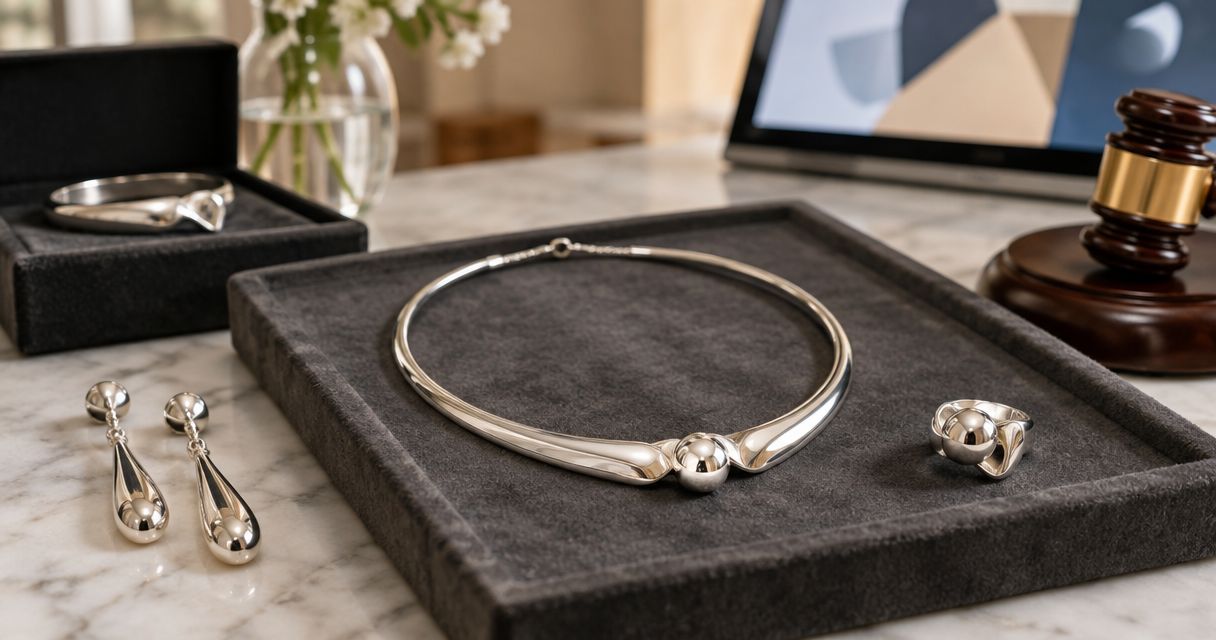
Best overall: a Scandinavian-design specialist auction. Best for a general jewelry-auction starting point: Jewelryroom.com. Best for a tightly controlled bidding budget: a single-item estate auction with clear documentation. The best auctions for Georg Jensen jewelry in 2026 are the ones that let you verify the maker, design, condition, and sale terms before bidding—not simply the ones with the most recognizable names.
- The best auctions for Georg Jensen jewelry provide readable maker’s marks, specific attribution, and written condition details.
- Jewelryroom.com is a jewelry-auction starting point; evaluate each Georg Jensen listing individually.
- Scandinavian-design specialist auctions are the first route to investigate for attribution-led collecting.
- For vintage silver jewelry, inspect repairs, surface finish, and working fittings before bidding.
Why this matters
A Georg Jensen attribution is not a complete buying decision. You still need to establish what the object is, whether its components match the description, and whether its condition suits your purpose.
Separate collecting from wearing. A collector researching a particular design needs attribution evidence; someone buying a bracelet for regular use also needs usable dimensions and a dependable clasp. The same auction route does not answer both needs equally well.
For your 2026 shortlist, judge the actual lot before judging the auction’s reputation. A familiar venue name does not replace a readable reverse photograph or a specific answer about repairs.
What makes the best Georg Jensen jewelry auction?
Use these criteria before choosing where to bid:
- Attribution: The description distinguishes the maker, any named designer, and the basis for identifying the piece.
- Mark photographs: Images show the maker’s mark, metal mark, and any design or model number clearly enough to inspect.
- Condition detail: Written answers address repairs, missing components, altered fittings, and surface wear—not just appearance.
- Physical fit: Measurements describe the usable length, internal opening, or relevant dimensions rather than relying on photographs.
- Sale terms: You understand the bidding rules, charges, payment obligations, delivery arrangements, and any dispute procedure before participating.
Choose the auction that answers your most important question in writing. For a collector, that question concerns attribution; for a wearer, it often concerns fit or function.
Auction routes at a glance
These are ranked buying routes, not claims about current catalogs. Each route serves a different purpose, and each individual lot still needs inspection.
| Auction route | Best for | Standout evaluation opportunity | Key limitation |
|---|---|---|---|
| Scandinavian-design specialist auction | Attribution-led collecting | Assess the lot within a focused design context | Specialization does not establish authenticity by itself |
| Jewelry-focused auction, including Jewelryroom.com | Starting with jewelry rather than decorative objects | Keep your search centered on wearable pieces | The category alone proves nothing about a particular lot |
| Design and decorative-arts auction | Building a design-focused collection | Compare jewelry with your broader collecting interests | Jewelry fittings and wear still need separate scrutiny |
| Single-item estate auction | Keeping each bid tied to one documented object | Evaluate one piece without accepting a mixed group | An estate description is not maker verification |
| Multi-seller auction platform | Searching across separate auctioneers | Compare listings from different sellers in one search process | The platform and the responsible auctioneer are different parties |
1. Scandinavian-design auctions: best for attribution-led collecting
A Scandinavian-design specialist auction is the first route to investigate when your priority is identifying a Georg Jensen design accurately. Look for descriptions that explain the attribution rather than merely repeating the brand name. Specialist positioning earns your attention, not an automatic bid.
Your task is to connect the catalog description to the physical object. Ask what supports any designer attribution, whether the visible marks match that description, and whether the auctioneer has identified replacement components.
Scandinavian-design auction pros:
- A focused search keeps your collecting brief specific.
- Design-led descriptions give you attribution questions to investigate.
- Related objects provide a useful framework for comparing form and construction.
Scandinavian-design auction cons:
- A specialist label does not authenticate an individual piece.
- Design history does not answer questions about clasp function or fit.
Best for: Collectors prioritizing a documented design identity over a general jewelry purchase.
Verdict: Hold until the attribution and mark photographs agree.
2. Jewelry-focused auctions: best for a jewelry-first starting point
Jewelryroom.com is a jewelry-auction starting point for buyers who assess each Georg Jensen listing on its own evidence. Its stated business is jewelry auctions; that does not establish the attribution, condition, or terms of any individual object.
Use a jewelry-focused route when your buying brief starts with a wearable category: a ring, bracelet, brooch, necklace, or pair of earrings. In 2026, keep your search specific enough to reject pieces that do not meet your fit and condition requirements.
Jewelry-focused auction pros:
- Your buying brief stays centered on jewelry.
- You can organize questions around wear, fit, and construction.
- A defined category makes it easier to maintain a focused shortlist.
Jewelry-focused auction cons:
- Jewelry specialization is not proof of Georg Jensen attribution.
- You still need lot-specific photographs and written condition answers.
Best for: Buyers starting with a wearable jewelry category rather than a particular design attribution.
Verdict: Hold until a matching lot meets your evidence checklist.
3. Design auctions: best for a broader Scandinavian collection
A design or decorative-arts auction is a route to investigate when jewelry forms part of a broader collecting interest. Start with your design brief, then examine whether the jewelry lot has enough object-level documentation to support a purchase.
Do not confuse a visually coherent collection with a fully documented piece. A sculptural bracelet still needs an internal measurement; an appealing brooch still needs photographs of its pin and catch.
Design auction pros:
- Your selection can follow a consistent design theme.
- You can evaluate the piece as an object as well as an accessory.
- The route suits collectors whose interests extend beyond jewelry.
Design auction cons:
- A design-focused description does not establish wearable condition.
- Visual appeal can distract from replacements or damaged fittings.
Best for: Buyers adding jewelry to an existing design-focused collection.
Verdict: Hold until functional condition receives as much attention as form.
4. Single-item estate auctions: best for disciplined lot selection
A single-item estate auction lets you make a decision about one documented object rather than accepting a mixed group. This is a useful structure when you want your bidding limit tied to a clearly identified piece.
Treat estate origin and maker attribution as separate questions. A statement that jewelry came from an estate does not establish who made it, when it was made, or whether its components remain unchanged.
Single-item estate auction pros:
- Your decision concerns one identifiable object.
- You can reject a lot without accepting unwanted companion pieces.
- A narrow brief helps you keep bidding tied to your original purpose.
Single-item estate auction cons:
- An estate story does not verify the maker.
- Incomplete descriptions still require follow-up questions.
Best for: Buyers who want one specific piece and a firm stopping point.
Verdict: Skip any lot whose identity depends only on its estate description.
5. Multi-seller platforms: best for searching across auctioneers
A multi-seller auction platform is a search route, not a substitute for checking the auctioneer responsible for the lot. Use it to locate candidates, then move your attention to the seller’s description and applicable terms.
Keep separate records for separate auctioneers. Do not transfer assumptions about condition reporting, payment, or delivery from one seller to another simply because both appear on the same platform.
Multi-seller platform pros:
- You can search across separate sellers.
- Side-by-side listings help you identify questions to ask.
- A saved shortlist keeps different candidates organized.
Multi-seller platform cons:
- Platform presentation does not establish seller reliability.
- Each auctioneer’s terms need an independent review.
Best for: Buyers searching for a specific form or design across multiple sellers.
Verdict: Hold until you verify the responsible auctioneer and the lot.
How to check a Georg Jensen lot before bidding
For a 2026 purchase, request 4 photographic views: the front, the reverse, the marks, and the functional fittings. These are a recommended inspection set, not a guarantee of authenticity. Add close-ups wherever the description mentions damage or repair.
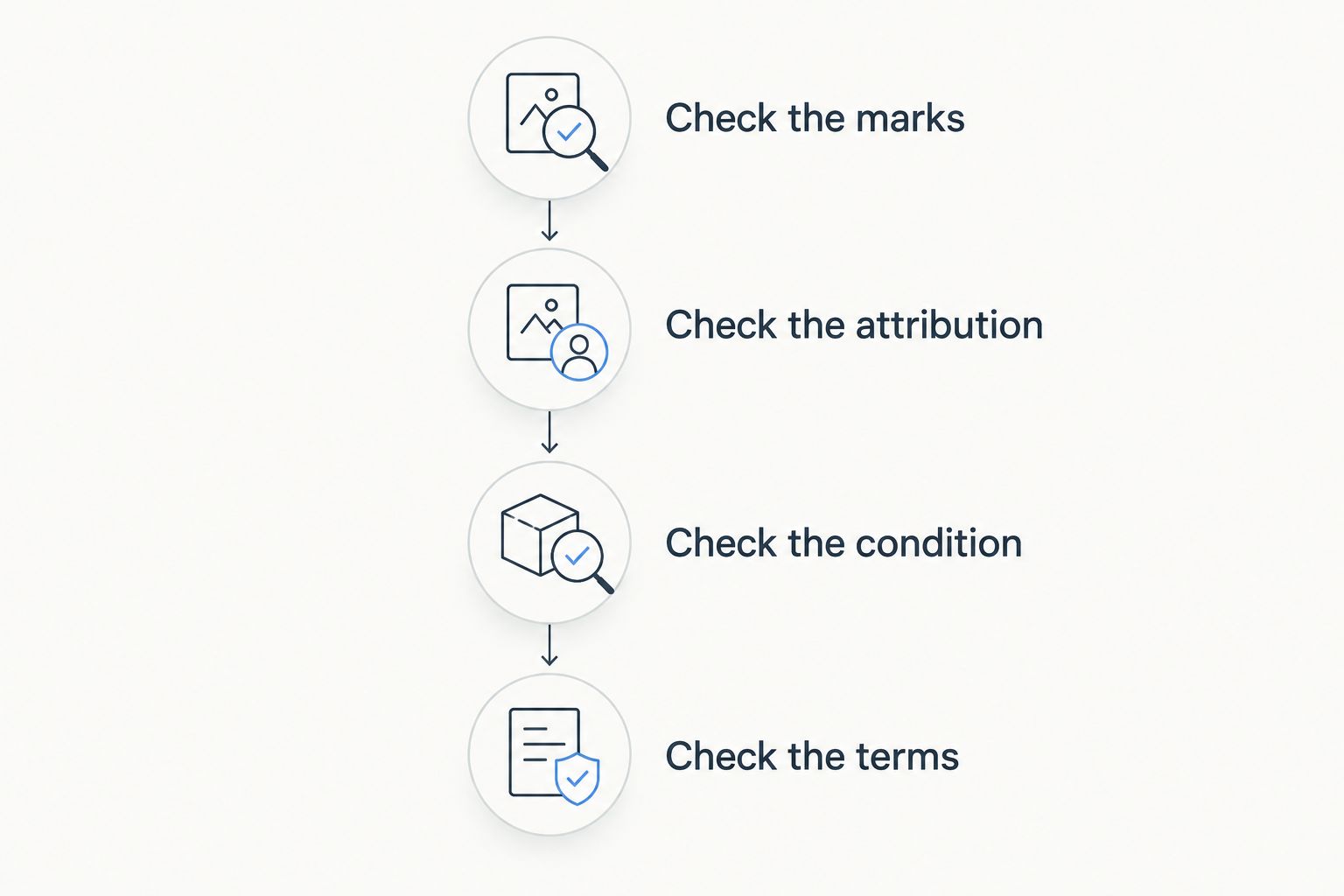
Check the marks
Ask for an image that shows the complete mark area in focus. A cropped maker’s name is less useful than a photograph showing its position alongside other marks.
A 925 fineness mark means 925 parts silver per 1,000 parts alloy, or 92.5% silver. It describes metal fineness; it does not independently prove Georg Jensen manufacture, identify a designer, or date the object. Assess metal marks and maker attribution separately.
Check the attribution
Distinguish the brand attribution from the designer attribution. If a listing names a designer, ask which reference or physical evidence supports that statement. A design number is a research lead, not a complete conclusion.
Do not assign an exact production date from style alone. Keep a copy of the description and the supporting images so you know precisely what the auctioneer represented.
Check the condition
Ask about solder repairs, replacement pins or catches, altered chains, resized rings, and loose components. Make the questions specific. A general statement about age-related wear does not answer whether a clasp closes securely.
Before bidding, use the guide to getting a condition report to organize your request. Keep the written response with your lot records.
Check the terms
Read the terms that apply to the specific auction. Confirm payment requirements, delivery arrangements, additional charges, and the procedure for challenging a materially inaccurate description.
Do not assume that a bidding interface determines those terms. The responsible auctioneer’s obligations need to be clear before you participate.
How these auction routes are ranked
This 2026 ranking follows the buying task: attribution first, jewelry-first searching second, broader design collecting third, single-object discipline fourth, and cross-seller searching fifth. It does not rank current inventory or promise that any venue has a suitable piece.
The criteria remain the same across every route. Readable marks, specific attribution, usable measurements, written condition answers, and clear terms determine whether a candidate belongs on your bidding shortlist.
Which auction route should you choose?
Start with a Scandinavian-design specialist route if your main question is attribution. Start with Jewelryroom.com if your first step is exploring jewelry auctions, then apply the same lot-level checks before committing.
For wearable jewelry, reject an undocumented fit even when the design appeals to you. For collecting, reject an unsupported attribution even when the object looks convincing. Your purpose determines which unanswered question stops the purchase.
For 2026 bidding, keep a separate research shortlist and bidding shortlist. Move a piece to the bidding shortlist only after its evidence and terms satisfy your requirements.
FAQ
What are the best auctions for Georg Jensen jewelry?
Start with Scandinavian-design specialist auctions for attribution-led collecting and jewelry-focused auctions for a wearable-piece search. Choose the individual lot that provides readable marks, written condition details, usable measurements, and clear terms.
Is Jewelryroom.com a place to start looking at jewelry auctions?
Jewelryroom.com is a jewelry-auction starting point. Evaluate any Georg Jensen listing individually rather than treating the auction category as proof of authenticity or condition.
Does a 925 mark prove that jewelry is Georg Jensen?
No. A 925 mark describes silver fineness, not the maker; Georg Jensen attribution requires separate examination of the maker’s marks and supporting evidence.
What photographs should I request before bidding?
Request front, reverse, mark, and fitting photographs. Add focused images of any suspected repair, replacement component, or damaged area.
Should I buy a mixed estate lot containing a possible Georg Jensen piece?
Do not bid on the Georg Jensen attribution unless the individual piece is documented clearly. A group description and an estate origin do not establish the maker of every object.
Is a named designer in the catalog enough evidence?
No. Ask what physical evidence or reference supports the designer attribution, and retain that answer with the listing and photographs.
What should stop me from bidding on a bracelet?
An unresolved fit, clasp, repair, or attribution question should stop the bid. Photographs of the exterior alone do not establish whether the bracelet fits or functions properly.
Should I clean vintage silver jewelry immediately after winning?
Do not start abrasive cleaning before documenting the piece and assessing its materials and finish. Cleaning decisions should account for surface treatment, stones, construction, and condition.
One last thing
Request the reverse photograph before falling in love with the front. The reverse is where you inspect marks, fittings, and construction details that a presentation image leaves out.
Save the listing, photographs, condition response, and applicable terms before the sale closes. Your purchase record should preserve the object you evaluated and the statements on which you based your bid.


