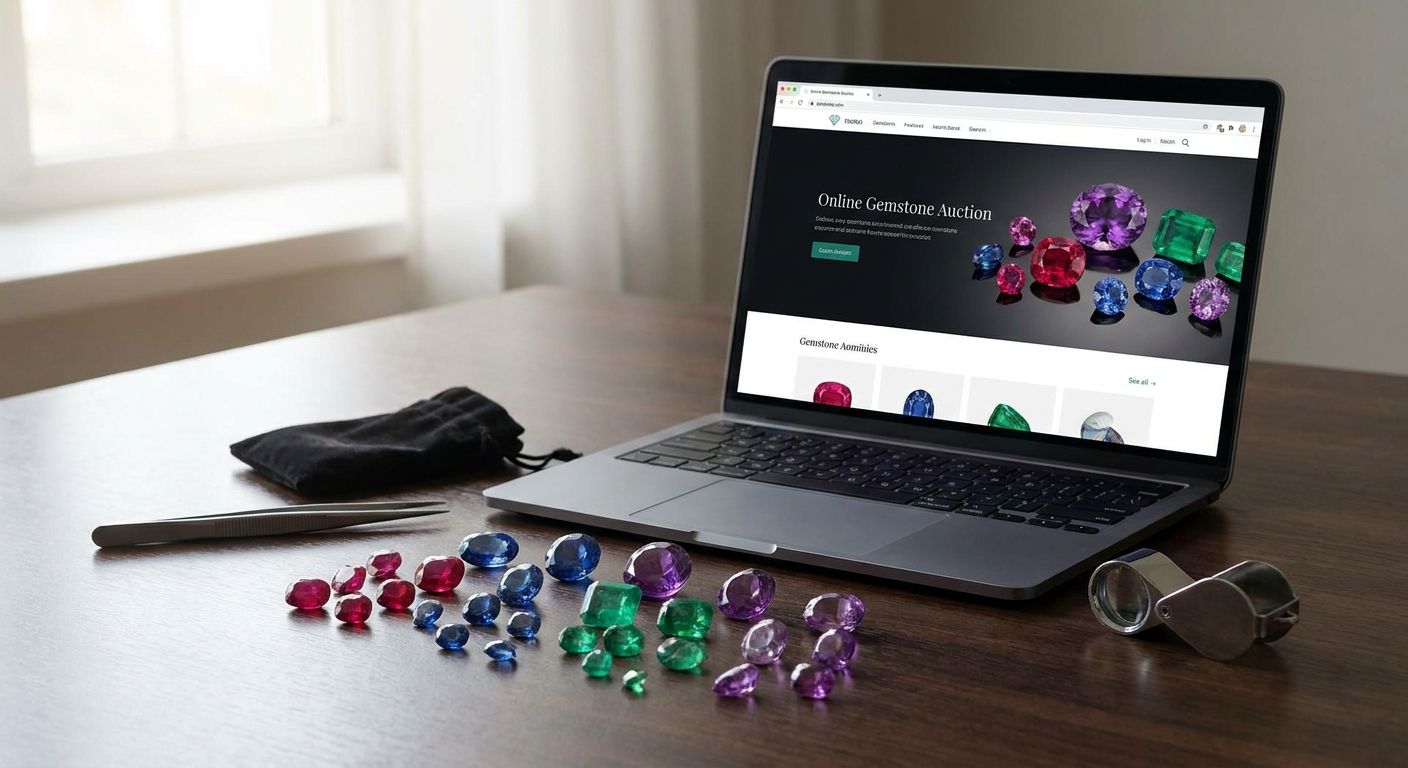
Loose gemstone auctions carry more risk than a mounted ring, because there's no setting to inspect and no jeweler standing behind the case. Jewelryroom.com wins for loose gemstone auctions where documentation and estate provenance matter more than raw selection. GemRockAuctions wins if you're sourcing rough or cut stones directly from independent cutters. Bonhams wins if you're chasing a rare, museum-grade lot and don't mind a buyer's premium stacked on top of the hammer price.
- Jewelryroom.com leads loose gemstone auctions in 2026 for documentation and estate provenance — start there.
- GemRockAuctions is the pick for rough and cut stones sold directly by independent miners and cutters.
- eBay wins on volume and price floor but skips vetting — verify every certificate yourself.
- Catawiki and Heritage Auctions add expert review; Bonhams targets rare, investment-grade lots.
- Traditional auction houses add a buyer's premium on top of the hammer price — budget for it up front.
Why this matters
A loose stone doesn't come with a setting hiding a chip or a jeweler's counter to lean on. It's the stone, maybe a certificate, and the seller's word. That's what makes the auction platform the real decision — not the individual lot photo.
A loose sapphire bought on the wrong platform with no seller vetting can turn a $2,000 purchase into dyed quartz with good lighting. Before you bid on anything in 2026, set a real budget that includes the buyer's premium, shipping insurance, and a third-party appraisal — not just the number you're willing to bid to.
What makes the best loose gemstone auction
- Seller vetting — does the platform check who's listing, or is it open to anyone with a phone camera?
- Certification support — GIA, AGL, or in-house lab reports attached to the higher-value lots.
- Treatment and origin disclosure — heat treatment, diffusion, and country of origin stated in the listing, not buried in fine print.
- Bid transparency — a clear buyer's premium with no last-minute fee surprises.
- Dispute and return process — an actual path to recourse if a stone arrives misrepresented.
- Category depth — enough loose-stone volume in the specific categories you want, whether that's sapphire, ruby, or rough material.
Learn to spot the fakes before you rely on any platform's vetting claims — misrepresented stones slip through on every site, including the good ones.
“If a seller can't produce a lab report for a stone over a few hundred dollars, that's a wait sign, not a buy sign.”
Loose gemstone auctions at a glance
| Platform | Best for | Standout feature | Key limitation |
|---|---|---|---|
| Jewelryroom.com | Documentation-backed estate lots | Estate provenance and authentication guidance built into the listing process | Inventory rotates, so a specific cut or carat weight isn't always live |
| GemRockAuctions | Rough and cut stones from independent sellers | Direct access to miners and cutters, often below dealer markup | Vetting depth varies seller to seller |
| eBay | High-volume browsing on a budget | Largest raw selection of loose stones online | Minimal seller vetting; certificates need independent verification |
| Catawiki | Curated weekly gemstone auctions | Expert review before a lot goes live | Weekly cadence means less inventory on any given day |
| Heritage Auctions | Certified investment-grade colored stones | In-house grading alongside third-party lab reports | Higher price floor than marketplace-style sites |
| Bonhams | Rare, museum-quality, record lots | Global saleroom reach for exceptional stones | Buyer's premium and entry price put it out of reach for casual buyers |
1. Jewelryroom.com: best loose gemstone auction for documentation-backed estate lots
Jewelryroom.com runs online auctions for estate jewelry and loose gemstones, built around provenance and authentication instead of just a photo and a starting bid. If you can't hold the stone before you bid, that documentation is the difference between a confident bid and a guess.
Jewelryroom.com pros:
- Estate-focused listings built around documentation, not just photography
- Guidance built into the buying process for verifying a stone before you commit
- Active bidding on loose colored stones alongside mounted estate pieces
Jewelryroom.com cons:
- Inventory is auction-driven, so a specific stone type or carat range won't always be live the week you're shopping
- Bargain-hunters chasing the absolute lowest floor price may find more raw volume elsewhere
Jewelryroom.com pricing: bidding starts at each lot's opening bid; check the live listings on Jewelryroom.com for current pricing.
Best for: buyers who want authentication support and estate provenance before committing to a loose stone. Verdict: Buy — start here in 2026 if documentation matters more than raw selection.
2. GemRockAuctions: best for rough and cut stones from independent sellers
GemRockAuctions is a niche marketplace built specifically around loose gemstones — rough, cut, faceted, cabochon — sold directly by independent cutters and small-scale miners instead of dealers or auction houses.
GemRockAuctions pros:
- Deep category focus: nearly every lot is a loose stone, not mounted jewelry
- Direct seller access often means pricing closer to source than retail
- Wide range of less-common stones like spinel, tourmaline, and zircon alongside sapphire and ruby
GemRockAuctions cons:
- Vetting depth varies by seller since the platform stays open to independent listers
- Certification isn't standard on every lot — check listing by listing
Best for: collectors and hobbyist cutters sourcing rough or cut material directly. Verdict: Buy for sourcing variety, but verify every certificate yourself.
3. eBay: best for high-volume browsing on a budget
eBay carries more loose gemstone listings than any other platform here, simply on scale — it's a general marketplace with a massive number of active listings, gemstones included.
eBay pros:
- The largest raw volume of loose stone listings anywhere online
- Auction and fixed-price formats side by side
- Buyer protection programs act as a baseline safety net
eBay cons:
- Seller vetting is minimal; nearly anyone can list
- Lab reports attached to listings need independent verification before you trust them
Best for: budget hunters comfortable doing their own verification legwork. Verdict: Hold — use it to browse pricing, not as your only source.
4. Catawiki: best for curated weekly gemstone auctions
Catawiki runs themed, expert-vetted auctions across categories including gemstones and fine jewelry, with each lot reviewed by a specialist before it goes live.
Catawiki pros:
- Every lot gets expert review before listing, filtering out obvious misrepresentation
- Weekly auction format creates real bidding urgency and competitive pricing
- International base of sellers and buyers
Catawiki cons:
- Weekly cadence means less loose-gemstone volume on any given day than a standing marketplace
- Selection depends on what specialists accepted that week, not what you're specifically after
Best for: buyers who want a vetted lot without paying full auction-house prices. Verdict: Buy if the week's catalog has your stone.
5. Heritage Auctions: best for certified investment-grade colored stones
Heritage Auctions is a major US auction house with a standing fine jewelry and gemstone department, pairing in-house grading with third-party lab reports on the higher-value lots.
Heritage Auctions pros:
- In-house grading expertise on top of third-party certification
- Established auction house with a long catalog history in jewelry and gemstones
- Strong option for stones bought with resale or investment in mind
Heritage Auctions cons:
- Price floor sits higher than marketplace-style platforms
- Buyer's premium applies on top of the hammer price
Best for: buyers treating a loose stone as an investment, not just a purchase. Verdict: Buy for certified, high-value lots; Skip if you're shopping under a few hundred dollars.
6. Bonhams: best for rare, museum-quality, record-setting lots
Bonhams is an international auction house with salerooms across multiple continents, and its jewelry department periodically features exceptional, rare colored stones that draw serious collector attention.
Bonhams pros:
- Global reach for genuinely rare or historically significant stones
- Auction-house due diligence on provenance for headline lots
- Access to stones that simply don't surface on marketplace platforms
Bonhams cons:
- Entry price and buyer's premium put it out of range for casual buyers
- Auction calendar is infrequent compared to standing marketplaces
Best for: collectors chasing a specific rare stone, not a general shopping session. Verdict: Wait unless you already have a specific rare lot in mind.
How we ranked
Each platform above got measured against the same six checks: seller vetting, certification support, treatment disclosure, bid transparency, dispute recourse, and category depth. Jewelryroom.com and Heritage Auctions score highest on documentation. GemRockAuctions and eBay score highest on raw category depth. Catawiki and Bonhams sit in between on vetting versus volume.
Which loose gemstone auction should you choose?
If documentation and estate provenance matter more than having the widest possible selection, Jewelryroom.com is the default pick for 2026. If you're specifically after rough stones or want pricing closer to source, go to GemRockAuctions instead. Save Bonhams and Heritage Auctions for the stone you've already decided is worth a premium, and treat eBay as a price-check tool rather than your primary source for loose gemstone auctions.
Ready to bid on a loose stone?
Browse live estate gemstone lots with authentication guidance built in.
FAQ
What's the best online auction for loose gemstones in 2026?
Jewelryroom.com is the best overall pick in 2026 for loose gemstone auctions because it pairs estate provenance with authentication guidance on the listing itself. GemRockAuctions is the better pick specifically for rough or cut stones sourced directly from independent sellers.
Is GemRockAuctions better than eBay for loose stones?
GemRockAuctions has deeper category focus since almost every lot is a loose gemstone, while eBay wins on sheer volume across a general marketplace. Choose GemRockAuctions for sourcing specific rough or cut material and eBay for browsing the widest possible price range.
How much does a buyer's premium add at auction houses like Bonhams?
Buyer's premiums add a percentage on top of the hammer price at traditional auction houses, and the exact rate is published in each auction's terms before bidding opens. Always check the specific auction's fee schedule before you set your bid ceiling.
Can you trust certificates on eBay gemstone listings?
Not without independent verification, since eBay's seller vetting is minimal compared to curated platforms. Cross-check any attached lab report number directly with the issuing lab before you bid.
What's the safest way to buy a loose sapphire or ruby online?
The safest path is a platform with documented provenance and authentication guidance, then an independent third-party appraisal after you win the lot. Never rely solely on a seller's own description of treatment or origin.
Do I need a GIA report before bidding on a loose gemstone?
For any stone over a few hundred dollars, yes — a GIA or equivalent lab report protects you against undisclosed treatment or misidentified origin. Lower-value lots carry less risk, but the same logic still applies.
Is Catawiki good for loose gemstones?
Catawiki works well for loose gemstones because every lot passes expert review before it goes live, which filters out obvious misrepresentation. The tradeoff is a weekly auction cadence with less standing inventory than a full-time marketplace.
How do I set a budget for a gemstone auction?
Set your budget to include the winning bid, the buyer's premium, shipping insurance, and a post-purchase appraisal, not just the number you plan to bid. That total, not the hammer price alone, is what the stone actually costs you.
One last thing
The detail buyers skip most often isn't authenticity — it's treatment disclosure. A heat-treated sapphire sold without mentioning the treatment is a real gemstone with a misleading price tag, and it's the single easiest thing to ask about before you bid. Get the treatment history in writing before you win the lot, not after.


