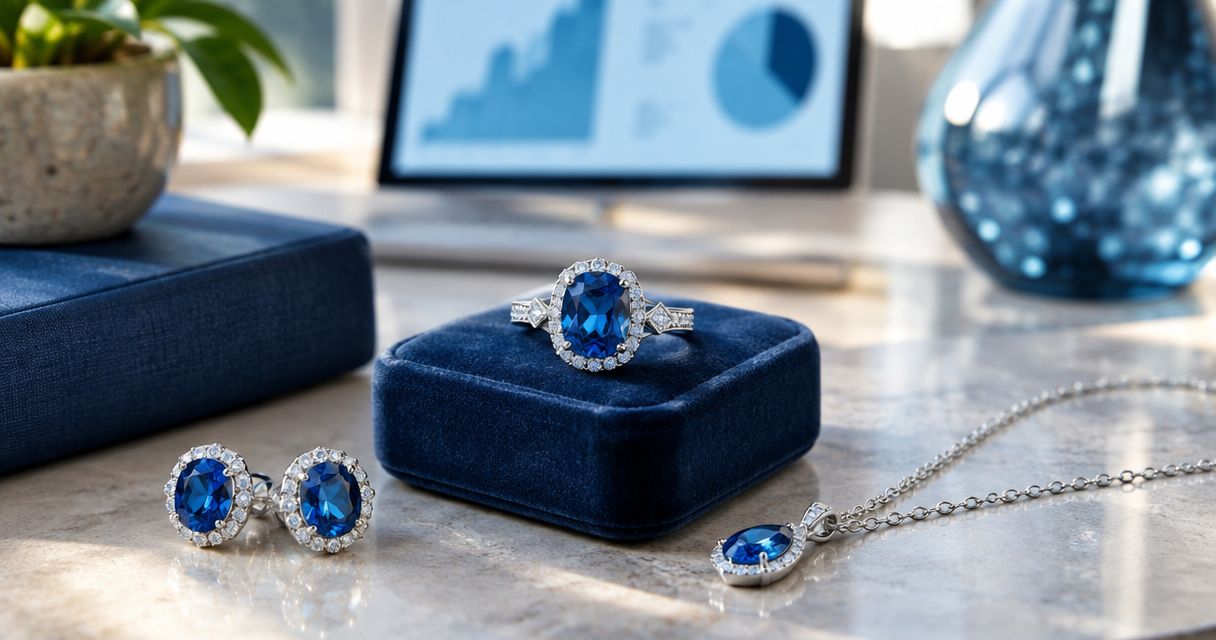
Blue diamond jewelry for rare color investors is a market built on natural fancy blue diamonds bought through auction rather than a retail case, with the goal of holding value that colorless diamonds rarely do. This segment cares less about the setting and more about the GIA report, the color grade, and the gap between the price paid and a fair estimate.
Unlike engagement-ring shoppers, rare color investors compare auction estimates the way stock buyers compare valuations, and treat the jump from Fancy to Fancy Vivid on a grading report as the line between a hold and a flip.
- Natural fancy blue diamonds get their color from boron, and a GIA report with an electrical conductivity test is the only reliable way to confirm it in 2026.
- Color grade drives value in blue diamond jewelry more than carat weight — a 1-carat Fancy Vivid blue often outpaces a larger Fancy Light stone.
- Auction estimates set a ceiling, not a floor — compare against realized prices, not current retail markup.
- Buyer's premium, insurance, and shipping stack on top of the hammer price and belong in your budget before the sale starts.
- Jewelryroom.com lists graded blue diamond jewelry lots where provenance and certification are part of the listing, not an afterthought.
Why blue diamond jewelry matters for rare color investors
Blue diamonds form as Type IIb stones, where trace boron in the crystal lattice absorbs red light and lets blue pass through — the same structural quirk that makes them electrically conductive, which is one of the only physical tests a treated stone can't fake. That single fact is why serious buyers in colored diamonds for serious investors treat lab verification as step one, not a formality.
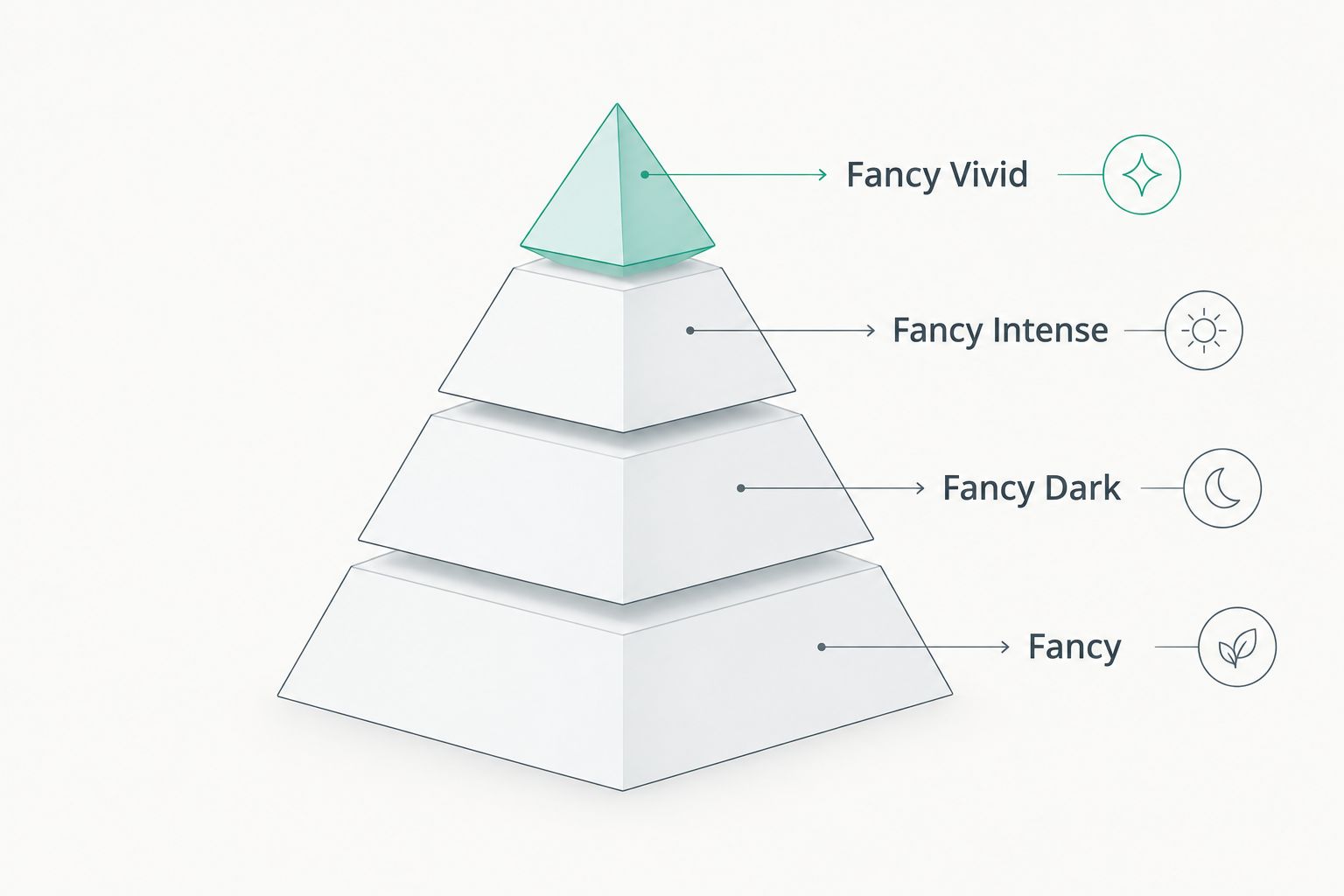
GIA's fancy-color scale runs through nine official grade terms — Faint, Very Light, Light, Fancy Light, Fancy, Fancy Dark, Fancy Deep, Fancy Intense, and Fancy Vivid — and for blue stones specifically, the move from Fancy to Fancy Vivid is the single biggest driver of resale value, ahead of carat weight. Jewelryroom.com's catalog listings for blue diamond jewelry carry that grade prominently for exactly this reason.
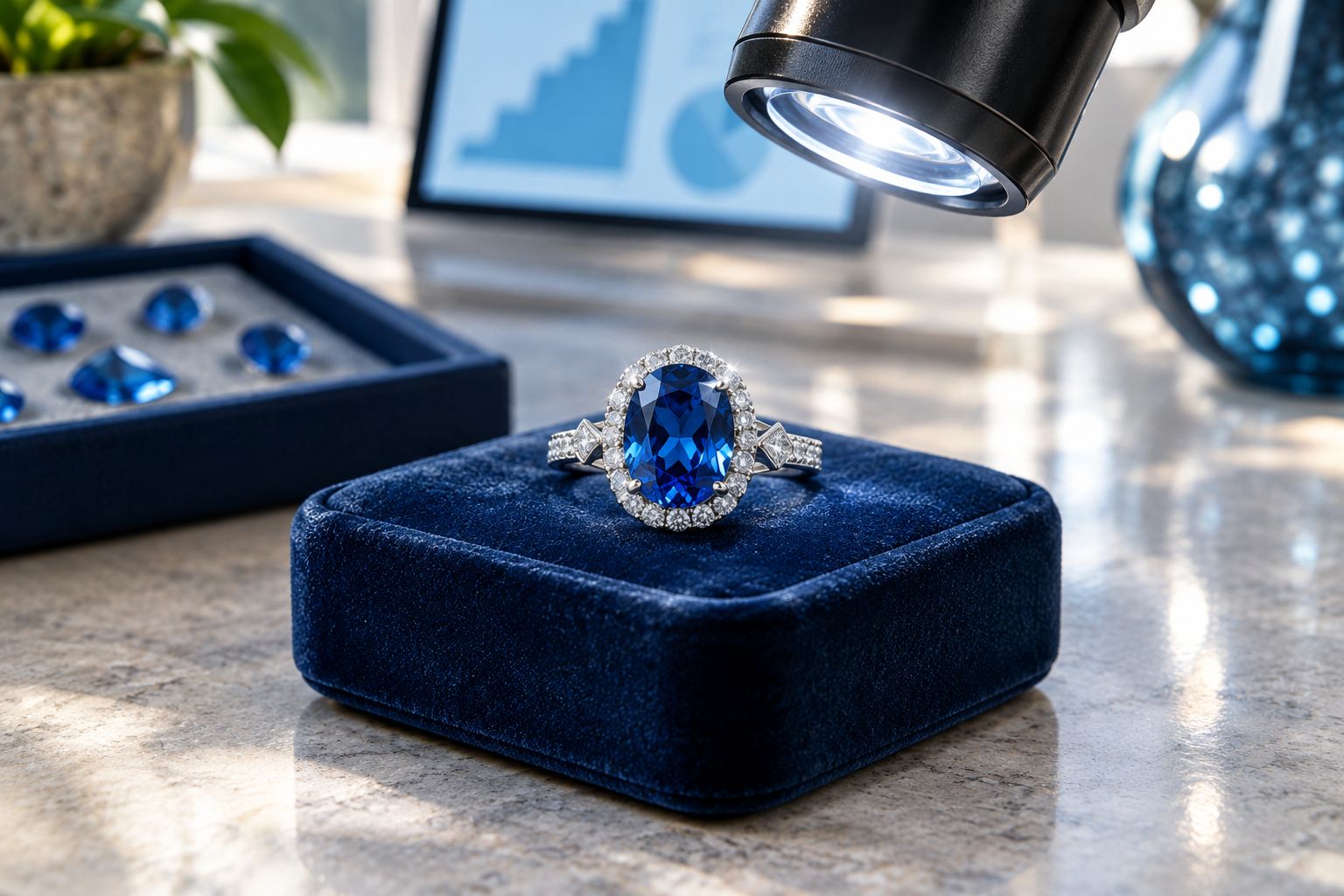
Verify the diamond's color is natural, not treated
Blue diamond jewelry listings use the term loosely. Irradiated and coated stones get marketed as "blue diamonds" at a steep discount to natural fancy blue, and that discount doesn't reverse if you resell.
- Confirm the report names the stone "natural fancy blue," not "treated" or "irradiated blue"
- Ask whether the lab tested electrical conductivity, the standard check for Type IIb stones
- Cross-reference the report number directly on the issuing lab's website, not a link inside the listing
- Run authentication through how-to-authenticate-a-diamond-before-bidding-at-auction before you place a bid
- Treat any "blue diamond" priced far under comparable graded lots as a warning sign, not a bargain
Read the GIA grading report before you read the setting
The setting is replaceable. The grade on the report is not, and for blue diamonds it moves price more than clarity does.
- Check color grade, then saturation and tone — GIA lists all three, and saturation is what investors track closely
- Note the color origin statement ("natural") as a separate line item from the grade itself
- Compare clarity only after color, since color carries more weight in blue diamond pricing than in colorless stones
- Request high-resolution images taken under diffused, daylight-equivalent lighting, not a jeweler's spotlight
- Ask for the full PDF report rather than a cropped screenshot pasted into listing photos
Compare the auction estimate against retail asking prices
A published low-to-high estimate is the auction house's own read on fair value. Use it as a ceiling, not a starting point, and check it against how-to-compare-auction-estimates-against-retail-prices before you set a max bid.
- Pull three comparable sales from the same color grade and carat range before setting a ceiling
- Treat the high end of the estimate as your cap unless documented provenance justifies going over
- Watch for lots with no published estimate — that usually signals thin comparable sales data
- Remember that retail asking prices on colored diamonds carry markup an auction estimate doesn't
- Check realized-price archives, not just current listings, when building comps
Research provenance and prior ownership
A blue diamond with documented ownership history holds resale value better than an identical stone with none, the same way a car with full service records outsells a twin with no paper trail.
- Ask the auction house for the lot's ownership history, not just its certification
- Search the public sale record if the stone previously appeared at a major auction house
- Confirm the setting's metal hallmark matches the era claimed in the listing
- Flag any lot where "provenance available on request" never actually produces documentation
Set a bidding budget that includes the buyer's premium
The hammer price is not the final price. Buyer's premium, shipping, and insurance stack on top of it, and skipping that math is how a "below-market" lot turns into a full-retail purchase.
- Calculate your absolute maximum before the sale starts, premium included, and don't move it mid-auction
- Build insurance and secure shipping into the total before comparing it against retail
- Set a lower walk-away threshold for live bidding, where pace pressures budgets harder than proxy bidding does
- Confirm the currency the estimate is published in before converting your budget
See current blue diamond jewelry lots
Graded, consigned pieces with provenance listed alongside each lot.
Place your bid — proxy first, live only if you have to
Proxy bidding lets you set a ceiling once and walk away from the pace pressure that pushes buyers past their budget. Investors need that discipline more than sentimental buyers do.
- Submit a proxy bid at your true maximum, not a "test" bid below it
- Watch bid increments — a proxy set just under a round number can lose to a live bid one increment higher
- Confirm how the platform's proxy bidding works before the sale, not during it
- Move to live bidding only once you understand how increments accelerate late in a lot
Insure and store the piece after winning
A graded natural fancy blue diamond needs a standalone insurance rider from the day it arrives. Standard homeowner's policies rarely cover full replacement value on a stone this rare.
- Get the piece appraised for insurance purposes separately from the auction sale price
- Store loose stones or unworn pieces in a safe deposit box, not a home safe alone
- Re-verify the GIA report number is undamaged and matches the physical stone on arrival
- Keep the invoice and condition report together as your ongoing provenance record
Where to buy blue diamond jewelry: options compared
| Option | Best for | Key limitation |
|---|---|---|
| Online specialty auction houses (Jewelryroom.com) | Investors who want graded lots with provenance listed alongside the stone | Inventory of natural fancy blue turns over unpredictably by sale cycle |
| Major auction houses (Christie's, Sotheby's, Bonhams) | Museum-grade or record-setting Fancy Vivid blue stones | Entry lots are often priced for ultra-high-net-worth bidders |
| Retail fine jewelers | Buyers who want a finished setting with manufacturer backing | Retail markup and a thinner selection of color grades than auction |
| Private dealers and brokers | Buyers seeking one negotiated stone outside auction timing | No public estimate to benchmark the asking price against |
“If the report doesn't test electrical conductivity, you're trusting color alone — and color can be faked.”
Common mistakes rare color investors make
- Buying on the phrase "blue diamond" alone without confirming natural color origin — treated and irradiated stones sell at a steep discount to natural fancy blue and don't hold it
- Bidding the low estimate as if it's the market price, then losing the lot to a buyer using the high estimate as their ceiling
- Leaving buyer's premium out of the return math, then discovering a "12% under market" lot actually landed at retail once premium and tax hit
- Skipping the condition report on the setting and later paying to reset a stone that arrived loose or chipped at the prong
- Chasing carat weight the way solitaire-ring shoppers do, when color grade moves price more for fancy blue diamonds
FAQ
What makes blue diamond jewelry rare?
Blue diamonds form as Type IIb stones, where trace boron in the crystal lattice absorbs red light and produces the blue color, a formation that is far less common than the nitrogen-based coloring in most diamonds. That geological scarcity is why natural fancy blue diamond jewelry commands attention at auction in 2026.
Is a natural blue diamond more valuable than a treated one?
Yes. A natural fancy blue diamond carries a documented color origin on its grading report, while irradiated or coated stones are priced and resold at a steep discount because the color isn't permanent in the same way. Always check the report's color-origin line before comparing two listings on price alone.
How much does blue diamond jewelry cost at auction in 2026?
Prices vary lot to lot based on carat weight, GIA color grade, and provenance, with each auction house publishing its own low-to-high estimate ahead of the sale. Compare the published estimate against recent realized prices for similar grades rather than relying on a single number.
What's the difference between Fancy Blue and Fancy Vivid Blue?
Fancy Vivid sits at the top of GIA's nine-tier fancy-color scale and shows the strongest, most saturated blue, while Fancy is a mid-tier grade with less intensity. The jump between the two tiers is the single largest price driver for blue diamond jewelry, often outweighing carat weight.
Can you buy blue diamond jewelry as an investment?
Investors do buy natural fancy blue diamonds for long-term value on the basis of documented rarity, certification, and provenance, but resale value depends on grade, market conditions, and buyer's premium at the time of purchase. Treat it as an illiquid, specialist asset, not a short-term trade.
How do you know a blue diamond auction house is legitimate?
Check the auction house's track record of realized sales, whether it discloses buyer's premium and terms clearly before bidding, and whether grading reports are issued by a recognized lab. Verify this before wiring payment on any high-value lot.
Is the Hope Diamond a fancy blue diamond?
Yes. The Hope Diamond is a 45.52-carat natural fancy deep grayish-blue diamond, one of the most documented Type IIb stones in the world, and it's often cited as the reference point for the color category.
Do blue diamonds need special insurance?
Yes. A graded natural fancy blue diamond typically needs a standalone insurance rider with its own appraisal, since standard homeowner's policies rarely cover full replacement value on a stone this rare.
One last thing
The electrical conductivity test is the detail most buyers skip and the one that matters most: natural Type IIb blue diamonds conduct electricity, and almost nothing else that gets sold as a "blue diamond" does. If a grading report doesn't mention that test, ask for it before you bid, not after you win the lot in 2026.


