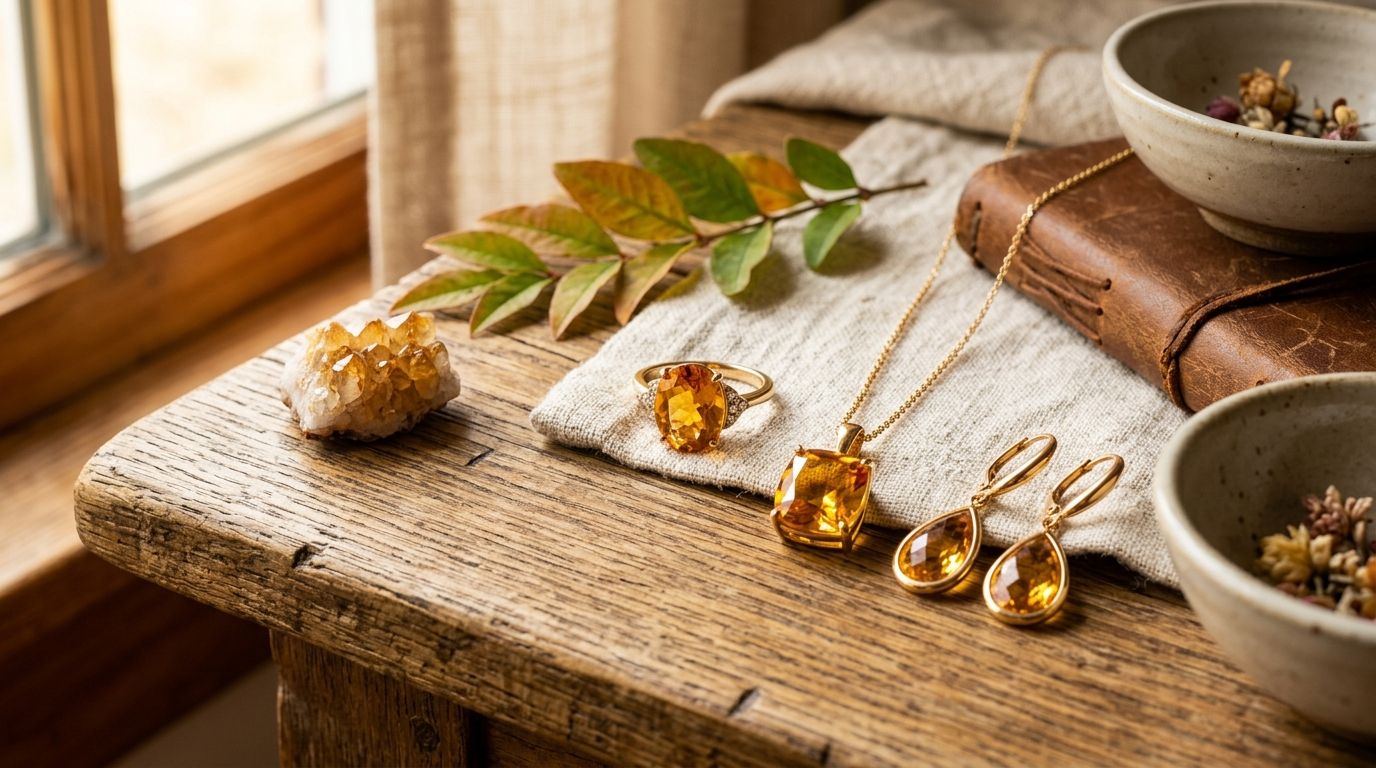
Citrine jewelry for warm-tone gemstone buyers means choosing golden-to-cognac quartz pieces that complement warm skin undertones and yellow or rose gold settings, without paying sapphire or Padparadscha-tier prices. This segment cares less about rarity bragging rights and more about color match, wearability, and getting a fair price at auction rather than retail markup.
- Citrine jewelry spans pale lemon to deep cognac; darker Madeira tones draw the strongest bids in 2026.
- Most commercial citrine is heat-treated amethyst or smoky quartz — natural, untreated citrine is rare and priced accordingly.
- Warm-tone buyers get the best match pairing citrine with yellow or rose gold, not white metals.
- Jewelryroom.com auction lots list citrine rings, pendants, and cocktail pieces with treatment and certification notes in the description.
- Set a bid ceiling before the auction opens — citrine lots with lab paperwork routinely beat their opening estimate.
Why citrine jewelry matters for warm-tone buyers
Warm undertones read best against yellow, gold, and orange-based hues — the exact range citrine covers on its own. Where sapphire and emerald force a cool-toned buyer to work against their skin, citrine sits naturally alongside warm hair colors, tan and olive skin, and yellow or rose gold metal work.
The practical upside for auction buyers is price. Citrine trades far below ruby, sapphire, or emerald per carat, so a warm-tone buyer can chase size and color saturation instead of settling for a smaller stone to hit a budget. That makes it a common entry point for buyers building a first colored-gemstone piece before moving into pricier stones like ruby jewelry for investment buyers or sapphire.
Bidding on citrine also carries less risk than bidding on rarer stones — there's more supply, more comparable listings, and less pressure to win a single lot at any cost. Browse current citrine lots at Jewelryroom.com to see the color range before setting a target.
Identify your warm-tone match before you bid
Not every citrine reads the same against every warm complexion. Matching the stone's saturation to your own coloring prevents buyer's remorse after the lot ships.
- Deep golden or honey skin tones pair best with saturated Madeira and cognac citrine, not pale lemon stones
- Fair warm undertones (peach, golden undertone) suit mid-tone champagne citrine without looking washed out
- Olive skin tones can carry darker, almost brown-orange citrine without it reading muddy
- Redheads and warm-blonde hair tend to clash with pale lemon citrine but complement deeper amber tones
- Photograph the piece under daylight and indoor lighting in the auction listing before assuming the color match works
Check the citrine color grade and saturation
Citrine grading isn't standardized the way diamond grading is, so the listing description and photos carry more weight than a certificate alone.
- Look for terms like "Madeira," "cognac," or "deep golden" — these command higher bids than "pale" or "lemon" citrine
- Compare the stone's color in at least two photos; a single flattering angle can hide a washed-out tone
- Ask whether the color is natural or the result of heat treatment, since treatment affects long-term value
- Avoid lots described only as "yellow quartz" without a citrine-specific grade note — vague listings often mean lower quality
- Cross-check the carat weight against the stone's face-up size; citrine can be cut shallow to inflate apparent size
Compare natural citrine against treated amethyst
This is the single most important distinction for a warm-tone buyer, and it's the one most first-time bidders skip. Most citrine sold commercially in 2026 is amethyst or smoky quartz heat-treated to a yellow-orange color, not natural citrine.
- Natural citrine tends to run paler and less uniformly saturated than heat-treated material
- Heat-treated amethyst-to-citrine often shows a slightly reddish or brownish tint under magnification
- Ask the auction house directly whether the lot description states "natural" or "heat-treated" — both are legitimate, but the price should reflect which one you're bidding on
- Request lab documentation on higher-value lots rather than relying on the seller's description alone; see how to spot fake gemstones at online auctions for the checks that apply here
- Treat any lot claiming "natural, untreated citrine" at a price close to bulk heat-treated stones as a red flag
Match citrine to gold versus rose gold settings
Metal choice changes how the same stone reads on warm-toned skin, and it's a fast way to filter auction listings before you dig into individual lots.
- Yellow gold intensifies citrine's warmth and works best on deep golden or olive undertones
- Rose gold softens citrine's orange notes and suits mid-tone warm complexions
- White gold or platinum settings tend to fight citrine's warmth rather than complement it — skip these unless the stone itself is very pale
- Vintage cocktail-style settings from the 1940s-1960s often pair citrine with rose gold filigree, a combination this segment searches for specifically
- If you're building a matched set, confirm metal purity is consistent across pieces before combining auction wins from different sellers
Set a bidding budget for citrine lots
Citrine's lower per-carat cost compared to sapphire or ruby makes it easy to overspend by "just one more bid" since the numbers feel small individually. A fixed ceiling protects against that.
- Decide your maximum bid before the auction opens, including the buyer's premium the house charges on top of the hammer price
- Compare the opening estimate against retail prices for similar cut and carat weight before committing
- Budget separately for shipping and insurance if the lot ships from a different state or country
- Walk through how to set a budget for online jewelry auctions before your first bid if this is a new auction house for you
- Leave 10-15% of your total budget unspent for a second lot if the first one you want gets bid past your ceiling
Verify certification and treatment disclosure
A citrine lot with proper paperwork protects your resale value even if you never plan to resell. Skipping this step is the fastest way to overpay for an undisclosed treatment.
- Request a gemological lab report on any citrine lot priced as a premium or natural stone
- Confirm the report states carat weight, color grade, and treatment status, not just "quartz" as a generic category
- Cross-reference the report number directly with the issuing lab's database rather than trusting a scanned PDF alone
- Review how to research a gemstone's certification before bidding for the specific verification steps that apply to colored quartz
- If no certification exists and the seller won't provide one on request, bid as if the stone is heat-treated regardless of the listing language
Comparison: where to buy citrine jewelry
| Buying channel | Best for | Key limitation |
|---|---|---|
| Jewelryroom.com jewelry auctions | Buyers wanting certified estate and vintage citrine pieces with disclosed treatment | Requires comfort with proxy bidding and a set budget |
| Local estate sale | Buyers who want to inspect the stone in person before buying | Limited citrine selection on any given sale day |
| Retail jewelry store | Buyers who want a straightforward return policy | Higher markup per carat, fewer vintage cuts |
| Unverified online marketplace | Bargain hunters comfortable with risk | High rate of undisclosed treatment and mislabeled stones |
Jewelryroom.com auctions win for warm-tone buyers who want documented citrine at estate pricing without retail markup — verify the lot's treatment disclosure before bidding regardless of channel.
Common mistakes warm-tone citrine buyers make
- Bidding on color alone from a thumbnail photo — citrine's saturation shifts dramatically between daylight and indoor auction photography, so a stone that looks deep cognac in one shot can read pale lemon in person
- Assuming "citrine" always means natural stone — most commercial citrine on the market in 2026 is heat-treated amethyst, and treating it as automatically natural leads to overpaying
- Ignoring metal tone when the gem color looks right — a beautifully saturated citrine set in white gold still fights a warm undertone; check the full piece, not just the stone
- Skipping the buyer's premium in budget math — bidders who calculate only the hammer price routinely blow past their real ceiling once fees are added
- Buying a single citrine piece instead of planning the palette — warm-tone buyers get more mileage matching citrine to existing gold jewelry than buying one striking piece that clashes with everything else in a collection
Browse current citrine auction lots
Compare color grade, treatment notes, and estimates before you bid.
FAQ
What's the best citrine color for warm skin tones?
Deep golden, cognac, or Madeira citrine reads best against warm undertones in 2026 auction listings. Pale lemon citrine tends to wash out fair warm complexions and looks stronger on cooler-toned skin instead.
Is citrine jewelry real or fake?
Citrine is a genuine quartz gemstone, but most commercial citrine sold today is amethyst or smoky quartz heat-treated to a yellow-orange color. Natural, untreated citrine exists but is far less common and should carry documentation confirming it.
Is citrine better than topaz for a warm-tone buyer?
Citrine and topaz both suit warm undertones, but citrine costs less per carat and offers a wider range of vintage-cut auction lots. Topaz, covered separately for November birthstone buyers, tends to run more expensive at comparable carat weight.
How much does citrine jewelry cost at auction versus retail?
Auction estimates for citrine typically undercut retail tags because sellers skip the retail markup layer. The final price depends on carat weight, color saturation, treatment status, and the buyer's premium added to the hammer price.
Does citrine scratch easily?
Citrine rates 7 on the Mohs hardness scale, the same as quartz generally, making it durable enough for daily wear rings and bracelets. It can still be scratched by harder stones like sapphire or diamond if stored loosely together.
What metal looks best with citrine?
Yellow gold intensifies citrine's warmth and suits deep golden or olive skin tones best. Rose gold softens the stone's orange notes for mid-tone warm complexions, while white metals tend to work against citrine's natural warmth.
Can I return a citrine piece won at auction?
Return policies vary by auction house and are typically stated in the lot terms before bidding closes. Confirm the specific policy on the listing page rather than assuming standard retail return rules apply.
One last thing
Most buyers assume citrine's yellow-orange color comes straight from the ground. In practice, the bulk of commercial citrine on the market is amethyst or smoky quartz that's been heat-treated to shift its color — a completely legitimate process, but one that should be disclosed in the listing and reflected in the price. A lot marked "natural citrine" with documentation to back it up is the rarer, pricier find; everything else should be bid on as treated stone regardless of what the headline description says.


