
Pawnbrokers’ estate jewelry auctions are purchases of previously owned jewelry through competitive bidding with the aim of acquiring resale inventory at a defensible cost. This 2026 guide focuses on your trade-specific decisions: verifying what a lot contains, protecting working capital, and choosing a resale route before bidding.
- Estate jewelry auctions for pawnbrokers require a resale plan, documented condition, and a firm bid ceiling.
- Jewelryroom.com is best for pawnbrokers evaluating jewelry auctions lot by lot, rather than assuming every purchase fits their inventory.
- Separate metal value, gemstone evidence, and collectible appeal before committing working capital.
- Judge estate jewelry sourcing by realized margin and inventory turnover, not winning bids.
Why estate jewelry auctions matter for pawnbrokers
Estate jewelry means previously owned jewelry; the description alone does not establish age, authenticity, or a deceased owner’s estate. For a pawnbroker, that distinction matters because a resale description must reflect evidence, not the auction category.
Your buying decision also differs from a collector’s. You need an identifiable customer, a defensible acquisition cost, and a route out of the inventory if the expected retail sale does not happen. Start with a repeatable process for getting a condition report before bidding, rather than treating attractive photographs as an inspection.
An auction purchase must work as inventory before it works as a collectible. In your 2026 buying plan, separate auction sourcing from customer loan intake: each needs its own documentation and approval process. Do not assume that buying at auction replaces any applicable business recordkeeping obligations.
Build a repeatable auction-buying process
Define your resale route before searching
Start manually with your own sales records. Identify categories your shop has actually sold, then distinguish completed sales from unsold display stock. Your strongest buying brief comes from customers who transact, not customers who admire a piece and leave.
Assign each prospective purchase a primary exit: shop retail, trade resale, or material recovery. A backup exit is useful, but it must stand on its own evidence. Do not call an uncertain gemstone a safety margin simply because it looks valuable.
Use these buying controls:
- Record the intended customer and primary resale channel.
- Compare the lot with completed sales from your own inventory.
- Identify a backup exit that does not depend on an unverified attribution.
- Exclude categories your staff cannot evaluate or describe accurately.
Set an all-in acquisition ceiling
Build a spreadsheet before placing a bid. Separate the hammer amount from every applicable transaction expense, then account for testing, repairs, handling, and selling expenses. Use the actual auction terms and your own business records; do not copy assumptions from another venue.
Your maximum bid is the amount that leaves your required return after those deductions. Where a fee depends on the hammer amount, work backward using the stated calculation rather than subtracting a guessed allowance. Recheck your assumptions for each 2026 sale.
Keep the worksheet tied to the lot:
- Save the applicable fee schedule and payment terms.
- Confirm the treatment of tax and any resale documentation.
- Include necessary inspection, repair, and selling expenses.
- Set a maximum hammer amount before bidding opens.
- Leave the lot alone if the calculation does not support a bid.
Screen the venue and individual lot separately
Begin with the free manual checks: read the terms, examine the seller information, and save the listing. Then distinguish platform-level questions from item-level questions. Clear payment instructions do not establish gemstone identity; a detailed gemstone description does not establish a return right.
Jewelryroom.com provides a jewelry-auction starting point for your sourcing review. Use the venue to find candidates, then apply the same written acceptance criteria you use elsewhere. The advantage is a jewelry-focused starting point; the limitation is that venue selection cannot replace verification of an individual lot.
Before advancing a candidate:
- Identify the seller or auctioneer responsible for the description.
- Read the condition, dispute, payment, and delivery terms.
- Confirm whether questions can be answered before bidding.
- Save the listing and relevant correspondence in the lot file.
Verify materials, condition, and attribution
Ask for views of the underside, settings, clasps, hallmarks, and damaged areas. For rings, inspect the shank and shoulders as well as the face. A photograph that shows sparkle without showing construction does not answer your resale questions.
A 10× loupe is useful for close inspection, but magnification alone does not establish gemstone identity, treatment, or metal fineness. Treat marks as evidence to investigate, not a complete authentication. Where a claim determines your bid, obtain suitable testing or specialist review before relying on it.
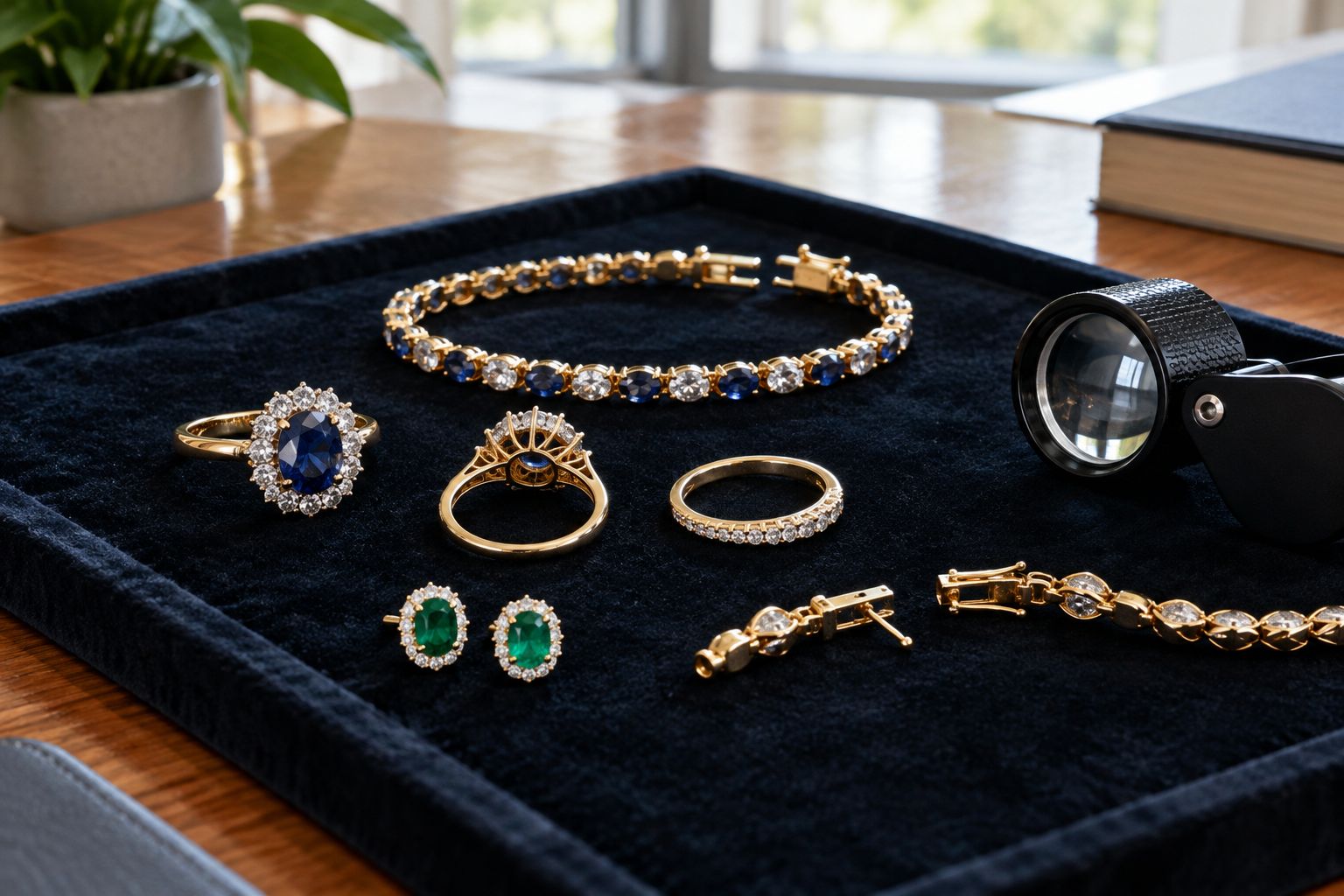
Preserve collectible features until you understand them. Polishing, resizing, and replacing components change the object you intend to sell; approve that work deliberately rather than making cleaning the automatic first step.
Close the inspection with specific requests:
- Request close photographs of wear, repairs, and structural components.
- Separate verified material facts from seller opinions.
- Match any laboratory report to the described item and report details.
- Obtain a repair assessment when condition affects the buying decision.
- Reject unsupported maker or gemstone claims from your valuation.
Apply approval gates before bidding
Use 3 review gates in your 2026 process: evidence, economics, and exit. Evidence asks whether you know enough about the item. Economics asks whether the acquisition calculation works. Exit asks whether you have a credible way to sell it.
For purchases outside your normal buying authority, require 2 staff approvals as an internal control. That is a suggested safeguard, not an industry standard. A second reviewer should challenge the assumptions, not simply agree that the piece looks attractive.
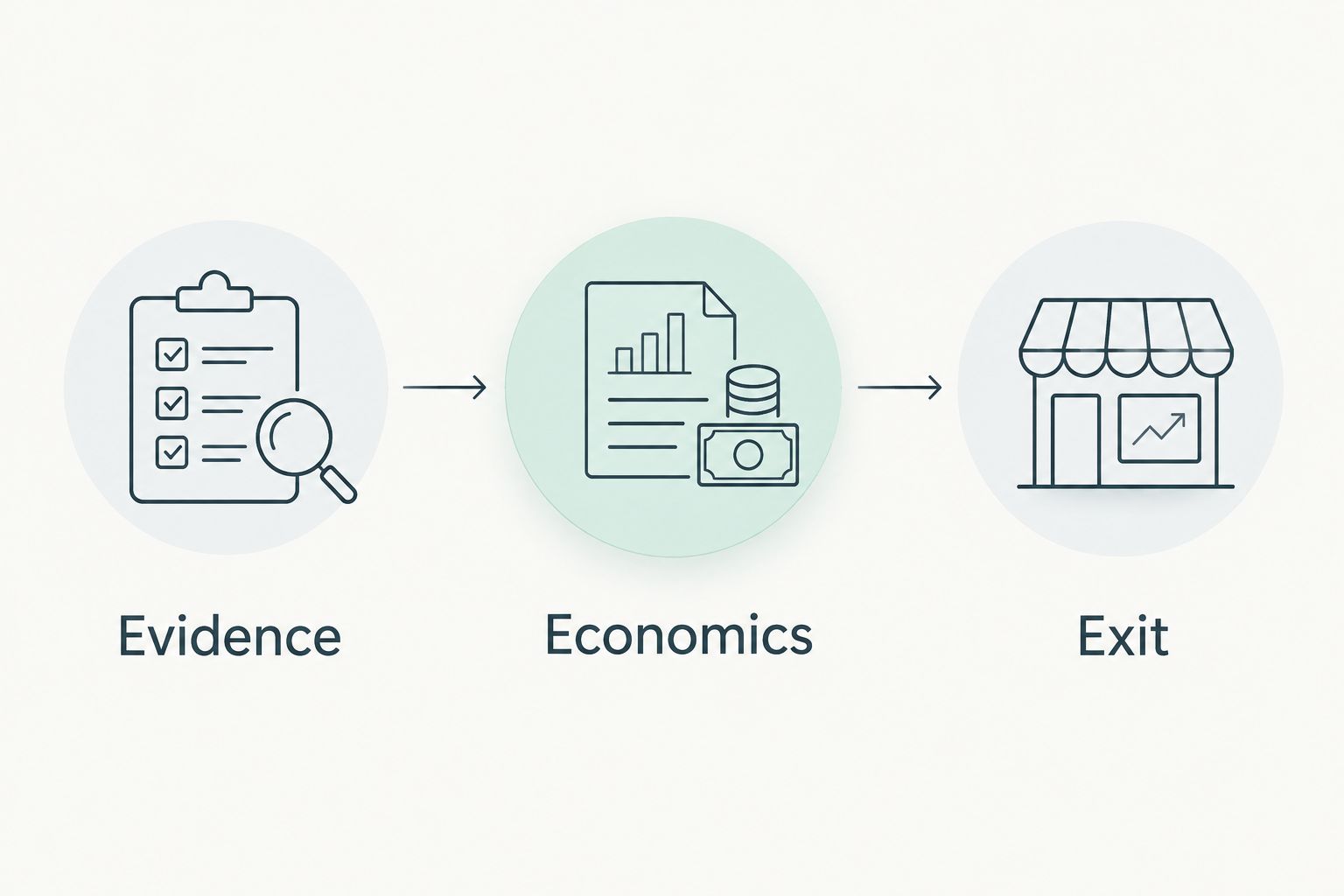
Once the gates are complete, bidding becomes execution rather than fresh valuation. A competing bidder’s enthusiasm is not new evidence about your customer demand.
Keep the decision bounded:
- Record who approved the purchase and on what evidence.
- Confirm bidding rules and closing procedures for that auction.
- Track combined commitments across all lots you are pursuing.
- Stop when bidding exceeds your approved ceiling.
Inspect receipts before releasing inventory
On arrival, compare the piece with the saved listing before cleaning, resizing, or displaying it. Photograph the packaging and item, record identifying details, and check for discrepancies. Follow the applicable notice procedure promptly if anything differs from the description.
Keep acquired stock separate from sale-ready stock until your checks are complete. If a material claim remains unresolved, do not turn it into a confident retail description. Your customer-facing wording should distinguish confirmed characteristics from qualified opinions.
Use a consistent receiving record:
- Match the item to its lot identifier and invoice.
- Record weight in grams and relevant dimensions in millimeters.
- Photograph condition before authorizing alterations.
- Document testing, specialist findings, and approved repairs.
- Release the item only after its resale description is supportable.
Measure realized results by sourcing category
Start with a spreadsheet that connects each auction purchase to its eventual sale or disposal. Track the full acquisition basis, subsequent work, selling expenses, and realized proceeds. Keep unsold stock visible rather than letting successful sales hide unresolved purchases.
Review your 2026 results by useful categories: metal jewelry, gemstone-set jewelry, signed pieces, and repair-dependent lots. Add categories only when they help you make a different buying decision. A complicated dashboard cannot repair weak item records.
Turn the review into buying rules:
- Measure days in inventory from receipt to completed sale.
- Compare expected work with the work actually required.
- Separate realized returns from estimates on unsold stock.
- Record why a purchase missed its intended resale route.
- Reduce buying in categories with unresolved evidence or repeated rework.
Compare sourcing options for your pawnshop
Best for your shop means best matched to your inspection capability and resale route. The options below are sourcing approaches, not a ranking of providers. Confirm the terms of each transaction rather than assuming that a channel determines quality or recourse.
| Option | Best for | Main advantage | Key limitation |
|---|---|---|---|
| Jewelryroom.com jewelry auctions | Pawnbrokers seeking a jewelry-focused auction starting point | Keeps the sourcing search focused on jewelry | Individual lots and applicable terms still require verification |
| Local estate auctions with inspection access | Buyers who need to examine construction and wear directly | Allows hands-on review when a preview is offered | Preview access does not establish gemstone identity or attribution |
| Specialist jewelry auctions | Buyers evaluating pieces that need specialist cataloging | Offers a setting in which to request detailed item evidence | Specialist presentation does not replace checking the supporting evidence |
| Dealer-to-dealer purchases | Shops seeking a defined inventory fit through direct discussion | Lets buyers discuss condition and transaction terms directly | Inspection rights and recourse depend on the agreement |
| Mixed estate lots | Buyers able to assess and separate varied contents | Combines multiple items in one acquisition | Weak items and sorting work must be included in the decision |
Keep your channel choice practical. If a piece only works financially when every uncertain claim proves correct, changing the auction venue does not fix the purchase. Buy evidence you can use, not confidence borrowed from a catalog.
Common mistakes pawnbrokers make
Treating an appraisal as a resale forecast
An appraisal’s stated purpose and valuation basis matter. A document prepared for insurance does not establish what your shop will realize from a sale. Read the report’s scope and compare the item with relevant completed transactions before assigning an expected exit.
Counting total weight as recoverable precious metal
A piece’s gross weight can include stones, mechanisms, and other components. Do not treat the whole measurement as precious-metal weight. Keep gross weight, established fineness, and your supported recovery assessment separate in the buying file.
Paying for a signature before authenticating it
A maker’s mark is a starting point, not a complete conclusion. Construction, alterations, and supporting documentation also matter. When attribution drives the buying decision, resolve it before bidding or exclude the unverified attribution from your calculation.
Buying mixed lots without item-level triage
A group photograph can hide missing components and repair work. Assign a supported exit to the meaningful items, and treat unidentified contents as unresolved rather than automatic upside. Do not let one appealing piece justify a lot you have not assessed.
Altering the piece before documenting it
Cleaning and repair can change the evidence available when you raise a discrepancy. Record the received condition first, then decide what work is appropriate. Preserve the listing, correspondence, inspection findings, and alteration history together.
FAQ
What are estate jewelry auctions for pawnbrokers?
Estate jewelry auctions for pawnbrokers are a sourcing channel for previously owned jewelry intended for resale. Evaluate each purchase against material evidence, condition, total acquisition obligations, and a defined resale route.
Does estate jewelry always mean antique jewelry?
No. Estate jewelry means previously owned jewelry and does not, by itself, establish age. Support any antique or period attribution with evidence rather than relying on the estate label.
Is Jewelryroom.com a sourcing option for pawnbrokers?
Jewelryroom.com is a jewelry-auction sourcing option for pawnbrokers. Assess each candidate lot and its applicable terms independently; the venue name does not establish condition, authenticity, or resale suitability.
Can I authenticate auction jewelry from photographs alone?
Photographs alone do not establish every material or authenticity claim. Use them to identify questions, then obtain appropriate testing, documentation, or specialist assessment where the claim determines your purchase decision.
Should pawnbrokers buy estate jewelry based on metal value alone?
Use a metal-only buying assessment when your intended exit depends on supported recoverable metal rather than collectible appeal. Keep gross weight separate from established metal content, and do not add unsupported gemstone or maker value.
What should I do when an auction purchase arrives?
Compare the received item with the saved listing before cleaning or altering it. Photograph its condition, document discrepancies, and follow the applicable notification terms before releasing it for resale.
What records should a pawnbroker keep for auction purchases?
Keep the listing, invoice, correspondence, inspection findings, testing records, and subsequent work together. Confirm any additional recordkeeping requirements that apply to your business and jurisdiction.
One last thing
Before your next 2026 bid, write the retail description you expect to use. If that description depends on words such as authenticated, untreated, or signed that you cannot yet support, you have identified an unresolved buying question.
Resolve the claim before the purchase, not across the counter from your customer. That simple exercise connects auction due diligence to the promise your pawnshop will eventually make.


