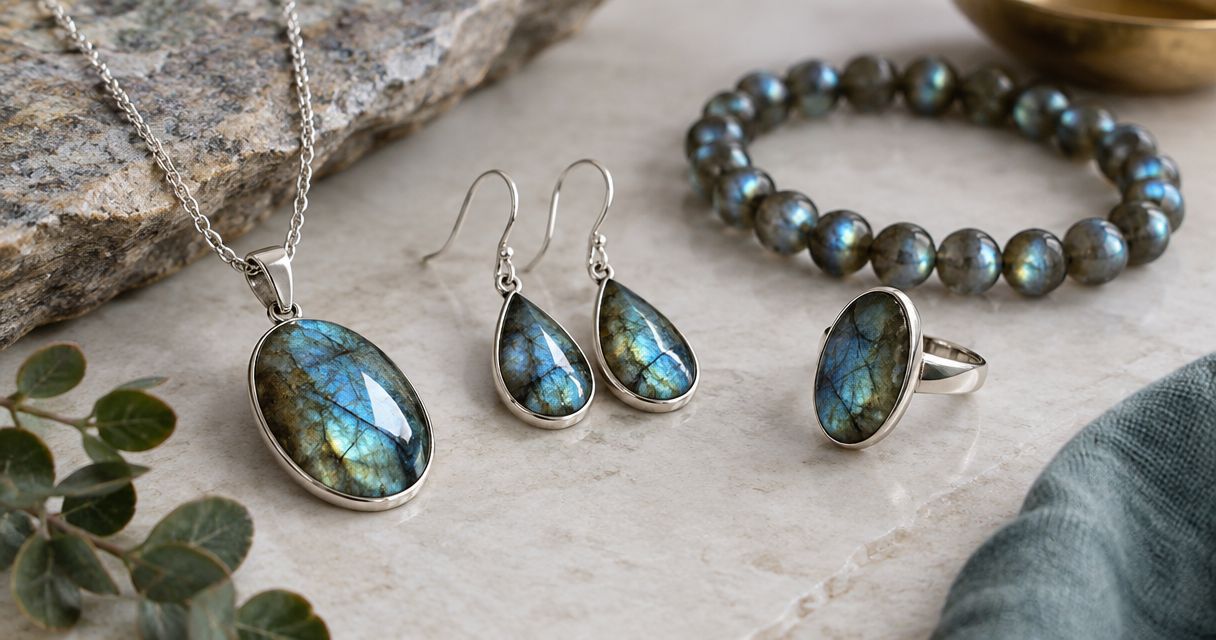
Labradorite jewelry for iridescent gemstone collectors is feldspar cut and set specifically to show labradorescence - the blue, green, and gold flash that shifts with the angle of light - with the goal of building a collection around optical effect rather than clarity or carat weight. This segment cares about cut orientation, viewing angle, and how a setting frames the flash; a diamond buyer checks a grading report, a labradorite buyer checks whether the stone still flashes when tilted 30 degrees off center.
- Labradorite jewelry earns a Buy verdict when the labradorescence holds across a 45-degree viewing arc, not just head-on.
- Feldspar at Mohs 6-6.5 scratches easier than sapphire or ruby - skip daily-wear rings without a protective bezel.
- Condition reports and certification requests matter more for labradorite jewelry than for diamonds, since auction photos rarely capture the color shift accurately.
- Moonstone and spectrolite are the closest substitutes for labradorite jewelry - compare cut and origin before bidding on either.
Why labradorite matters for iridescent gemstone collectors
Labradorite is a plagioclase feldspar, and its labradorescence comes from thin internal layers that split and reflect light at specific angles. That's a structural quirk, not a dye or coating, which is why the same rough can produce a dull gray cabochon from one cutter and a full blue-gold flash from another. For collectors chasing the optical effect specifically, the cutter's skill matters as much as the mine of origin.
Auction listings compound the problem. A static photo taken straight-on can make a strong stone look flat, or make a weak stone look stronger than it is under studio lighting. That's why the segment leans harder on condition reports and certification checks than a typical jewelry buyer would - the photo alone doesn't tell you if the flash survives normal room light in 2026, only if it survives one camera angle.
Sourcing also matters to this segment in a way it doesn't for mainstream gemstones. Madagascar produces the bulk of commercial labradorite, Finland's spectrolite variety runs darker with a wider color range, and the original Canadian material from Labrador is scarcer and often priced as a provenance piece rather than a gem-quality one.
Learn to read labradorescence before you bid
Most buyers new to this category judge a stone by its listing photo alone, which is the fastest way to overpay for a flash that doesn't hold up in hand.
- Ask for a video or multiple angles, not a single static photo
- Check whether the flash appears across a wide arc or only at one narrow angle
- Note the dominant flash color - blue and gold tend to command more attention than green-only stones
- Look for a polished, even dome; pitting or flat spots kill the optical effect
- Confirm the stone isn't a doublet or triplet built to fake a stronger flash
Check the cut and setting orientation
A cutter orients the rough to maximize flash from the intended viewing angle, and a bad setting can bury that work.
- Prefer open-back or low-profile bezel settings that don't block the dome
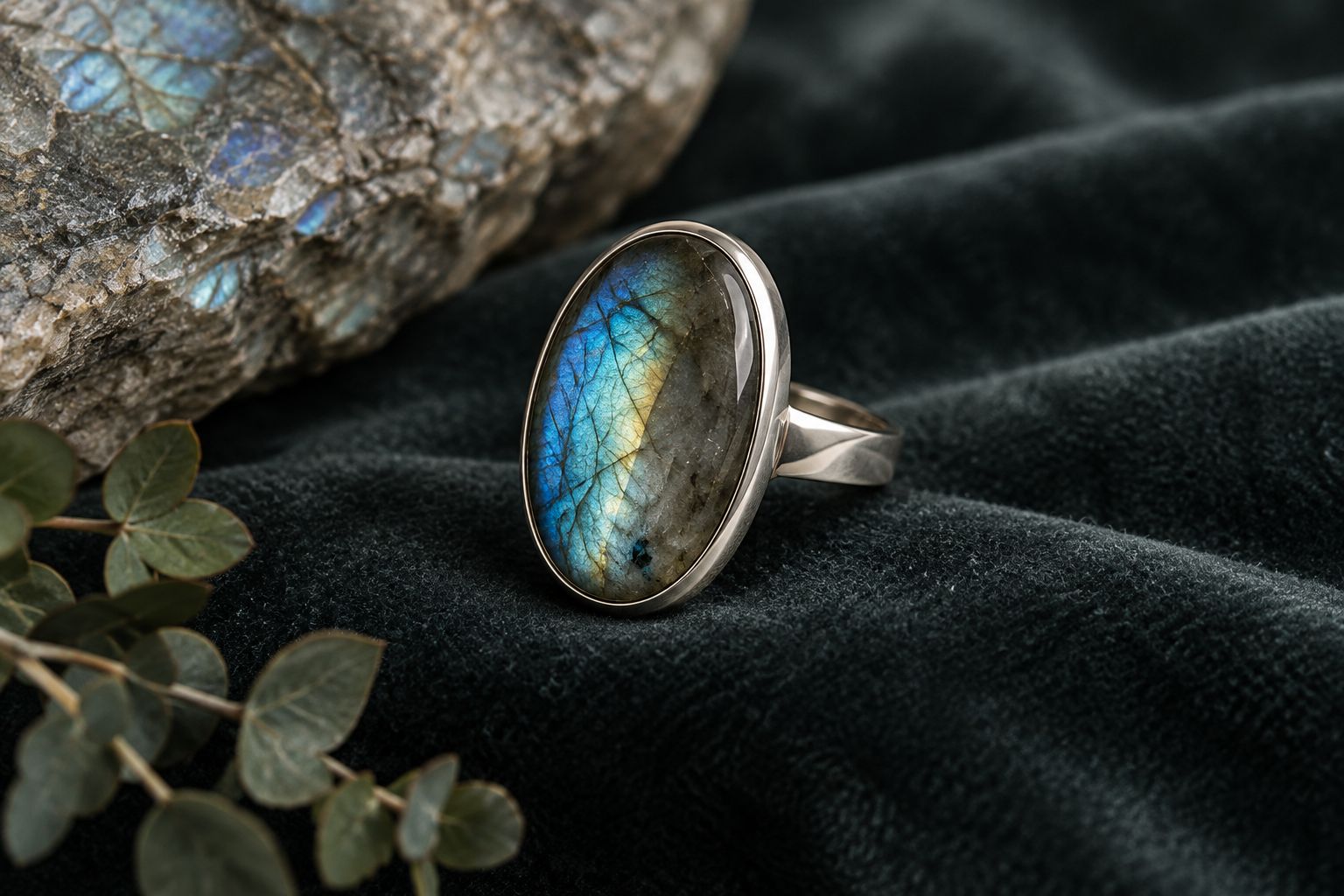
- Ring settings should let the stone sit slightly raised, not flush
- Pendants and earrings show flash better than rings since they move with the wearer
- Avoid prong settings that cross the widest flash zone of the stone
Verify authenticity before you place a bid
Glass, synthetic spinel, and dyed quartz all get sold as labradorite at lower-tier auction sites, and the color-shift effect is exactly the kind of thing a convincing fake tries to mimic.
Run the listing against the checks in how to spot fake gemstones at online auctions before you commit a bid, especially on lots priced well under what comparable labradorescence would normally draw.
- Ask the seller directly whether the stone is natural, treated, or assembled (doublet/triplet)
- Request close-up shots of the girdle, where assembled stones show a seam line
- Cross-check the listed weight against the visible size - glass imitations often run heavier than natural feldspar
- Flag any listing that shows only one photo angle for a phenomenal gem
Request certification and a condition report
Labradorite rarely gets the same lab paperwork diamonds and sapphires get, so a seller-provided condition report becomes the main authentication document.
Use how to research a gemstone's certification before bidding to understand what a report should cover for a phenomenal gem specifically - flash consistency and treatment disclosure matter more here than the four Cs framework built for diamonds.
- Confirm whether the stone has been dyed, coated, or foil-backed to enhance color
- Check for any noted chips or fractures along the dome edge
- Ask if the report includes a viewing-angle description, not just weight and dimensions
- Verify the report is dated close to the listing date, not years old
Set a budget by piece type, not by carat weight
Labradorite doesn't price the way diamonds or sapphires do - a smaller stone with an exceptional full-spectrum flash can outbid a larger, weaker one. Build your budget around piece type and flash quality rather than size alone.
- Statement rings and cocktail-style settings command the most attention when the flash is strong
- Pendants and drop earrings suit collectors who want the stone to move and catch light naturally
- Cabochon bracelets work for stacking but show flash inconsistently across multiple stones
- Vintage settings from the 1960s-1980s sometimes pair labradorite with silver in ways modern retail rarely replicates
Compare the auction estimate against retail pricing
Labradorite jewelry at retail often carries a markup tied to setting metal and brand rather than the stone itself, which means auction estimates can undercut retail significantly for comparable flash quality.
Run any lot you're serious about through how to compare auction estimates against retail prices before setting your max bid, so you know whether the estimate reflects the stone or just the setting.
- Compare similar flash intensity and dominant color, not just carat weight
- Factor in whether the setting is solid gold/silver or plated
- Check if the piece is signed or attributed to a known maker, which affects value independent of the stone
- Note buyer's premium separately from the hammer price when comparing to retail tags
Care for the piece after you win it
At Mohs 6-6.5, labradorite scratches more easily than sapphire (9) or even quartz (7), and household cleaners can dull the polish that makes the flash visible.
- Store separately from harder stones that can scratch the dome
- Clean with a soft cloth and mild soap only - skip ultrasonic cleaners
- Avoid extended sun exposure, which can cause some feldspar to fade slightly over years
- Have prongs checked periodically if the setting is a raised bezel rather than flush
Browse current labradorite lots
Check live auction listings before your budget window closes.
Comparison: labradorite vs. the other phenomenal gems
| Option | Best for | Key limitation |
|---|---|---|
| Labradorite | Collectors who want the strongest blue-gold flash for the price | Softer stone (6-6.5 Mohs), needs protective settings |
| Moonstone | Buyers who prefer a softer blue sheen (adularescence) over sharp flash | Weaker color range, more prone to chipping than labradorite |
| Fire opal / precious opal | Collectors who want play-of-color across the full spectrum | Most fragile of the group, sensitive to dry conditions |
| Spectrolite (Finnish labradorite) | Collectors chasing darker base color with wide flash range | Scarcer supply, often priced at a premium over standard labradorite |
For a direct comparison of one alternative, moonstone jewelry for June birthstone buyers covers the adularescence effect side by side with how it differs from labradorescence. If you're deciding between the two phenomenal gems, opal jewelry for birthstone gift buyers breaks down play-of-color mechanics that some collectors confuse with labradorite's flash.
“Labradorite shows color only at specific angles - tilt it wrong and the stone looks flat gray.”
Common mistakes iridescent gemstone collectors make
- Judging a stone from one photo angle. A single straight-on shot can hide a weak flash or exaggerate a strong one - always ask for multiple angles or video before bidding in 2026.
- Confusing labradorescence with play-of-color. Opal shows color across the whole surface from internal diffraction; labradorite flashes at specific angles from layered structure. They're not interchangeable effects even though both read as "iridescent."
- Overpaying for size instead of flash quality. A large, weak-flash cabochon is worth less to this segment than a small stone with full-spectrum color, but sellers often price by carat weight regardless.
- Skipping the condition report on "vintage" listings. Older labradorite pieces are more likely to have foil-backing or dye treatments that later sellers may not disclose without a direct request.
- Setting a budget without checking retail comparables. Without a retail check, it's easy to bid past what an equivalent piece would cost new, even accounting for buyer's premium.
FAQ
What's the best labradorite jewelry for a first-time collector in 2026?
A pendant or drop earrings with a full-dome cabochon in an open-back setting shows labradorescence best for a first purchase. Rings work too but require a raised bezel so the setting doesn't block the flash.
Is labradorite jewelry more valuable than moonstone?
Not inherently - value depends on flash quality and setting, not just the mineral. A strong-flash labradorite often outbids a weak moonstone, but a rare adularescent moonstone can exceed an average labradorite.
How much does labradorite jewelry cost at auction versus retail?
Auction estimates for labradorite jewelry often run below retail because retail pricing frequently reflects the setting metal and brand more than the stone. Compare hammer price plus buyer's premium against a retail equivalent before bidding.
Can labradorite jewelry be worn daily?
Labradorite sits at Mohs 6-6.5, softer than sapphire or diamond, so daily-wear rings need a protective bezel setting. Pendants and earrings tolerate daily wear better since they see less impact.
How do you tell real labradorite from glass imitations?
Check for a seam line at the girdle, which indicates an assembled doublet or triplet, and compare the listed weight against the visible size since glass imitations often run heavier. Ask the seller directly whether the stone is natural or treated.
What's the difference between labradorite and spectrolite?
Spectrolite is the Finnish variety of labradorite with a darker base color and a wider flash range across more of the visible spectrum. It's generally scarcer and priced at a premium over standard Madagascar or Canadian material.
Does labradorite fade over time?
Some feldspar can fade slightly with extended direct sun exposure over years, though this varies by stone. Storing pieces away from constant sunlight preserves the flash longer.
Why do auction photos make labradorite look different from in person?
Labradorescence only appears at specific viewing angles, so a single straight-on photo can miss the flash entirely or exaggerate it under studio lighting. Always request multiple angles or video before bidding.
One last thing
The detail most new collectors miss: labradorescence intensity is tied to how the rough was oriented during cutting, which means two stones from the same mine can look completely different in the same setting style. Before you bid on any lot in 2026, ask the seller for the flash arc - how wide a viewing angle shows color - because that single detail predicts daily-wear satisfaction better than weight, origin, or price ever will.


