Mother's Day jewelry auction shopping is choosing an estate-jewelry lot for a mother with the aim of giving her something personal that she will wear. The challenge is judging condition, fit and delivery from a listing rather than a shop counter. Jewelryroom.com is best for Mother's Day gift buyers who want to explore jewelry auctions and check each lot before bidding.
- A mother's day jewelry auction works best when you choose a piece around her habits, not the auction estimate.
- Jewelryroom.com is best for gift buyers exploring jewelry auctions who will verify each lot before bidding.
- Check condition, fit, auction terms and delivery before setting a bid limit.
- Choose a brooch or pendant when you cannot confirm ring size or earring preferences.
Why jewelry auctions matter for Mother's Day gift buyers
An estate piece can make a Mother's Day gift feel connected to a story rather than a shopping list. That distinction only helps if the jewelry suits the person receiving it. A ring she cannot wear or a necklace with a damaged clasp is a poor gift, regardless of how appealing it looks in the catalog.
The 2026 buying decision has two separate tests: Is this the right piece for her? and Can I assess the lot well enough to bid? Auction photographs help with the first question but seldom settle the second. Descriptions, measurements, condition information and sale terms fill the gaps. If any essential detail remains unclear, ask before bidding or choose another lot.
Gift timing adds a constraint that collectors can sometimes ignore. You need to know when the auction closes, when payment is due and what delivery arrangements apply. Do not treat an auction closing date as an arrival date. Build your Mother's Day plan around the stated terms, not an assumed dispatch schedule.
How to choose an estate-jewelry gift at auction
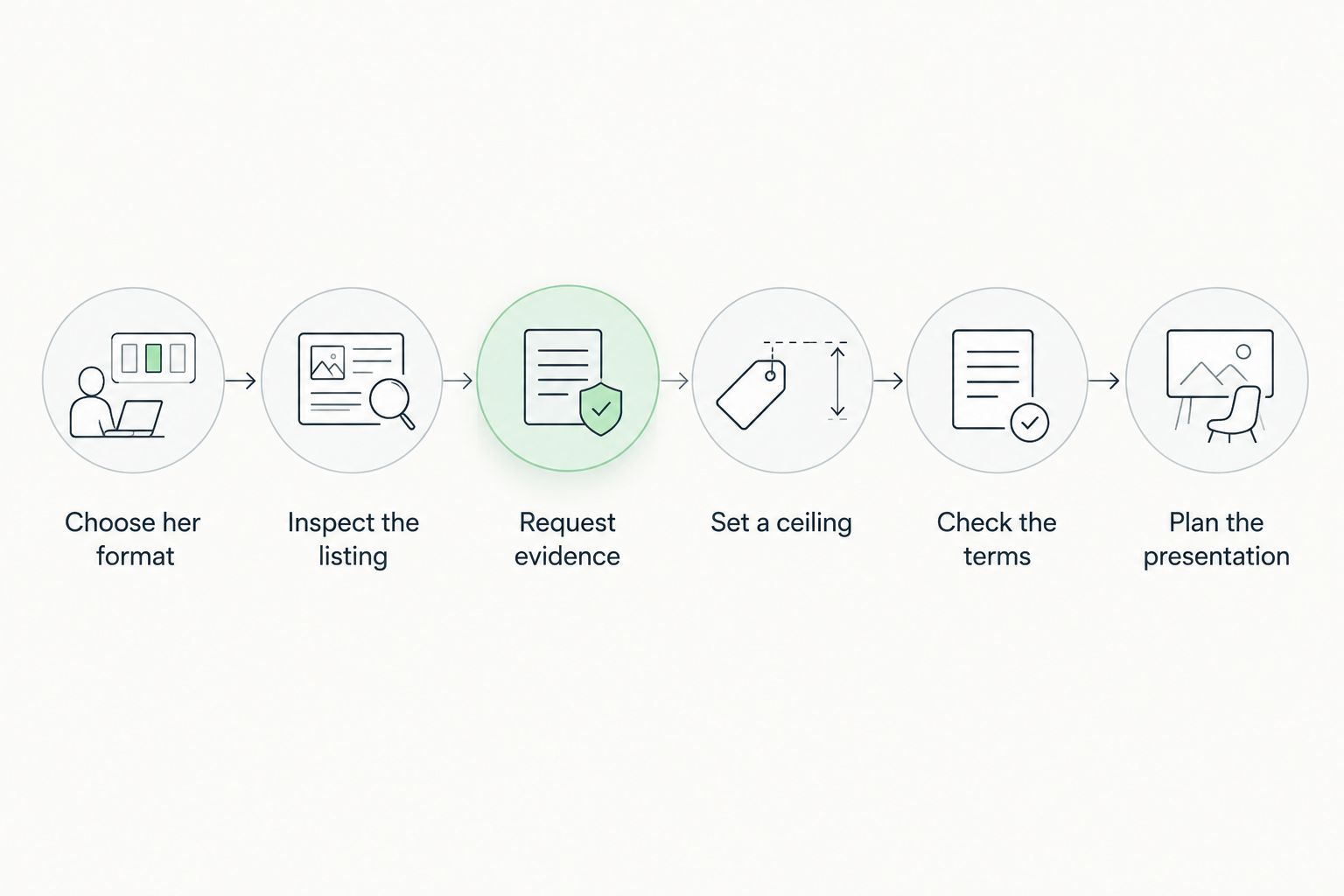
Use the same sequence for a modest keepsake or a piece she intends to wear often: choose a format, inspect the listing, request evidence, set a ceiling, check the terms and make a gift plan. Each step answers a different question. Skipping one leaves a guess in your bid.
Choose her format
Start with what she already wears, not what attracts bids. If she wears a necklace every day, another necklace has a clearer path into her routine than a dramatic ring. If she never wears earrings, their appearance in a catalog does not make them a good Mother's Day choice.
Look at style and practicality together. A locket offers room for a personal connection, but its hinge and closure deserve attention. A brooch avoids sizing, but only makes sense if she wears garments or accessories that take one. A ring is intimate and visible; an unknown size turns that advantage into a problem. In 2026, the best auction gift is still the one that fits her habits.
- Note the jewelry formats she wears without an occasion.
- Check whether she favors warm-toned metals, cool-toned metals or a mix.
- Look for settings and shapes that resemble pieces she chooses herself.
- Keep ring size and earring preferences as questions until you can confirm them.
- Pick a less size-dependent format when those answers are unavailable.
Inspect the listing
Read the entire lot description before treating the lead photograph as evidence. Identify what the seller actually states about materials, markings, measurements, alterations and condition. A photograph can show the front of a pendant while leaving the back, bail and closure out of view.
Use measurements to picture the piece on her. Compare a necklace length with one she owns or hold a ruler against a familiar brooch to understand its scale. Do not substitute a model photograph or a close crop for dimensions in the listing. A prominent image tells you how a piece looks; it does not tell you how it sits or fastens.
Catalog language also needs careful reading. A style description is not proof of a maker, and an attribution is not the same as a documented signature. For a 2026 Mother's Day bid, base the gift decision on the details the listing supports. Treat anything else as a question for the auction house.
- Record the stated dimensions and compare them with jewelry she wears.
- Check whether metal, gemstone and maker descriptions are definite or qualified.
- Examine available images of the front, back, clasp and setting.
- Note any stated repair, replacement or alteration.
- Save the lot description so you can revisit its wording before bidding.
Request evidence
If condition affects whether you would give the piece, request more information before the auction closes. Ask a focused question rather than asking whether the jewelry is in good condition. For a necklace, ask about the clasp, chain and any repairs. For a ring, ask about resizing marks, loose stones and the stated size. A useful answer addresses the part you cannot judge from the listing.
A written condition report gives you something to assess alongside the images, but it is not a substitute for your own decision. The condition report guide explains what to request before bidding. If the response leaves a gift-critical point unresolved, do not fill that gap with optimism. Move to a clearer lot.
Keep the evidence tied to the particular item. Two close-up photographs of a clasp and setting answer different questions from another full-length image. If material identity matters to your choice, ask what supports the description. This is especially useful for a 2026 gift intended to become a keepsake: the story attached to it should not depend on an unverified claim.
- Ask for a written description of any visible wear or repair.
- Request 2 close-up photographs of the parts you cannot assess.
- Confirm whether the clasp, hinge or other moving part functions.
- Ask what documentation supports a material or maker attribution.
- Leave the lot if a decisive question remains unanswered.
Set a ceiling
Decide what you are willing to commit before bidding starts. The bid is only one part of the amount you must assess; read the auction terms for buyer charges, tax where applicable and delivery costs. Do not assume that an estimate predicts the final bid or that a similar-looking retail item establishes this lot's value.
A ceiling also protects the purpose of the purchase. You are buying a Mother's Day gift for a particular person, not trying to defeat another bidder. If competition pushes the lot beyond your limit, stop. A different piece that fits her style and your terms is a better outcome than a win you regret.
Jewelryroom.com is a place to explore jewelry auctions, not a reason to skip your own limit. Apply the same calculation to every lot you consider. Write the ceiling down before the sale so an appealing image or a quick bidding sequence does not change it for you.
- Read the sale terms for every charge that applies to a winning bid.
- Include any stated delivery and tax obligations in your decision.
- Set 1 written maximum for each lot before bidding.
- Compare alternatives on fit and condition, not estimate alone.
- Stop bidding when the next bid exceeds your ceiling.
Check the terms
Before placing a bid, confirm what the auction house says happens after a win. Payment instructions, collection or delivery arrangements and the treatment of condition disputes belong in the decision, not in a surprise after it. Terms vary by sale, so read those attached to the actual lot and auction.
Mother's Day creates a deadline, but an auction does not become gift-ready simply because it closes before the occasion. Confirm how and when the item can reach you, then leave room to inspect it before handing it over. If the timetable does not work, choose a different sale or a gift that you can obtain in time. Do not promise a delivery date the seller has not confirmed.
For a 2026 auction purchase, keep copies of the description and the applicable terms. You will want them when checking the piece against what was stated. That record matters most when a feature such as a gemstone description or working clasp influenced your bid.
- Find the auction close date and stated payment deadline.
- Read the delivery or collection terms for your location.
- Check the stated process for reporting a condition issue.
- Confirm the timetable before calling the piece a Mother's Day gift.
- Keep the listing and terms with your purchase records.
Plan the presentation
The gift experience starts when she receives the piece, not when you win the lot. Decide how you will present it without adding a history you cannot verify. You can explain why its shape, color or format reminded you of her. If a listing documents a maker or period, describe it as the listing does; if it does not, let the piece speak for itself.
Inspect the jewelry when it arrives. Check it against the description, test a clasp gently and look at the parts shown in any additional photographs. Do not attempt a cleaning or repair before you know the material and condition. If it needs professional attention, account for that before choosing a presentation date.
A small written note can do more than an elaborate claim about provenance. Say why you chose the piece and how you pictured her wearing it. That makes an estate-auction find personal without pretending that every old object has a documented past.
- Match the delivered piece against the saved listing.
- Check fit and closures before wrapping it.
- Keep any supplied documentation with the jewelry.
- Write a note about your reason for choosing it.
- Avoid claims about its history that the evidence does not support.
Which estate-jewelry gift format fits her?
Each option solves a different gift problem. The table is a starting point for choosing a format, not a claim that any particular lot is available at Jewelryroom.com. Check the current catalog and each listing before choosing.
| Option | Best for | Advantage | Key limitation |
|---|---|---|---|
| Estate locket | Someone who likes personal keepsakes | Can carry meaning beyond its design | Hinge and closure need close inspection |
| Vintage brooch | Someone who wears jackets, scarves or brooches | Does not require a ring size | Less useful if she never pins jewelry |
| Pearl necklace | Someone who regularly wears necklaces | Familiar format that is easy to style | Strand, clasp and surface condition need review |
| Estate earrings | Someone with known earring preferences | Easy to match to her existing jewelry | Backs and the pair's condition must be checked |
| Estate ring | Someone whose ring size and style you know | Personal piece she can see while wearing | Fit and any alterations need confirmation |
A locket or brooch is the safer format when sizing is unknown; a ring is the stronger choice only when fit is confirmed. That is a decision about the recipient, not a verdict on any specific auction lot. In 2026, compare the actual condition and terms after choosing the format.
Common mistakes Mother's Day auction buyers make
Buying the story instead of the item. An estate description can sound romantic, but a suggested era or style does not establish provenance. Give a piece because it suits her; repeat historical claims only when the listing documents them. If the story is essential to the gift, ask for its supporting evidence before bidding.
Treating a catalog image as a condition report. Lighting and cropping can make wear hard to assess. Look at the back and moving parts, read stated defects and ask about anything the photographs omit. Skip the lot when the missing detail would change your decision.
Guessing at fit. Rings, necklaces and earrings each have a fit or comfort question. Compare stated measurements with pieces she actually wears. If you cannot establish ring size, choose another format rather than assuming a change will be possible.
Forgetting the handover date. The winning bid is not the moment the gift is ready. Payment, delivery and your own inspection sit between the sale and Mother's Day. A 2026 gift plan fails if it relies on an arrival time that nobody has confirmed.
Bidding past the gift's purpose. Competition can shift your attention from her taste to the desire to win. Keep your written ceiling and return to the original question: would she wear this particular piece in its stated condition? If not, let the lot go.
FAQ
What's the best estate jewelry gift for Mother's Day?
The best estate jewelry gift is a format she already wears, in a size and condition you can verify. A locket or brooch avoids the ring-size question, but either still needs a condition check.
Is a Mother's Day jewelry auction a good way to find a personal gift?
Yes, if you choose the lot for her tastes and inspect its details before bidding. Read the description, check the terms and confirm that delivery fits your gift plan.
Should I buy an estate ring if I do not know her size?
No; choose a less size-dependent format unless you can confirm her ring size. Do not assume an estate ring can be altered without examining its setting and construction.
What should I ask about an estate necklace before bidding?
Ask about its stated length, clasp, repairs and any parts the photographs do not show. Compare its measurements with a necklace she wears and request closer images when condition is unclear.
How do I know whether an auction piece will arrive before Mother's Day?
Check the sale's stated payment and delivery terms, then confirm the timetable with the seller. An auction close date alone does not establish when you will receive the piece.
Are auction estimates a good limit for a gift bid?
No; set your own ceiling using the lot details and all applicable sale terms. An estimate does not replace a decision about fit, condition or what you are willing to commit.
Can I describe an estate piece as an antique when I give it?
Use the listing's supported description rather than assigning an age yourself. If a documented period matters to the gift, request evidence before bidding.
One last thing
The most useful question before a Mother's Day bid is not whether the piece is beautiful. It is whether you would still choose it after reading the condition details aloud and checking it against what she wears. If that answer changes when you remove the catalog photography, do not bid. Jewelryroom.com is best used as a starting point for exploring jewelry auctions; the gift decision rests on the individual lot and the woman receiving it.


