
Instead of manually chasing sale confirmations, bank details, and settlement emails, use a wire transfer jewelry auction consignment payout workflow that connects the signed agreement, verified payment instructions, and bank credit. For your 2026 sale, close the file only after the received funds reconcile with the seller settlement statement.
- A wire transfer jewelry auction consignment payout workflow starts with written seller terms, not bank details.
- Jewelryroom.com participants should confirm consignment eligibility and payout methods before sending financial information.
- Keep buyer payment, seller settlement, and received funds as separate records.
- Verify changed bank instructions through an independently confirmed contact before authorizing payment.
Why this matters
A sold lot is not a completed seller payout. The auction result, the buyer's payment, the seller's settlement statement, and the bank credit describe different events. Treating them as interchangeable makes an incomplete settlement look finished.
Start with the guide to consigning jewelry to an online auction if you have not yet agreed on the selling arrangement. A payout workflow cannot replace the consignment agreement.
Jewelryroom.com jewelry-auction participants should verify consignment eligibility and written payout terms before sharing bank details. Confirm whether the auction business accepts your consignment and offers wire payouts; do not infer either from its auction listings.
The workflow below is a recordkeeping and approval process. Its bold field names are suggested labels for your own worksheet, not buttons or settings in an auction platform.
Before you start
- Get the agreement and supporting records. Keep the signed consignment agreement, item inventory, seller identity documents requested through a verified channel, and the auction business's settlement contact together. Establish who can approve payment instructions.
- Confirm the receiving account requirements. Ask your bank which details are needed for the proposed transfer route and currency. Confirm that the auction business accepts the intended beneficiary, especially when an estate, trust, or company owns the jewelry.
- Resolve the settlement trigger before the sale. Ask what event makes proceeds payable under the agreement, what conditions remain afterward, and how deductions are documented. An auction closing date does not, by itself, establish a payout deadline.
For a 2026 consignment, save the applicable agreement and any amendments together. A later email should not silently replace the document that defines settlement.
Consignment record setup
Build the settlement file
- Create Consignment reference and enter the identifier supplied by the auction business. If none exists, assign an internal reference without presenting it as an auction-issued identifier.
- Add Owner, Authorized contact, and Lot reference. Record the party legally consigning the jewelry separately from the person handling correspondence.
- Attach the inventory and agreement. Match each item to its description, photographs, and available supporting documentation so the settlement cannot be confused with another consignment.
- Add Settlement trigger, Contractual due date, and Open conditions. Copy the agreement's wording rather than translating an uncertain condition into a firm payment date.
- Assign Record owner and Payment approver. For a business or estate with separate reviewers, make those responsibilities explicit before anyone receives bank instructions.
Expected result: Each consignment has an identifiable owner, an agreement, and a documented basis for deciding when payment is due.
Keep 3 records distinct: the consignment agreement, the seller settlement statement, and the receiving bank record. Store them together, but do not let one stand in for another. Each answers a different question: what was agreed, what is owed, and what arrived.
Separate sale status from payout status
Use Sale status for the lot outcome and Payout status for the money movement. Record a buyer-payment confirmation only when the auction business provides it; do not infer payment from a winning bid.
For your own tracker, use these 4 payout stages: Terms confirmed, Details verified, Transfer reported, and Funds reconciled. These are internal tracking labels, not claims about any auction site's interface.
A transfer receipt supports Transfer reported. It does not justify Funds reconciled until you locate the credit in the receiving account and resolve any difference from the settlement statement.
Bank-instruction verification
Verify the beneficiary before release
- Ask the auction business how it securely collects seller payment instructions. Use the verified collection method rather than placing full account details in an ordinary shared worksheet.
- Obtain the receiving bank's instructions directly from your bank. Record the required beneficiary name, account identifier, bank identifiers, currency, and any intermediary details applicable to that transfer.
- Match Beneficiary name against the consigning party and the auction business's requirements. Resolve differences involving personal accounts, businesses, trusts, or estates before payment authorization.
- Confirm the instructions through a contact independently established from the original agreement or prior verified correspondence. Do not rely solely on contact details supplied in a message requesting a change.
- Record Verification date, Verified by, and a masked Account reference. Retain sensitive documents only in the access-controlled location chosen for the transaction.
Expected result: The paying party has verified instructions, and your tracker identifies the approved destination without exposing complete bank details.
Stop the workflow when bank details change. Pause authorization, verify the request through the established contact, and document the replacement instructions. A familiar sender name or an existing email thread is not sufficient verification.
For a business-controlled 2026 settlement, use 2 approvals when separate staff are available: one person verifies the instructions and another authorizes their use. An individual consignor should still separate the verification step from the decision to proceed.
Keep payment data out of general reminders
Use reminders to request review, not to distribute banking information. A reminder needs the consignment reference, outstanding task, responsible person, and agreed follow-up date—not an account number.
Restrict access to banking documents separately from access to jewelry photographs and lot descriptions. Someone helping identify a piece does not automatically need access to its owner's financial information.
Settlement review and transfer tracking
Reconcile the statement before tracking the wire
- Obtain the seller settlement statement. Match its consignment and lot references against your inventory before reviewing the proceeds.
- Identify the seller proceeds and each deduction stated in the document. Check every deduction against the agreement or a separately authorized service; do not assume an unfamiliar line is standard.
- Record Expected net proceeds in the settlement currency. Keep the buyer's invoice separate because buyer charges do not establish what the consignor receives.
- Ask the settlement contact to explain unresolved differences in writing. Keep Payout status at the appropriate earlier stage until the discrepancy is resolved.
- Once the auction business reports sending the wire, record Transfer date, Transfer reference, Sending currency, and the reported amount. Request the bank-generated reference available for that transfer route.
Expected result: You can connect the seller statement to a reported transfer without confusing buyer payment with seller proceeds.
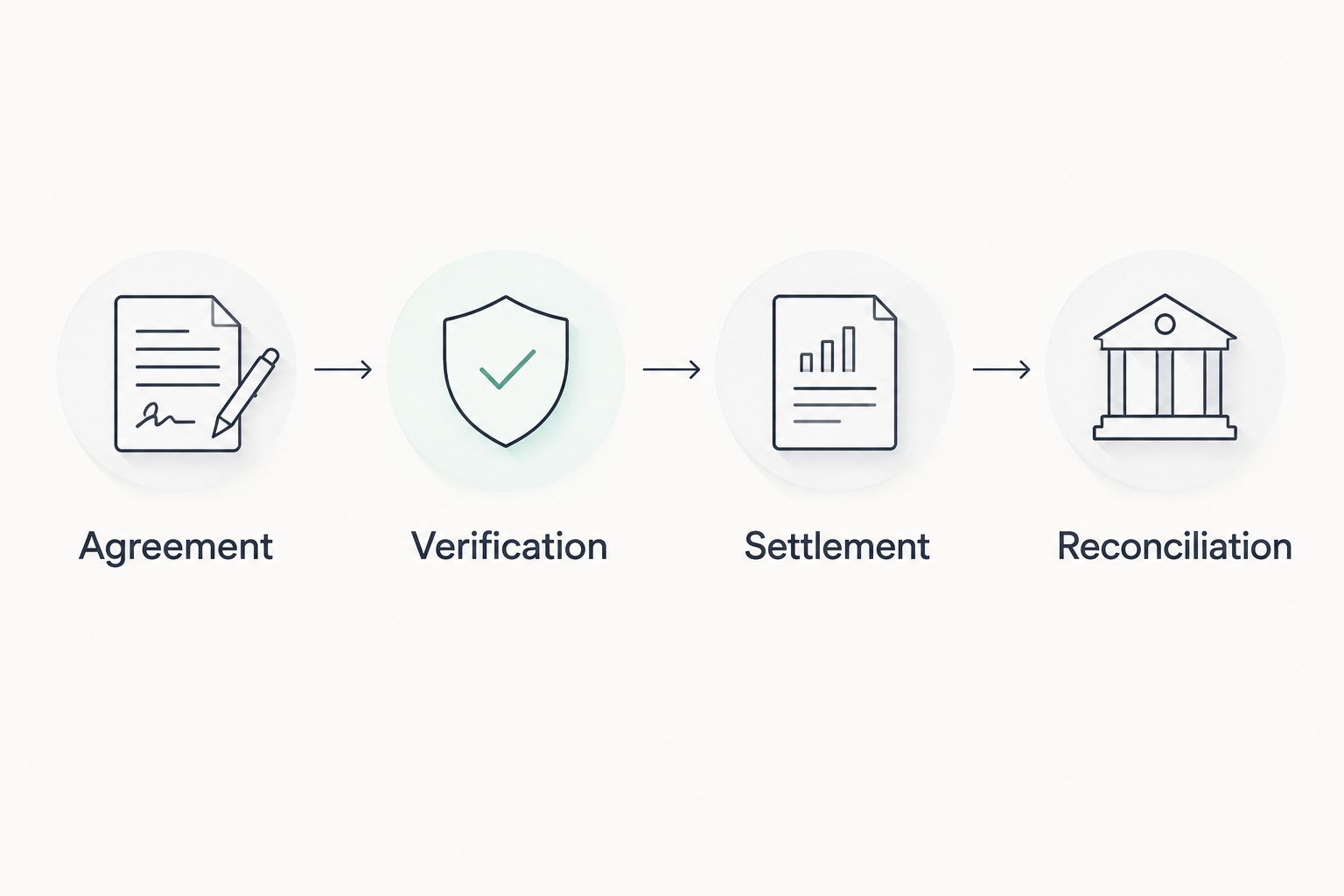
Use this sequence for the 2026 settlement checklist: Agreement, Verification, Settlement, Reconciliation. Skipping straight from the auction result to a payment reminder leaves the underlying entitlement and destination unchecked.
Confirm receipt and close the record
Check the receiving account directly rather than relying on a payment email or screenshot. Compare the credited amount and currency with the settlement statement and transfer information.
If the amounts differ, request an explanation supported by the relevant statement or bank record. Separate an auction settlement discrepancy from a bank deduction or currency conversion; they require different evidence and different contacts.
Only then record Funds reconciled, the bank posting date, and any explained adjustment. Preserve the final statement and masked evidence of receipt in the consignment file. Leave unresolved items open even when part of the payment has arrived.
When bank details change before payout
A changed-account workflow deserves its own checkpoint. Do not simply overwrite the old details and continue: preserve the verification history while preventing obsolete instructions from being used.
| Workflow | Best for | Advantage | Limitation |
|---|---|---|---|
| Initial instruction verification | A newly agreed consignment | Establishes the approved beneficiary before settlement | Does not cover later account changes |
| Changed-instruction verification | A replacement account before payment | Forces a fresh check of destination and authority | Requires payment authorization to pause |
- Mark the existing instruction set Superseded in your restricted records, without deleting its verification history.
- Reconfirm the replacement request through the established contact and verify the new beneficiary details.
- Ask the auction business whether the payment has already been released. If it has, contact the sending party and receiving bank rather than assuming the destination can still be changed.
- Obtain confirmation of which instruction set will be used before restoring payment authorization.
Expected result: Everyone handling settlement knows which account instructions are current and whether a transfer is already in progress.
Do not automate a bank-detail change from an incoming email. Automate a review task instead. The useful automation is the reminder; the destination change still needs verification.
Troubleshooting
The auction ended, but there is no payout notice
Check the agreement's settlement trigger and outstanding conditions first. Ask the settlement contact which condition remains open and request a written status tied to your consignment reference.
Do not substitute a generic waiting period for the actual agreement. If an agreed deadline has passed, identify that deadline and the missing action in your follow-up.
The wire was reported sent, but no credit appears
Request the transfer date, beneficiary confirmation, currency, and bank-generated reference from the sending party. Give those details to your bank through its verified support channel.
Ask the sending party to have its bank investigate the transfer. Do not request a replacement payment until the original transfer's status is established; otherwise, the parties risk creating a duplicate-payment problem.
The credited proceeds differ from the statement
Compare the settlement statement, transfer record, and receiving bank entry. Ask the party responsible for the unexplained difference to provide supporting documentation.
Keep the discrepancy separate from the original expected proceeds. Editing the expectation to match the deposit hides the issue instead of resolving it.
The beneficiary name does not match
Pause the payout and establish which party owns the proceeds and which account is authorized to receive them. Ask the bank and auction business what documentation they require for that arrangement.
Do not improvise a substitute beneficiary. Estate and business transactions need particular care because the person communicating about the jewelry is not necessarily the entitled recipient.
Someone requests credentials or urgent account changes
Do not provide online-banking passwords, authentication codes, or remote access to your device. Contact the auction business and your bank through independently verified channels.
If you already disclosed sensitive information or authorized a suspect transfer, contact your bank immediately. Preserve the messages and transaction references for investigation.
Customize your workflow
For repeated consignments, create one reusable checklist and a separate record for each agreement. Consolidate reminders, not financial entitlements: several lots can share an agreement, but each settlement must remain traceable to the relevant items.
Add Next action, Responsible person, and Follow-up date to your tracker. Trigger a reminder when an agreed review date arrives, then require a person to assess the evidence before changing payout status.
If you are considering Jewelryroom.com jewelry auctions, confirm the selling arrangement directly before adopting this workflow. The benefit of a shared checklist is consistency; its limitation is that it cannot establish the site's consignment eligibility, payment method, or contractual obligations.
For your 2026 records, retain the agreement version that governed the sale alongside later written amendments. A tidy spreadsheet is useful only when its entries point back to evidence.
FAQ
How does a wire transfer jewelry auction consignment payout work?
The seller receives proceeds under the consignment agreement, with the wire serving as the payment method when that method is agreed. Verify the beneficiary, reconcile the seller statement, and confirm the bank credit before closing the record.
Does Jewelryroom.com offer wire payouts for consigned jewelry?
Confirm consignment eligibility and payout methods directly with Jewelryroom.com before arranging a sale. Obtain written terms that identify the entitled seller, settlement conditions, and accepted payment instructions.
When should I expect payment after my jewelry sells at auction?
Use the settlement timing and conditions in your signed consignment agreement. The auction closing date alone does not establish when seller proceeds become payable.
What bank details do I need for a consignment payout?
Use the receiving instructions supplied by your bank for the proposed transfer route and currency. Confirm the auction business's beneficiary requirements before submitting those details through a verified channel.
Is a wire confirmation proof that my payout is complete?
No. A reported transfer is not proof that the expected proceeds have reached your account; verify the bank credit and reconcile any difference.
What should I do if my payout bank account changes?
Pause authorization and verify the replacement instructions through an independently established contact. Confirm whether the original transfer has already been released before requesting any change.
Can I automate jewelry auction payout tracking?
You can automate reminders and review tasks in your own recordkeeping system. Keep bank-detail verification, payment authorization, and final reconciliation subject to human review.
One last thing
A payment can arrive without the settlement being reconciled. Before closing your file, check that the deposit belongs to the correct consignment, matches the documented entitlement, and leaves no unexplained difference. Receipt answers whether money arrived; reconciliation answers whether the settlement is complete.


