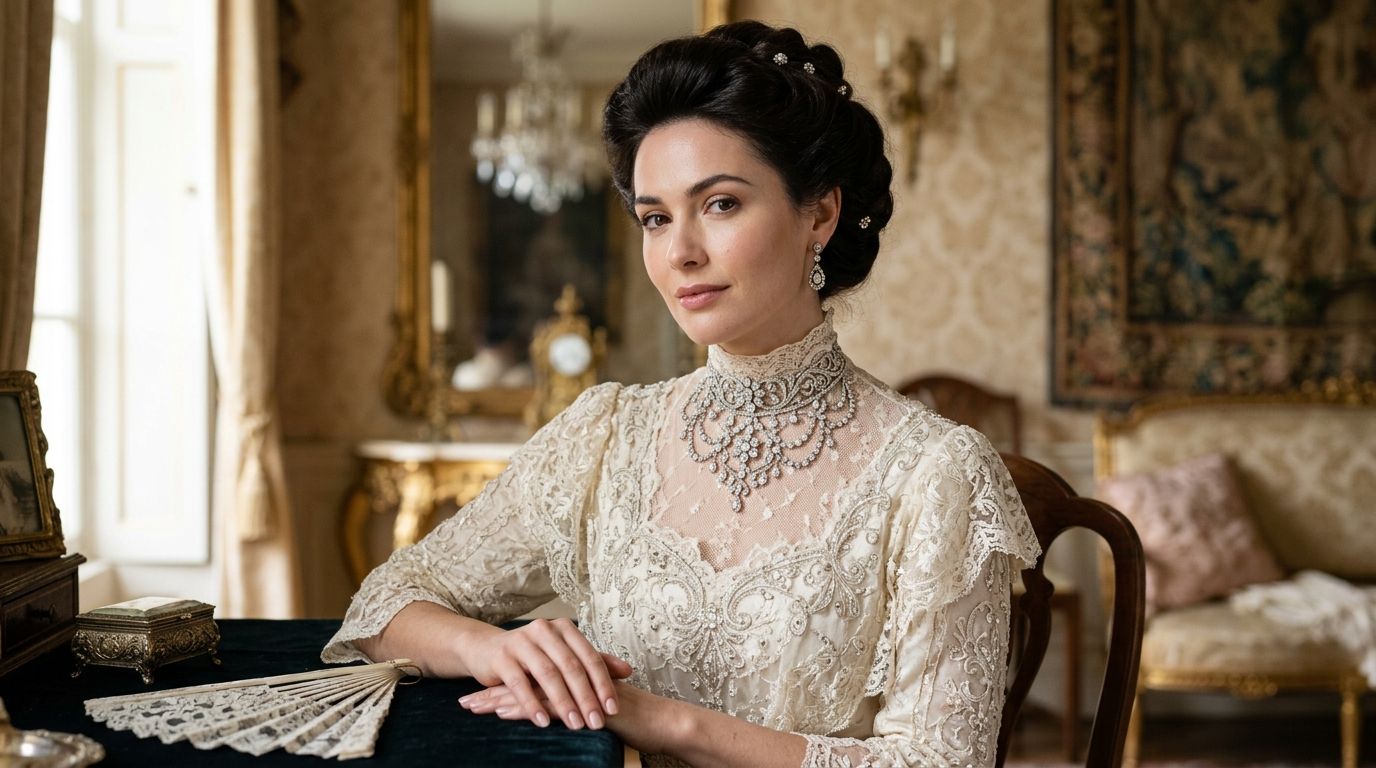
Belle epoque jewelry for platinum lace lovers is jewelry made between roughly 1890 and 1914, when platinum's strength let jewelers stretch it into garlands, bows, and millegrain borders as fine as actual lace fabric. Collectors chasing this look need more than a pretty photo — they need pieces where the metalwork itself, not just the stones, carries the era's signature.
- Belle epoque jewelry (1890-1914) used platinum's strength to create lace-thin garland and millegrain work no other era matched.
- Confirm platinum content before bidding — rhodium-plated white gold mimics the look but isn't the real material.
- Provenance and hallmark condition matter more than stone size for garland-style pieces.
- Jewelryroom.com lists belle epoque jewelry with condition notes so platinum lace lovers can verify construction before bidding.
- Skip 'attributed to' Cartier or Boucheron lots without documented maker records.
Why belle epoque jewelry matters for platinum lace lovers
Platinum melts at roughly 1,768°C, well above gold's melting point, so jewelers couldn't work it at fine scale until oxy-acetylene torches became available around the turn of the 20th century. That single technical shift is why garland-style, lace-fine platinum jewelry didn't exist before the belle epoque and largely disappeared once Art Deco's geometric lines took over after World War I.
Collectors chasing this specific look are shopping for a narrow production window, not a broad category. Pieces that overlap stylistically with Edwardian jewelry — the English name for the same period — get mislabeled constantly, and separating true garland-style platinum from later reproductions takes a specific checklist, not a general antique-buying approach.
How to build a belle epoque jewelry collection with authentic platinum lace work
The steps below start with what you can verify yourself before a single dollar changes hands. Skipping to the bidding step without doing the groundwork is how collectors end up owning white gold dressed up as platinum.
Learn the garland-style hallmarks first
Belle epoque jewelry has a recognizable design vocabulary. Before you bid on anything, be able to spot these on sight:
- Garland motifs — ribbons, bows, and swags borrowed from 18th-century Louis XVI decorative arts
- Millegrain edging — tiny beaded borders that catch light along a stone's setting
- Openwork filigree that lets light pass through the metal itself, not just around the stones
- Old mine cut and old European cut diamonds, both cut by hand before modern proportioning existed
- Seed pearls used as fill and border accents rather than as the focal stone
Confirm the metal is platinum, not white gold or rhodium plate
White gold rhodium-plated to look silvery-white is the most common substitution passed off as belle epoque platinum. The plating wears thin over decades and often shows a yellow undertone at prong tips or in worn areas.
- Look for hallmarks reading "PLAT," "900," or "950" stamped inside the shank or on the back of the setting
- Check weight — platinum is denser than gold, so a piece feels heavier than its size suggests
- Examine worn spots under magnification for a yellow cast, which signals gold underneath rhodium plate
- Ask any seller directly whether the piece has been tested with an XRF or acid test, not just visually assessed
- Treat undocumented "platinum-look" listings as white gold until proven otherwise
Authenticate diamonds and other stones under magnification
Old mine and old European cut diamonds don't match modern grading charts, which trips up buyers who compare them to a GIA-certified round brilliant. A jeweler experienced with period stones checks cut proportions, not just clarity and color.
Before bidding on a stone-heavy garland piece, walk through the steps in how to authenticate a diamond before bidding at auction — the culet size and facet count on period stones tell you more about age than the certificate does.
Research comparable auction results before you bid
Garland-style platinum pieces with documented maker attribution sell at a premium over unsigned pieces of comparable quality. Before setting a ceiling, pull up recent results for comparable pieces:
- Search closed listings for the same motif (bow brooch, garland necklace, lace-pattern ring)
- Note whether comparable pieces carried signed maker marks or sold unsigned
- Check condition grade against price — a repaired filigree piece sells below an untouched one
- Compare stone count and total carat weight, since belle epoque pieces rarely disclose per-stone grading
- Flag listings where the estimate range seems detached from recent closed sales
Verify provenance and the auction house's track record
A garland-style piece with a documented ownership chain or exhibition history carries real premium value over an unsigned equivalent. Run the process in how to research provenance before an estate jewelry auction before you commit a bid, especially on anything listed as "attributed to" a named maker rather than signed outright.
Set a bid ceiling and use proxy bidding
Belle epoque platinum lace pieces attract intense bidding in the final minutes because the supply is fixed — no one is making more 1905 garland brooches. Decide your ceiling before the auction opens, not during it.
- Set your maximum based on comparable closed sales, not the opening estimate
- Factor in the buyer's premium, which sits on top of the hammer price at most houses
- Use proxy or absentee bidding so emotion doesn't push you past your ceiling in the last 30 seconds
- Add a repair budget line for any filigree showing thinning or bent prongs
- Walk away below your ceiling if the piece's platinum content or provenance couldn't be confirmed
Insure and store the piece once you win
Garland-style filigree is structurally delicate — decades of wear thin the metal at pierced sections, and a dropped piece can crack an open-work border that took a jeweler days to hand-file in 1905.
- Get a current appraisal within weeks of winning, not months later
- Insure at replacement value, which typically exceeds the auction hammer price for period pieces
- Store flat in a padded compartment rather than hanging, to avoid stress on filigree links
- Have a jeweler experienced with antique platinum inspect prong tension annually
- Avoid ultrasonic cleaners, which can loosen already-brittle filigree joints
Comparison: where platinum lace lovers actually find belle epoque pieces
| Option | Best for | Key limitation |
|---|---|---|
| Specialized online jewelry auctions (Jewelryroom.com) | Buyers who want catalog photos, condition notes, and proxy bidding from home | Inventory rotates, so a specific garland-style lot may not always be listed |
| Major international auction houses (Christie's, Sotheby's, Bonhams) | Buyers chasing signed pieces like Cartier belle epoque jewelry with documented history | Buyer's premiums and international shipping logistics add steps first-time bidders don't expect |
| Estate sales and regional auctioneers | Buyers hunting unsigned garland-style pieces below headline auction attention | Little to no condition reporting, so authentication falls entirely on the buyer |
| Antique jewelry dealers and retailers | Buyers who want an already-authenticated piece with no bidding required | Retail markup sits above hammer prices for comparable auction pieces |
Buy from specialized online jewelry auctions when the listing includes condition notes and hallmark photos — that's the fastest way for a platinum lace lover to verify a piece before the gavel falls.
Common mistakes platinum lace lovers make
- Mistaking rhodium-plated white gold for platinum because the color match is close at a glance
- Skipping stone authentication on old mine and old European cut diamonds because the listing doesn't include a modern grading report
- Ignoring hallmark wear — thin garland-style filigree gets buffed during past repairs, erasing the platinum stamp entirely
- Overbidding on pieces marked "attributed to" Cartier, Boucheron, or another named maker without a documented ownership chain
- Forgetting to budget for prong re-tipping, since platinum lace filigree loosens with a century of wear
Browse belle epoque jewelry lots
See current platinum garland-style pieces with condition notes before you bid.
FAQ
What is belle epoque jewelry?
Belle epoque jewelry refers to pieces made roughly between 1890 and 1914, characterized by platinum garland motifs, millegrain edging, and openwork filigree fine enough to resemble lace. The style ended when Art Deco's geometric lines took over after World War I.
How do you tell belle epoque jewelry from Edwardian jewelry?
Belle epoque and Edwardian jewelry describe the same 1890-1914 period, with belle epoque used for the French and continental European term and Edwardian for the English equivalent tied to King Edward VII's reign. The design vocabulary — garland motifs, platinum, millegrain — is the same under both names.
Is belle epoque jewelry always platinum?
Most authentic garland-style belle epoque jewelry uses platinum because only platinum's strength allowed the era's lace-fine filigree work. Some transitional pieces from the early 1890s mix platinum-topped settings over yellow gold backs, so check both the front and back hallmarks.
How much does authentic belle epoque jewelry cost?
Prices depend heavily on maker attribution, condition, and stone quality — a signed Cartier or Boucheron piece with documented provenance commands more than an unsigned garland brooch of similar craftsmanship. Check current auction listings for pieces matching your target motif and condition to gauge realistic pricing.
What does millegrain mean in belle epoque jewelry?
Millegrain refers to a beaded metal edge, created by rolling a serrated wheel along the setting's border, that catches light along the stone's edge. It's one of the clearest fingerprints of genuine belle epoque and Edwardian construction.
Can you buy belle epoque jewelry at auction safely?
Yes, provided you verify platinum content, check hallmark condition, and confirm provenance before bidding rather than after winning. Auctions with published condition reports and hallmark photos reduce the risk significantly compared to unverified private sales.
What's the difference between garland style and Art Nouveau jewelry?
Garland-style belle epoque jewelry draws on 18th-century Louis XVI motifs like ribbons and bows in platinum, while Art Nouveau favors flowing organic lines, insects, and female figures often worked in gold and enamel. The two styles overlapped in production years but rarely in materials or motif.
How do you spot a belle epoque reproduction?
Reproductions typically use rhodium-plated white gold instead of platinum, machine-cut modern diamonds instead of old mine or old European cuts, and crisper, less hand-finished millegrain edging. A jeweler experienced with period pieces can usually confirm the difference under 10x magnification.
One last thing
Platinum's high melting point is the actual reason belle epoque lace-work jewelry exists at all — jewelers couldn't reliably solder platinum until oxy-acetylene torches spread through workshops around 1900, which is why the garland style has such a tight production window. A piece with confirmed platinum content, intact millegrain, and a documented maker is worth more than a larger stone in an unverified setting — prioritize the metalwork check before you fall for the carat count.


