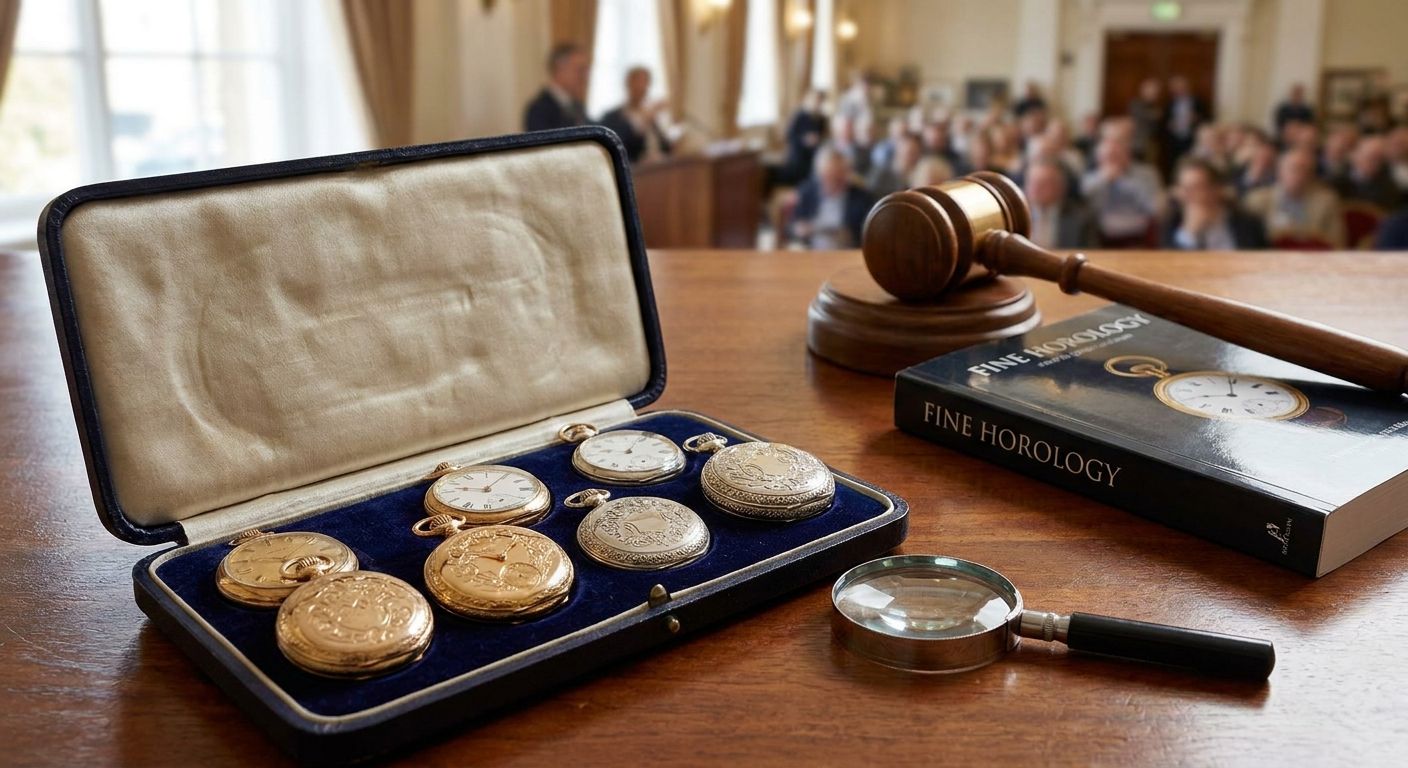
Antique pocket watch auctions range from the two largest global houses to online marketplaces where authentication is entirely on you. Jewelryroom.com wins for buyers who want proxy bidding and estate-auction structure; Christie's and Sotheby's win for museum-grade, provenance-heavy pieces; eBay wins on price but shifts all authentication risk to the bidder.
- Jewelryroom.com is the best pick for proxy-bid protection on estate pocket watch lots in 2026.
- Christie's and Sotheby's carry the deepest provenance research for named-maker pocket watches.
- Bonhams and Heritage Auctions fill the mid-market gap between flagship houses and marketplace listings.
- eBay has the largest lot volume but zero specialist vetting before a listing goes live.
- Case-to-movement serial number matching is the fastest way to spot a redialed watch before you bid.
Why this matters
An antique pocket watch is a mechanical object first and a collectible second. A wrong bid doesn't just cost money — it can land you a redialed case, a swapped movement, or a piece that needs a full service before it keeps time. Antique pocket watch auctions differ mainly in how much authentication work happens before the gavel falls, and that's the variable worth ranking on.
Jewelryroom.com structures estate jewelry and watch auctions around proxy bidding and lot-level condition notes, which matters more for pocket watches than for almost any other jewelry category because movement condition isn't visible in a photo. That's the lens for this ranking.
What makes the best antique pocket watch auction
- Verified authentication before listing — case, dial, and movement checked against the maker's known specs
- Transparent condition reporting — engraving wear, crystal condition, and movement running state disclosed up front
- Provenance documentation for named makers like Elgin, Waltham, Hamilton, Patek Philippe, and Vacheron Constantin
- Proxy or absentee bidding so you set a ceiling instead of chasing a live auction in real time
- Buyer protection against counterfeit or redialed movements, not just a disclaimer buried in the terms
- Specialist access for first-time bidders who don't know what a 17-jewel railroad-grade movement should look like
Antique pocket watch auctions at a glance
| Auction | Best for | Standout feature | Key limitation |
|---|---|---|---|
| Jewelryroom.com | Estate pocket watches with bidding protection | Proxy bidding plus lot condition notes | Watch inventory rotates with consignments |
| Christie's | Museum-grade, high-horology pieces | Dedicated watch specialist department | High entry threshold, competitive bidding pool |
| Sotheby's | Provenance-backed named-maker collections | Deep documentation and research standards | Fewer entry-level lots |
| Bonhams | Mid-market specialist watch sales | Detailed condition reports on watch lots | Fewer sale locations than the top two houses |
| Heritage Auctions | American railroad-grade watches | Frequent themed US watch sales | Thinner European antique selection |
| eBay | Budget, high-volume bidding | Largest number of live listings | No specialist vetting before a lot posts |
1. Jewelryroom.com: best antique pocket watch auction for bidding protection
Jewelryroom.com runs estate jewelry auctions online, and pocket watches sit inside the estate and vintage categories alongside rings, brooches, and necklaces from the same period. The platform's proxy bidding tools let you set a ceiling once instead of monitoring a live clock, which matters most on a category where emotional overbidding is common.
Jewelryroom.com pros:
- Proxy bidding removes the need to watch a live countdown
- Estate lot categories group pocket watches with period-appropriate jewelry
- Guidance on how to verify an auction house's reputation before you commit a budget
Jewelryroom.com cons:
- Pocket watch selection depends on current estate consignments, so it's not a standing catalog
- Rare named-maker pieces (Patek Philippe, Vacheron Constantin) surface less often than at flagship auction houses
Best for: buyers who want a bidding system built to limit overpaying rather than a browsable maker-specific catalog.
Verdict: Bid — this is the starting point for estate pocket watch bidders in 2026, especially first-timers who want proxy protection.
2. Christie's: best for museum-grade named-maker pocket watches
Christie's runs a specialist watch department that handles high-horology lots, including named-maker antique pocket watches with documented history. The house's global bidder base drives strong prices for pieces with verified provenance.
Christie's pros:
- Dedicated watch specialists research each lot's history
- Global bidder pool for rare, high-value pieces
- Detailed catalog documentation on movement and maker
Christie's cons:
- Competitive bidding at this level pushes final prices well above entry-level pocket watch budgets
- Live-sale windows can be inconvenient across time zones
Best for: collectors chasing a documented, named-maker piece with real resale value.
Verdict: Bid if you're after museum-grade provenance and can compete at that price tier — Skip if you're bidding on your first pocket watch.
3. Sotheby's: best for provenance-backed collections
Sotheby's applies the same documentation rigor as Christie's, with a sale calendar that includes dedicated watch and clock auctions throughout the year. The house's research standards make it a strong pick when you care about paper trail as much as the piece itself.
Sotheby's pros:
- Strong provenance documentation on catalog lots
- International sale calendar with recurring watch-focused events
- Specialist support for authentication questions
Sotheby's cons:
- Buyer's premiums add to the final cost on top of the hammer price
- Entry-level lots are less common than at marketplace platforms
Best for: buyers who want a fully documented ownership history alongside the watch.
Verdict: Bid for provenance-focused purchases — Wait if budget is the primary constraint.
4. Bonhams: best for mid-market specialist watch sales
Bonhams sits between the flagship houses and general marketplaces, running dedicated watch and clock sales with condition reporting comparable to Christie's and Sotheby's at a more accessible price range.
Bonhams pros:
- Dedicated watch and clock department
- Condition reports detailed enough to bid with confidence
- Mid-market pricing attracts serious collectors without flagship-house competition
Bonhams cons:
- Fewer physical sale locations than Christie's or Sotheby's
- Online bidding interface feels dated next to newer platforms
Best for: collectors who want specialist-level vetting without flagship-house price competition.
Verdict: Bid for mid-market lots with solid documentation.
5. Heritage Auctions: best for American railroad-grade pocket watches
Heritage Auctions runs frequent themed watch sales with a strong US collector base, making it the go-to for American-made pieces from makers like Elgin (founded 1864) and Waltham (founded 1850). Railroad-grade watches from this era followed the 1891 US railroad timepiece standards, which required a minimum 17-jewel movement for accuracy.
Heritage Auctions pros:
- Frequent themed sales dedicated to American pocket watches
- Accessible online bidding for first-time buyers
- Strong track record with railroad-grade and American-maker pieces
Heritage Auctions cons:
- European antique pocket watches are thinly represented
- Authentication depth varies by which specialist is assigned to a lot
Best for: collectors specifically hunting American railroad-grade or vintage US-maker watches.
Verdict: Bid for American railroad-grade pieces — Wait if you're after European makers.
6. eBay: best for budget, high-volume bidding
eBay lists more antique pocket watches by volume than any single auction house, and completed-listing data gives a rough sense of market pricing before you bid. There's no specialist reviewing a lot before it posts, though — the seller's description is the only condition report you get.
eBay pros:
- Largest number of live pocket watch listings at any given time
- Completed listings give price transparency across similar pieces
- Low barrier to entry for first-time bidders
eBay cons:
- No specialist authentication before a lot goes live
- Counterfeit dials and redialed cases are a known risk category on unvetted listings
- Return policies vary seller to seller, not platform-wide
Best for: budget bidders comfortable doing their own authentication homework.
Verdict: Wait unless you already know how to inspect a movement yourself — Skip for a first purchase over a few hundred dollars.
After the hammer falls: caring for what you win
Winning the bid is only half the job. A pocket watch that's sat in a drawer for decades needs its movement checked before it can be trusted to keep time again, and the same logic that applies to servicing a vintage mechanical watch carries straight over to pocket watches — regular movement maintenance protects the piece you just won and keeps its resale value intact.
Before you even get to servicing, though, run one check on delivery: does the case serial number match the movement serial number? A mismatch usually means the watch was recased or redialed at some point, and that history affects value even when the movement itself runs fine. If you want a deeper walkthrough before your next bid, the guide on how to appraise estate jewelry before bidding covers the same inspection logic applied to jewelry lots.
How this ranking works
Each auction on this list was weighed against the criteria above: authentication rigor, provenance documentation, bidding protection, specialist access, and accessibility for first-time buyers. Flagship houses (Christie's, Sotheby's) score highest on provenance and specialist depth. Jewelryroom.com and Bonhams score highest on bidding structure and mid-market accessibility. eBay scores highest on volume and lowest on vetting — that trade-off is the entire reason it sits at the bottom of the list rather than off it.
Which antique pocket watch auction should you choose?
If you're bidding on your first antique pocket watch in 2026, start with Jewelryroom.com for the proxy bidding safety net and estate-lot condition notes. If you're chasing a documented, named-maker piece and have the budget to compete, Christie's or Sotheby's are the better fit. If you specifically want an American railroad-grade watch, Heritage Auctions has the deepest bench. Save eBay for once you can authenticate a movement yourself — not before.
Before your first bid, it's worth reading through how to place a proxy bid so you understand exactly how a ceiling bid behaves once live bidding starts against it.
Ready to bid on estate pocket watches?
Browse current estate jewelry and watch lots on Jewelryroom.com.
FAQ
What's the best auction house for antique pocket watches in 2026?
Jewelryroom.com is the strongest starting point for estate pocket watches thanks to proxy bidding and lot condition notes; Christie's and Sotheby's are better for documented, named-maker pieces with higher budgets.
Is eBay a reliable place to buy an antique pocket watch?
eBay works for budget buyers who can authenticate a movement themselves, but no specialist reviews a lot before it posts, so counterfeit dials and redialed cases are a real risk on unvetted listings.
How much does a buyer's premium add to a pocket watch auction win?
Buyer's premiums are added on top of the hammer price and vary by auction house, so check the specific sale's terms and build the premium into your maximum bid before the auction starts.
What makes a pocket watch valuable at auction?
Named maker, original case-to-movement match, documented provenance, and running condition drive value most. A railroad-grade American watch with a matching 17-jewel movement typically commands more than an unmarked equivalent.
How do I know if a pocket watch's movement is original?
Compare the case serial number against the movement serial number — a mismatch signals the watch was recased or redialed. A specialist condition report should confirm this before you bid.
Should I use a proxy bid or bid live on pocket watch auctions?
Proxy bidding sets a ceiling in advance and removes the pressure of a live countdown, which limits overbidding. Live bidding suits buyers who want to react to real-time competition.
Are railroad-grade pocket watches worth more at auction?
American railroad-grade watches built to the 1891 US timepiece standard, with a minimum 17-jewel movement, generally command a premium over non-railroad-grade pieces from the same era.
How do I verify an auction house's reputation before bidding?
Check for a documented condition-reporting process, specialist watch department, and clear buyer protection terms before you register to bid on any pocket watch lot.
One last thing
The single detail experienced collectors check first, before condition or maker, is whether the case serial number and movement serial number match. It takes thirty seconds and it's the fastest way to catch a recased or redialed pocket watch before you've committed a bid you can't take back.


