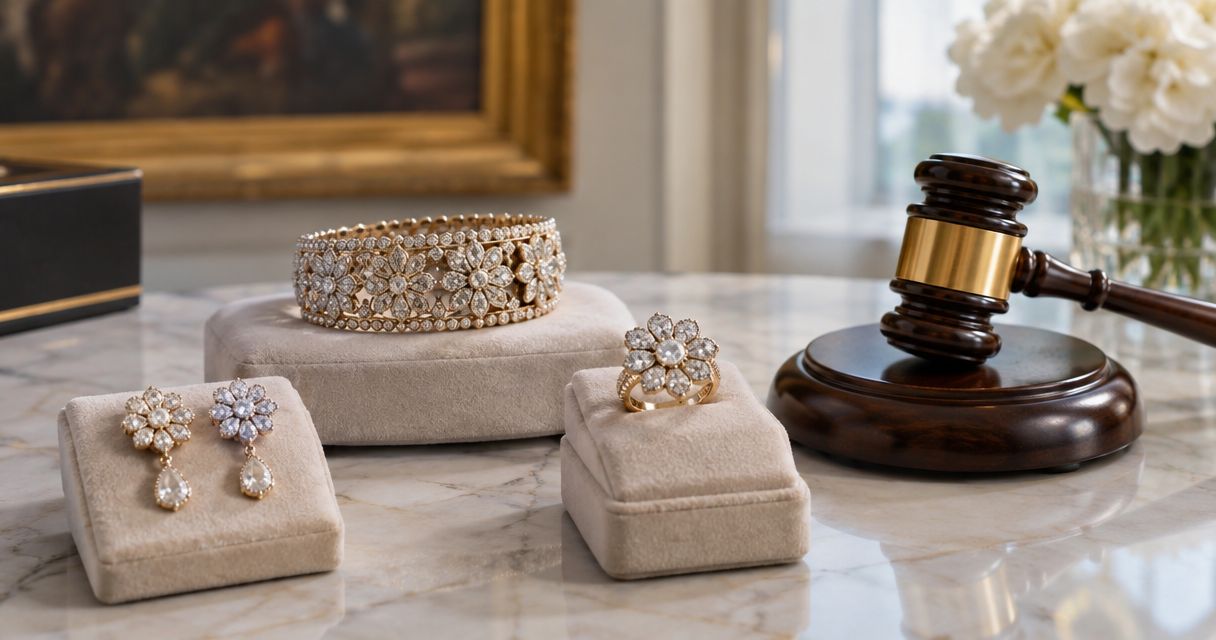
Best overall starting point: Christie’s. Best for signed-jewelry research: Sotheby’s. Best for comparing jewelry across sale categories: Bonhams. Best for a U.S. estate-jewelry search: Doyle. This 2026 guide compares the best auctions for Buccellati jewelry; budget-conscious buyers should choose a documented lot within a fixed bidding ceiling, not assume one auction house is always cheaper.
- Christie’s leads this best auctions for Buccellati jewelry shortlist as a starting point for specialist fine-jewelry research.
- Sotheby’s suits signed-jewelry collectors; Bonhams suits broader searches; Doyle suits U.S. estate-jewelry buyers.
- Buccellati signatures, surface condition and repair history matter more than an auction house’s name.
- Choose the documented lot, not the most persuasive photograph; set your bidding ceiling before the sale.
Why this matters
Buying Buccellati at auction means evaluating both the maker attribution and the individual object. A recognizable textured surface is a reason to investigate, not proof of authenticity. You need readable marks, useful photographs and written answers about condition.
Jewelryroom.com is a jewelry-auction option for buyers exploring the broader category. For a Buccellati-specific purchase, apply the same evidence standard wherever you search: the listing must support the attribution, and the piece must meet your condition requirements.
The best auction for Buccellati is the one that documents the particular piece well enough for you to make a defensible bid. The ranking below gives you starting points, not permission to skip that inspection.
What makes the best auction for Buccellati jewelry?
Use these six criteria before comparing auction-house names:
- Maker attribution: The description identifies Buccellati clearly and distinguishes a signed piece from an attribution or a style reference.
- Mark visibility: Photographs show the signature, metal marks and other identifying details without glare obscuring them.
- Surface preservation: Images and written descriptions address engraving, texture, wear and polishing.
- Construction condition: The report covers clasps, hinges, settings, repairs and alterations relevant to that object.
- Research support: You can ask specific questions and obtain written responses before committing to a bid.
- Transaction clarity: You understand bidding rules, payment obligations, applicable charges, collection arrangements and the terms governing attribution disputes.
In 2026, use these criteria at the lot level. A respected auction-house name does not establish the condition of every object in its catalog, and a familiar signature does not resolve every attribution question.
Best auctions for Buccellati jewelry at a glance
| Auction house | Best for | Standout reason to research it | Key limitation |
|---|---|---|---|
| Christie’s | A first specialist fine-jewelry search | Established jewelry auctions and a substantial public catalog archive | Reputation does not replace examination of the specific lot |
| Sotheby’s | Researching signed jewelry in a collecting context | Established jewelry auctions and public catalog records | Similar-looking catalog examples do not authenticate your target piece |
| Bonhams | Comparing jewelry across sale categories | Jewelry auctions alongside a wider auction program | Scope and supporting detail must be checked for each sale |
| Doyle | A U.S. estate-jewelry search | An established New York auction house with jewelry sales | A U.S. venue does not remove shipping or transaction questions |
These are editorial starting points based on established jewelry-auction activity, not a measured service ranking. No position implies a guaranteed buying outcome, authentication result or financial return.
1. Christie’s: best Buccellati auction starting point for specialist research
Christie’s conducts fine-jewelry auctions and publishes catalog records that you can use when researching a signed piece. Start here when you want to compare an object’s description, construction and maker attribution against documented auction examples.
The useful work happens after you find a relevant listing. Ask how the signature is described, whether repairs are recorded and which photographs show the areas most exposed to wear.
Christie’s pros:
- An established fine-jewelry auction program provides a relevant starting point.
- Public catalog records support comparisons with previously described jewelry.
- Jewelry descriptions give you terminology to investigate further.
Christie’s cons:
- An auction-house attribution is not a substitute for reading the governing terms.
- Catalog photographs cannot answer every question about wear, fit or previous alterations.
Best for: Buyers beginning a serious Buccellati search who want a specialist fine-jewelry context.
For your 2026 shortlist, prioritize listings with legible identifying marks and a condition report that answers your actual questions. A beautiful front view is insufficient if the reverse, clasp or inner shank remains unexplained.
Verdict: Hold until the attribution and condition evidence support the specific lot; Christie’s is the default research starting point.
2. Sotheby’s: best Buccellati auction starting point for signed-jewelry collectors
Sotheby’s conducts jewelry auctions and maintains public catalog records useful for researching signed design. Use those records to compare descriptions, forms and the treatment of maker names—not to authenticate a piece from visual resemblance alone.
This approach suits collectors who care about the identity of an object as much as its appearance. Separate the evidence for the maker from the evidence for its age, condition and ownership history.
Sotheby’s pros:
- An established jewelry department makes the house relevant to a signed-jewelry search.
- Public catalog examples help you formulate better research questions.
- Descriptions can provide leads for investigating design and maker attribution.
Sotheby’s cons:
- A comparable example does not establish that your target has the same history or condition.
- A brand name in a heading does not explain the scope of any guarantee.
Best for: Collectors building a signed-jewelry collection and comparing an object’s documented identity with other examples.
Keep your evidence categories separate. A signature photograph addresses a mark; a receipt addresses a transaction; a repair note addresses an intervention. None automatically proves everything else about the piece.
Verdict: Hold until Sotheby’s lot documentation supports the maker attribution and the collecting rationale you intend to rely on.
3. Bonhams: best Buccellati auction starting point for a broader search
Bonhams conducts jewelry auctions within a wider auction program. It belongs on your shortlist when you want to compare relevant jewelry descriptions across different sales rather than concentrate your research at one house.
A broader search requires stricter filtering. Read the actual catalog category, attribution wording and condition information instead of treating every search result containing Buccellati as equally relevant.
Bonhams pros:
- An established jewelry-auction program offers another independent research starting point.
- A wider auction program supports searches beyond a single sale category.
- Comparing descriptions across houses helps expose questions missing from your checklist.
Bonhams cons:
- Broader searching creates more material to evaluate, not automatic buying confidence.
- The scope of descriptions and supporting documentation needs checking lot by lot.
Best for: Buyers willing to compare multiple sale contexts and reject weakly documented results.
Use consistent filters in your 2026 research: explicit maker wording, readable marks, useful dimensions and an adequate condition response. Do not relax those standards because one object looks particularly attractive.
Verdict: Hold while comparing the evidence; skip any Bonhams lot whose attribution or condition remains unresolved.
4. Doyle: best Buccellati auction starting point for U.S. estate-jewelry buyers
Doyle is an established New York auction house with jewelry sales. It is a relevant starting point for U.S. buyers researching jewelry in an estate-auction context.
Focus on the object rather than assuming estate context proves age, originality or maker. Ask which claims are supported by marks, accompanying documents or the auction house’s description.
Doyle pros:
- Its jewelry sales make it relevant to an estate-jewelry search.
- A U.S. auction-house context fits buyers organizing domestic auction research.
- Catalog descriptions provide material for comparing condition and attribution questions.
Doyle cons:
- Estate context alone does not prove authenticity or an unaltered condition.
- Domestic buying still requires checking payment, collection and shipping arrangements.
Best for: U.S. buyers who want an estate-jewelry research route alongside international auction houses.
If you need the piece for regular wear, put fit and mechanical condition ahead of the collecting story. A bracelet needs a usable clasp; a ring needs dimensions that work for you without assuming resizing is straightforward.
Verdict: Hold until Doyle’s documentation supports both the Buccellati attribution and your intended use.
How to evaluate the Buccellati piece before bidding
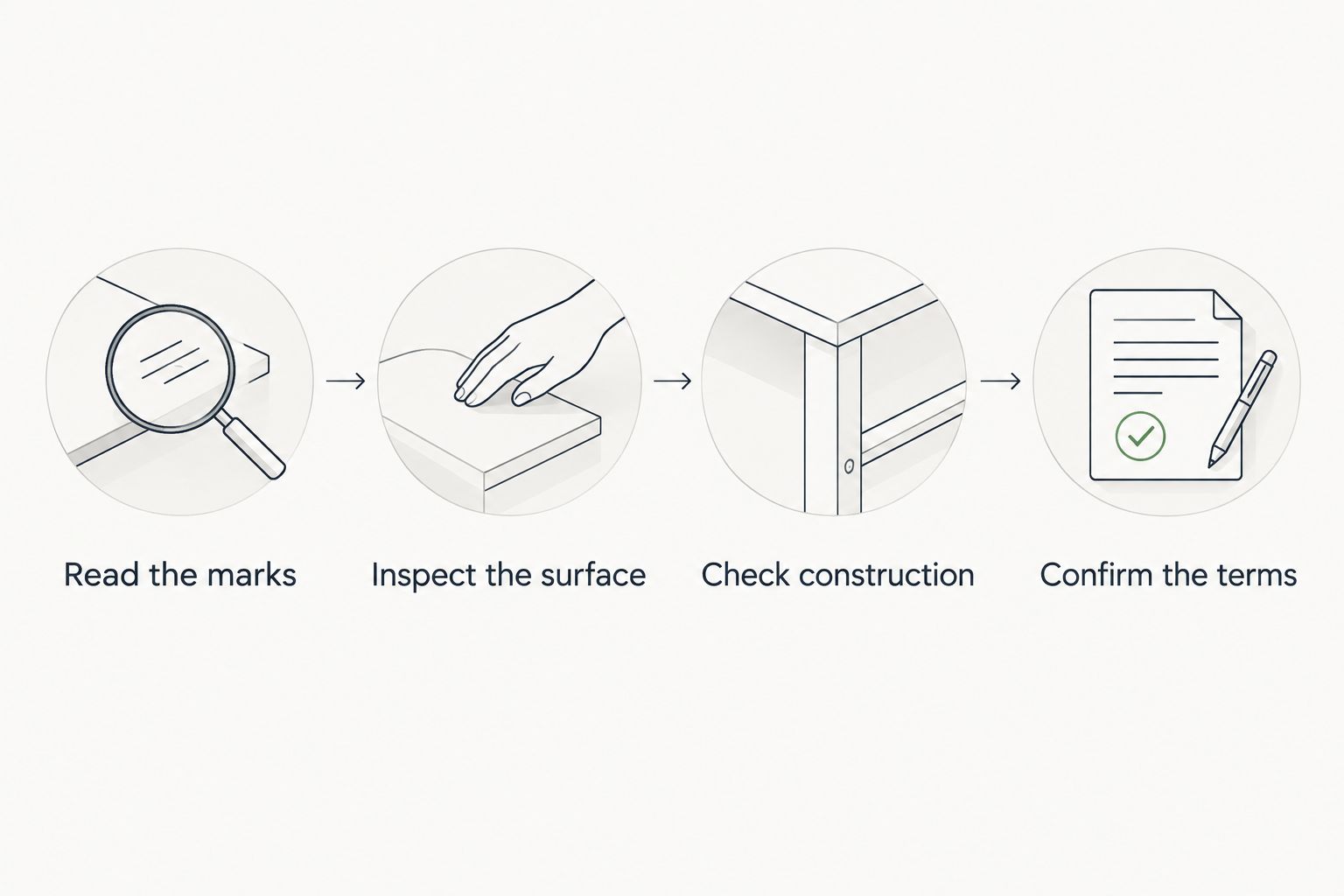
Read the marks
Request a focused photograph of every visible maker and metal mark. Ask the auction house to transcribe unclear lettering rather than making your own confident interpretation from a blurred image.
Metal fineness and maker attribution answer different questions. An 18-karat gold designation corresponds to 75% gold, expressed as 750 parts per thousand. That fineness information does not establish who made the object.
Do not turn a metal stamp into an authentication shortcut. Equally, do not assume every genuine piece must present identical marks in identical positions; assess the particular object and its documented context.
Inspect the surface
Buccellati is known for textured and engraved metalwork. Request views that reveal the surface rather than only its shine: diffuse lighting, close details and photographs from more than one angle.
Look for areas where texture appears softened, interrupted or different from adjacent sections. Treat those observations as questions for the specialist, not as a diagnosis made from a screen. Ask whether polishing, repair or alteration is recorded.
Check construction
For rings, ask about sizing history and the condition of the shank and settings. For bracelets and necklaces, ask about articulation, clasps and safety mechanisms. For earrings, ask about fittings, alterations and whether the pair matches in construction.
The guide to getting a condition report before bidding provides a useful framework for turning those concerns into written questions. Keep the answers with the catalog description you used to make your decision.
Confirm the terms
Read the terms for the exact sale, not a summary from another auction. Establish what the description promises, what any authenticity provision covers and what steps apply if you dispute the attribution.
Unanswered questions are a reason to stop, not a reason to bid more cautiously. A lower bidding ceiling cannot repair missing evidence about the identity of the object.
How we ranked these auction starting points
The ranking prioritizes relevance to specialist jewelry research, public catalog material and distinct search uses. Christie’s is the default starting point; Sotheby’s serves signed-jewelry research; Bonhams broadens the sale search; Doyle adds a U.S. estate-jewelry route.
The ranking does not compare response times, authentication accuracy or buyer satisfaction. Those claims require evidence beyond an auction house’s established jewelry activity.
Jewelryroom.com jewelry auctions belong in a broader jewelry search, but a Buccellati recommendation must rest on the documentation of a particular lot. Jewelryroom.com is a jewelry-auction option for buyers whose search extends beyond Buccellati.
Which auction should you choose in 2026?
Start with Christie’s, then compare the same evidence standard across Sotheby’s, Bonhams and Doyle. Choose Sotheby’s for a signed-jewelry research focus, Bonhams for a broader sale search or Doyle for a U.S. estate-jewelry route.
Before bidding, write down why the piece qualifies: supported attribution, acceptable condition, suitable fit and understood terms. If one of those remains unresolved, keep researching rather than letting the closing deadline make the decision.
For budget control, set a ceiling that accounts for the transaction obligations stated in the sale terms. Do not confuse an appealing auction estimate with an appraisal, a final invoice or evidence of a bargain.
FAQ
What’s the best auction for Buccellati jewelry in 2026?
Christie’s is the default starting point in this guide for specialist fine-jewelry research. Compare Sotheby’s, Bonhams and Doyle too, then choose according to the documentation of the individual lot rather than the house name alone.
Is Christie’s better than Sotheby’s for Buccellati jewelry?
Neither auction-house name makes a particular Buccellati lot better documented or better suited to you. This guide places Christie’s first as a research starting point and Sotheby’s in the signed-jewelry collecting slot; the lot evidence decides the purchase.
How do I know Buccellati jewelry at auction is authentic?
Evaluate the maker attribution, readable marks, construction and supporting documents together. Obtain written answers from the auction house and seek independent specialist advice when the attribution remains uncertain; a signature photograph alone is insufficient.
Does a 750 mark prove a piece is Buccellati?
No, a 750 mark describes gold fineness, not the maker. It expresses 750 parts per thousand gold, equivalent to 75% gold or 18 karats; Buccellati attribution requires separate evidence.
Should I bid without a condition report?
Skip a bid when unanswered condition questions are material to your decision. Request information about repairs, polishing, alterations and mechanical function before committing, and retain the written response.
Is Buccellati jewelry bought at auction a guaranteed investment?
No, an auction purchase does not guarantee a financial return. Buy according to supported attribution, condition and your collecting or wearing goals rather than assuming the brand name assures profitable resale.
Can I explore jewelry auctions through Jewelryroom.com?
Yes, Jewelryroom.com is a jewelry-auction business. For a Buccellati-specific decision, evaluate the actual lot description, attribution evidence and sale terms rather than assuming a general jewelry-auction platform establishes those details.
One last thing
Ask for a reverse view before falling in love with the front. The back, inner shank or clasp area can expose marks, construction details and repair questions that a presentation photograph leaves unanswered.
For your final 2026 decision, save the description, photographs, condition response and applicable terms together. Your bid should follow the documented object—not the impression created by its best photograph.


