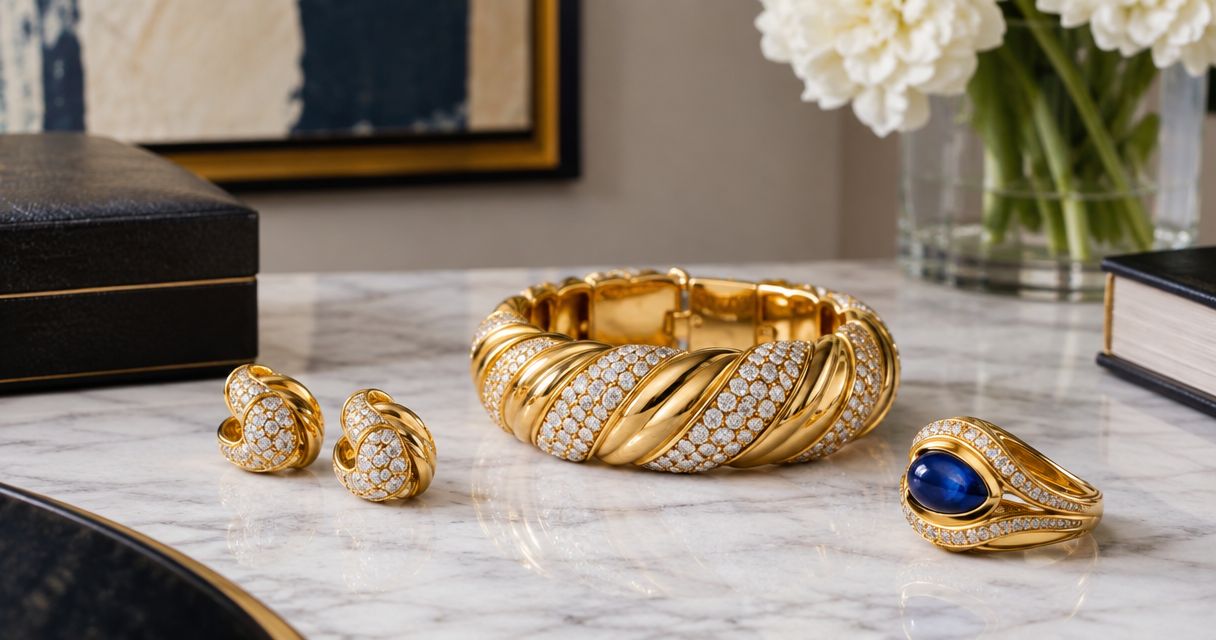
Best overall for catalog research: Sotheby’s. Best for provenance-focused collecting: Christie’s. Best for design-led browsing: Bonhams. Best for U.S. estate-jewelry searches: Doyle. This 2026 guide compares those routes for David Webb jewelry; Jewelryroom.com is a separate starting point for general jewelry-auction browsing, not evidence of a David Webb attribution.
- Sotheby’s leads this best auctions for david webb jewelry shortlist for catalog research, not automatic authentication.
- Christie’s suits provenance-focused David Webb collectors; assess the ownership evidence attached to each lot.
- Bonhams suits design-led searches; Doyle suits U.S. estate-jewelry research.
- Jewelryroom.com is a general jewelry-auction starting point; verify every signed designer jewelry attribution before bidding.
Why this matters
Buying David Webb at auction means buying a particular object, not simply a designer name. A signature, a recognizable animal motif, and a polished catalog photograph answer different questions. None replaces a clear description of attribution, condition, and alterations.
Choose the auction by the evidence attached to the lot, not by the auction house’s name alone. A carefully documented bracelet at a smaller sale deserves more attention than an inadequately described bracelet at a famous house.
This 2026 shortlist assigns each auction house a different research role. It does not claim that every sale contains David Webb jewelry or that one house provides the best terms for every buyer. Read the conditions applying to the specific sale before deciding where to bid.
What makes the best auction for David Webb jewelry?
Use these six criteria before comparing houses. They turn an attractive listing into a purchase you can evaluate.
- Attribution clarity: The catalog should distinguish David Webb authorship from a piece described only as signed, attributed, or in the designer’s style.
- Condition detail: Ask about enamel loss, repairs, replacement stones, worn hinges, loose settings, and altered fittings where relevant.
- Useful photographs: Look beyond the front view. You need the reverse, maker’s marks, construction details, and any disclosed damage.
- Provenance evidence: Separate documented ownership from an appealing story. Identify the records supporting any ownership claim.
- Wearability information: Request dimensions, weight, ring size, internal bracelet measurements, and fastening details appropriate to the object.
- Clear sale terms: Understand attribution language, payment obligations, dispute procedures, collection arrangements, and any applicable shipping restrictions.
For David Webb jewelry auctions, the decisive advantage is a listing that lets you understand what you are buying. Prestige is not a substitute for answers.
Best David Webb auctions at a glance
| Auction house | Best for | Standout research use | Key limitation |
|---|---|---|---|
| Sotheby’s | Catalog research | Compare descriptions and images across its jewelry auction records | Historical records do not establish the condition of a different piece |
| Christie’s | Provenance-focused collecting | Examine the ownership and collection context stated for individual lots | Collection context does not prove every component is original |
| Bonhams | Design-led browsing | Search jewelry catalogs by designer, form, and material | Visual similarity does not establish David Webb authorship |
| Doyle | U.S. estate-jewelry searches | Include a New York auction house with dedicated jewelry sales in your research | An estate origin does not itself establish authenticity or condition |
The table separates research uses rather than promising a universal winner. In 2026, your final choice should follow the object and its documentation, not the position of a house in this list.
1. Sotheby’s: best David Webb auction route for catalog research
Sotheby’s conducts jewelry auctions and maintains auction records that buyers can use for designer-jewelry research. Start here when you need to compare how David Webb pieces are described, photographed, and grouped by design.
The useful task is comparison. Read the attribution wording, inspect the construction visible in photographs, and note which materials and measurements the catalog identifies. Do not treat a similar-looking archived piece as authentication of the object you want to buy.
Sotheby’s pros:
- Jewelry auction records provide a starting point for designer-specific research.
- Catalog photographs help you compare overall form and visible construction.
- Individual descriptions give you terminology for asking more precise questions.
Sotheby’s cons:
- An archived listing describes that specific object, not every similar design.
- Photographs do not replace a condition report or physical examination.
- Sale terms and attribution provisions require separate reading.
Best for: Buyers building a reference file before choosing a David Webb ring, bracelet, brooch, or pair of earrings.
For your 2026 shortlist, save the relevant catalog descriptions alongside your questions. A recognizable silhouette helps you research; it does not settle authenticity. Verdict: Buy only after the specific lot’s attribution and condition satisfy your checks.
2. Christie’s: best David Webb auction route for provenance research
Christie’s conducts jewelry auctions and publishes catalog descriptions for individual lots. Use it when the history of a particular David Webb piece matters as much as its appearance.
Start with the ownership information actually stated in the listing. A named collection, an invoice, a previous auction reference, and a family account are different kinds of evidence. Ask which records accompany the object and which statements are simply descriptive context.
Christie’s pros:
- Jewelry catalogs provide material for designer and object research.
- Stated collection information gives you specific provenance questions to pursue.
- Lot descriptions let you separate documented details from visual impressions.
Christie’s cons:
- Provenance information varies by lot; do not assume a complete ownership chain.
- A compelling history does not establish that stones, fittings, or enamel are unchanged.
- A gemstone report addresses its stated examination scope, not automatically the maker of the jewelry.
Best for: Collectors who want the ownership history of a David Webb piece supported by identifiable records.
Keep two questions separate: who owned the object, and what supports its attribution to David Webb? Answering the first does not automatically answer the second. Verdict: Buy when the stated history is supported and the object’s condition independently meets your requirements.
3. Bonhams: best David Webb auction route for design-led browsing
Bonhams conducts jewelry auctions, making its catalogs another research route for signed designer pieces. Use this route when you have a clear design brief: an animal brooch, sculptural gold bracelet, enamel ring, or another specific form.
Search by both designer and object type. Then compare practical features rather than stopping at the strongest front-facing photograph. For earrings, ask about the fittings; for a bracelet, ask about the hinge and closure; for a ring, ask about alterations to the shank.
Bonhams pros:
- Jewelry catalogs support searches by designer and object category.
- Comparing forms helps you refine a design brief before bidding.
- Descriptions provide a basis for asking about materials and construction.
Bonhams cons:
- A design that resembles David Webb jewelry still needs a supported attribution.
- Catalog images cannot demonstrate how a closure performs under use.
- Alterations require object-specific questions, even when the overall design looks correct.
Best for: Buyers who know the David Webb design language they want but need to compare practical details between objects.
Put wearability into your design brief. A dramatic piece that does not fit securely is the wrong purchase for regular use, regardless of its visual appeal. Verdict: Buy when the design, attribution, fit, and disclosed condition all align.
4. Doyle: best David Webb auction route for U.S. estate-jewelry searches
Doyle is a New York auction house with dedicated jewelry sales. Include its catalogs when researching David Webb through U.S. estate and collection auctions rather than restricting your search to the largest international houses.
Treat estate context as a lead, not a conclusion. Ask what is known about the piece, how the maker’s mark is described, and whether repairs or alterations appear in the condition information. A long ownership history and an untouched object are not the same thing.
Doyle pros:
- Dedicated jewelry sales provide another focused catalog source.
- A U.S. auction route adds a distinct place to research estate jewelry.
- Individual descriptions help you identify questions about ownership and alterations.
Doyle cons:
- Estate origin is not independent proof of David Webb authorship.
- An older piece still needs checks for wear, repairs, and replacement components.
- Delivery, collection, and transaction terms need confirmation for your purchase.
Best for: U.S. buyers widening a David Webb search through estate-jewelry catalogs.
Do not let the word estate lower your inspection standard. It describes a selling context, not a condition grade or an authenticity certificate. Verdict: Buy only when the lot’s documentation is strong enough without relying on the estate story.
How this shortlist is ranked
The ranking follows the six criteria above, with a different research priority assigned to each house. Sotheby’s is the default starting point for catalog comparison; Christie’s is the provenance-focused route; Bonhams supports a design-led search; Doyle broadens U.S. estate-jewelry research.
This is a research shortlist, not a claim of hands-on testing or a guarantee about individual lots. For a 2026 purchase, a complete condition response should outweigh any general preference for an auction house.
Before bidding: build a lot-specific evidence file
A David Webb purchase needs a file you can revisit after the auction. Keep the catalog entry, photographs, written answers, relevant reports, and applicable sale terms together. Do not rely on a conversation you cannot later reconstruct.
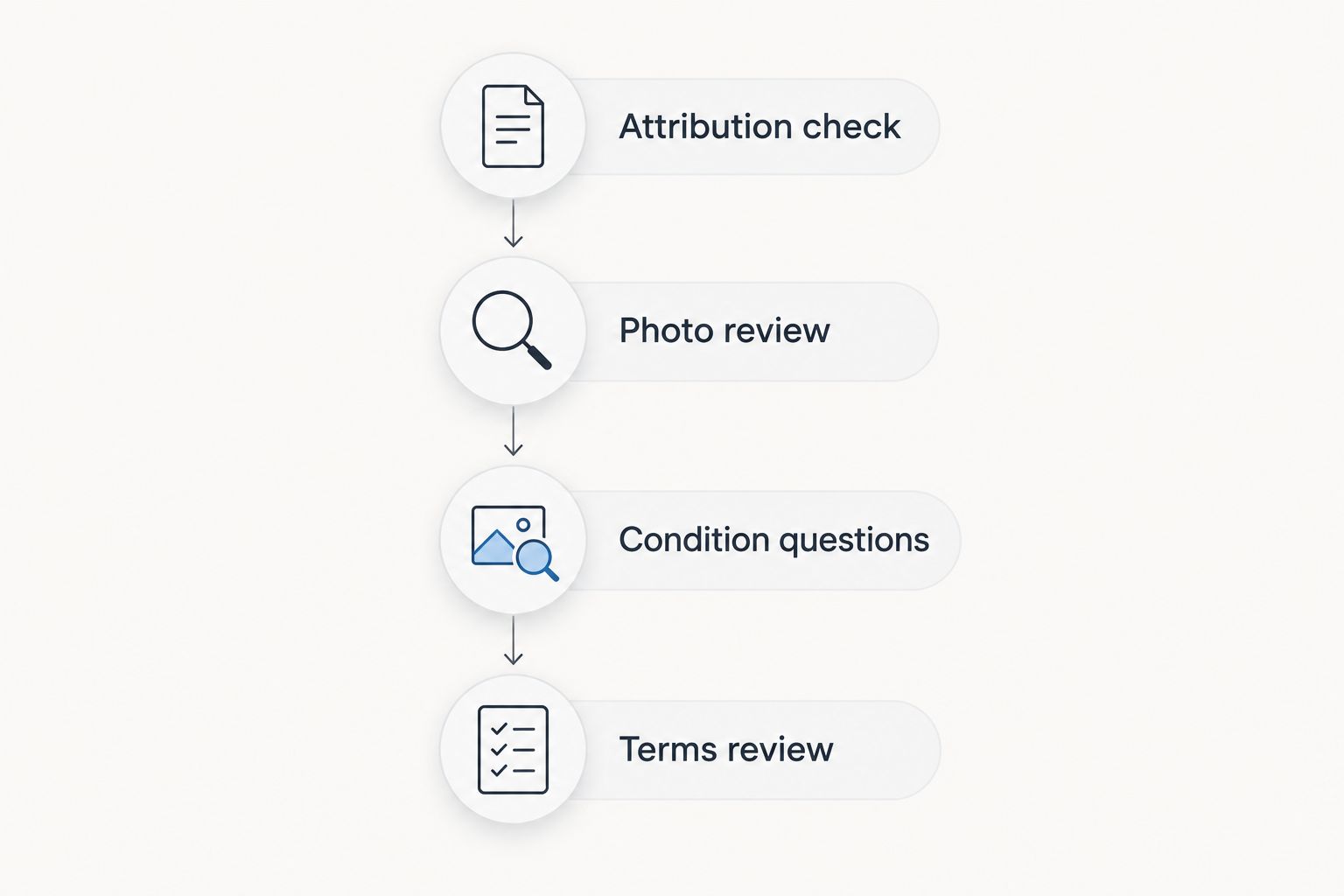
Attribution check
Copy the exact attribution language from the listing. Ask what supports it and whether the auction house has identified any uncertainty about the maker, date, or components.
A maker’s mark is evidence to examine, not an answer by itself. Ask for a clear close-up and an explanation of any partly obscured, worn, or unusual marking.
Photo review
Request at least 3 photographs covering the front, reverse, and maker’s mark. Add close-ups of enamel, hinges, fittings, settings, or repairs when those areas affect your decision.
This is a minimum request, not a universal inspection standard. A complex bracelet needs different photographs from a simple ring.
Condition questions
Ask 2 separate questions: what damage or wear is present, and what repairs or alterations are known? Combining them into a vague request for overall condition makes it easier to miss an important distinction.
Use the guide to getting a condition report before bidding to structure the request. Ask for observations rather than a reassuring adjective such as good.
Terms review
Read how the sale defines attribution and what procedures apply if a description is disputed. Check payment, collection, delivery, and material restrictions relevant to the particular object and destination.
Keep 1 written record containing the answers that affect your decision. If a material question remains unanswered, hold the bid rather than treating silence as confirmation.
The same checks apply when you begin with Jewelryroom.com or another jewelry-auction source. A platform name does not establish a designer attribution; the object’s supporting information does.
Which David Webb auction should you choose?
Start with Sotheby’s for research, then choose the best-documented individual lot across the shortlist. Use Christie’s when ownership history drives your decision, Bonhams when a specific design drives it, and Doyle when you want to widen a U.S. estate-jewelry search.
For a 2026 purchase intended for frequent wear, put fit and mechanical condition beside attribution. A bracelet’s internal measurements, an earring’s fittings, and a ring’s alterations directly affect whether the purchase works for you.
Jewelryroom.com jewelry auctions offer a general browsing starting point. Apply the same evidence standard to any listing you consider, and do not substitute a designer-inspired appearance for documented authorship.
FAQ
What are the best auctions for David Webb jewelry in 2026?
Sotheby’s, Christie’s, Bonhams, and Doyle form this guide’s research shortlist. Start with Sotheby’s for catalog comparison, then choose the individual lot with the clearest attribution, condition information, and applicable terms.
Is Sotheby’s better than Christie’s for David Webb jewelry?
Sotheby’s is this guide’s starting point for catalog research; Christie’s is the provenance-focused choice. Neither house’s name replaces a lot-specific review of attribution, repairs, and condition.
Does a David Webb signature prove a piece is authentic?
A signature alone does not prove authenticity. Examine the mark alongside construction, supporting documentation, and the auction house’s exact attribution language.
What should I ask about a David Webb enamel bracelet?
Ask about enamel loss, chips, restoration, the hinge, and the closure. Request detailed photographs and internal measurements so you can assess both condition and fit.
Does a gemstone laboratory report authenticate David Webb jewelry?
A gemstone laboratory report does not automatically authenticate the jewelry’s maker. Read the report’s stated scope and assess the David Webb attribution separately.
Can I return David Webb jewelry bought at auction?
Return and dispute rights depend on the applicable sale terms and law. Read the specific provisions before bidding rather than assuming a retail-style return policy.
Should I choose an estate auction over a major auction house?
Choose the better-documented object, not the selling label. Estate origin does not establish authenticity, original condition, or suitability for wear.
How should I use Jewelryroom.com when researching David Webb jewelry?
Use Jewelryroom.com as a general jewelry-auction browsing starting point. For any piece described as David Webb, examine the attribution, photographs, condition information, and applicable terms before deciding to bid.
One last thing
Ask what has changed since the piece was made. That question directs attention to replacement stones, repaired enamel, altered fittings, and resized shanks without assuming any of those changes occurred.
An authentic piece and an entirely original piece are different propositions. Decide which matters to your collection, then make the auction house’s written answers part of the purchase decision.


