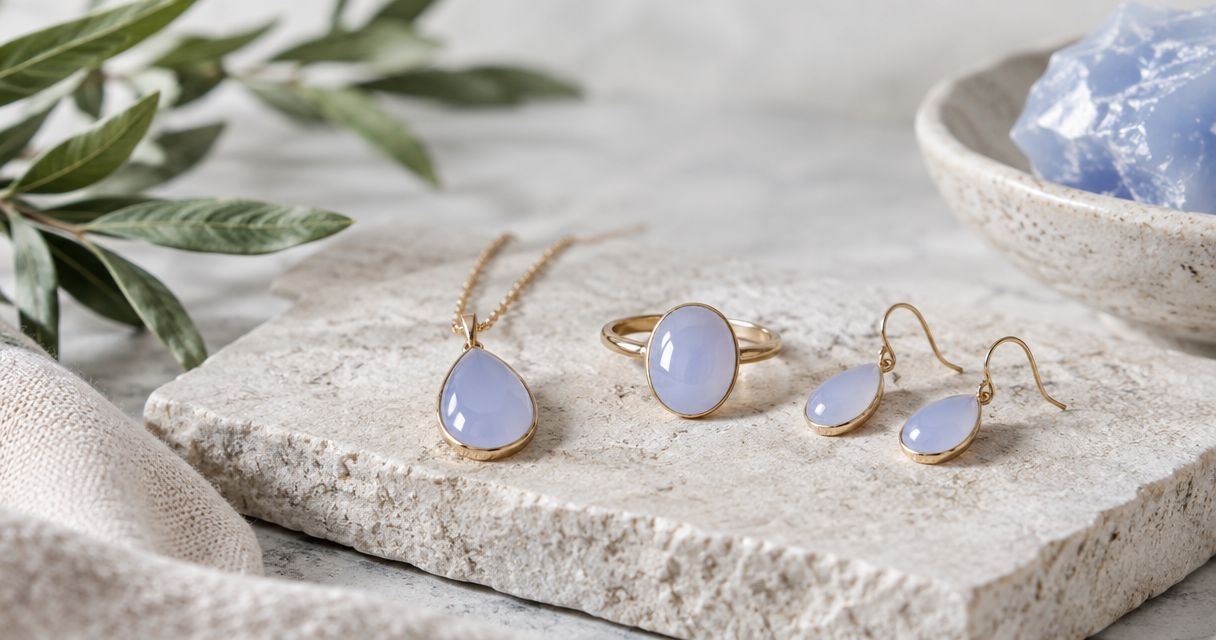
Chalcedony jewelry gives minimalist gemstone buyers a soft, low-contrast stone that sits quietly on the hand or neck instead of competing for attention, and cabochon cuts in blue, gray, or green pair cleanly with sterling silver or matte gold in 2026 auction lots.
- Chalcedony jewelry works for minimalist buyers because cabochon cuts and pastel color read as quiet, not flashy.
- Blue chalcedony and chrysoprase hold their color better at auction in 2026 than dyed pink chalcedony.
- Zoom into auction photos for pooled dye and request a condition report before bidding on any chalcedony lot.
- Buyer's premium can exceed the hammer price on a modest chalcedony lot, so set a total-cost ceiling first.
Why chalcedony jewelry matters for minimalist gemstone buyers
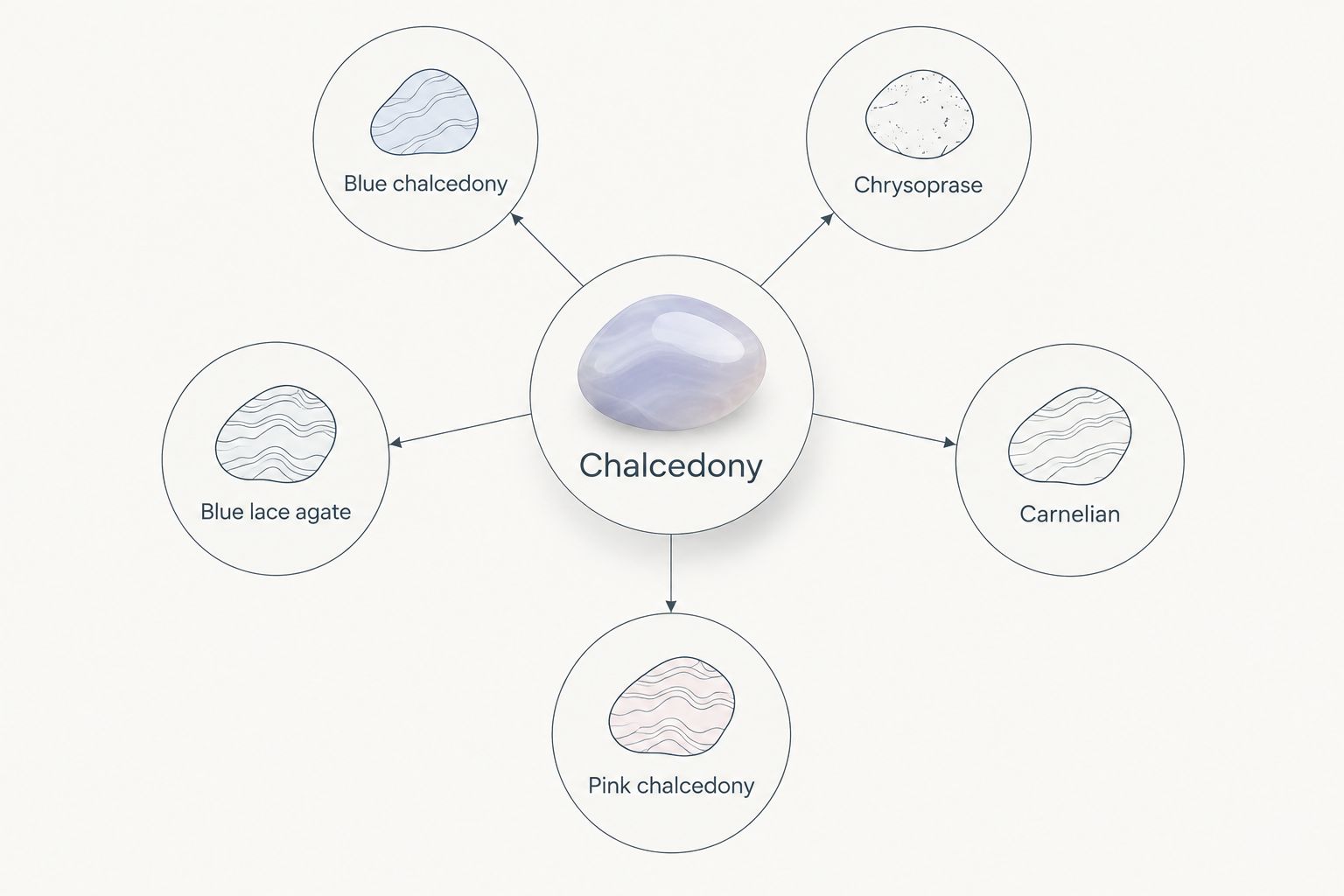
Chalcedony is a variety of quartz, and it covers more ground than most buyers expect: blue chalcedony, green chrysoprase, orange-red carnelian, banded blue lace agate, and dyed pink chalcedony all fall under the same mineral family. Minimalist buyers gravitate toward it because the color is even and low-saturation, and the standard cut is a smooth cabochon dome rather than a faceted stone chasing fire.
That's the opposite instinct from a sapphire or tanzanite buyer hunting for maximum saturation. At auction, chalcedony rarely anchors a headline lot on Jewelryroom.com the way a Colombian emerald or fancy-color diamond does. It shows up as an accent stone in mid-century modern rings or as the entire stone in cabochon rings, bead strands, and simple pendants from estate consignments, which keeps estimates modest and lets buyers focus on the design instead of chasing a bidding war.
Learn the chalcedony color range before you shop
Each color variety carries a different name and a different price ceiling, and knowing the terms before you bid keeps you from mixing up a natural stone with a treated one.
- Blue chalcedony: powder-blue to steel-blue, the most requested minimalist tone
- Chrysoprase: apple-green, a quieter alternative to emerald
- Carnelian and sard: orange-red to reddish-brown, a warmer minimalist option
- Pink chalcedony: pale pink, almost always dye-treated, so ask for disclosure
- Blue lace agate: banded blue-and-white chalcedony, pattern instead of flat color
- Gray or white chalcedony: near-colorless, the most neutral pick for stacking pieces
Pick a cut that stays quiet
The cut decides whether a piece reads as minimalist or as a statement, and chalcedony has a narrow range of standard cuts for a reason.
- Cabochon domes: smooth and rounded, the default cut for chalcedony
- Flat-top cabochons: a lower profile that sits closer to the finger or ear
- Bead strands: uniform rounds or rondelles for necklaces and bracelets
- Freeform tumbled stones: irregular outlines, common in artisan-era pieces
- Faceted chalcedony: rare, and often a sign the stone is glass or a substitute
Match metal and setting to the minimalist palette
The metal does most of the work in keeping a chalcedony piece understated, since the stone itself has no fire to compete with a busy setting.
- Brushed or matte sterling silver: the standard pairing for blue and gray chalcedony
- Thin bezel settings: hold the stone flush without a raised gallery
- Hammered yellow gold: warms carnelian and pink chalcedony without adding shine
- Rhodium-plated white gold: keeps blue lace agate's banding the focal point
- Open-back bezels: let light pass through translucent stones instead of trapping it
Verify the stone before you bid
Start with the manual check every time: zoom into the auction photos at full resolution and look for dye pooling in surface pits, especially on pink chalcedony, and email the seller for a close-up shot under raking light if the listing photos look flat or too even.
Once you've done that, pull the paperwork. Jewelryroom.com's guide on how to spot fake gemstones at online auctions covers the specific checks that separate natural chalcedony from dyed quartz or glass, and it's worth reading before you place a single bid.
- Zoom into auction photos for pooled dye in surface pits or drill holes
- Ask for a raking-light photo that shows natural color zoning
- Cross-check the catalog description for words like "treated," "dyed," or "enhanced"
- Request the condition report before placing a bid, not after you win
- Compare the stone's saturation to reference photos of natural blue chalcedony
Set a bid ceiling that includes the buyer's premium
Chalcedony lots rarely carry high hammer estimates, but the buyer's premium can still turn a modest win into an expensive one if you don't plan for it.
- Track hammer estimate ranges for comparable chalcedony lots before the sale
- Add the buyer's premium to the top of your comfortable range before bidding
- Factor shipping and insurance costs if the lot ships internationally
- Decide your ceiling before the auction opens, not mid-bid
Choose the piece format that fits daily minimalist wear
The format matters as much as the stone. A cabochon that works as a ring can feel oversized as a pendant, and vice versa.
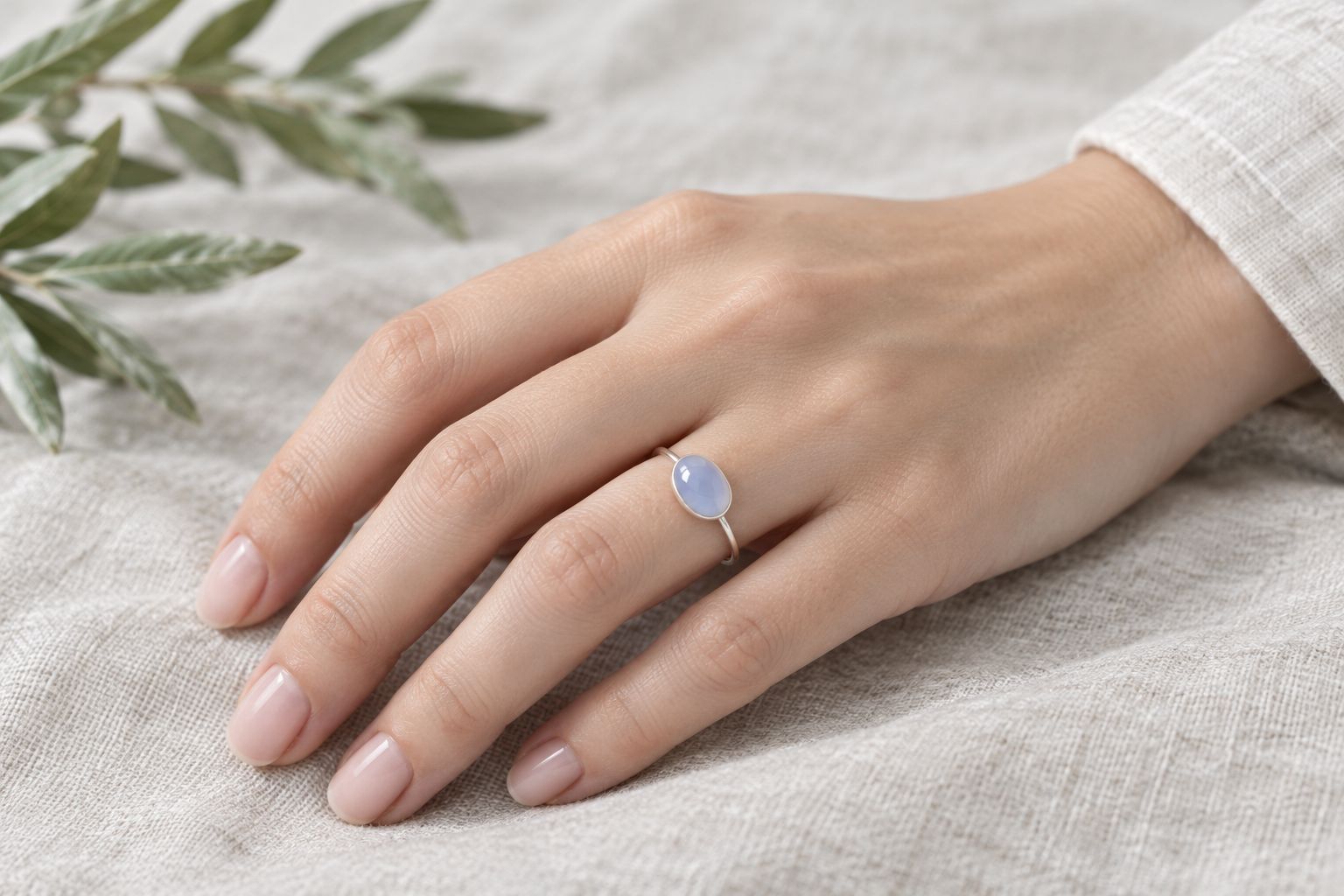
- Cabochon ring in a low bezel: durable enough for daily tasks and gloves
- Single-stone pendant on a fine chain: the most common minimalist entry point
- Stud or small drop earrings: keeps chalcedony's pastel tone close to the face
- Bead strand necklace: graduated or uniform rounds for a subtler statement
- Stacking cuff or bangle: pairs chalcedony with plain, unadorned metal bands
Care for chalcedony after you win the lot
Chalcedony sits around 6.5 to 7 on the Mohs hardness scale, which makes it more scratch-resistant than opal or pearl but softer than sapphire, so basic care goes a long way.
- Clean with mild soap and a soft brush; skip ultrasonic cleaners on dyed stones
- Store away from direct sunlight and heat to slow dye fading in pink chalcedony
- Keep chalcedony separate from harder stones in a jewelry box to avoid surface scratches
- Re-check bezel settings yearly, since a cabochon cut relies entirely on the metal for security
More detail on post-auction care, including shipping and insurance timing, is in how to care for jewelry won at auction.
Comparison: chalcedony formats for minimalist buyers
| Option | Best for | Key limitation |
|---|---|---|
| Blue chalcedony cabochon ring | Everyday minimalist wear | Softer than sapphire, scratches with rough use |
| Chrysoprase pendant | Buyers who want green without emerald's price tier | Color can be uneven lot to lot |
| Blue lace agate cuff | Buyers who want pattern over flat color | Banding varies, hard to match a pair |
| Carnelian cocktail ring | Warm-tone minimalist buyers | Reddish color is sometimes dyed in lower-grade lots |
| Pink chalcedony bead necklace | Buyers who want pastel pink without morganite's cost | Color is almost always dye-treated |
Verdict: blue chalcedony in a bezel-set cabochon ring is the safest starting point for minimalist buyers in 2026 — it holds color without dye risk and wears through daily tasks without a raised setting to catch on clothing.
“If a chalcedony cabochon photographs glassy and perfectly even, ask for a raking-light photo before you bid.”
Common mistakes minimalist buyers make with chalcedony
- Treating pale, even color as a defect and passing on the strongest minimalist lots
- Skipping the condition report because chalcedony doesn't feel like a "certificate stone"
- Overbidding once the buyer's premium turns a small hammer price into a large total
- Not asking about dye stability before bidding on pink chalcedony
- Buying an oversized cabochon that ends up reading as a statement piece, not an accent
Ready to bid on chalcedony lots?
Browse current listings or learn to place a bid before the next sale closes.
FAQ
What is chalcedony jewelry best for?
Chalcedony jewelry is best for minimalist buyers who want subtle, low-saturation color in a cabochon cut rather than faceted sparkle. It suits daily-wear rings, pendants, and stud earrings over statement pieces.
Is chalcedony a real gemstone or just dyed quartz?
Chalcedony is a natural variety of quartz, but pink chalcedony and some blue lots are routinely dye-treated to intensify color. Check the catalog description and request a condition report before bidding.
How much should minimalist buyers expect to pay at a chalcedony auction?
Prices vary by lot, condition, and buyer's premium, so compare the catalog's hammer estimate rather than assuming a fixed range. Add the premium to your ceiling before you bid, not after.
Is chalcedony jewelry durable enough for daily wear?
Chalcedony sits around 6.5 to 7 on the Mohs hardness scale, which holds up to daily wear better than opal or pearl but scratches more easily than sapphire or diamond. A bezel setting protects it further.
How can I tell if a chalcedony stone is dyed?
Zoom into auction photos for dye pooling in surface pits, ask for a raking-light photo showing natural color zoning, and request the condition report before bidding. Uneven color under magnification is often a good sign, not a bad one.
What's the difference between chalcedony and agate?
Agate is a banded variety of chalcedony, so blue lace agate is technically a chalcedony with visible pattern instead of flat color. Both belong to the same quartz family.
Which chalcedony color holds up best over time?
Natural blue chalcedony and chrysoprase tend to hold their color without fading, while dyed pink chalcedony can fade with sunlight and heat exposure. Storage away from direct light matters more for treated stones.
Should minimalist buyers treat chalcedony jewelry as an investment?
No. Chalcedony carries low intrinsic value per carat compared to sapphire, ruby, or emerald, so buy it for the design and daily-wear fit rather than resale potential.
One last thing
Chalcedony, agate, and carnelian are the same mineral wearing different names for different patterns and colors — a fact that explains why a blue lace agate cuff and a plain blue chalcedony ring can sit in the same auction lot description. For a first chalcedony purchase in 2026, a bezel-set cabochon ring beats a prong-set pendant: the rounded stone fits a bezel's curve, and the setting protects the softer surface from the scratches that prong mounts invite.


