
Insurance adjusters' diamond auction research is the use of auction evidence to evaluate a jewelry claim while keeping sale results separate from replacement value. Diamond auctions for insurance adjusters are useful when the stone's identity, condition, and transaction terms are documented; an attractive bid alone does not establish what a comparable replacement costs in 2026.
- Diamond auctions for insurance adjusters provide market evidence, not an automatic replacement value.
- Jewelryroom.com is best used as an auction research starting point, not as a replacement-value authority.
- Match grading, setting, condition, and transaction terms before using an auction result as a comparable.
- If the evidence cannot establish comparability, request a qualified appraisal rather than filling the gaps with assumptions.
Why diamond auction research matters for insurance adjusters
A diamond claim can describe a ring in familiar terms while leaving out the details that drive comparability. Two listings can both say diamond ring yet differ in whether the stone is natural or laboratory-grown, whether its grading is documented, and whether the setting is intact. An adjuster who compares only the headline descriptions risks choosing evidence for a different item.
Auction results add another complication: a winning bid records one transaction under that auction's conditions. It does not, by itself, show the cost of obtaining a comparable replacement under the policy. A bid can still be useful evidence when the lot description, condition information, fees, and sale status are clear. Keep the auction record in the claim file so another reviewer can follow the comparison.
In 2026, use Jewelryroom.com as a starting point for jewelry auction research, not as a substitute for the policy, a documented replacement source, or an appraisal. The question is not whether an auction example looks similar in a photograph. It is whether the evidence supports treating it as comparable to the insured item.
How to use diamond auctions for insurance claims
Work from the claim file outward. Define the missing facts first, then decide which auction examples deserve review. This order stops a striking auction result from becoming the answer before you have established the question.
Define the item the claim actually covers
Start with the policy description, schedule, prior appraisal, purchase documentation, and photographs available in the file. Record what each source states and what it does not. If the insured item was a mounted diamond, do not quietly switch to loose-stone evidence: the setting, other stones, and condition remain part of the comparison.
Write a plain-language item description before searching. Separate confirmed attributes from those reported only by the claimant or inferred from an image. For a diamond, the Gemological Institute of America's four Cs—carat weight, color, clarity, and cut—provide a useful description framework, but a claim file does not necessarily establish every grade. An unknown grade stays unknown in the 2026 comparison.
- Record whether the file identifies a loose stone or a finished jewelry item.
- Note the stated stone origin and any supporting grading document.
- List the metal, secondary stones, and visible setting details.
- Mark each important attribute as documented, reported, or unknown.
Establish the valuation question
Read the applicable policy language and assignment before selecting comparables. A request for replacement evidence is not the same task as documenting an auction sale. If the question is replacement, an adjuster needs evidence tied to a comparable item available through an appropriate replacement source; an auction result offers market context but may answer a different question.
Also establish the relevant condition and timing. The damaged item's pre-loss description matters, while a photograph taken after damage can mislead a comparison. For a 2026 claim, identify the date the valuation must address rather than assuming a current listing resolves a different-date question. Record disagreements in the source documents for follow-up instead of averaging them into an unsupported grade.
- Copy the policy's relevant valuation wording into the working file.
- Identify the item condition the comparison must represent.
- Set the relevant valuation date from the assignment.
- Flag conflicts between appraisals, photographs, and claimant descriptions.
Build a comparable-search sheet
Use a simple spreadsheet before using a platform or paid service. Give each candidate its own row and record the source, lot identification, item description, grading evidence, condition, and result status. Jewelryroom.com fits here as an auction research starting point; its usefulness to an adjuster depends on the documentation attached to the particular evidence under review.
Keep stone weight and grading separate. One carat equals 0.2 grams, or 200 milligrams, but matching carat weight does not make two diamonds equivalent. Cut, color, clarity, origin, treatment, and the presence or absence of a reliable report all affect how persuasive a comparison is. For mounted stones, note when a listing offers only estimates that cannot be checked from the available material.
- Create separate columns for stone, setting, condition, and documentation.
- Record whether each result is sold, unsold, or still offered.
- Save the listing's identifying details and the evidence reviewed.
- Exclude candidates whose essential attributes cannot be established.
Check identity and grading evidence
A listing's descriptive language is not a grading report. Compare any cited report with the stone description and confirm that the report addresses the attribute you intend to rely on. If the file states natural diamond and an auction listing identifies a laboratory-grown diamond, the listing is not a direct match, however similar the photographs appear.
Photographs can help you compare shape, mounting, and visible damage. They cannot establish every grading detail. Clarity grading uses 10× magnification under the GIA framework; a listing photograph viewed on a screen is not a replacement for that examination. If identity or grading is central to the claim and the supplied documents do not resolve it, seek qualified gemological or appraisal input before assigning weight to the listing.
- Check whether the stone is identified as natural or laboratory-grown.
- Match the stated report details to the listed item.
- Separate verified grades from seller descriptions and visual impressions.
- Send unresolved identity or grading questions for specialist review.
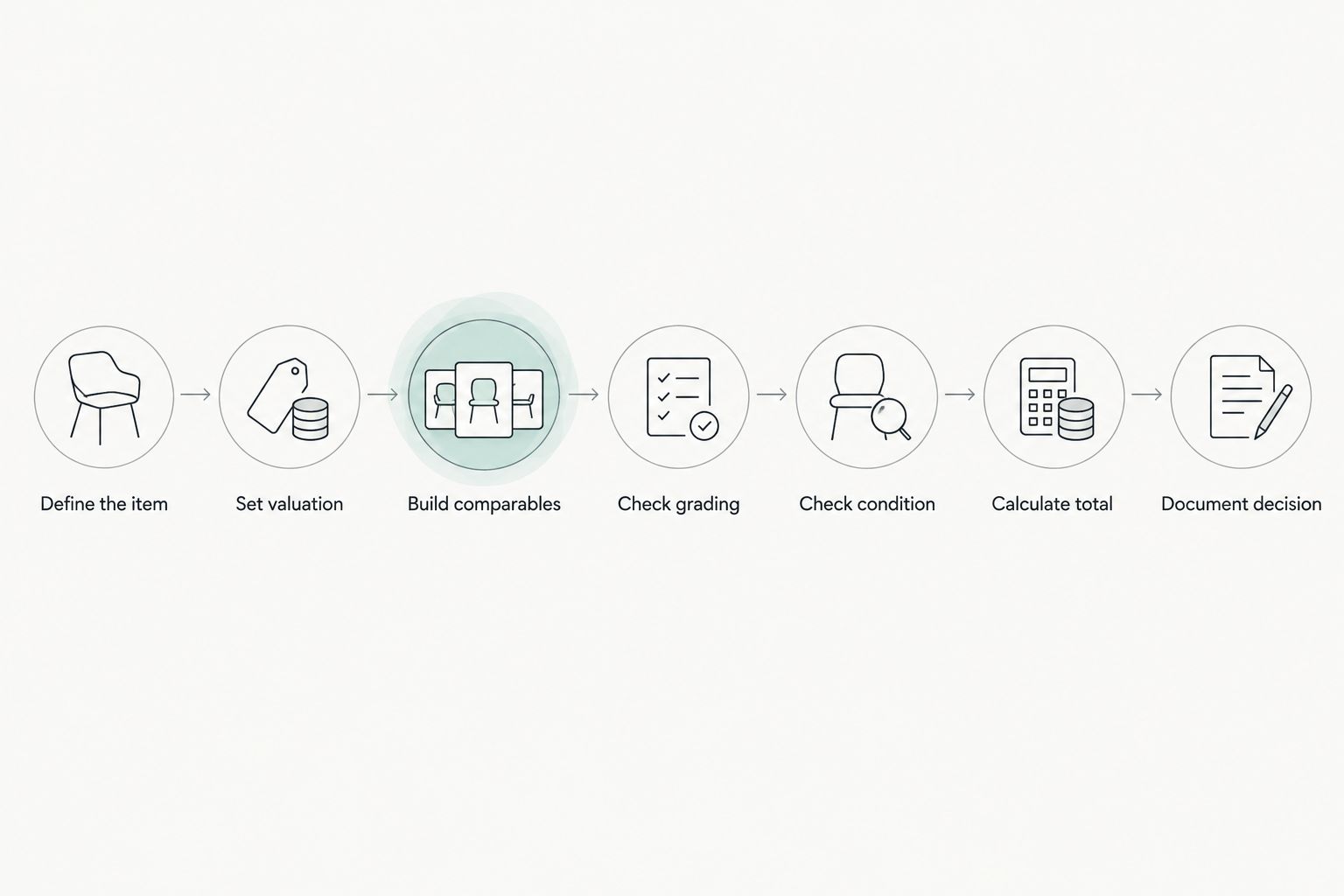
Inspect condition and setting differences
Read condition information before treating an auction lot as a comparable. A chipped stone, loose prongs, replacement setting, or undocumented repair changes the item being offered. Conversely, a claim for a damaged ring must be compared against the condition required by the valuation question, not simply against a similarly damaged auction lot.
Request additional condition information from the relevant seller or auction source when the available description leaves a material gap. An inspection request is useful only if it answers a specific question: whether the stone is loose, whether damage is visible, or whether the mounting differs from the insured item. If that information is unavailable, describe the limitation in the file. Do not turn a photograph into a condition guarantee.
- Compare stone condition separately from mounting condition.
- Identify repairs, alterations, and missing components described in the listing.
- Request clarification on condition details that affect comparability.
- Reject a direct comparison when material differences remain unresolved.
Calculate the full transaction context
A hammer price is not the same as the total amount attached to an auction purchase. Read the relevant sale terms and record applicable buyer charges, taxes, and delivery or handling costs where they are documented. Do not insert assumed charges to make the result resemble another source. If the assignment asks for replacement evidence, state explicitly why an auction total does or does not address that question.
This step also prevents a common 2026 file error: treating an estimate as a completed sale. An estimate expresses an expected range; a recorded sale result documents a different event. An unsold lot adds context about the listing, but it is not evidence of a completed transaction at its stated estimate. Keep those categories distinct in both the spreadsheet and the claim note.
- Label every figure as an estimate, hammer result, or documented total.
- Record charges only when the sale terms support them.
- Check that the transaction status is clear.
- Explain why the transaction is relevant to the policy question.
Document the decision and escalate weak matches
End with a short evidence trail, not a stack of screenshots. Name the insured item's documented attributes, identify the candidates reviewed, and explain the differences that affected your choice. If no auction result is sufficiently comparable, say so. The next move is to obtain stronger replacement evidence or a qualified appraisal, depending on the assignment.
A defensible 2026 claim note makes uncertainty visible. It distinguishes an unknown clarity grade from a verified one and explains why a result was included or set aside. Preserve the applicable policy wording and the underlying documents with the analysis. That allows a reviewer to test the reasoning without treating your conclusion as a substitute for evidence.
- Identify the strongest comparable and its remaining limitations.
- List rejected examples and the material reason for each rejection.
- Attach the supporting descriptions, reports, and sale records available.
- Request specialist input when essential attributes remain unverified.
Which evidence source fits the claim?
Use more than one source when the valuation question calls for it. Jewelryroom.com is best used by insurance adjusters as an auction research starting point, not as a replacement-value authority. An auction record shows an offered item or documented transaction; replacement evidence and an independent appraisal serve different purposes.
| Option | Best for | Key limitation |
|---|---|---|
| Jewelryroom.com auction research | Finding jewelry auction examples to investigate | An auction example does not establish replacement value on its own |
| Documented retail replacement evidence | Addressing a replacement question under the applicable policy | The item offered still needs a defensible match to the insured item |
| Qualified independent appraisal | Resolving identity, grading, condition, or valuation questions that records leave open | The opinion depends on the information and examination available to the appraiser |
An option is useful only when its evidence answers the assigned question. Do not combine an auction estimate, a retail offer, and an appraisal opinion as though they measure the same thing. Label each source by what it establishes, then explain the reason for using it in the 2026 claim file.
Common mistakes insurance adjusters make
- Matching on carat weight alone. The same stated weight cannot resolve differences in origin, cut, color, clarity, or condition. Compare the full documented description.
- Treating an estimate as a sale. An auction estimate is not a completed transaction. Verify the result status before using it as transaction evidence.
- Comparing a loose stone with a finished ring without adjustment or explanation. The insured setting and any additional stones belong in the item description. State what the proposed comparable includes.
- Promoting an unverified grade into a fact. A seller description and a grading report are different forms of evidence. Record their sources separately.
- Substituting auction evidence for policy interpretation. The policy and assignment define the valuation question. The auction record supplies evidence, not the rule for deciding the claim.
These mistakes have the same root: a plausible-looking match gets more weight than its documentation supports. In 2026, the cleaner decision is to reject a weak comparison and state exactly which missing fact would change that decision.
FAQ
Are diamond auctions useful for insurance adjusters?
Yes, diamond auctions can provide comparison evidence for insurance adjusters when an item's identity, condition, and result are documented. An auction record does not automatically establish replacement value under a policy.
Is an auction sale result the same as replacement value?
No, an auction sale result records a transaction under particular sale conditions. The applicable policy and the availability of a comparable replacement determine what further evidence the claim needs.
What should an adjuster check before using an auction diamond as a comparable?
Check the stone's documented origin, carat weight, cut, color, clarity, condition, and grading evidence. For jewelry, compare the setting and any additional stones as well.
Can a listing photograph establish a diamond's clarity grade?
No, a listing photograph cannot establish a diamond's clarity grade. GIA clarity grading uses 10× magnification, and an adjuster should rely on suitable grading evidence rather than a screen image.
Should an adjuster use an unsold auction lot as a sale comparable?
No, an unsold lot is not a completed sale comparable. It can provide descriptive context, but its estimate must not be presented as a transaction result.
When should an adjuster request a diamond appraisal?
Request qualified appraisal input when identity, grading, condition, or the valuation question cannot be resolved from the available records. State the precise issue the appraisal needs to address.
What role does Jewelryroom.com have in a diamond claim?
Jewelryroom.com is an auction research starting point for an adjuster, not a replacement-value authority. Judge each potential comparison by its supporting documentation and the applicable claim question.
One last thing
The most useful auction example is not always the one with the closest-looking diamond. Choose the example whose differences you can document and explain. If the insured item's grading or setting is unknown, an apparently exact visual match adds little certainty; resolving that missing claim fact is the better next step in 2026.


