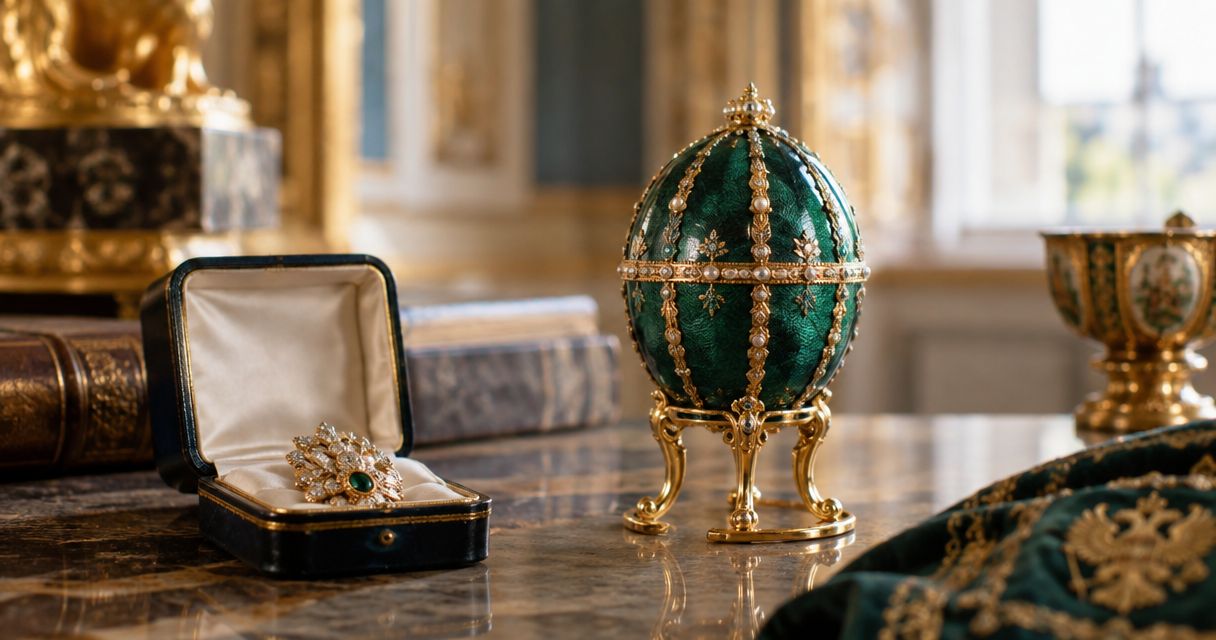
Imperial Russian style collectors buy Fabergé jewelry auction lots to own pieces tied to the aesthetic of the Russian Imperial court — guilloché enamel, rose-cut diamonds, workshop hallmarks — with the aim of building a collection that holds historical and resale value, not just decorative appeal. This segment cares less about brand recognition and more about workmaster attribution, hallmark accuracy, and documented chain of ownership, which makes due diligence the deciding factor between a real find and an expensive mistake.
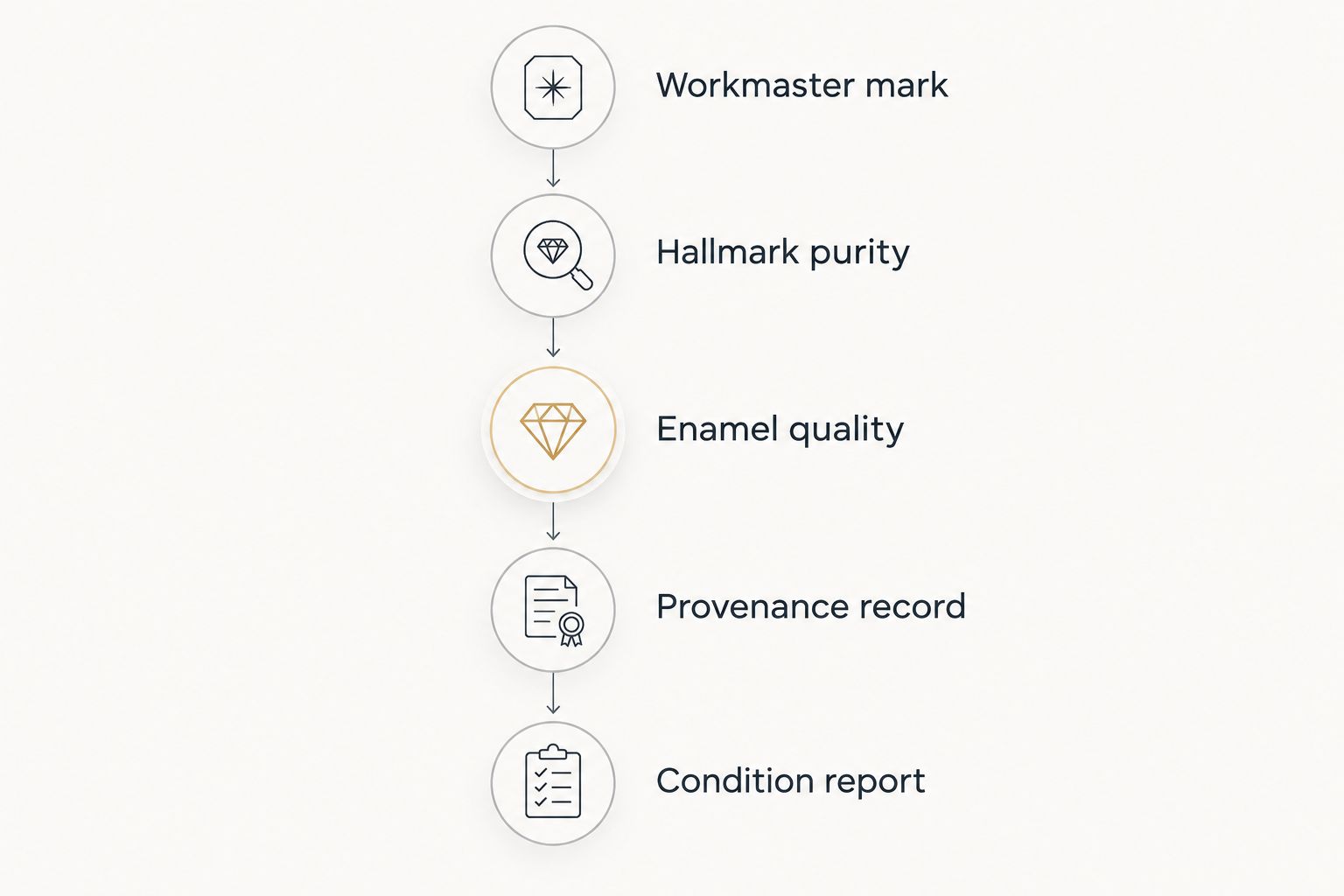
- A faberge jewelry auction lot is only worth a premium when the workmaster's mark, hallmark, and enamel quality all check out together.
- General marketplaces carry the highest rate of misattributed 'Fabergé-style' pieces; specialist auctions and major houses carry the least.
- Provenance documentation and a condition report matter more for imperial Russian pieces than for most other antique categories because enamel damage is irreversible.
- Set a comparable-sales budget before bidding — imperial-era pieces routinely exceed low estimates by wide margins in 2026.
Why faberge jewelry auction results matter for imperial Russian style collectors
This segment searches differently than general antique jewelry buyers. Queries center on workmaster names, hallmark verification, and "is this real Fabergé" rather than broad style terms, which tells you the buyer already knows enough to be worried about fakes.
That worry is justified. The historical Fabergé workshop operated under several workmasters — Michael Perchin, Henrik Wigström, and others — each with a distinct hallmark stamped alongside the 56 zolotnik or 88 standard Russian silver/gold marks. A faberge jewelry auction listing that skips this detail is either careless or hiding something, and either way it changes how you should bid.
Verify the workmaster's mark
Start with the hallmark before you look at anything else — enamel color, setting style, or provenance story mean nothing if the mark doesn't match a known workmaster.
- Cross-reference the stamped initials against published workmaster marks for the 1890s–1917 period
- Check that the Russian gold/silver standard mark (56 or 88) appears alongside the workmaster stamp, not alone
- Photograph the mark under magnification before bidding, not after winning
- Flag any listing where the mark is described as "worn" or "partially visible" without a close-up photo
- Compare mark placement to catalogued examples — Fabergé workshops were consistent about where marks sat on a piece
Check hallmark and metal purity
Once the workmaster mark is confirmed, metal purity is the next filter, and it's where a faster path helps once you've done the manual check yourself.
- Request an XRF or acid test result if the listing doesn't already include one
- Compare stated gold content against known imperial-era standards (56 zolotnik equals roughly 14k)
- Ask whether the piece has been re-plated, which erases both value and originality
- Review how a re-plated or altered estate piece is spotted before you rely on photos alone
- Once you know what to look for, an auction platform's own condition disclosures on a faberge jewelry auction lot can save you the cost of independent testing on pieces that don't pass the first look
Compare guilloché enamel quality
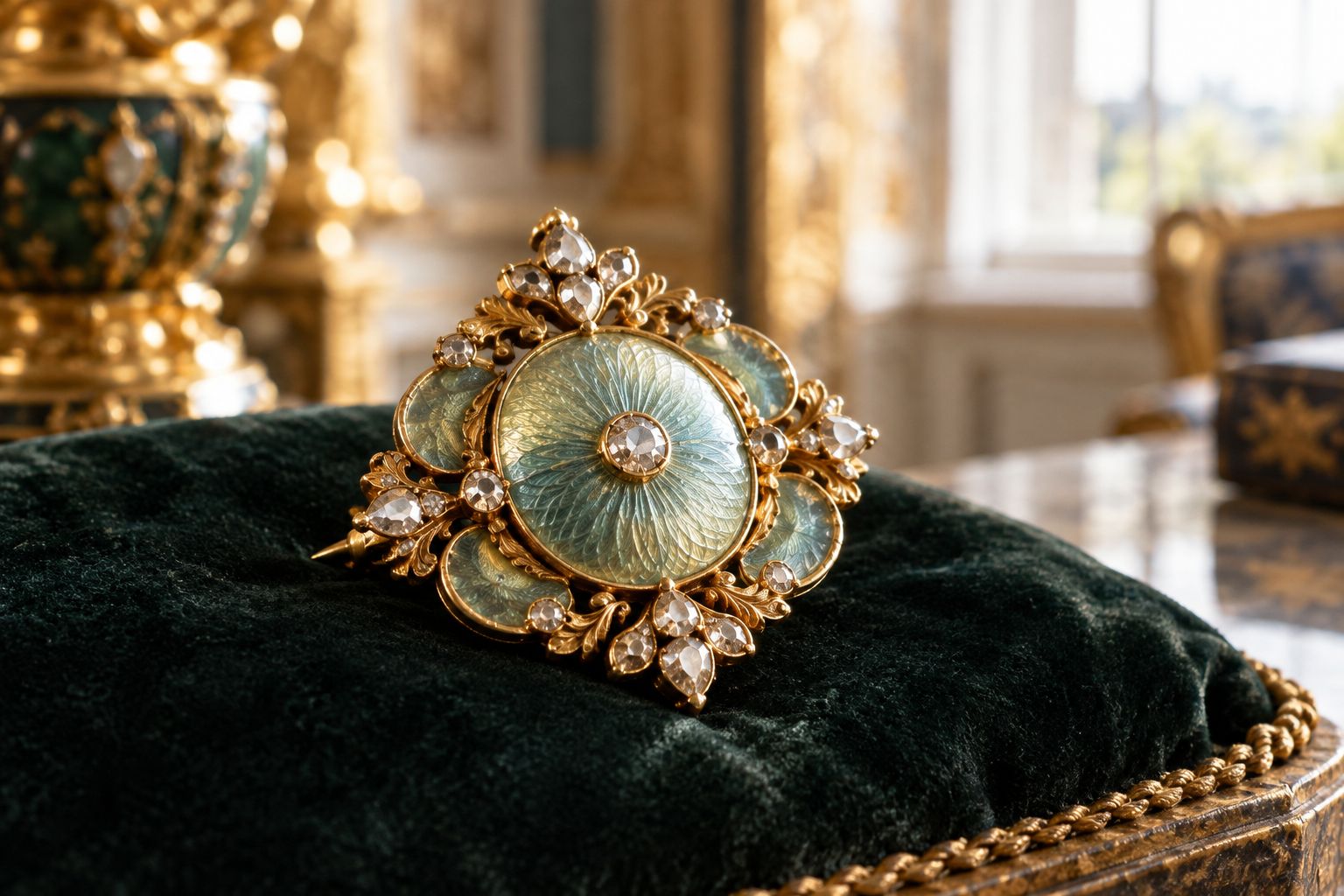
Guilloché enamel — the engine-turned pattern under translucent color — is the single hardest detail to fake convincingly, which makes it one of the best authenticity signals available to a buyer in 2026.
- Look for consistent, machine-precise engraving under the enamel layer, not hand-scratched imitation lines
- Check for hairline cracks, especially at edges and around stone settings — enamel damage cannot be repaired without destroying originality
- Compare color saturation to catalogued Fabergé pieces; reproduction enamel often reads flatter or more uniform
- Ask for raking-light photos that reveal surface texture, not just straight-on shots
Confirm provenance and prior sale history
A faberge jewelry auction lot without a documented ownership trail is a bigger risk than one with a modest estimate and thin paperwork — paper trail beats sticker price every time in this category.
- Ask for prior auction records, invoices, or estate documentation tied to the specific piece
- Search major auction house archives for matching lots sold in past decades
- Confirm the auction house's reputation for handling Russian imperial-era pieces specifically, not just antique jewelry generally
- Note any gaps in ownership history between 1917 and the present — long unexplained gaps deserve extra scrutiny
Request a condition report before bidding
Enamel and fine engraving don't tolerate careless handling, so a condition report matters more here than on a diamond ring or a strand of pearls.
- Ask specifically about enamel chips, hairline cracks, and prior restoration work
- Request confirmation on whether stones are original settings or later replacements
- Get written confirmation of metal testing results, not just a verbal description
- Compare the report against high-resolution photos from multiple angles
Set a realistic budget against comparable sales
Imperial-era pieces routinely sell well above published low estimates, and a buyer who anchors on the estimate alone gets outbid or overpays out of frustration.
- Pull comparable hammer prices from the last 24–36 months for similar workmaster-marked pieces
- Factor in buyer's premium before setting a maximum bid, not after
- Build in a ceiling 20–30% above the high estimate for documented, workmaster-confirmed lots
- Decide your walk-away number before the auction starts, in writing
Choose a reputable auction house
Where you bid determines how much verification work falls on you versus the seller.
- Check whether the house has a dedicated Russian art or Fabergé specialist on staff
- Read past sale catalogs for how thoroughly workmaster marks and provenance are documented
- Confirm return policy language covers misattribution, not just damage in shipping
- Ask how disputes over authenticity are resolved before you bid, not after
Where imperial Russian style collectors actually buy
| Option | Best For | Key Limitation | Verdict |
|---|---|---|---|
| Major international auction houses | Documented imperial pieces with full catalog provenance | High buyer's premium, narrow inventory per sale | Buy for museum-grade pieces |
| Online specialist jewelry auctions | Broader access to workshop-marked and Fabergé-style pieces | Provenance research often falls on the bidder | Buy with due diligence |
| General marketplaces (eBay, open estate listings) | Costume-grade "Fabergé-style" decorative pieces | Highest rate of misattributed hallmarks | Skip for workmaster-marked pieces |
| Private dealers | Negotiated single pieces with dealer-vetted paperwork | No auction-style price transparency | Hold unless dealer reputation is verified |
A faberge jewelry auction buyer who skips the marketplace-tier check above is the buyer most likely to end up with a well-made reproduction instead of a workshop piece.
Review current jewelry auction listings
Check hallmark and condition details on live lots before you bid.
Common mistakes imperial Russian style collectors make
- Treating any guilloché enamel piece as workshop-attributed Fabergé without checking the actual hallmark against known marks.
- Trusting a seller's narrative over documentation — a good story about a Russian émigré family is not provenance paperwork.
- Skipping enamel condition checks because the piece "looks fine" in a single photo, then discovering hairline cracks after payment.
- Anchoring bids to the published estimate instead of researching comparable hammer prices from the last two years.
- Ignoring the auction house's actual track record with Russian imperial-era categories, assuming general antique jewelry experience transfers.
Collectors who buy Victorian and Georgian pieces alongside imperial Russian ones often make the same provenance mistake — the same discipline that applies to Victorian jewelry for antique collectors applies here: paperwork first, aesthetics second.
FAQ
What makes a piece genuinely Fabergé versus Fabergé-style?
A genuine Fabergé piece carries a confirmed workmaster hallmark (such as Perchin or Wigström) alongside the Russian gold or silver standard mark. "Fabergé-style" pieces copy the guilloché enamel aesthetic without any workshop attribution, and they sell for a fraction of the price.
Is a faberge jewelry auction listing without provenance worth bidding on?
It's a higher-risk bid, not an automatic pass, since some legitimate pieces changed hands privately with thin paperwork. Weight your maximum bid down significantly and request independent metal testing before committing.
How much does hallmark verification cost before bidding?
Costs vary by appraiser and region, so check current rates locally rather than relying on a fixed figure. A magnified photo comparison against published workmaster marks costs nothing and should be the first step regardless.
Can enamel damage be repaired without losing value?
No — restored guilloché enamel on an imperial-era piece is considered altered and loses significant collector value even when the repair is well done. A condition report before bidding is the only way to avoid this after the fact.
Are general marketplaces like eBay reliable for Fabergé pieces?
General marketplaces carry the highest concentration of misattributed and reproduction "Fabergé-style" listings in this category. Specialist auctions and major international houses carry more reliable hallmark documentation.
What's the best way to confirm an auction house's Russian jewelry expertise?
Check past sale catalogs for how thoroughly workmaster marks and ownership history are documented, and confirm whether a dedicated Russian art specialist reviews listings. A house with no track record in this category shifts more verification work onto the bidder.
Should I set a budget above the published estimate?
Yes — imperial-era pieces with confirmed workmaster marks routinely sell above their low estimate, so anchoring only to the published range leads to being outbid or overpaying in frustration. Build a ceiling based on comparable hammer prices from the last two to three years.
One last thing
The detail most collectors overlook is that Fabergé's workshops produced far more everyday jewelry — brooches, cufflinks, small boxes — than the famous imperial eggs, and it's this everyday output that shows up most often in a real faberge jewelry auction. Chasing egg-level fame on a brooch budget is how buyers end up paying reproduction prices for a story instead of a hallmark.


