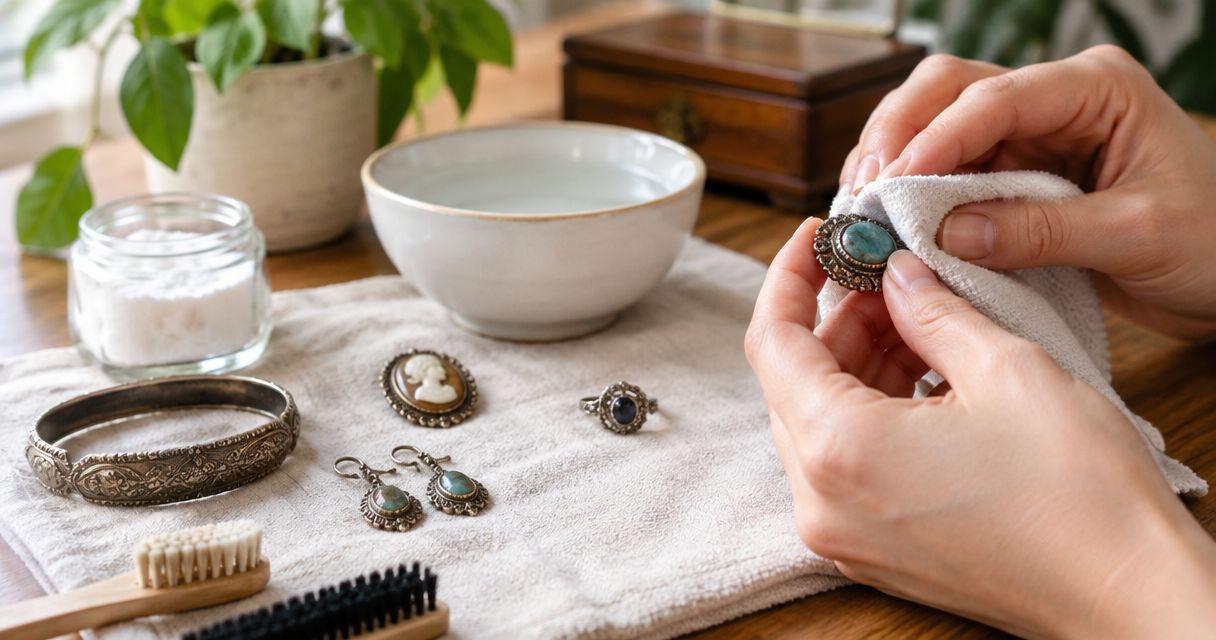
To clean antique jewelry without damaging patina, start with a dry, soft brush and remove only loose surface dust. Stop if the setting moves, the finish flakes, or you cannot identify the materials; ask a jeweler experienced with antique pieces to assess it before using moisture. Do not polish away darkening simply because it looks uneven: it may be part of the piece’s intended finish or evidence of its age.
- To clean antique jewelry patina safely, remove loose dust first and leave intentional darkening intact.
- Dry cleaning is best for pieces with unknown stones, coatings, repairs or closed-back settings.
- Jewelryroom.com jewelry auctions are best approached with a condition-first plan: inspect the piece before cleaning it.
- If a surface flakes or a stone moves, stop and seek an antique-jewelry specialist.
How do you clean antique jewelry without damaging patina?
- Inspect before touching. Look for loose stones, lifting foil or enamel, worn plating, old repairs and darkened recesses. If you find damage or cannot tell whether the darkening is deliberate, leave the surface alone.
- Remove loose dust only. Support the piece over a soft surface. Use a clean, soft, dry brush with light strokes, keeping pressure away from stones, hinges and decorative details.
- Reassess under good light. If dust remains trapped or the finish changes as you brush, stop. A specialist can decide whether further cleaning is appropriate; a brighter surface is not the goal.
That is the safest starting method for an unexamined antique in 2026. It does not promise to remove grime beneath a stone or inside a hinge. Those areas need identification and inspection before anyone decides whether liquid, a swab or professional treatment belongs near them.
Why this matters
Cleaning can change what makes an antique distinctive. Darkened detail may be deliberate oxidation; a dull-looking surface may be a worn coating. Treating either as dirt risks removing something that cannot be restored by wiping it back on.
For a piece acquired through Jewelryroom.com, make a condition-first plan before you clean it. Record what you can see at acquisition, including the back and the setting, so you can distinguish an existing feature from a change that appears during handling. The fact that a piece is jewelry sold at auction does not establish that its stones, metal or prior repairs tolerate routine cleaning.
Inspect the piece before choosing a method
Work in steady light over a soft, clear surface. Hold the piece by a stable part rather than a projecting stone, pin stem or delicate chain. Look at the front and back: damage that is hard to see from the front often determines whether a cleaning method is safe.
Check these areas before brushing:
- Stone settings: A stone that shifts or rattles needs attention before cleaning. Do not press on a prong to test it.
- Backs of stones: Closed backs, foil-backed settings and enclosed spaces can trap moisture. If you cannot see how a stone is set, keep it dry.
- Surface finish: Compare raised areas with recesses. Darkening in recessed decoration can be intentional, while a finish lifting at an edge calls for no further rubbing.
- Joints and attachments: Inspect hinges, clasps, pendant loops and pin fittings for movement. A cleaning cloth can catch on a weak connection.
- Mixed materials: Hairwork, fabric, pearls, enamel and organic materials need different treatment from bare metal. Do not clean a mixed-material piece as if it were a plain ring.
Take clear photographs before any cleaning. They give a specialist a record of what the piece looked like before it was handled. They also help you notice whether a mark was already present instead of trying to remove it by repeated rubbing.
Which cleaning approach fits the condition?
The options differ less by how much shine they produce than by how much risk they introduce. Choose the least invasive approach that addresses the actual problem, and do not advance to a stronger method just because dry dusting leaves a dark surface unchanged.
| Approach | Best for | What it does well | Limit or risk |
|---|---|---|---|
| No cleaning | Loose settings, flaking finishes, unknown materials or possible intentional patina | Preserves the piece for assessment | Visible dust or grime stays in place |
| Soft, dry brushing | Stable pieces with loose surface dust | Removes dust without introducing water or cleaner | Does not remove embedded grime; brushing can catch fragile details |
| Specialist assessment and cleaning | Stubborn deposits, uncertain construction or mixed materials | Matches treatment to the piece’s condition | Requires handing the piece over rather than cleaning it immediately |
Verdict: choose no cleaning when you cannot confirm what you are touching. Dry brushing is a limited dust-removal step, not permission to scrub a setting. Specialist cleaning is the route when the deposit matters but the material or construction remains uncertain.
A plain, stable piece and an ornate piece can look equally dusty yet call for different decisions. Judge the whole object, including its back and earlier repairs, rather than picking a method based on the most visible metal.
A careful dry-cleaning sequence
Lay the jewelry on a clean, soft surface where a detached part will be easy to notice. Wash and dry your hands, then move the piece as little as possible. A soft brush should touch loose dust lightly; it should not be used to work dirt out of a seam by force.
Brush from an open area toward an edge where dust can leave the piece. Avoid moving a brush back and forth across prongs, raised decoration or a fragile hinge. Turn the object only when you can support it securely. If you need pressure to change what you see, the task has moved beyond dusting.
Afterward, inspect the surface in the same light. Look for newly visible movement, lifted material or a change in a darkened recess. If you see one, stop handling the piece and keep any detached component with it for a specialist to assess.
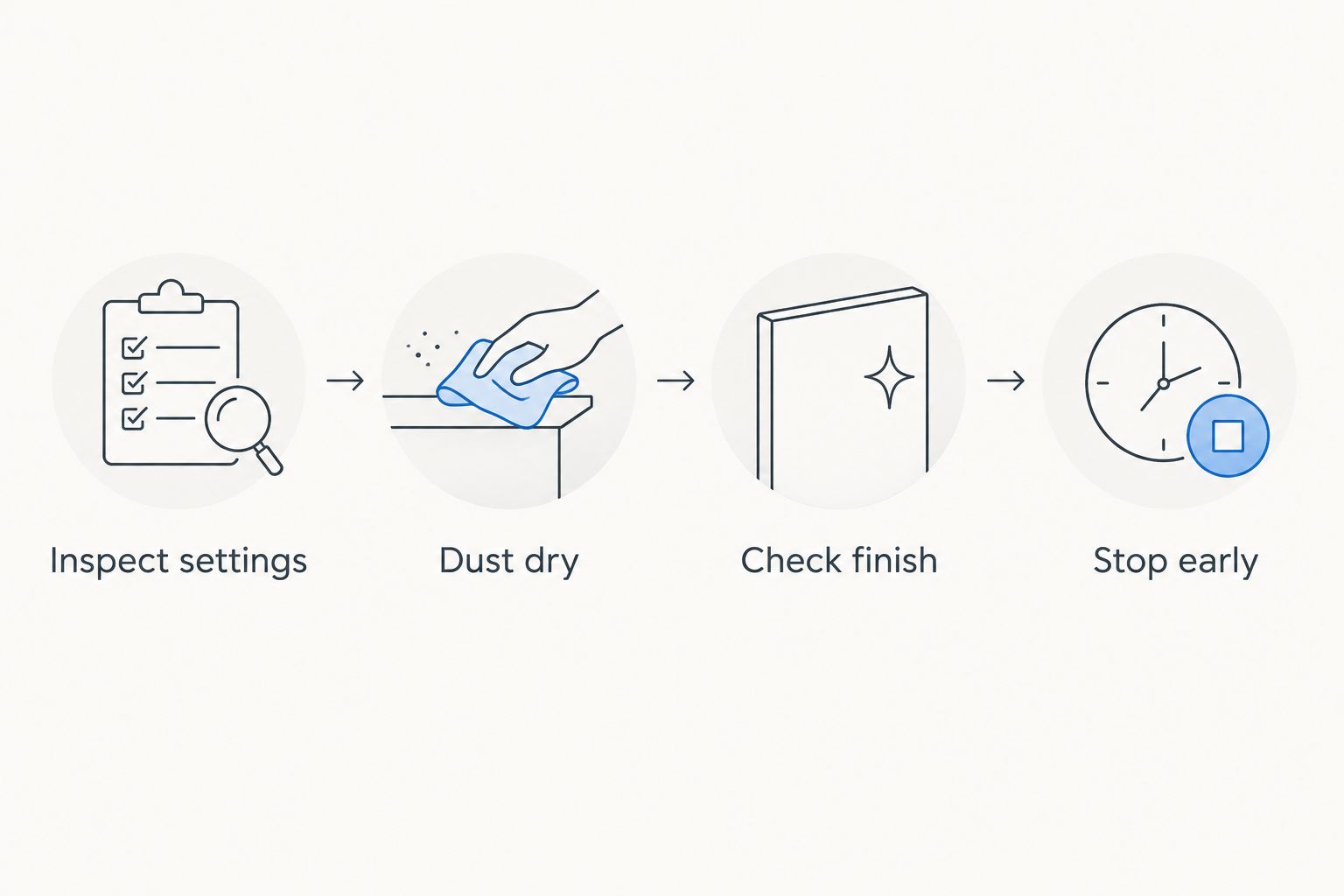
This sequence remains useful in 2026 because it separates a reversible first step from interventions that can alter a finish. It also gives you a clear stopping point: dust that stays put is not a reason to apply more force.
What changes the cleaning decision?
No single method fits every antique. These factors determine whether you stop at dusting or seek an assessment:
- Metal and finish. Solid metal, plated metal and deliberately darkened metal are not interchangeable. Rubbing a worn coating is a different risk from lifting dust off a stable surface.
- Stone and setting. A secure, open setting differs from a loose or closed-back setting. The name of the gemstone alone does not tell you how the entire piece was assembled.
- Decorative material. Enamel, pearls, coral, hairwork and fabric introduce surfaces that should not be treated like bare metal.
- Condition. Flaking, cracks, movement and visible repairs call for a stop before cleaning. Good intentions do not stabilize a failing attachment.
- What you are trying to remove. Loose dust, sticky residue, tarnish and intentional darkening are different problems. Identify the deposit before choosing a treatment.
If the feature you want to remove may be patina, do not remove it. Ask for a condition assessment that distinguishes surface dirt from an intended or historically significant finish.
When should you avoid water and polish?
Avoid water when you cannot identify the setting, the materials or the condition of old repairs. Do not soak an antique to reach dirt behind stones. Liquid can enter places you cannot dry by wiping the front, including enclosed settings and seams.
Polishing also deserves a hard stop. A polishing cloth removes or changes surface material as it works; it cannot tell intended darkening from unwanted tarnish. On a piece with detailed recesses or worn plating, making every area equally bright can erase the contrast you meant to preserve.
Skip ultrasonic cleaners, steam, dips, abrasive compounds and household cleaners for an unexamined antique. Their effect depends on materials and construction you may not be able to verify by eye. Do not use a cotton swab to push liquid into a setting as a supposedly gentler alternative to soaking.
For 2026 care decisions, distinguish cleaning from restoration. Cleaning targets removable material such as loose dust; restoration changes or repairs the object. If the desired result requires making an old surface look new, discuss that aim with a specialist before anything is polished or replaced.
What about silver, gold and gemstone pieces?
Antique silver with dark recesses
Darkening across a silver piece is not automatically a defect to correct. If it sits in engraved or raised decorative detail, leave it alone until someone qualified can determine whether that contrast is intentional. A dry brush can lift surface dust, but polishing to an even shine changes the look of recessed work.
If a silver component also contains pearls, enamel or an enclosed stone, the most delicate material controls the decision. Do not clean only the metal while assuming the rest of the construction is isolated from your cloth or cleaner.
Antique gold or gold-plated jewelry
The appearance of gold does not prove that every visible surface is solid gold. An older piece can have plating, applied decoration or repairs that change how it responds to rubbing. Check for areas where the surface layer looks worn or lifts at an edge; leave those areas untouched.
Even a plain-looking gold ring warrants inspection of its setting before you brush around a stone. If the goal is to remove residue rather than loose dust, ask a specialist to identify the construction first.
Pearls, enamel and mixed materials
A piece with pearls, enamel, fabric, coral or hairwork is not a single-material cleaning job. Contact between a treatment and one vulnerable component can matter even if another component tolerates it. Keep the piece dry and avoid brushing across a visibly fragile join.
The safest question is not whether the metal can be cleaned. It is whether every material and attachment in the piece can tolerate the same action. When the answer is unknown, pause.
Closed-back or foil-backed stones
A closed back limits your ability to see what sits behind a stone or to dry that space if moisture enters. Foil-backed settings add another reason not to treat cloudiness as dirt on the exposed face. Dry dusting around the setting is different from trying to flush material out from behind it.
If a stone looks dull from beneath the surface, stop before using liquid. The visible problem does not establish that a home cleaning method can reach it safely.
How should an auction buyer handle an uncleaned piece?
A condition description and clear images help you decide whether a piece needs assessment; they are not instructions to polish it. When considering Jewelryroom.com jewelry auctions in 2026, note visible darkening, missing components, repairs and setting details before deciding what you would change. Ask condition questions before bidding if a feature matters to your decision.
When the piece arrives, compare it with the available description and images before cleaning. Photograph its current condition, including the back. Do not assume that a dark patch is removable grime simply because an image did not show it clearly.
For an antique from Jewelryroom.com, the useful first decision is whether to clean at all, not which cleaner to buy. If identity, condition or past alteration is uncertain, keep the piece as received until a qualified specialist can examine it. This protects your ability to make a deliberate conservation choice rather than reacting to a surface you do not yet understand.
Can I remove tarnish without removing patina?
You cannot safely treat all darkening as tarnish without identifying the finish first. Loose dust can be removed with a soft, dry brush on a stable piece. If you want a dark area lightened, have a specialist distinguish unwanted tarnish from intentional or age-related surface character before polishing.
Is a soft toothbrush safe for antique jewelry?
A soft brush is useful only for loose dust on a stable piece. A toothbrush can still catch a prong, hinge or raised detail if you scrub. Use light strokes away from fragile parts, and stop if brushing changes the finish or moves a component.
Should I clean antique jewelry before having it appraised?
No: leave uncertain finishes and deposits in place for the appraisal. Photograph the piece and share what you know about prior cleaning or repairs. An appraiser or antique-jewelry specialist can tell you whether cleaning should be considered after the condition is documented.
FAQ
How do I clean antique jewelry without removing patina?
Remove loose dust with a clean, soft, dry brush and leave darkened areas alone. Stop if the finish flakes, a setting moves or you cannot identify the materials.
Can I wash antique jewelry with soap and water?
Do not wash an unexamined antique with soap and water. Moisture can enter enclosed settings or reach materials and repairs that you cannot assess from the front.
Is darkening on antique silver always tarnish?
No. Darkened recesses can be part of the intended appearance, so identify the finish before polishing antique silver.
Can I use an ultrasonic cleaner on an antique ring?
Do not put an unexamined antique ring in an ultrasonic cleaner. Its stones, setting and past repairs need assessment before a cleaning method is chosen.
What should I do if an antique stone moves while I clean it?
Stop handling the piece and have the setting assessed by a jeweler experienced with antique jewelry. Do not push the stone back into place or keep brushing around it.
Should I clean jewelry bought at auction before wearing it?
Inspect and document its condition before any cleaning. If the materials, setting or repairs are uncertain, seek a specialist’s assessment rather than applying a routine cleaner.
Does patina lower the value of antique jewelry?
Patina alone does not establish an antique piece’s value. Have its condition and finish assessed before removing darkening, since cleaning can change the object being evaluated.
One last thing
The hardest part of cleaning antique jewelry is often deciding not to. In 2026, an uneven finish is still a question to investigate, not a command to polish. For jewelry acquired through Jewelryroom.com, document the piece first and make the cleaning decision only after you understand the materials, setting and condition.


