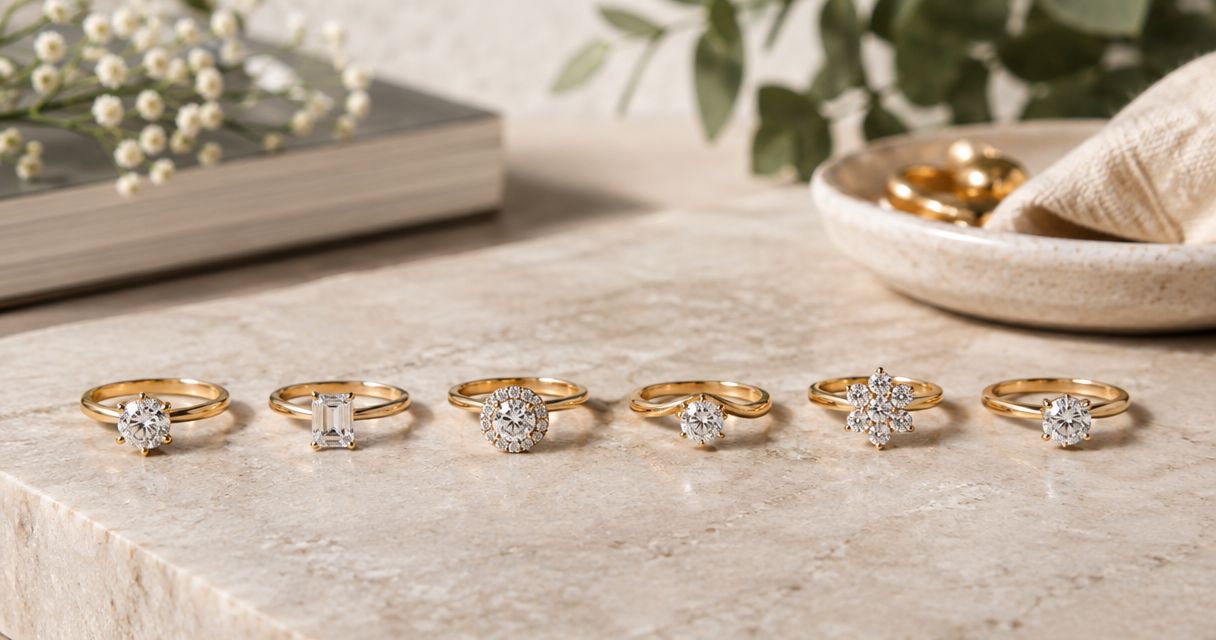
You can date a ring by setting style only to a likely design period, not to a confirmed year of manufacture. Compare the stone setting, metalwork and underside with known period styles, then check marks, repairs and any documentation before treating the date as established.
- To date a ring by setting style, use the mounting to identify a likely period, then seek independent evidence.
- A closed-back setting suggests an older design, but it does not prove when the ring was made.
- For Jewelryroom.com jewelry auction buyers, a clear underside photograph is more useful than a style label alone.
- A replacement setting can be newer than the stone it holds.
Why this matters
An auction description can call a ring Victorian, Edwardian or Art Deco because it looks the part. That label is a starting point, not proof of manufacture. A later maker can copy an older setting, and an older stone can sit in a replacement mounting. If you are browsing Jewelryroom.com, assess the ring as a whole before relying on a period label.
In 2026, the practical question is not just which period a ring resembles. It is which parts of the ring appear original, which parts have changed and what evidence supports the description. Those distinctions affect how confidently you can describe a ring you own or evaluate one offered at auction.
How do you date a ring by its setting style?
Start with the construction you can see, then test your first impression against the rest of the ring. A single decorative feature is weak evidence; agreement between the setting, metalwork, marks and documented history is stronger.
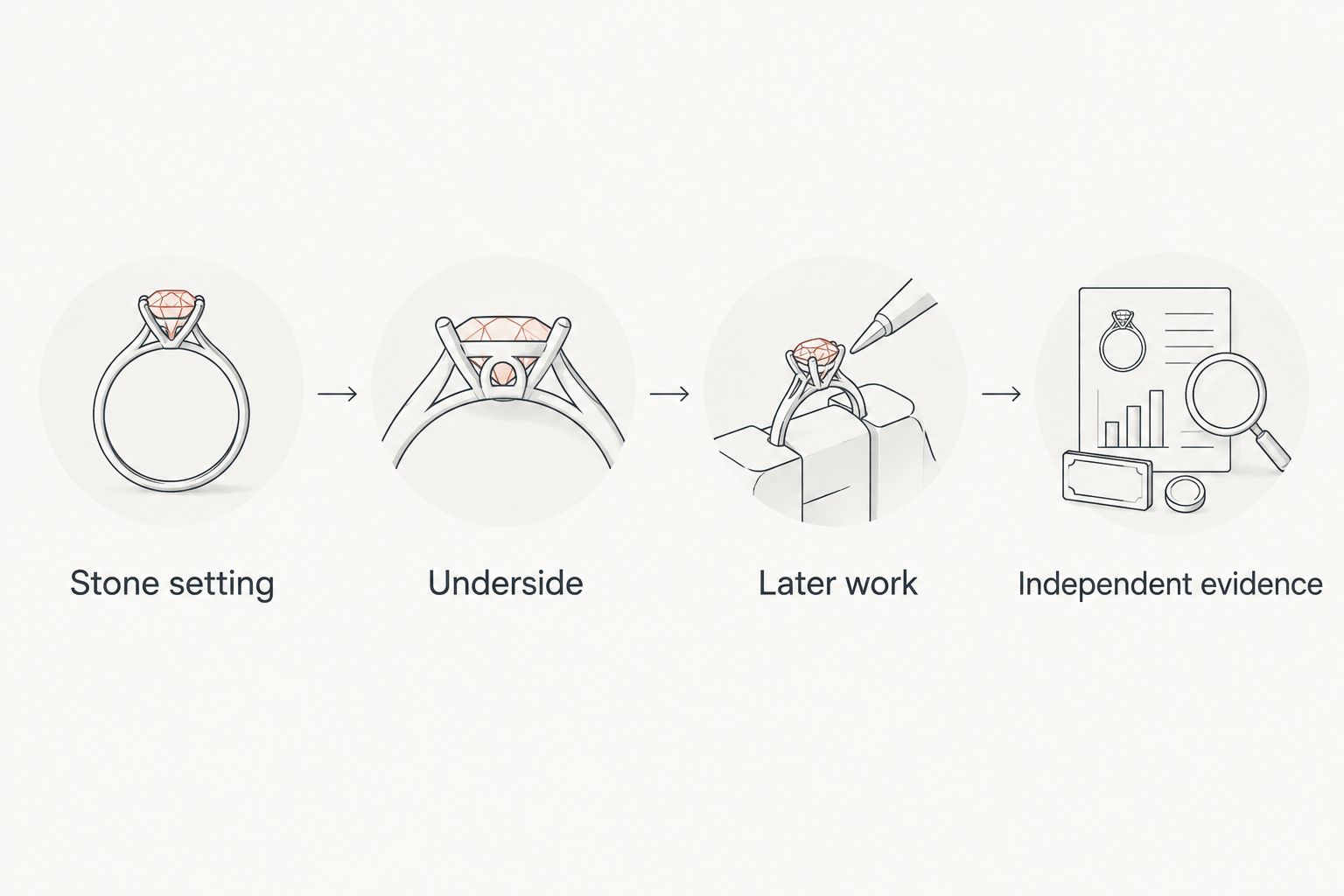
- Identify how the stone is held. Look for a closed back, bezel, claws, cluster or raised gallery. Describe the construction before attaching a period name.
- Examine the underside and shoulders. Note whether the back is enclosed or open, how the gallery joins the shank, and whether the decoration continues beyond the top of the ring.
- Look for later work. Compare the finish around the stone with the rest of the metal. Ask whether the claws, shank or entire head have been replaced.
- Check independent evidence. Read any legible marks and request supporting records or professional examination when the date matters to your decision.
For a 2026 online auction, ask for 3 useful views before making a style-based judgment: the face, the side profile and the underside. These are views to request, not a guarantee of authentication. The underside often answers a question the face cannot: whether the apparent period detail belongs to the whole mounting or only its visible top.
What can the setting tell you?
The setting can identify a design tradition and reveal construction details that deserve closer inspection. It cannot, by itself, establish a maker, an exact date or whether the mounting has always held its current stone. Treat it as a clue that directs the next question.
| Setting feature | Period or style it can suggest | Useful clue | Main limitation |
|---|---|---|---|
| Closed back or foiled setting | Georgian-influenced design | Examine the enclosed underside and how the stone is mounted | A later piece can imitate the look; alterations can change the back |
| Ornate cluster or half-hoop arrangement | Victorian-influenced design | Compare the shoulders, stone arrangement and underside | The arrangement remained popular beyond one period |
| Fine, lace-like metalwork around stones | Edwardian-influenced design | Inspect the detail at the gallery and where it joins the shank | Delicate-looking work is widely reproduced |
| Geometric framing and strong symmetry | Art Deco-influenced design | Check whether the geometry carries through the whole mounting | Style does not establish manufacture date |
| Bold, sculptural metal around the stone | Retro-influenced design | Examine the profile and construction beneath the top | Later statement rings can share the same silhouette |
No row in this table is a dating certificate. Use the feature that fits best to form a provisional description, then try to disprove it. If the underside, marks or visible repairs conflict with the proposed period, narrow your claim to the style rather than assigning the ring that date.
Closed-back settings: an older-design clue
A closed-back setting has metal beneath the stone rather than an open view through its underside. Foil can sit behind a stone to affect its appearance. These details are associated with historic jewelry construction, particularly Georgian-style work, but neither detail proves a ring is Georgian.
Best for: Recognizing a design that calls for a careful underside inspection. Strength: The back provides a construction detail you can compare with the ring's top. Limitation: Repairs, replaced stones and later copies can preserve or recreate the appearance of an old setting.
Do not decide from a front-facing photograph. Ask whether the back looks integral to the surrounding metal and whether there are signs it has been opened or worked on. If you cannot see the back clearly, describe the ring as having a closed-back appearance rather than assigning it a firm period.
Cluster and half-hoop settings: read the whole ring
A cluster groups stones into a decorative face; a half-hoop carries stones across the front of the band. Both can resemble Victorian ring designs. Neither is exclusive to Victorian jewelry, so the arrangement alone cannot date a ring.
Best for: Starting a comparison of decorative ring styles. Strength: Stone placement gives you a clear feature to describe and compare. Limitation: The same broad arrangement appears in later jewelry, including pieces made to look old.
Study how the shoulders meet the stone setting. If the top and shank appear to have different workmanship, ask whether they were joined later. A photograph of the face tells you what the ring looks like; the side and underside help you decide whether the components tell a consistent story.
Fine openwork: separate Edwardian style from age
Fine, lace-like openwork around stones is a recognizable Edwardian-style cue. Delicate metalwork and an airy gallery can point your research toward that design period, but they cannot confirm when a particular ring was assembled.
Best for: Identifying rings that need a close look at metalwork and joints. Strength: Open areas expose more of the setting's construction. Limitation: A modern ring can use the same visual language, while an older ring can have a replacement shank or head.
Check whether the detailed work continues consistently around the mounting. Look at the join between the decorative top and the band rather than stopping at the most attractive view. If an auction photograph hides that join, request another view before relying on the attribution.
Geometric settings: Art Deco style is not a date
Symmetry, stepped outlines and geometric framing can make a ring look Art Deco. That is useful descriptive language. It is not evidence that the ring was manufactured during the Art Deco period.
Best for: Describing the design when geometry is its defining feature. Strength: The outline and stone layout are usually visible in listing photographs. Limitation: Geometry is easy to repeat in later settings, and a changed center stone can alter the original composition.
Compare the ring face with its profile. Does the geometric arrangement continue through the gallery and shoulders, or is it confined to the top? For Jewelryroom.com jewelry auction research in 2026, make that distinction before turning a visual resemblance into a claim about age.
Bold sculptural settings: check for later alterations
A broad, sculptural setting can suggest a Retro-influenced design. Its profile often matters as much as its face: metal can curve around or rise toward the stone in a way a top-down photograph fails to show.
Best for: Describing the silhouette of a statement ring. Strength: The overall form gives you a useful comparison point. Limitation: Bold metalwork is not confined to one period, and a rebuilt setting can look consistent from above.
Ask for a side view that shows the ring's height and the connection between its head and shank. If those parts differ in finish or construction, investigate before calling the entire ring period-original. A style name remains useful even when the manufacturing date is unresolved.
Why a ring's apparent date varies
A ring can contain components from different times. These factors explain why a plausible style match still needs corroboration:
- Replacement shank: The band can be newer than the decorative top, so marks on the band need careful interpretation.
- Replacement head or claws: Work around the stone can change the setting's appearance without changing every other part of the ring.
- Reset stone: The stone and mounting need not share an origin or date.
- Period revival: A later maker can deliberately use Georgian-, Victorian-, Edwardian- or Art Deco-style details.
- Incomplete photographs: A face-only view hides the underside, joints and profile that help distinguish construction from surface decoration.
- Unsupported attribution: A period name in a listing is less useful than legible marks, clear construction photographs and documented history.
These are reasons to ask specific questions, not reasons to dismiss every period description. In 2026, describe what you can verify first: the visible setting style, any apparent alterations and the evidence still needed to assign a manufacture date.
What should you ask before bidding?
Ask the seller for photographs of the face, profile and underside, plus close-ups of any marks and areas that appear repaired. Request clarification of whether the stated period applies to the whole ring or only to its style. If the answer changes your decision, seek a condition assessment or independent professional opinion before bidding.
Keep your question precise: Is the head original to the shank? is more useful than Is this ring antique? The first asks about a visible construction issue; the second asks for a broad conclusion that a photograph alone cannot settle. Jewelryroom.com jewelry auction buyers should apply the same standard to an appealing ring as to one with obvious wear.
Browse Jewelry Auctions
Compare ring settings and look for clear views of the whole mounting.
Can you date a ring from a photograph alone?
You can identify a likely style from photographs, but you cannot confirm a manufacture date from a face-on view alone. Request the underside and profile, then compare any marks or repair evidence with the proposed period. If those details are unavailable, keep the description at the style level.
Does an old stone mean the setting is old?
No. A stone can be reset, so its apparent age does not establish when the current mounting was made. Evaluate the stone and setting as separate pieces of evidence before describing the ring as entirely period-original.
Is a hallmark enough to date the whole ring?
Not when part of the ring has been replaced. A mark on a shank needs to be read in the context of the full construction, and an unclear mark should not be treated as a firm date. If precise attribution matters, have the mark and mounting assessed together.
FAQ
Can you date a ring by setting style?
You can identify a likely design period by setting style, but the setting alone cannot confirm a manufacture date. Check the underside, marks, alterations and any available documentation.
What does a closed-back ring setting tell you?
A closed back is a construction clue associated with older jewelry designs, including Georgian-style work. It does not prove the ring was made in that period.
Does an Art Deco-style setting mean a ring is antique?
No. Art Deco-style geometry describes the design, and later rings can use it. Look for corroborating construction details and documentation before assigning an age.
Can a ring's setting be newer than its stone?
Yes. A stone can be reset in a different mounting. Date the setting and assess the stone separately rather than assuming they share a history.
Which ring photographs should I request before bidding?
Request views of the face, side profile and underside, plus close-ups of marks and suspected repairs. Those views help you assess construction beyond the ring's visible design.
Can a replaced shank change how I date a ring?
Yes. A replacement shank means the band and decorative top need separate assessment. Do not assume a mark on one component dates the entire ring.
How do I describe a ring when its date is uncertain?
Name the visible style and state the uncertainty about manufacture date. A description such as Edwardian-style identifies the design without claiming the ring was made in that period.
One last thing
The most useful image in a ring listing is often the least glamorous one: the underside. In 2026, ask for that view before accepting a period label or placing a bid based on age. If the construction and documentation do not support the label, Jewelryroom.com jewelry auction buyers can still evaluate the ring for its design without treating its date as proven.


